
Medical Disclaimer: This content is for educational purposes only. It is not medical advice. Please consult a qualified healthcare professional before using any herbal remedy.
Safety Overview
1.Caladium Pink Beauty — At a Glance
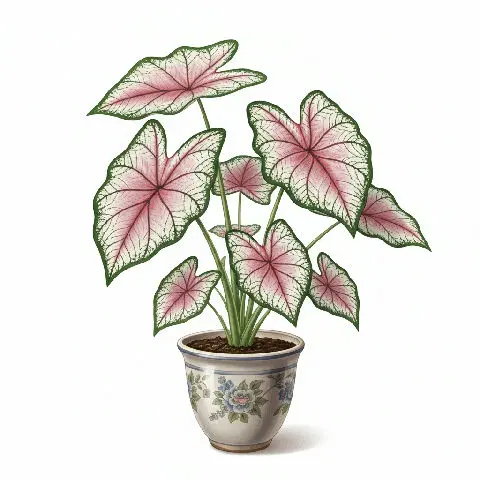
Caladium 'Pink Beauty', botanically known as Caladium bicolor 'Pink Beauty', is a highly prized hybrid tropical perennial originating from the Araceae family. This cultivar, primarily a product of modern horticultural breeding, is celebrated for its exceptionally vibrant and intricate foliage rather than ancient medicinal applications. The genus Caladium is native to the humid, shaded understories of the Amazon rainforests in South America, where its tuberous ancestors thrive in rich, consistently moist soils.
Historically, some indigenous communities in these regions utilized the tubers of certain Caladium species as a food source, but only after extensive and meticulous processing to neutralize their inherent toxicity. 'Pink Beauty' itself is a testament to selective breeding, showcasing large, distinctively heart-shaped to lance-shaped leaves that boast a striking fuchsia pink coloration, dramatically contrasted by dark green veins and margins, often adorned with lighter pink or white speckles. This dramatic aesthetic makes it a highly sought-after indoor plant globally and a popular choice for enhancing shaded garden beds in subtropical and tropical climates (USDA Hardiness Zones 9-11).
As a tuberous plant, Caladium 'Pink Beauty' stores essential nutrients in underground tubers, enabling it to enter a dormant phase during less favorable conditions, typically in cooler, drier months. While Caladiums do produce a characteristic spathe and spadix flower, these are generally inconspicuous and often removed by growers to direct the plant's energy towards its spectacular leaves, which are its primary ornamental feature. Naturalized populations of other Caladium species can be found in various tropical regions worldwide, sometimes becoming invasive, though 'Pink Beauty' is primarily cultivated.
Trusted Scientific References
1. Authoritative external sources for Caladium pink beauty
1.1 Wikipedia — Caladium pink beauty
1.2 Kew POWO (Plants of the World Online)
1.3 PubMed — peer-reviewed research
1.4 NCBI Taxonomy Browser
1.5 GBIF — Global Biodiversity
1.1.Caladium Pink Beauty — Highlights
- ✓Botanical Name — Caladium bicolor 'Pink Beauty' (or Caladium 'Pink Beauty')
- ✓Family — Araceae (Aroid family), known for its toxic members.
- ✓Primary Use — Exclusively ornamental foliage plant, prized for its aesthetic appeal.
- ✓Leaf Coloration — Distinctive fuchsia pink with contrasting dark green veins and margins, often speckled.
- ✓Leaf Shape — Large, showy, typically heart-shaped (cordate) or lanceolate leaves.
- ✓Growth Habit — Tuberous perennial, characterized by a dormant phase during cooler seasons.
- ✓Native Region — The genus Caladium is native to the Amazon rainforests of South America.
- ✓Toxicity — All parts of the plant are highly toxic if ingested, primarily due to calcium oxalate raphides.
- ✓Light Preference — Prefers partial to full shade; direct sun causes leaf burn.
- ✓Care Level — Considered relatively easy to care for when its specific light, water, and humidity requirements are met.
1.2.Caladium Pink Beauty — In Brief
- ✓Ornamental and Toxic — Caladium 'Pink Beauty' is a beautiful foliage plant, but all parts are highly toxic if ingested.
- ✓Striking Appearance — Celebrated for its vibrant pink, green, and white heart-shaped leaves.
- ✓Tropical Needs — Thrives in warm, humid, shaded conditions, native to the Amazon rainforest.
- ✓No Medicinal Use — This cultivar has no known medicinal or safe edible applications.
- ✓Handling Precautions — Requires careful handling to avoid skin and eye irritation from its sap.
- ✓Indoor or Shade Garden — Best suited as a houseplant or for shaded outdoor gardens in tropical zones.
2.Caladium Pink Beauty — Scientific Identity
3.Caladium Pink Beauty — Key Data
4.Caladium Pink Beauty — Botanical Features
5.Caladium Pink Beauty — Origin & Spread
6.Caladium Pink Beauty — Traditional Uses
7.Caladium Pink Beauty — Key Phytochemicals
- ✓Calcium Oxalate Crystals — Predominantly present as needle-like raphides, these crystals are the primary toxic agents, causing severe mechanical irritation upon contact or ingestion.
- ✓Proteolytic Enzymes — Enzymes such as proteases are found in the sap, contributing to the irritating and inflammatory effects on mucous membranes and skin.
- ✓Saponins — These naturally occurring glycosides can contribute to gastrointestinal upset and irritation if ingested, although their role is secondary to oxalates.
- ✓Flavonoids — General plant pigments and secondary metabolites that contribute to overall plant health and defense, but not specific to medicinal use in this toxic cultivar.
- ✓Anthocyanins — Water-soluble pigments responsible for the vibrant pink and red coloration observed in the leaves of 'Pink Beauty', contributing to its ornamental appeal.
- ✓Carbohydrates — Primarily starches, stored in the underground tubers as an energy reserve, historically requiring extensive processing for edibility in other Caladium species.
- ✓Proteins — Fundamental structural and enzymatic components essential for the plant's growth, metabolism, and defense mechanisms.
- ✓Lipids — Fats and oils present in various plant tissues, serving as energy storage and structural components.
- ✓Organic Acids — Various organic acids contribute to the plant's metabolic processes and overall chemical profile.
- ✓Minerals — Essential macro- and micronutrients absorbed from the soil, vital for plant physiological functions.
- ✓Volatile Organic Compounds — Present in trace amounts, potentially contributing to plant signaling or defense, though not a prominent feature for 'Pink Beauty'.
- ✓Glycosides — A broader class of compounds that may include various secondary metabolites beyond saponins, contributing to the plant's chemical complexity.
8.Caladium Pink Beauty — Pharmacological Findings
- ✓Historical Food Source (Genus Caladium) — Tubers of certain Caladium species were traditionally consumed by indigenous Amazonian communities after rigorous and extensive processing to neutralize calcium oxalate crystals and other toxins. Caladium 'Pink Beauty' is a modern cultivar and is NOT recommended for consumption, nor does it share these specific traditional food uses.
- ✓Ornamental Value — The primary 'benefit' of Caladium 'Pink Beauty' is its exceptional aesthetic appeal, providing vibrant color and tropical flair to indoor spaces, patios, and shaded outdoor gardens.
- ✓Air Aesthetic Enhancement — As a living ornamental plant, it contributes positively to the visual environment, potentially enhancing mood and well-being through its beauty, rather than direct air purification.
- ✓Horticultural Interest — Caladium 'Pink Beauty' stimulates significant interest in plant breeding and ornamental horticulture due to its striking, complex foliage patterns and successful hybridization.
- ✓Educational Tool (Toxicity Awareness) — It serves as an important botanical example for understanding plant toxicity, the role of calcium oxalate, and the critical distinction between raw and processed plant parts within a genus.
- ✓Traditional External Applications (Genus Caladium, with extreme caution) — Some Caladium species have historical records of highly cautious external use in traditional medicine for specific skin conditions, but this is NOT applicable or recommended for Caladium 'Pink Beauty' due to its potent irritant properties.
- ✓Cultural Significance (Genus Caladium) — Certain Caladium species hold cultural importance in their native regions, often linked to their unique appearance or historical uses; 'Pink Beauty' contributes to modern horticultural culture.
- ✓Biodiversity Contribution (Horticultural) — As a widely cultivated variety, it adds to the genetic and morphological diversity within ornamental plant collections, enriching horticultural biodiversity.
- ✓Shade Garden Accent — Its ability to thrive and flourish in low-light conditions makes it an invaluable plant for brightening shaded areas where many sun-loving flowering plants struggle.
- ✓Indoor Decor Enhancement — It is highly prized for its transformative ability to elevate interior spaces, adding a touch of exotic elegance and vibrant color to home and office environments.
- ✓Plant Breeding Inspiration — The success and popularity of 'Pink Beauty' continue to inspire further research and development in hybridizing Caladiums for novel and improved aesthetic traits.
- ✓Habitat Analogue (Genus Caladium) — Its growth habits and environmental preferences reflect those of its Amazonian ancestors, offering insights into tropical understory ecosystems for ecological study.
8.1.Caladium Pink Beauty — Health Applications
9.Caladium Pink Beauty — Safety & Side Effects
9.1.Caladium Pink Beauty — Warnings
- ✓Oral Irritation — Ingestion causes immediate, intense burning pain and irritation of the mouth, tongue, throat, and digestive tract due to calcium oxalate crystals.
- ✓Swelling — Significant swelling of the oral cavity, lips, and throat can occur, potentially leading to difficulty breathing or swallowing (dysphagia).
- ✓Gastrointestinal Upset — Common symptoms following ingestion include nausea, vomiting, abdominal pain, and diarrhea.
- ✓Skin Irritation — Direct contact with the plant's sap can cause contact dermatitis, characterized by redness, itching, burning sensation, and blistering on sensitive skin.
- ✓Eye Irritation — Sap exposure to the eyes can result in severe pain, redness, tearing, swelling, and potential corneal damage.
- ✓Pet Poisoning — Highly toxic to domestic animals (cats, dogs, birds), causing similar symptoms of oral irritation, excessive drooling, pawing at the mouth, vomiting, and distress.
- ✓Respiratory Distress — In severe cases of airway swelling from ingestion, respiratory compromise can occur, necessitating immediate medical intervention.
9.2.Caladium Pink Beauty — Risk Assessment
- ✓Highly Toxic — Caladium 'Pink Beauty' is considered highly toxic if any part of the plant is ingested by humans or animals.
- ✓Skin Contact Caution — Always wear protective gloves when handling the plant, especially during pruning, repotting, or propagation, to prevent skin irritation from the sap.
- ✓Keep Away from Children — Ensure the plant is placed in an area completely inaccessible to curious children who might be tempted to touch or ingest its attractive leaves.
- ✓Pet Safety — Keep Caladium 'Pink Beauty' strictly out of reach of all pets; even a small bite can cause severe and painful symptoms.
- ✓Avoid Eye Contact — Prevent the sap from coming into contact with eyes; if exposure occurs, immediately flush with copious amounts of water and seek medical attention.
- ✓Do Not Ingest — Under no circumstances should any part of Caladium 'Pink Beauty' be consumed or used internally.
- ✓First Aid — In case of ingestion or severe skin/eye exposure, seek immediate medical attention or contact a poison control center without delay.
10.Caladium Pink Beauty — Usage Guide
- ✓Ornamental Display — Primarily cultivated for its striking foliage as an indoor houseplant or as a vibrant accent in shaded outdoor garden beds and containers.
- ✓Container Planting — Ideal for pots and planters, allowing for easy relocation to protect from direct sun or cold, and to manage dormancy.
- ✓Mass Planting — Creates a dramatic visual impact when planted in groups in suitable shaded garden areas, enhancing landscape aesthetics.
- ✓Interior Decor Accent — Utilized to infuse home and office interiors with tropical beauty and a splash of color, complementing various design styles.
- ✓Foliage Arrangements — The cut leaves can be used temporarily in floral arrangements, though handling with gloves is recommended due to sap.
- ✓Edible Use (Not Applicable) — Unlike some other Aroid family members, Caladium 'Pink Beauty' is NOT for human or animal consumption, even after processing, due to its high toxicity.
- ✓Traditional Medicinal Use (Not Applicable) — This specific cultivar has no known or safe traditional medicinal applications; its use is strictly ornamental.
- ✓Educational Specimen — Employed in botanical gardens and educational settings to illustrate plant diversity, hybridization, and the importance of plant toxicity awareness.
11.Caladium Pink Beauty — Garden Cultivation
- ✓Light Requirement — Prefers partial to full shade; direct sunlight will scorch and damage the delicate leaves, causing discoloration and burn spots.
- ✓Soil Preference — Thrives in rich, well-draining, slightly acidic soil with a pH range of 5.5 to 6.2, ideally amended with organic matter like peat moss.
- ✓Watering Schedule — Keep the soil consistently moist but never waterlogged during the active growing season; reduce watering significantly as the plant enters dormancy in autumn.
- ✓Temperature Range — Optimal growth occurs between 21°C and 30°C (70°F-85°F); temperatures below 15°C (60°F) can trigger dormancy or cause damage.
- ✓Humidity Needs — Requires normal to high humidity, mimicking its native tropical environment; consider misting or using a pebble tray for indoor plants.
- ✓Hardiness Zones — Suitable for outdoor cultivation in USDA Hardiness Zones 9-11; in colder climates, tubers must be dug up and stored indoors over winter.
- ✓Dormancy Management — Allow foliage to die back naturally in autumn; store tubers in a cool, dry, dark place (e.g., peat moss) until spring for replanting.
- ✓Fertilization — Feed with a balanced liquid fertilizer every 2-4 weeks during the active growing season to support robust foliage growth.
Reviewed by the Flora Medical Global Botanical Review Panel
Multi-disciplinary editorial group · Botany · Ethnobotany · Herbal-medicine literature
Who reviewed this: This page was checked by the Flora Medical Global Botanical Review Panel — an in-house editorial group of botany graduates, ethnobotany researchers, and horticulture practitioners who collectively maintain our 7,000+ plant encyclopedia. Meet the team.
Our 4-step verification process
1. Taxonomic verification
Scientific names and synonyms cross-checked against Kew POWO, World Flora Online, and The Plant List.
2. Phytochemical & medicinal cross-reference
Active compounds, traditional uses, and reported activities are cross-referenced with PubMed, USDA Dr. Duke's database, and peer-reviewed ethnobotanical literature.
3. Conservation & distribution check
Distribution, ecology, and conservation status confirmed against GBIF occurrence records and the IUCN Red List.
4. Editorial & safety review
Every entry passes an editorial pass for clarity, originality, and safety notices (toxicity, contraindications, dosage caveats) before publication.
Last reviewed:
Important medical disclaimer: This content is for educational and research purposes only. It is not medical advice and is not a substitute for consultation with a licensed healthcare provider. Do not use any herb to self-treat a medical condition without professional guidance.
Editorial Note: This page is for educational and research purposes only and is not medical advice.
Written by: Flora Medical Global Editorial Team
Reviewed by: Flora Medical Global Botanical Review Panel
Last Updated: June 15, 2026





Caladium Pink Beauty — Comments & Community Reviews
Rate this plant