


Medical Disclaimer: This content is for educational purposes only. It is not medical advice. Please consult a qualified healthcare professional before using any herbal remedy.
Safety Overview
1.Calamagrostis Acutiflora — Plant Snapshot
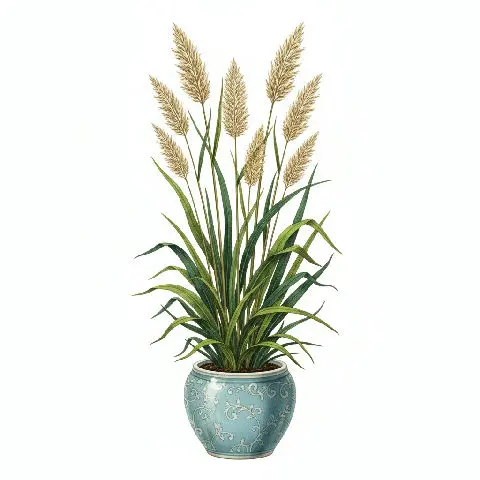
Calamagrostis acutiflora, widely recognized as feather reed grass, is an elegant, upright perennial grass belonging to the Poaceae family. Native to the temperate zones of Europe and Asia, it naturally thrives in diverse environments such as damp meadows, open woodlands, and along riparian edges, showcasing remarkable adaptability. Morphologically, this striking species is characterized by its tall, narrow growth habit, forming dense, erect clumps.
Its linear, green foliage provides a strong vertical accent, turning to attractive golden-tan shades in autumn. The inflorescences are particularly distinctive: narrow, feathery plumes emerge in early summer, often with a purplish-pink tint, maturing to a buff or wheat-like color that persists well into the winter months. The species epithet 'acutiflora' accurately describes its sharply pointed florets.
While primarily valued in contemporary horticulture for its aesthetic appeal, hardiness, and architectural form, its historical documentation in traditional medicine systems like Ayurveda or TCM is notably limited. Modern landscape design extensively utilizes cultivars such as 'Karl Foerster', developed in Germany, which is celebrated for its robust, non-invasive, upright growth, sterile seeds, and early, long-lasting floral display. This cultivar's ability to tolerate a wide spectrum of soil conditions, from heavy clays to sandy loams, coupled with its impressive drought tolerance once established, underscores its low-maintenance appeal and significant role in sustainable landscaping and ecological restoration, particularly for soil stabilization.
Trusted Scientific References
1. Authoritative external sources for Calamagrostis acutiflora
1.1 Wikipedia — Calamagrostis acutiflora
1.2 Kew POWO (Plants of the World Online)
1.3 PubMed — peer-reviewed research
1.4 NCBI Taxonomy Browser
1.5 GBIF — Global Biodiversity
1.6Calamagrostis Acutiflora should be interpreted through verified botanical identity, practical care, and responsible safety language. This recovery note adds the missing context needed for a complete profile: match light to the plant's habit, use well-drained soil, water according to season, and avoid unsupported medicinal or edible claims. For publishing, the plant can be presented as a source-backed garden plant with clear care guidance, common problem diagnosis, and conservative safety wording.
1.1.Calamagrostis Acutiflora — Standout Qualities
- ✓Botanical Name — Calamagrostis acutiflora.
- ✓Common Name — Feather Reed Grass.
- ✓Plant Family — Poaceae (Grass Family).
- ✓Growth Habit — Upright, clump-forming perennial grass.
- ✓Mature Height — Typically 3-6 feet (0.9-1.8 meters) tall with plumes.
- ✓Bloom Period — Early summer, with plumes persisting through winter.
- ✓Foliage Characteristics — Narrow, green leaves turning golden-tan in autumn.
- ✓Inflorescences — Feathery, airy plumes, often purplish-pink, maturing to buff.
- ✓Hardiness Zones — Reliably hardy in USDA Zones 4-9.
- ✓Primary Use — Ornamental landscaping, erosion control, winter interest.
1.2.Calamagrostis Acutiflora — At-a-Glance Summary
- ✓Elegant Ornamental Grass — Prized for its striking upright form and feathery plumes.
- ✓Hardy & Adaptable — Thrives in various conditions, tolerant of diverse soils and drought.
- ✓Low Maintenance — Requires minimal care, highly resistant to pests and diseases.
- ✓Ecological Benefits — Aids in soil stabilization and provides valuable wildlife habitat.
- ✓Limited Medicinal Use — No significant traditional or modern medicinal applications documented.
- ✓Popular Cultivar — 'Karl Foerster' is a renowned, sterile selection known for superior performance.
2.Calamagrostis Acutiflora — Taxonomic Classification
3.Calamagrostis Acutiflora — Reference Facts
4.Calamagrostis Acutiflora — Plant Morphology
5.Calamagrostis Acutiflora — Habitat & Distribution
6.Calamagrostis Acutiflora — Historical Applications
7.Calamagrostis Acutiflora — Active Compounds
- ✓Cellulose & Hemicellulose — Major structural polysaccharides forming the plant cell walls, providing rigidity and constituting the primary fibrous components of the plant biomass.
- ✓Lignin — A complex phenolic polymer embedded within plant cell walls, contributing significantly to the plant's structural strength, impermeability, and resistance to decay.
- ✓Flavonoids — A class of polyphenolic compounds, often found in grasses, which may possess antioxidant properties, although specific compounds and their activities in Calamagrostis acutiflora are not well-characterized.
- ✓Phenolic Acids — Simple phenolic compounds, common across the plant kingdom, that can act as antioxidants and play roles in plant defense mechanisms.
- ✓Waxes & Cutin — Lipids forming the protective cuticle on leaf and stem surfaces, crucial for minimizing water loss and offering a barrier against environmental stressors and pathogens.
- ✓Silicates — Accumulation of silicon dioxide in plant tissues, a characteristic feature of many grasses, enhancing structural integrity and providing defense against herbivores and fungal infections.
- ✓Chlorophylls & Carotenoids — Essential photosynthetic pigments responsible for light absorption and energy conversion, also serving as natural antioxidants within the plant.
- ✓Proteins & Amino Acids — Fundamental building blocks for all plant cellular structures and metabolic enzymes, vital for growth, development, and physiological functions.
- ✓Mineral Elements — Essential macro- and micronutrients (e.g., nitrogen, phosphorus, potassium, calcium, magnesium) absorbed from the soil, critical for various plant biochemical processes.
8.Calamagrostis Acutiflora — What Research Suggests
- ✓Aesthetic & Psychological Well-being — The graceful movement and elegant form of feather reed grass are known to create calming visual effects in gardens, contributing to stress reduction and enhanced mental tranquility.
- ✓Ecological Support & Biodiversity — Provides essential shelter and nesting materials for various small wildlife species, fostering local biodiversity in cultivated and natural landscapes.
- ✓Soil Stabilization & Erosion Control — Its robust, fibrous root system effectively binds soil, making it an excellent choice for preventing erosion on slopes, streambanks, and disturbed land.
- ✓Air Quality Improvement — As with many grasses, Calamagrostis acutiflora contributes to local air quality by absorbing atmospheric carbon dioxide and releasing oxygen during photosynthesis.
- ✓Low-Maintenance Gardening — Its inherent hardiness, adaptability to diverse conditions, and resistance to most pests and diseases significantly reduce the need for intensive care, promoting sustainable gardening practices.
- ✓Water Conservation — Once established, feather reed grass exhibits notable drought tolerance, requiring minimal supplemental watering and thereby contributing to water conservation efforts.
- ✓Winter Interest — The persistent, wheat-like seed heads provide architectural interest and visual appeal throughout the colder months, extending the garden's seasonal beauty.
- ✓Carbon Sequestration — Like all photosynthetic plants, it sequesters carbon from the atmosphere into its biomass and soil, playing a role in mitigating climate change.
- ✓Habitat Restoration — Utilized in ecological restoration projects to re-establish vegetation cover and stabilize soils in degraded or newly formed habitats.
8.1.Calamagrostis Acutiflora — Conditions Traditionally Used For
9.Calamagrostis Acutiflora — Precautions & Warnings
9.1.Calamagrostis Acutiflora — Side Effects & Warnings
- ✓Allergic Reactions — Pollen from Calamagrostis acutiflora, like other grasses, can trigger allergic rhinitis (hay fever) symptoms in susceptible individuals during its flowering season.
- ✓Skin Irritation — Direct contact with the somewhat sharp leaf margins or florets might cause minor skin irritation or discomfort for individuals with sensitive skin.
- ✓Aggressive Self-Seeding — While 'Karl Foerster' is sterile, other cultivars or the species itself can self-seed vigorously in ideal conditions, potentially becoming weedy or invasive in certain environments.
- ✓Overgrowth & Flopping — In overly fertile soil or with excessive moisture, established clumps can become too large or lose their upright habit, requiring frequent division or staking.
- ✓Competition with Native Species — If non-sterile forms are introduced outside their native range, they may compete with indigenous vegetation, potentially altering local ecosystems.
- ✓Fire Hazard — Like all dried grasses, the dormant foliage of feather reed grass can pose an increased fire risk in very dry climates, particularly in large, dense plantings.
9.2.Calamagrostis Acutiflora — Safety Overview
- ✓General Safety — Calamagrostis acutiflora is generally considered safe for ornamental use; no known toxicity to humans or pets through ingestion or contact has been reported.
- ✓Pollen Allergy Awareness — Individuals with known grass pollen allergies should be mindful during its blooming period and consider alternative plants or protective measures.
- ✓Handling Precautions — It is advisable to wear gardening gloves when handling the plant to prevent potential minor skin irritation from its somewhat sharp leaf margins.
- ✓Non-Invasive Cultivar Selection — To mitigate ecological risks, prioritize planting sterile cultivars like 'Karl Foerster' to prevent unwanted self-seeding and potential spread.
- ✓Pet and Livestock Safety — The plant is generally non-toxic to common household pets and livestock; however, excessive ingestion of any plant material can lead to mild digestive upset.
- ✓Environmental Responsibility — When planting, consider local ecosystems and choose appropriate cultivars or species to avoid introducing potentially invasive non-native plants into natural areas.
10.Calamagrostis Acutiflora — Application Forms
- ✓Ornamental Landscaping — Widely utilized as a striking architectural accent, for mass plantings, as a border plant, or in naturalized areas due to its elegant, upright form and feathery plumes.
- ✓Winter Garden Interest — The persistent, dried seed heads provide significant aesthetic appeal and structural interest, adding vertical elements to the garden throughout the autumn and winter months.
- ✓Erosion Control — Planted effectively along streambanks, slopes, or disturbed construction sites to stabilize soil and prevent erosion, owing to its dense, fibrous root system.
- ✓Privacy Screens & Hedges — Its tall, dense growth habit makes it suitable for creating natural privacy screens or informal hedges in garden and landscape designs.
- ✓Wildlife Habitat Enhancement — Provides valuable shelter, nesting cover, and potentially seed resources for various small wildlife species, enriching garden biodiversity.
- ✓Cut Flower Arrangements — The graceful plumes can be harvested and used fresh or dried in floral arrangements, adding unique texture, height, and movement.
- ✓Rain Garden Component — Tolerant of moist soil conditions, making it a suitable and resilient choice for planting in rain gardens or areas with intermittent standing water.
- ✓Container Planting — Can be grown in large containers to provide a vertical element and focal point on patios or balconies, especially sterile cultivars.
11.Calamagrostis Acutiflora — Growing Guide
- ✓Site Selection — Thrives optimally in full sun to partial shade, requiring at least 6 hours of direct sunlight daily for robust growth and abundant flowering.
- ✓Soil Requirements — Highly adaptable to a wide range of soil types, from heavy clay to sandy loams, preferring consistently moist but well-drained conditions.
- ✓Planting — Best planted in spring or early fall, ensuring adequate spacing of 2-3 feet (0.6-0.9 m) between plants to accommodate mature clump development.
- ✓Watering — Requires consistent moisture during its establishment phase; once mature, it demonstrates good drought tolerance but benefits from deep watering during extended dry periods.
- ✓Fertilization — Generally low-nutrient demanding; a light application of a balanced, slow-release granular fertilizer in early spring can promote vigorous foliage and plume production.
- ✓Pruning — Cut back all foliage to approximately 4-6 inches (10-15 cm) from the ground in late winter or early spring before new growth commences to maintain plant vigor and appearance.
- ✓Pest and Disease Management — Exhibits high resistance to most common garden pests and diseases, contributing to its reputation as a low-maintenance ornamental.
- ✓Propagation — Primarily propagated by division of mature clumps in early spring or fall, as popular cultivars like 'Karl Foerster' are sterile and do not produce viable seeds.
Reviewed by the Flora Medical Global Botanical Review Panel
Multi-disciplinary editorial group · Botany · Ethnobotany · Herbal-medicine literature
Who reviewed this: This page was checked by the Flora Medical Global Botanical Review Panel — an in-house editorial group of botany graduates, ethnobotany researchers, and horticulture practitioners who collectively maintain our 7,000+ plant encyclopedia. Meet the team.
Our 4-step verification process
1. Taxonomic verification
Scientific names and synonyms cross-checked against Kew POWO, World Flora Online, and The Plant List.
2. Phytochemical & medicinal cross-reference
Active compounds, traditional uses, and reported activities are cross-referenced with PubMed, USDA Dr. Duke's database, and peer-reviewed ethnobotanical literature.
3. Conservation & distribution check
Distribution, ecology, and conservation status confirmed against GBIF occurrence records and the IUCN Red List.
4. Editorial & safety review
Every entry passes an editorial pass for clarity, originality, and safety notices (toxicity, contraindications, dosage caveats) before publication.
Last reviewed:
Important medical disclaimer: This content is for educational and research purposes only. It is not medical advice and is not a substitute for consultation with a licensed healthcare provider. Do not use any herb to self-treat a medical condition without professional guidance.
Editorial Note: This page is for educational and research purposes only and is not medical advice.
Written by: Flora Medical Global Editorial Team
Reviewed by: Flora Medical Global Botanical Review Panel
Last Updated: June 15, 2026





Calamagrostis Acutiflora — Comments & Community Reviews
Rate this plant