


Medical Disclaimer: This content is for educational purposes only. It is not medical advice. Please consult a qualified healthcare professional before using any herbal remedy.
Safety Overview
1.Calathea Dottie — Essential Profile
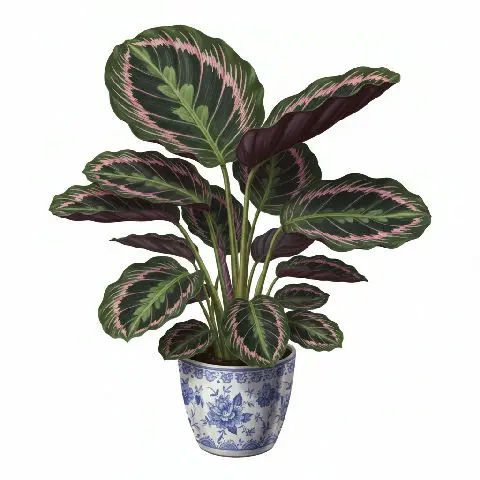
Calathea 'Dottie', scientifically known as Calathea roseopicta 'Dottie', is an exquisite cultivar within the Marantaceae family, celebrated for its dramatically dark foliage and vivid contrasting patterns. This hybrid was meticulously developed to enhance the striking visual appeal inherent in its parent species, Calathea roseopicta, which is native to the humid tropical rainforests of Brazil and Ecuador.
In its natural habitat, the progenitor species thrives in the shaded understory, employing a fascinating diurnal leaf movement called nyctinasty; leaves fold upwards at dusk, mimicking hands in prayer, and unfurl with the morning light to maximize light absorption. 'Dottie' exhibits this characteristic 'prayer plant' behavior with remarkable grace.
The morphological distinction of 'Dottie' lies in its intensely deep, almost black-green leaves, which serve as a dramatic canvas for vibrant, rosy-pink to magenta markings. These striking patterns meticulously trace the leaf veins and margins, creating a painted, almost iridescent effect that sets it apart from other cultivars. The undersides of the leaves often present a rich purple hue, adding another layer of visual complexity.
While the 'Dottie' cultivar itself is a product of modern horticulture and lacks traditional medicinal documentation, its wild relatives in the Calathea genus have historically been utilized by indigenous communities for purposes such as weaving and as biodegradable food wrappers, reflecting the practical value of the broader species. Contemporary research into the genus has revealed a presence of beneficial phytochemicals, including flavonoids and triterpenes, which suggest potential antioxidant and anti-inflammatory properties, though direct studies on 'Dottie' are limited.
Trusted Scientific References
1. Authoritative external sources for Calathea roseopicta Dottie
1.1 Wikipedia — Calathea roseopicta Dottie
1.2 Kew POWO (Plants of the World Online)
1.3 PubMed — peer-reviewed research
1.4 NCBI Taxonomy Browser
1.5 GBIF — Global Biodiversity
1.1.Calathea Dottie — Distinguishing Points
- ✓Striking Foliage — Deep, almost black-green leaves with vibrant rosy-pink to magenta patterns.
- ✓Nyctinastic Movement — Leaves fold up at night and unfurl during the day, a 'prayer plant' characteristic.
- ✓Non — Toxic — Safe for households with children and pets.
- ✓Air Purifier — Contributes to improved indoor air quality.
- ✓Tropical Origin — Native to the understory of Brazilian and Ecuadorian rainforests (parent species).
- ✓High Humidity Lover — Thrives in moist, warm environments.
- ✓Indirect Light Requirement — Prefers shaded conditions, susceptible to direct sun scorch.
- ✓Ornamental Value — Highly prized for aesthetic appeal in interior design.
- ✓Unique Cultivar — 'Dottie' is a specifically bred hybrid of Calathea roseopicta.
- ✓Marantaceae Family Member — Part of the 'prayer plant' family, known for decorative foliage.
1.2.Calathea Dottie — At-a-Glance Summary
- ✓Ornamental and Air-Purifying Houseplant — Valued for dramatic foliage and indoor air quality benefits.
- ✓Non-Toxic to Humans and Pets — A safe choice for family environments.
- ✓Unique Foliage Patterns & Nyctinasty — Dark leaves with pink markings, exhibiting 'prayer plant' movement.
- ✓Requires High Humidity & Indirect Light — Mimics its tropical rainforest understory habitat.
- ✓Limited Direct Medicinal Research — Cultivar lacks traditional medicinal uses, but genus shows phytochemical potential.
- ✓Potential for Mild Skin Irritation — Sap may affect sensitive individuals.
2.Calathea Dottie — Botanical Identity
3.Calathea Dottie — Fact Sheet
4.Calathea Dottie — Botanical Description
5.Calathea Dottie — Ecological Habitat
6.Calathea Dottie — Traditional Uses
7.Calathea Dottie — Key Phytochemicals
- ✓Flavonoids — Identified in various Calathea species, these polyphenolic compounds like quercetin and kaempferol are known for their strong antioxidant and anti-inflammatory actions.
- ✓Triterpenes — Present in the broader Calathea genus, these compounds, such as lupeol or betulinic acid, often exhibit anti-inflammatory, antimicrobial, and adaptogenic properties.
- ✓Phenolic Acids — Common in many plants, including potentially Calathea, these include caffeic acid and ferulic acid, contributing to antioxidant capacity.
- ✓Carotenoids — Responsible for some of the vibrant pigmentation in plant leaves, these compounds like lutein and beta-carotene are potent antioxidants.
- ✓Polysaccharides — Complex carbohydrates found in plant tissues, which can have immunomodulatory and prebiotic effects, though not specifically studied for 'Dottie'.
- ✓Saponins — Glycosides that can have various biological activities, including anti-inflammatory and cholesterol-lowering effects, potentially present in trace amounts.
- ✓Alkaloids — Nitrogen-containing organic compounds, often with significant pharmacological activity, though typically less prominent in Marantaceae compared to other plant families.
- ✓Volatile Organic Compounds (VOCs) — Released in trace amounts, contributing to the plant's natural fragrance (if any) and potentially interacting with indoor air quality.
- ✓Anthocyanins — Pigments that can contribute to the purple undersides and red hues, also known for their antioxidant properties.
8.Calathea Dottie — Pharmacological Findings
- ✓Air Purification — Calathea 'Dottie', like many houseplants, contributes to improved indoor air quality by absorbing common volatile organic compounds (VOCs) and releasing oxygen, fostering a healthier living environment.
- ✓Stress Reduction — The plant's vibrant colors and rhythmic leaf movements offer aesthetic pleasure and a connection to nature, which can help reduce psychological stress and enhance overall well-being.
- ✓Humidifying Effect — Through transpiration, Calathea 'Dottie' releases moisture into the air, subtly increasing ambient humidity, which can be beneficial for respiratory comfort in dry indoor settings.
- ✓Non-Toxic Nature — It is recognized as non-toxic to humans and pets, making it a safe ornamental choice for households with children and animals, alleviating concerns about accidental ingestion.
- ✓Anti-inflammatory Potential (Genus-Specific) — Research on other Calathea species indicates the presence of triterpenes and other compounds with potential anti-inflammatory properties, suggesting a broader family benefit.
- ✓Antioxidant Activity (Genus-Specific) — Flavonoids identified in the Calathea genus contribute to antioxidant defense, helping to neutralize free radicals and protect cellular health.
- ✓Aesthetic Therapy — Its striking foliage and unique patterns provide a focal point for visual meditation and appreciation of botanical beauty, which can have a calming and uplifting effect.
- ✓Biophilic Connection — Integrating Calathea 'Dottie' into indoor spaces strengthens the biophilic connection, promoting a sense of calm and natural harmony, indirectly supporting mental health.
8.1.Calathea Dottie — Reported Uses
9.Calathea Dottie — Safety & Side Effects
9.1.Calathea Dottie — Possible Adverse Reactions
- ✓Skin Irritation — The sap of Calathea roseopicta can occasionally cause mild skin irritation or dermatitis in highly sensitive individuals upon direct contact.
- ✓Allergic Reactions — Although rare, individuals with extreme plant sensitivities might experience mild allergic responses such as itching or redness.
- ✓Oral Discomfort (Accidental Ingestion) — While non-toxic, accidental ingestion by very young children or pets might lead to mild, temporary gastrointestinal upset due to roughage.
- ✓Leaf Browning — Improper care, particularly low humidity or use of fluoridated water, can lead to cosmetic issues like browning leaf tips and edges.
- ✓Root Rot — Overwatering can lead to root rot, which, while a plant issue, diminishes its vitality and potential air-purifying benefits.
9.2.Calathea Dottie — Risk Assessment
- ✓Non-Toxic — Calathea 'Dottie' is widely recognized as non-toxic to humans, cats, and dogs, making it a safe houseplant choice.
- ✓External Contact — Exercise caution for individuals with sensitive skin, as direct contact with plant sap may cause mild irritation.
- ✓Ingestion — While not harmful, ingestion is not recommended and may cause minor digestive upset if consumed in large quantities.
- ✓Handling — Wash hands after handling the plant, especially if sap contact occurs, to prevent potential skin irritation.
- ✓Indoor Use Only — This tropical plant is suitable for indoor environments and is not hardy in frost-prone climates.
- ✓No Known Drug Interactions — Due to its primary ornamental use and lack of internal medicinal application, no drug interactions are documented.
- ✓Pet Safe — It poses no known threat to household pets, making it a popular choice for pet owners.
10.Calathea Dottie — Preparations & Uses
- ✓Ornamental Display — Calathea 'Dottie' is primarily cultivated for its striking decorative foliage, enhancing interior aesthetics in homes and offices.
- ✓Indoor Air Quality Improvement — Position the plant in living spaces to benefit from its natural air-purifying capabilities, contributing to a healthier atmosphere.
- ✓Humidity Enhancement — Group several 'Dottie' plants or place them on a pebble tray to naturally increase ambient humidity, beneficial for both the plant and human respiratory comfort.
- ✓Biophilic Design Element — Integrate into interior design schemes to foster a connection with nature, promoting well-being and reducing stress through visual appeal.
- ✓Traditional Leaf Wraps (Related Species) — While 'Dottie' itself has no documented traditional use, larger leaves of its wild Calathea relatives were historically used by indigenous communities for wrapping food or crafting.
- ✓Topical Poultices (Hypothetical for Genus) — Based on the non-toxic nature and potential for sap irritation in sensitive individuals, related Calathea species might hypothetically have been used externally in traditional practices for minor skin ailments, though not documented for 'Dottie'.
- ✓Educational Specimen — Utilize as a live specimen for botanical education, demonstrating nyctinasty (leaf movement) and diverse plant adaptations.
- ✓Aesthetic Meditation — Use the plant as a focal point for mindfulness practices, appreciating its intricate patterns and natural rhythms.
11.Calathea Dottie — Garden Cultivation
- ✓Light — Provide bright, indirect light; direct sunlight can scorch leaves and fade their vibrant patterns.
- ✓Soil — Use a well-draining, peat-based potting mix, ideally amended with perlite or vermiculite for aeration.
- ✓Water — Maintain consistently moist soil, but avoid waterlogging; use distilled or filtered water to prevent mineral buildup.
- ✓Temperature & Humidity — Thrive in temperatures between 18-24°C (65-75°F) and high humidity (above 60%); mist regularly or use a pebble tray.
- ✓Fertilization — Feed with a diluted, balanced liquid houseplant fertilizer every 2-4 weeks during the active growing season (spring/summer).
- ✓Pruning — Remove any yellowing, browning, or damaged leaves at the base to encourage new growth and maintain plant vigor.
- ✓Cleaning — Gently wipe leaves with a damp, soft cloth periodically to remove dust, ensuring efficient photosynthesis.
- ✓Repotting — Repot every 1-2 years or when root-bound, using a slightly larger pot to accommodate growth.
Reviewed by the Flora Medical Global Botanical Review Panel
Multi-disciplinary editorial group · Botany · Ethnobotany · Herbal-medicine literature
Who reviewed this: This page was checked by the Flora Medical Global Botanical Review Panel — an in-house editorial group of botany graduates, ethnobotany researchers, and horticulture practitioners who collectively maintain our 7,000+ plant encyclopedia. Meet the team.
Our 4-step verification process
1. Taxonomic verification
Scientific names and synonyms cross-checked against Kew POWO, World Flora Online, and The Plant List.
2. Phytochemical & medicinal cross-reference
Active compounds, traditional uses, and reported activities are cross-referenced with PubMed, USDA Dr. Duke's database, and peer-reviewed ethnobotanical literature.
3. Conservation & distribution check
Distribution, ecology, and conservation status confirmed against GBIF occurrence records and the IUCN Red List.
4. Editorial & safety review
Every entry passes an editorial pass for clarity, originality, and safety notices (toxicity, contraindications, dosage caveats) before publication.
Last reviewed:
Important medical disclaimer: This content is for educational and research purposes only. It is not medical advice and is not a substitute for consultation with a licensed healthcare provider. Do not use any herb to self-treat a medical condition without professional guidance.
Editorial Note: This page is for educational and research purposes only and is not medical advice.
Written by: Flora Medical Global Editorial Team
Reviewed by: Flora Medical Global Botanical Review Panel
Last Updated: June 15, 2026





Calathea Dottie — Comments & Community Reviews
Rate this plant