
Medical Disclaimer: This content is for educational purposes only. It is not medical advice. Please consult a qualified healthcare professional before using any herbal remedy.
Safety Overview
1.Calathea Flamestar — Overview
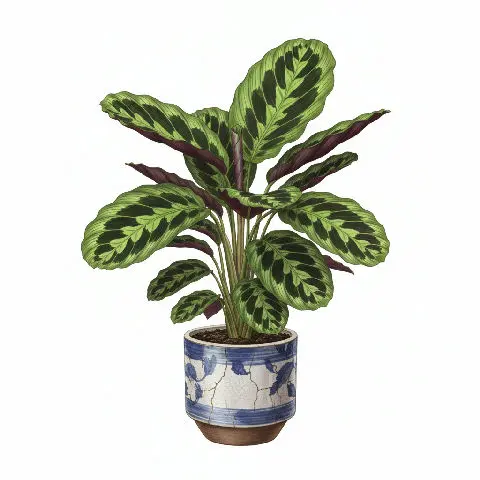
Goeppertia 'Flamestar', a captivating cultivar within the Marantaceae family, is celebrated for its visually striking foliage and characteristic 'prayer plant' movements. Botanically classified under the genus Goeppertia (formerly Calathea), this specific hybrid is a product of selective breeding, designed to enhance its ornamental appeal. Its leaves exhibit a dramatic pattern: deep green margins frame a central, feathery blaze of iridescent red-pink to burgundy, reminiscent of a flickering flame, which gives the plant its evocative 'Flamestar' moniker.
The undersides of these leaves present a stark, uniform contrast with their rich burgundy or purple hue. Like its close relatives, Goeppertia 'Flamestar' displays nyctinastic movements, where its leaves fold upwards at dusk and unfurl with the dawn. This fascinating biological rhythm is orchestrated by specialized motor organs called pulvini, located at the base of each petiole, responding to changes in light intensity.
This movement is not merely aesthetic but serves a physiological purpose, believed to optimize light absorption during the day and minimize water loss during cooler, darker periods. While Goeppertia 'Flamestar' itself lacks a direct historical record in traditional medicinal systems due to its modern horticultural origin, its wild progenitor species, typically found in the humid understory environments of Central and South American rainforests, have a long-standing ethnobotanical history, primarily for crafting, ceremonial uses, and some localized palliative applications. The cultivar inherits the robust characteristics of its parent species, likely involving Goeppertia makoyana or similar resilient, visually appealing species, making it a popular and relatively hardy indoor ornamental.
Trusted Scientific References
1. Authoritative external sources for Goeppertia Flamestar
1.1 Wikipedia — Goeppertia Flamestar
1.2 Kew POWO (Plants of the World Online)
1.3 PubMed — peer-reviewed research
1.4 NCBI Taxonomy Browser
1.5 GBIF — Global Biodiversity
1.1.Calathea Flamestar — Standout Qualities
- ✓Striking Foliage — Displays intricate, flame-like patterns of red-pink to burgundy on deep green leaves.
- ✓Nyctinastic Movement — Leaves fold upwards at night and unfurl during the day, a characteristic 'prayer plant' behavior.
- ✓Air Purifying — Actively contributes to improving indoor air quality by filtering toxins.
- ✓Humidity Loving — Thrives in high humidity environments, reflecting its tropical origins.
- ✓Non — Toxic — Safe for households with children and pets, posing minimal risk if ingested.
- ✓Indirect Light Requirement — Prefers bright, indirect light, protecting its delicate leaves from scorching.
- ✓Rhizomatous Root System — Possesses shallow, spreading rhizomes essential for growth and propagation.
- ✓Moderate Growth Rate — Reaches mature size within 1-2 years under optimal care conditions.
- ✓Ornamental Value — Highly prized for its aesthetic appeal, enhancing any indoor space.
1.2.Calathea Flamestar — In Brief
- ✓Vibrant Goeppertia 'Flamestar' is a stunning ornamental houseplant from the Marantaceae family.
- ✓Features dramatic, flame-like leaf patterns and unique 'prayer plant' movements.
- ✓Known for its air-purifying qualities and ability to increase indoor humidity.
- ✓Generally non-toxic to humans and pets, making it a safe home addition.
- ✓Requires bright, indirect light, high humidity, and consistent moisture to thrive.
- ✓Primarily valued for its aesthetic appeal and contribution to well-being.
2.Calathea Flamestar — Taxonomic Classification
3.Calathea Flamestar — Reference Facts
4.Calathea Flamestar — Morphological Account
5.Calathea Flamestar — Habitat & Distribution
6.Calathea Flamestar — Historical Applications
7.Calathea Flamestar — Active Compounds
- ✓Chlorophylls — Essential green pigments primarily responsible for photosynthesis, capturing light energy to convert carbon dioxide and water into sugars, vital for the plant's growth and vibrancy.
- ✓Carotenoids — Accessory pigments such as beta-carotene and lutein, contributing to the yellow, orange, and red hues observed in 'Flamestar' leaves, and providing photoprotection against excessive light.
- ✓Anthocyanins — Water-soluble flavonoid pigments that impart the rich purple and burgundy coloration, particularly prominent on the undersides of the leaves, also acting as antioxidants and UV protectants.
- ✓Flavonoids — A diverse group of polyphenolic compounds distributed throughout the plant, known for their antioxidant, anti-inflammatory, and potential defense against pathogens and herbivores.
- ✓Polysaccharides — Complex carbohydrates forming structural components of plant cell walls, contributing to the plant's structural integrity, resilience, and water retention capabilities.
- ✓Organic Acids — Various acids involved in metabolic pathways, nutrient cycling, and maintaining cellular pH, crucial for overall plant health and physiological functions.
- ✓Saponins — Glycosides found in various plant parts, often contributing to defense mechanisms against pests and microbes, though not typically associated with medicinal use in this cultivar.
- ✓Volatile Organic Compounds (VOCs) — While plants can emit VOCs, they also absorb certain atmospheric VOCs, contributing to the air-purifying benefits attributed to houseplants like Goeppertia 'Flamestar'.
8.Calathea Flamestar — What Research Suggests
- ✓Air Purification — Goeppertia 'Flamestar' actively helps improve indoor air quality by absorbing common airborne toxins, contributing to a healthier living environment through its foliage and associated root-zone microbes.
- ✓Humidity Enhancement — Through the natural process of transpiration, this plant releases water vapor into the air, effectively increasing ambient humidity levels, which can be beneficial for respiratory comfort and other humidity-loving houseplants.
- ✓Psychological Well-being — The vibrant aesthetic appeal of its dramatic foliage and the calming observation of its nyctinastic movements can reduce stress, improve mood, and foster a deeper connection to nature, promoting mental tranquility.
- ✓Non-Toxic Status — As a non-toxic plant to both humans and common household pets like dogs and cats, Goeppertia 'Flamestar' offers peace of mind, making it a safe choice for family homes without significant risk of severe poisoning.
- ✓Biophilic Design Integration — Incorporating this plant into living or working spaces aligns with biophilic design principles, enhancing environments to promote human health, productivity, and overall well-being by connecting people with nature.
- ✓Aesthetic Therapy — The striking, flame-like patterns and dynamic leaf movements provide a visually stimulating and engaging presence, acting as a natural focal point that can be soothing and aesthetically therapeutic.
- ✓Environmental Conditioning — Its preference for humid, indirect light conditions can guide the creation of optimal microclimates within indoor spaces, benefiting a wider array of tropical plants and contributing to a balanced indoor ecosystem.
- ✓Educational Value — Observing the 'prayer plant' phenomenon offers an accessible way to learn about plant physiology, phototropism, and circadian rhythms, enriching understanding of botanical science for all ages.
8.1.Calathea Flamestar — Health Applications
9.Calathea Flamestar — Precautions & Warnings
9.1.Calathea Flamestar — Warnings
- ✓Mild Gastrointestinal Upset — Ingestion of large quantities by humans or pets may lead to mild stomach discomfort, vomiting, or diarrhea.
- ✓Skin Irritation — Direct contact with plant sap, though rare, could potentially cause minor skin irritation in sensitive individuals.
- ✓Allergic Reactions — While uncommon, individuals with extreme plant sensitivities might experience mild allergic responses upon contact.
- ✓Overwatering Symptoms — Excessive watering can lead to root rot, characterized by mushy roots and wilting leaves, which can ultimately cause plant decline.
- ✓Underwatering Stress — Insufficient watering results in dry, crispy leaves and stunted growth, indicating plant stress.
- ✓Leaf Scorch — Exposure to direct sunlight will cause the delicate leaves to burn, leading to unsightly brown patches and damage.
9.2.Calathea Flamestar — Safety Overview
- ✓Non-Toxic Classification — Goeppertia 'Flamestar' is generally considered non-toxic to humans, dogs, and cats, making it a safe choice for most households.
- ✓Caution with Ingestion — Despite its non-toxic status, it is advisable to prevent ingestion of significant plant material to avoid potential mild gastrointestinal upset.
- ✓Pet and Child Placement — For households with curious pets or young children, placing the plant out of easy reach is a sensible precaution.
- ✓Monitor for Sensitivities — Individuals with sensitive skin or plant allergies should observe for any mild irritation upon prolonged contact, though it is rare.
- ✓Proper Handling — Always wash hands after handling any plant material to minimize exposure to potential irritants or allergens.
- ✓No Known Severe Reactions — There are no documented reports of severe toxicity or adverse reactions associated with this plant.
10.Calathea Flamestar — Preparation & Dosage
- ✓Aesthetic Display — Position Goeppertia 'Flamestar' as a captivating focal point in living rooms, offices, or bedrooms to enhance interior aesthetics with its vibrant, patterned foliage.
- ✓Indoor Air Improvement — Place in areas with good air circulation to leverage its natural air-purifying capabilities, contributing to a healthier indoor atmosphere.
- ✓Humidity Regulation — Utilize in dry indoor environments to naturally elevate ambient humidity levels through transpiration, benefiting both human comfort and other tropical plants.
- ✓Biophilic Design Element — Integrate into spaces designed to connect occupants with nature, fostering a sense of calm and well-being through its living presence and dynamic movements.
- ✓Group Planting — Combine with other humidity-loving, indirect-light plants like Pothos or Peace Lily to create a lush, tropical microclimate and enhance visual depth.
- ✓Mindfulness Observation — Engage with its unique nyctinastic leaf movements, observing the daily folding and unfurling as a practice in mindfulness and connection to natural rhythms.
- ✓Propagation for Expansion — Divide the rhizomes during repotting in spring to create new plants for expanding your collection or sharing with others.
- ✓Terrarium Inclusion — Suitable for large, enclosed or open terrariums that can provide the consistent high humidity and stable temperatures it requires.
11.Calathea Flamestar — Growing Guide
- ✓Indirect Light — Position in a location receiving bright, indirect light; direct sunlight can scorch its delicate, patterned leaves.
- ✓High Humidity — Maintain ambient humidity levels above 60% by misting regularly, using a pebble tray, or placing it near a humidifier.
- ✓Well-Draining Soil — Plant in a slightly acidic to neutral (pH 6.0-7.0) potting mix rich in organic matter that ensures good drainage while retaining moisture.
- ✓Consistent Watering — Water when the top inch of soil feels dry to the touch, using room-temperature water to avoid shocking the roots.
- ✓Balanced Fertilization — Apply a balanced, water-soluble fertilizer every 4-6 weeks during the active growing seasons of spring and summer.
- ✓Regular Pruning — Remove any yellowing, damaged, or dead leaves promptly to encourage new growth and maintain the plant's aesthetic appeal.
- ✓Pest Monitoring — Regularly inspect the foliage for common houseplant pests like spider mites or mealybugs, and address any infestations quickly.
- ✓Container with Drainage — Always use pots with adequate drainage holes to prevent waterlogging and reduce the risk of root rot.
Reviewed by the Flora Medical Global Botanical Review Panel
Multi-disciplinary editorial group · Botany · Ethnobotany · Herbal-medicine literature
Who reviewed this: This page was checked by the Flora Medical Global Botanical Review Panel — an in-house editorial group of botany graduates, ethnobotany researchers, and horticulture practitioners who collectively maintain our 7,000+ plant encyclopedia. Meet the team.
Our 4-step verification process
1. Taxonomic verification
Scientific names and synonyms cross-checked against Kew POWO, World Flora Online, and The Plant List.
2. Phytochemical & medicinal cross-reference
Active compounds, traditional uses, and reported activities are cross-referenced with PubMed, USDA Dr. Duke's database, and peer-reviewed ethnobotanical literature.
3. Conservation & distribution check
Distribution, ecology, and conservation status confirmed against GBIF occurrence records and the IUCN Red List.
4. Editorial & safety review
Every entry passes an editorial pass for clarity, originality, and safety notices (toxicity, contraindications, dosage caveats) before publication.
Last reviewed:
Important medical disclaimer: This content is for educational and research purposes only. It is not medical advice and is not a substitute for consultation with a licensed healthcare provider. Do not use any herb to self-treat a medical condition without professional guidance.
Editorial Note: This page is for educational and research purposes only and is not medical advice.
Written by: Flora Medical Global Editorial Team
Reviewed by: Flora Medical Global Botanical Review Panel
Last Updated: June 15, 2026





Calathea Flamestar — Comments & Community Reviews
Rate this plant