


Medical Disclaimer: This content is for educational purposes only. It is not medical advice. Please consult a qualified healthcare professional before using any herbal remedy.
Safety Overview
1.Calathea Orbifolia — Botanical Snapshot
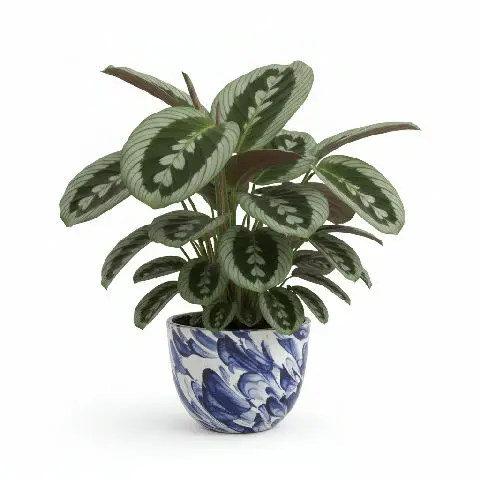
Goeppertia orbifolia, often still recognized by its former botanical classification Calathea orbifolia, is an exquisite herbaceous perennial evergreen native to the humid tropical rainforests of Eastern Brazil. This striking plant is a proud member of the Marantaceae family, famously dubbed the 'prayer plant' family, a moniker derived from the captivating nyctinastic movement of its foliage. Each evening, the large, orb-shaped leaves gracefully fold upwards, reminiscent of hands in prayer, only to unfurl once more with the first light of dawn. The specific epithet 'orbifolia' is a direct nod to its most defining characteristic: its broad, nearly perfectly round leaves.
These impressive leaves can span up to 30 cm (12 inches) in diameter, boasting a vibrant, glossy dark green surface that is intricately adorned with distinctive, prominent silver-green stripes radiating elegantly from the central vein. The undersides of the leaves present a contrasting pale green to silvery hue. Typically, Goeppertia orbifolia forms compact, dense, and erect clumps, reaching heights of 60 to 90 cm (2 to 3 feet) and spreading 30 to 60 cm (1 to 2 feet) wide. While it can produce small, inconspicuous white flowers under ideal conditions, flowering is a rare sight for indoor specimens.
Its extraordinary foliage pattern makes it a highly coveted ornamental houseplant, frequently chosen to enhance modern interior designs with its lush, architectural presence. Historically, specific traditional medicinal applications for Goeppertia orbifolia itself are not extensively documented, primarily due to its South American origin, separate from the development of classical Asian or Middle Eastern traditional medicine systems. However, the broader Marantaceae family is known for various utilitarian and sometimes medicinal uses, such as Maranta arundinacea (arrowroot) for its starch content and digestive benefits.
Trusted Scientific References
1. Authoritative external sources for Goeppertia orbifolia
1.1 Wikipedia — Goeppertia orbifolia
1.2 Kew POWO (Plants of the World Online)
1.3 PubMed — peer-reviewed research
1.4 NCBI Taxonomy Browser
1.5 GBIF — Global Biodiversity
1.1.Calathea Orbifolia — Distinguishing Points
- ✓Distinctive Orb — shaped Leaves — Large, nearly perfectly round leaves up to 30 cm (12 inches) wide.
- ✓Striking Silver — Green Stripes — Prominent, radiant silver-green patterns adorn its dark green foliage.
- ✓Nyctinastic Movement — Leaves fold upwards at night and unfurl during the day, a characteristic 'prayer plant' behavior.
- ✓Tropical Rainforest Native — Thrives in high humidity and warm, consistent temperatures, mimicking its natural habitat.
- ✓Non — toxic to Pets — Safe for households with cats and dogs, a significant advantage for pet owners.
- ✓Air Purifying Qualities — Contributes to cleaner indoor air and increased humidity through transpiration.
- ✓Aesthetic Appeal — Highly sought after as an ornamental houseplant for its dramatic and elegant appearance.
- ✓Low Maintenance (with specific care) — Relatively easy to care for once its specific humidity and watering needs are met.
- ✓Compact Growth Habit — Forms dense, erect clumps, ideal for tabletops or floor planters.
- ✓Botanical Reclassification — Formerly known as Calathea orbifolia, now correctly classified as Goeppertia orbifolia.
1.2.Calathea Orbifolia — Concise Overview
- ✓Goeppertia orbifolia is a striking ornamental plant from Eastern Brazil, known for large, round, silver-striped leaves.
- ✓Exhibits nyctinastic 'prayer plant' movement, with leaves folding at night.
- ✓Requires high humidity, bright indirect light, and consistent moisture with purified water.
- ✓Primarily valued for aesthetic appeal and contributions to indoor air quality and humidity.
- ✓Non-toxic to pets, making it a safe houseplant choice.
- ✓No documented traditional medicinal uses for this specific species, but belongs to a family with some historical applications.
2.Calathea Orbifolia — Nomenclature & Classification
3.Calathea Orbifolia — Fact Sheet
4.Calathea Orbifolia — Botanical Features
5.Calathea Orbifolia — Origin & Spread
6.Calathea Orbifolia — Folk Medicine Applications
7.Calathea Orbifolia — Phytochemistry
- ✓Polysaccharides — While not extensively studied in Goeppertia orbifolia specifically, other Marantaceae members like Maranta arundinacea are rich in starch, a complex polysaccharide, known for its demulcent and nutritional properties.
- ✓Flavonoids — These are common plant secondary metabolites with known antioxidant and anti-inflammatory properties, likely present in Goeppertia orbifolia leaves, contributing to cellular protection.
- ✓Terpenoids — A diverse group of organic compounds often responsible for plant aromas and defense mechanisms, potentially found in trace amounts within the foliage of Calathea orbifolia.
- ✓Phenolic Acids — These compounds, including derivatives like caffeic acid, are widely distributed in plants and possess significant antioxidant capacities, protecting plant cells from oxidative stress.
- ✓Saponins — Natural glycosides that can be found in various plant species, known for their foaming properties and potential for diverse biological activities, though not specifically quantified in this species.
- ✓Carotenoids — Pigments responsible for various yellow, orange, and red hues in plants, present in the leaves of Goeppertia orbifolia, acting as antioxidants and light-harvesting accessory pigments.
- ✓Chlorophylls — The primary photosynthetic pigments, abundant in the green leaves of Calathea orbifolia, essential for energy production and contributing to the plant's vibrant coloration.
- ✓Alkaloids — Nitrogen-containing organic compounds, often with potent pharmacological activities, though their presence and specific types in Goeppertia orbifolia are not well-documented.
8.Calathea Orbifolia — Evidence-Based Benefits
- ✓Air Purification — As a large-leaved houseplant, Goeppertia orbifolia contributes to indoor air quality by absorbing common volatile organic compounds and releasing oxygen through photosynthesis, though specific studies on its efficiency are limited.
- ✓Humidity Enhancement — Its significant leaf surface area and natural transpiration process help to increase ambient humidity levels, which can be beneficial in dry indoor environments and for respiratory comfort.
- ✓Stress Reduction — The aesthetic beauty and vibrant green foliage of the Calathea orbifolia are known to evoke feelings of calm and reduce stress, aligning with biophilia principles that connect humans to nature.
- ✓Mood Enhancement — Integrating this ornamental plant into living spaces can positively impact mood and well-being, fostering a sense of tranquility and connection to the natural world.
- ✓Non-toxic for Pets — Goeppertia orbifolia is recognized as non-toxic to both cats and dogs, making it a safe choice for households with animal companions, reducing a common household concern.
- ✓Visual Acuity Support — The presence of green plants like the Goeppertia orbifolia can provide a natural focal point, potentially aiding in eye relaxation and reducing strain during prolonged screen time.
- ✓Biophilic Design Integration — Its striking patterns and movement make it an excellent element in biophilic design, which aims to improve human health and well-being by incorporating natural elements into built environments.
- ✓Improved Focus and Concentration — Studies suggest that the presence of indoor plants can enhance cognitive functions, including concentration and productivity, by creating a more stimulating and calming environment.
8.1.Calathea Orbifolia — Therapeutic Indications
9.Calathea Orbifolia — Safety & Side Effects
9.1.Calathea Orbifolia — Side Effects & Warnings
- ✓Brown Leaf Tips/Edges — Commonly caused by low humidity, inconsistent watering, or fluoride/chlorine present in tap water, leading to unsightly browning.
- ✓Leaf Curling — An indication of dehydration or insufficient humidity, causing the leaves to curl inward as a protective mechanism.
- ✓Root Rot — Results from overwatering or poorly draining soil, leading to the decay of the root system and eventual plant decline.
- ✓Leaf Spot — Often develops when foliage remains wet for extended periods after watering, encouraging fungal or bacterial growth.
- ✓Scorched Leaves — Direct exposure to intense sunlight can burn and discolor the delicate leaves, causing irreversible damage.
- ✓Pest Infestations — Susceptible to common houseplant pests such as spider mites, mealybugs, aphids, and scale insects, which can weaken the plant.
- ✓Fading Leaf Color — Insufficient light levels can cause the vibrant patterns on the leaves to dull and lose their characteristic luster.
9.2.Calathea Orbifolia — Safety Overview
- ✓Non-toxic to Pets — Goeppertia orbifolia is officially listed as non-toxic for both cats and dogs, making it a safe addition to pet-friendly homes.
- ✓No Known Human Toxicity — There are no documented reports of toxicity to humans from handling or accidental ingestion of this plant.
- ✓Topical Contact — Generally safe to handle, with no known skin irritants or allergens associated with its foliage.
- ✓Ingestion Safety — While non-toxic, it is not intended for human consumption and should not be ingested.
- ✓Allergenic Potential — Low risk of allergic reactions for most individuals, but as with any plant, sensitive persons might experience mild irritation.
- ✓Environmental Impact — Poses no invasive risk when grown as an indoor ornamental plant.
- ✓Child Safety — Keep out of reach of small children to prevent accidental ingestion or damage to the plant, despite its non-toxic nature.
10.Calathea Orbifolia — Usage Guide
- ✓Ornamental Houseplant — Primarily cultivated for its striking foliage, Goeppertia orbifolia is used to enhance indoor aesthetics in homes and offices.
- ✓Biophilic Design Element — Integrate into interior design schemes to bring a sense of nature and tranquility, improving overall well-being in living or working spaces.
- ✓Humidity Enhancement — Place in areas requiring increased ambient humidity, such as bathrooms or near other humidity-loving plants, to create a beneficial microclimate.
- ✓Tabletop or Floor Planter — Its moderate size makes it versatile for display on tables, desks, or as an accent in a floor-standing pot.
- ✓Gifting — An excellent choice as a decorative gift for plant enthusiasts due to its beauty and relatively manageable care requirements.
- ✓Air Quality Improvement — Position strategically in rooms to contribute to the natural purification of indoor air, though its direct impact is modest.
- ✓Propagation for New Plants — Divide mature plants during repotting in spring to create new specimens for personal collection or sharing.
- ✓Educational Display — Can be used in botanical displays or educational settings to illustrate plant nyctinasty and tropical plant diversity.
11.Calathea Orbifolia — Garden Cultivation
- ✓Light — Provide bright, indirect light or partial shade; direct sunlight can scorch the leaves and fade their vibrant patterns.
- ✓Watering — Keep the potting mix consistently moist but never waterlogged; use distilled water, rainwater, or filtered tap water to prevent fluoride-induced brown leaf tips.
- ✓Humidity — Requires high humidity, at least 60%; consider using a humidifier, a pebble tray with water, or grouping plants together.
- ✓Temperature — Maintain consistent temperatures between 18-24°C (65-75°F); avoid cold drafts and sudden fluctuations.
- ✓Soil — Use a moist, well-drained, and slightly acidic potting mix, rich in organic matter to mimic its natural rainforest environment.
- ✓Fertilization — Fertilize monthly during the growing season (spring and summer) with a balanced liquid fertilizer diluted to half strength.
- ✓Propagation — The most common and effective method is division during spring, carefully separating rhizomes with healthy root systems.
- ✓Leaf Care — Regularly wipe the large leaves gently with a damp cloth to remove dust, ensuring optimal photosynthesis and maintaining their glossy appearance.
Reviewed by the Flora Medical Global Botanical Review Panel
Multi-disciplinary editorial group · Botany · Ethnobotany · Herbal-medicine literature
Who reviewed this: This page was checked by the Flora Medical Global Botanical Review Panel — an in-house editorial group of botany graduates, ethnobotany researchers, and horticulture practitioners who collectively maintain our 7,000+ plant encyclopedia. Meet the team.
Our 4-step verification process
1. Taxonomic verification
Scientific names and synonyms cross-checked against Kew POWO, World Flora Online, and The Plant List.
2. Phytochemical & medicinal cross-reference
Active compounds, traditional uses, and reported activities are cross-referenced with PubMed, USDA Dr. Duke's database, and peer-reviewed ethnobotanical literature.
3. Conservation & distribution check
Distribution, ecology, and conservation status confirmed against GBIF occurrence records and the IUCN Red List.
4. Editorial & safety review
Every entry passes an editorial pass for clarity, originality, and safety notices (toxicity, contraindications, dosage caveats) before publication.
Last reviewed:
Important medical disclaimer: This content is for educational and research purposes only. It is not medical advice and is not a substitute for consultation with a licensed healthcare provider. Do not use any herb to self-treat a medical condition without professional guidance.
Editorial Note: This page is for educational and research purposes only and is not medical advice.
Written by: Flora Medical Global Editorial Team
Reviewed by: Flora Medical Global Botanical Review Panel
Last Updated: June 15, 2026





Calathea Orbifolia — Comments & Community Reviews
Rate this plant