


Medical Disclaimer: This content is for educational purposes only. It is not medical advice. Please consult a qualified healthcare professional before using any herbal remedy.
Safety Overview
1.Calathea Rufibarba — Botanical Snapshot
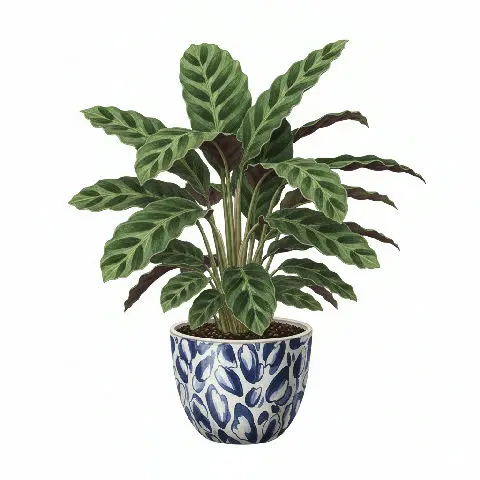
Calathea rufibarba, widely known as the 'Fuzzy Feather' or 'Velvet Calathea,' is an exquisite tropical perennial within the Marantaceae family, celebrated for its unique foliage and characteristic nyctinastic movements. Indigenous to the lush, humid understories of the Brazilian rainforests, particularly in regions like Espírito Santo and Bahia, this species flourishes beneath the dense canopy, where it receives dappled, indirect light. Its common name, 'rufibarba,' is derived from Latin, combining 'rufus' (reddish) and 'barba' (beard), a fitting descriptor for the fine, soft, reddish-brown hairs that densely cover the undersides of its elongated, spear-shaped leaves and petioles.
These velvety undersides strikingly contrast with the vibrant, often slightly ruffled or corrugated, dark green upper surfaces. Botanically, Calathea rufibarba is a rhizomatous plant, meaning it grows from underground stems, enabling it to form dense clumps and regrow effectively. Its upright growth habit can reach heights of 60-90 cm, creating a captivating bushy appearance.
A hallmark of the Marantaceae family, Calathea rufibarba exhibits 'prayer plant' movements, where its leaves fold upwards at dusk and unfurl with the dawn, a photoperiodic response thought to conserve moisture and protect its delicate foliage from nocturnal elements in its native habitat. While primarily cultivated for its striking foliage, the plant does produce small, inconspicuous yellow-orange flowers on short spikes, typically nestled at the base of the plant, though these are rarely observed in indoor cultivation. Though often referred to as Calathea, modern molecular phylogenetic studies have reclassified this species, along with many others, into the genus Goeppertia, reflecting a deeper understanding of its evolutionary relationships within the arrowroot family.
Trusted Scientific References
1. Authoritative external sources for Calathea rufibarba
1.1 Wikipedia — Calathea rufibarba
1.2 Kew POWO (Plants of the World Online)
1.3 PubMed — peer-reviewed research
1.4 NCBI Taxonomy Browser
1.5 GBIF — Global Biodiversity
1.1.Calathea Rufibarba — Notable Characteristics
- ✓Unique Foliage — Long, wavy, dark green leaves with a distinctive velvety, reddish-brown underside.
- ✓Nyctinastic Movement — Leaves fold upwards at night and unfurl during the day, a captivating 'prayer plant' behavior.
- ✓Pet — Friendly — Non-toxic to cats and dogs, making it a safe indoor plant choice.
- ✓Air Purifier — Contributes to improving indoor air quality by filtering common pollutants.
- ✓Humidity Lover — Thrives in high humidity, making it suitable for bathrooms or grouped with other plants.
- ✓Tropical Aesthetic — Adds a lush, exotic, and vibrant touch to any indoor space.
- ✓Rhizomatous Perennial — Grows from underground stems, allowing for robust growth and easy propagation by division.
- ✓Low — Maintenance (with proper conditions) — Relatively easy to care for once its specific light and humidity needs are met.
- ✓Award — Winning — Recipient of the Royal Horticultural Society's Award of Garden Merit (AGM).
1.2.Calathea Rufibarba — Concise Overview
- ✓'Fuzzy Feather' Calathea, native to Brazilian rainforests.
- ✓Distinctive velvety, reddish-brown leaf undersides and green upper surfaces.
- ✓Exhibits nyctinastic 'prayer plant' movements at night.
- ✓Primarily an ornamental houseplant, non-toxic to pets and humans.
- ✓Excellent for air purification and increasing indoor humidity.
- ✓Requires bright, indirect light, consistent moisture, and high humidity.
2.Calathea Rufibarba — Botanical Identity
3.Calathea Rufibarba — Key Data
4.Calathea Rufibarba — Physical Description
5.Calathea Rufibarba — Native Range & Habitat
6.Calathea Rufibarba — Traditional Uses
7.Calathea Rufibarba — Phytochemistry
- ✓Flavonoids — General polyphenolic compounds present in plant tissues, potentially contributing to leaf pigmentation and offering antioxidant properties as part of the plant's natural defense mechanisms.
- ✓Anthocyanins — Pigments responsible for the reddish-purple coloration on the undersides of the leaves; these compounds are known for their antioxidant activity in other plant species.
- ✓Chlorophylls — The primary green pigments essential for photosynthesis, found abundantly in the leaf blades, facilitating energy conversion from light.
- ✓Carotenoids — Accessory pigments that assist in photosynthesis and offer photoprotection, present alongside chlorophylls in the leaves.
- ✓Polysaccharides — Complex carbohydrates found in the rhizomes and cell walls, serving as energy storage and structural components for the plant.
- ✓Saponins — Glycosidic compounds that may be present in trace amounts, contributing to plant defense against herbivores and pathogens, though not extensively studied in Calathea rufibarba.
- ✓Plant Hormones — Endogenous regulators like auxins and gibberellins, crucial for growth, development, and the characteristic nyctinastic movements of the leaves.
- ✓Volatile Organic Compounds (VOCs) — While not extensively studied for Calathea rufibarba, many plants release trace amounts of VOCs, some of which contribute to air purification or plant communication.
8.Calathea Rufibarba — Evidence-Based Benefits
- ✓Air Purification — Calathea rufibarba, like many houseplants, contributes to filtering indoor air pollutants such as formaldehyde and benzene, enhancing overall air quality in enclosed spaces.
- ✓Humidity Enhancement — Through the natural process of transpiration, this plant releases water vapor into the air, helping to increase ambient humidity levels, which can be beneficial for respiratory health and dry skin.
- ✓Stress Reduction — The presence of lush, vibrant houseplants like Calathea rufibarba has been shown to reduce psychological stress and improve mood, fostering a sense of calm and well-being through biophilic design.
- ✓Cognitive Improvement — Studies suggest that indoor plants can enhance concentration and productivity, making Calathea rufibarba a valuable addition to workspaces or study areas.
- ✓Aesthetic Therapy — The plant's striking appearance, with its unique leaf patterns and movements, provides a visually stimulating and calming focal point, contributing to an aesthetically pleasing and therapeutic environment.
- ✓Non-Toxic for Pets — A significant benefit for pet owners, Calathea rufibarba is recognized as non-toxic to cats and dogs, offering peace of mind for households with animals.
- ✓Natural Biomonitor — Its sensitivity to environmental conditions (e.g., brown leaf tips from low humidity or fluoride) can serve as a natural indicator of indoor air and water quality, prompting adjustments for a healthier living space.
- ✓Connection to Nature — For individuals living in urban environments, caring for plants like Calathea rufibarba provides a vital connection to the natural world, promoting mindfulness and a sense of responsibility.
8.1.Calathea Rufibarba — Indications & Uses
9.Calathea Rufibarba — Safety Considerations
9.1.Calathea Rufibarba — Warnings
- ✓Skin Irritation — The sap from Calathea rufibarba may cause mild skin irritation or dermatitis in individuals with sensitive skin upon direct contact.
- ✓Brown Leaf Tips — A common issue resulting from low humidity, fluoride in tap water, or inconsistent watering, indicating suboptimal environmental conditions.
- ✓Pest Infestation — Susceptible to common houseplant pests like spider mites, mealybugs, and thrips, especially in dry or stressed conditions, requiring diligent monitoring.
- ✓Root Rot — Overwatering or poorly draining soil can lead to root rot, characterized by wilting, yellowing leaves, and a foul odor from the soil.
- ✓Fungal Issues — High humidity combined with poor air circulation can create conditions conducive to fungal growth on leaves or soil surface.
- ✓Allergic Reactions (Rare) — While generally non-allergenic, some individuals might exhibit mild allergic responses to plant particulate matter or pollen if the plant flowers indoors.
9.2.Calathea Rufibarba — Toxicity Assessment
- ✓Non-Toxic — Calathea rufibarba is widely considered non-toxic to humans, cats, and dogs, making it a safe choice for households with children and pets.
- ✓Topical Contact — Avoid direct contact of sap with sensitive skin to prevent potential mild irritation; wear gloves if handling extensively.
- ✓Ingestion — While non-toxic, ingestion of large quantities of any plant material is not recommended and could lead to mild digestive upset.
- ✓Environmental Placement — Position the plant in areas with good air circulation to mitigate the risk of mold or fungal development in high-humidity environments.
- ✓Water Quality — Use filtered or distilled water for irrigation to avoid the accumulation of fluoride and other chemicals that can harm the plant and potentially irritate sensitive individuals.
- ✓Allergen Management — Though rare, if allergic symptoms develop, remove the plant from the environment and consult a healthcare professional.
- ✓General Plant Hygiene — Regular cleaning of leaves helps prevent dust accumulation and pest issues, contributing to a healthier indoor plant and environment.
10.Calathea Rufibarba — Usage Guide
- ✓Ornamental Houseplant — Primarily used for its aesthetic appeal to enhance indoor environments, adding a touch of tropical elegance to homes and offices.
- ✓Air Quality Improvement — Place in living spaces to leverage its natural air-purifying capabilities, contributing to a healthier indoor atmosphere.
- ✓Humidity Regulation — Group with other humidity-loving plants or place on a pebble tray to naturally increase ambient moisture levels in a room, benefiting both the plant and occupants.
- ✓Biophilic Design Element — Integrate into interior design schemes to foster a connection with nature, promoting psychological well-being and stress reduction.
- ✓Terrarium or Enclosed Garden Feature — Ideal for high-humidity environments like terrariums, where its specific moisture requirements can be easily met, creating a miniature ecosystem.
- ✓Propagation for Expansion — Divide rhizomes during repotting to create new plants, expanding your collection or sharing with others, ensuring healthy new specimens.
- ✓Educational Display — Utilize its unique nyctinastic movement as an engaging educational tool to demonstrate plant circadian rhythms and responses to light cycles.
11.Calathea Rufibarba — Garden Cultivation
- ✓Light — Prefers bright, indirect light; direct sunlight can scorch its delicate leaves, while insufficient light may diminish leaf vibrancy.
- ✓Soil — Requires a well-draining, peat-based potting mix, often enriched with perlite or vermiculite to ensure adequate aeration and moisture retention.
- ✓Water — Maintain consistently moist soil, allowing the top inch to dry slightly between waterings; use distilled, rainwater, or filtered tap water to prevent brown leaf tips.
- ✓Temperature and Humidity — Thrives in warm temperatures between 18-24°C (65-75°F) and high humidity levels, ideally above 60%, mimicking its native rainforest habitat.
- ✓Fertilization — Fertilize monthly during the active growing seasons of spring and summer with a diluted, balanced liquid houseplant fertilizer; reduce or cease feeding in fall and winter.
- ✓Pruning — Remove yellowed, brown, or damaged leaves at the base to encourage new growth and maintain the plant's tidy appearance.
- ✓Repotting — Repot every 2-3 years, or when the plant becomes root-bound, ideally in spring to accommodate its growth.
Reviewed by the Flora Medical Global Botanical Review Panel
Multi-disciplinary editorial group · Botany · Ethnobotany · Herbal-medicine literature
Who reviewed this: This page was checked by the Flora Medical Global Botanical Review Panel — an in-house editorial group of botany graduates, ethnobotany researchers, and horticulture practitioners who collectively maintain our 7,000+ plant encyclopedia. Meet the team.
Our 4-step verification process
1. Taxonomic verification
Scientific names and synonyms cross-checked against Kew POWO, World Flora Online, and The Plant List.
2. Phytochemical & medicinal cross-reference
Active compounds, traditional uses, and reported activities are cross-referenced with PubMed, USDA Dr. Duke's database, and peer-reviewed ethnobotanical literature.
3. Conservation & distribution check
Distribution, ecology, and conservation status confirmed against GBIF occurrence records and the IUCN Red List.
4. Editorial & safety review
Every entry passes an editorial pass for clarity, originality, and safety notices (toxicity, contraindications, dosage caveats) before publication.
Last reviewed:
Important medical disclaimer: This content is for educational and research purposes only. It is not medical advice and is not a substitute for consultation with a licensed healthcare provider. Do not use any herb to self-treat a medical condition without professional guidance.
Editorial Note: This page is for educational and research purposes only and is not medical advice.
Written by: Flora Medical Global Editorial Team
Reviewed by: Flora Medical Global Botanical Review Panel
Last Updated: June 15, 2026





Calathea Rufibarba — Comments & Community Reviews
Rate this plant