
Medical Disclaimer: This content is for educational purposes only. It is not medical advice. Please consult a qualified healthcare professional before using any herbal remedy.
Safety Overview
1.Calathea Vittata — Plant Snapshot
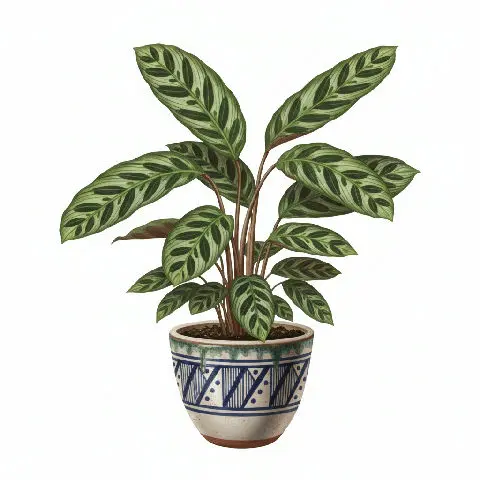
Goeppertia elliptica 'Vittata', commonly known as Calathea Vittata, is a highly sought-after ornamental perennial belonging to the Marantaceae family, often referred to as the prayer plant family. Native to the lush, humid tropical rainforests of Brazil, this cultivar is celebrated for its exceptionally striking foliage. Its elliptical, deep green leaves are distinctively adorned with numerous parallel, light green to white linear stripes that elegantly radiate from the central midrib towards the margins, creating a captivating visual pattern. This unique variegation is the primary reason for its widespread appeal among houseplant enthusiasts.
A hallmark physiological trait of Goeppertia elliptica 'Vittata' is nyctinasty, the rhythmic diurnal movement of its leaves. During daylight hours, the leaves unfurl and flatten to maximize light absorption, while at night, they fold upwards, resembling hands clasped in prayer. This fascinating movement is orchestrated by a specialized joint-like structure called a pulvinus, located at the base of the leaf petiole, which responds to changes in light intensity and internal turgor pressure. While many species within the broader Calathea genus have traditional uses, such as for wrapping food or crafting baskets by indigenous cultures, specific ethnobotanical or medicinal applications for Goeppertia elliptica 'Vittata' are notably sparse.
Its primary significance remains its aesthetic contribution to indoor environments, thriving in conditions that mimic its native understory habitat: consistent warmth, high humidity, and filtered light. Modern research largely focuses on its horticultural aspects, yet the genus as a whole is known to contain potentially bioactive compounds like flavonoids and terpenes.
Trusted Scientific References
1. Authoritative external sources for Goeppertia elliptica
1.1 Wikipedia — Goeppertia elliptica
1.2 Kew POWO (Plants of the World Online)
1.3 PubMed — peer-reviewed research
1.4 NCBI Taxonomy Browser
1.5 GBIF — Global Biodiversity
1.1.Calathea Vittata — Standout Qualities
- ✓Botanical Name — Goeppertia elliptica 'Vittata'
- ✓Common Name — Calathea Vittata, Prayer Plant
- ✓Family — Marantaceae (Arrowroot Family)
- ✓Native Region — Tropical rainforests of Brazil
- ✓Foliage — Deep green elliptical leaves with distinctive white linear stripes
- ✓Nyctinasty — Exhibits diurnal leaf movements, folding upwards at night
- ✓Toxicity — Non-toxic to humans and common household pets
- ✓Air Purification — Known to contribute to improved indoor air quality
- ✓Growth Habit — Evergreen perennial, forming an upright, clumping structure
- ✓Environmental Needs — Thrives in high humidity, consistent moisture, and indirect light
1.2.Calathea Vittata — In Brief
- ✓Ornamental 'Praying Plant' with striking deep green leaves and white linear stripes.
- ✓Non-toxic to humans, cats, and dogs, making it a safe choice for any household.
- ✓Actively improves indoor air quality by filtering pollutants and enhancing humidity.
- ✓Requires consistent moisture, high humidity, and bright, indirect light to thrive.
- ✓Primary value is aesthetic and environmental, with limited traditional medicinal applications.
- ✓Exhibits fascinating nyctinasty, where leaves fold up at night and unfurl by day.
2.Calathea Vittata — Taxonomic Classification
3.Calathea Vittata — Quick Facts
4.Calathea Vittata — Structural Profile
5.Calathea Vittata — Habitat & Distribution
6.Calathea Vittata — Historical Applications
7.Calathea Vittata — Active Compounds
- ✓Flavonoids — Primarily includes quercetin and kaempferol derivatives; these compounds are well-regarded for their potent antioxidant, anti-inflammatory, and potential cardioprotective effects.
- ✓Terpenes/Terpenoids — Encompasses monoterpenes and sesquiterpenes; these contribute to the plant's natural scent, serve as defense mechanisms, and may exhibit antimicrobial and anti-inflammatory properties.
- ✓Saponins — These glycosides possess detergent-like characteristics and have been studied for potential hemolytic, anti-inflammatory, and immune-modulating activities in other plant species.
- ✓Alkaloids — Nitrogen-containing organic compounds; while often pharmacologically active, specific types and their concentrations in Goeppertia elliptica 'Vittata' are not extensively documented.
- ✓Phenolic Acids — Includes caffeic acid and ferulic acid; these are powerful antioxidants that effectively scavenge free radicals and help protect cells from oxidative damage.
- ✓Glycosides — Various compounds where a sugar molecule is bonded to a non-sugar component; they can influence plant physiology and potentially exert diverse pharmacological effects.
- ✓Chlorophylls — The primary photosynthetic pigments responsible for the plant's green coloration; they also possess some antioxidant properties when consumed.
- ✓Carotenoids — Such as beta-carotene and lutein; these accessory pigments play vital roles in photosynthesis and function as antioxidants, beneficial for both plant and potentially human health.
- ✓Polysaccharides — Complex carbohydrates that serve as energy storage; some plant polysaccharides are known for their immune-modulating and potential prebiotic effects, supporting gut health.
8.Calathea Vittata — What Research Suggests
- ✓Air Purification — Calathea Vittata naturally filters common indoor air pollutants such as formaldehyde and benzene, contributing to a healthier and cleaner breathing environment.
- ✓Humidity Regulation — Through the process of transpiration, this plant releases moisture into the surrounding air, effectively increasing ambient humidity levels, which can benefit respiratory comfort.
- ✓Stress Reduction — The plant’s vibrant, dynamic foliage and unique leaf movements provide aesthetic pleasure and a connection to nature, known to foster a calming atmosphere and mitigate psychological stress.
- ✓Non-Toxic Properties — Goeppertia elliptica 'Vittata' is widely recognized as non-toxic to household pets and humans, making it a safe and worry-free addition to family homes.
- ✓Biophilic Design Element — Integrating natural elements like this plant into indoor spaces has been scientifically linked to improved mood, enhanced cognitive function, and overall well-being.
- ✓Potential Anti-inflammatory Effects — Broader Calathea species contain flavonoids, which are compounds known for their antioxidant and anti-inflammatory capabilities, suggesting potential for further investigation in this cultivar.
- ✓Antioxidant Potential — Terpenes, also present in the Calathea genus, possess antioxidant activity that could contribute to combating oxidative stress at a cellular level.
- ✓Traditional Decorative Use — Although not medicinal, its historical use in indigenous cultures for practical purposes like food wrapping highlights its utility and cultural relevance beyond mere aesthetics.
- ✓Symbolic Value — Often regarded as a symbol of fresh starts and hope, the presence of Calathea Vittata can subtly promote positive emotional states and a sense of renewal.
8.1.Calathea Vittata — Health Applications
9.Calathea Vittata — Risk Profile
9.1.Calathea Vittata — Warnings
- ✓Skin Irritation — The sap of Goeppertia elliptica 'Vittata' may cause mild skin irritation or contact dermatitis in individuals with particularly sensitive skin upon direct contact.
- ✓Allergic Reactions — Although uncommon, some individuals might experience minor allergic reactions, such as sneezing or watery eyes, from plant particles or infrequent indoor blooms.
- ✓Overwatering Issues — Excessive watering is the most common problem, leading to root rot, characterized by wilting, yellowing leaves, and a distinct foul odor from the soil.
- ✓Low Humidity Stress — Insufficient ambient humidity results in undesirable brown leaf tips and crispy edges, indicating environmental stress rather than a direct toxic effect.
- ✓Direct Sunburn — Exposure to intense, direct sunlight can cause leaf scorching, manifesting as bleached, faded, or crispy patches on the foliage.
- ✓Pest Infestations — Like all houseplants, it can become susceptible to common pests such as spider mites, mealybugs, or thrips if environmental conditions are not optimal, leading to plant damage.
9.2.Calathea Vittata — Toxicity Assessment
- ✓Non-Toxic — Goeppertia elliptica 'Vittata' is widely recognized as non-toxic to humans, cats, and dogs, making it a very safe choice for households with pets and young children.
- ✓Skin Sensitivity — While generally safe, individuals with highly sensitive skin should exercise caution and potentially wear gloves when handling the plant to avoid mild sap-induced irritation.
- ✓Ingestion Safety — Accidental ingestion by pets or children is not expected to cause severe poisoning, though consuming very large quantities might lead to mild, transient gastrointestinal upset.
- ✓Allergen Status — The plant's flowers are typically small and inconspicuous, rarely blooming indoors, which significantly minimizes the risk of pollen-related allergic reactions.
- ✓Environmental Care — Ensuring appropriate growing conditions (humidity, light, water) is crucial for maintaining plant health, which in turn reduces susceptibility to pests and diseases.
- ✓Pest Management — Should pest infestations occur, it is recommended to use non-toxic or organic pest control methods to uphold the plant's safety profile as an indoor ornamental.
10.Calathea Vittata — Preparation & Dosage
- ✓Indoor Decoration — Place Calathea Vittata in homes, offices, or other indoor spaces as an ornamental houseplant to enhance aesthetic appeal and introduce a vibrant, tropical ambiance.
- ✓Air Quality Improvement — Position the plant in living areas to leverage its natural air-purifying capabilities, contributing to a fresher and healthier indoor environment.
- ✓Humidity Enhancement — Group with other humidity-loving plants or place on a pebble tray filled with water to naturally elevate the ambient humidity levels around the plant.
- ✓Educational Display — Utilize the plant to demonstrate the fascinating phenomenon of nyctinasty, or 'praying plant' leaf movements, as a botanical curiosity.
- ✓Biophilic Design Integration — Incorporate into interior design schemes to foster a deeper connection with nature, promoting mental well-being and reducing stress.
- ✓Safe Gifting Option — Present as a thoughtful and safe gift for plant enthusiasts, especially those with pets or children, due to its non-toxic nature.
- ✓Propagation for Sharing — Divide mature plants during the repotting process to create new specimens, ideal for expanding one's collection or sharing with others.
11.Calathea Vittata — Growing Guide
- ✓Light — Prefers bright, indirect light; direct sunlight can lead to leaf scorching, while insufficient light may cause its distinctive patterns to fade.
- ✓Soil — Thrives in a well-draining, peat-based potting mix, ideally amended with perlite or vermiculite to ensure proper aeration and prevent compaction.
- ✓Water — Keep the soil consistently moist but never waterlogged; allow the top inch of soil to dry slightly between waterings, using distilled or filtered water to avoid mineral buildup and brown leaf tips.
- ✓Temperature & Humidity — Optimal temperatures range from 18-24°C (65-75°F); requires high humidity, ideally above 60%, to prevent leaf crisping and browning.
- ✓Fertilization — Fertilize every 4 weeks during the active growing season (spring and summer) with a diluted, balanced liquid houseplant fertilizer; reduce or cease feeding in fall and winter.
- ✓Pruning — Trim away any yellowed, browned, or damaged leaves at their base to maintain the plant's tidy appearance and encourage new, healthy growth.
- ✓Repotting — Repot every 2-3 years in spring, or when the plant becomes root-bound, to refresh the potting medium and provide adequate space for root expansion.
- ✓Cleaning — Gently wipe the leaves periodically with a soft, damp cloth to remove dust, which helps maintain the plant's aesthetic appeal and supports efficient photosynthesis.
Reviewed by the Flora Medical Global Botanical Review Panel
Multi-disciplinary editorial group · Botany · Ethnobotany · Herbal-medicine literature
Who reviewed this: This page was checked by the Flora Medical Global Botanical Review Panel — an in-house editorial group of botany graduates, ethnobotany researchers, and horticulture practitioners who collectively maintain our 7,000+ plant encyclopedia. Meet the team.
Our 4-step verification process
1. Taxonomic verification
Scientific names and synonyms cross-checked against Kew POWO, World Flora Online, and The Plant List.
2. Phytochemical & medicinal cross-reference
Active compounds, traditional uses, and reported activities are cross-referenced with PubMed, USDA Dr. Duke's database, and peer-reviewed ethnobotanical literature.
3. Conservation & distribution check
Distribution, ecology, and conservation status confirmed against GBIF occurrence records and the IUCN Red List.
4. Editorial & safety review
Every entry passes an editorial pass for clarity, originality, and safety notices (toxicity, contraindications, dosage caveats) before publication.
Last reviewed:
Important medical disclaimer: This content is for educational and research purposes only. It is not medical advice and is not a substitute for consultation with a licensed healthcare provider. Do not use any herb to self-treat a medical condition without professional guidance.
Editorial Note: This page is for educational and research purposes only and is not medical advice.
Written by: Flora Medical Global Editorial Team
Reviewed by: Flora Medical Global Botanical Review Panel
Last Updated: June 15, 2026





Calathea Vittata — Comments & Community Reviews
Rate this plant