
Medical Disclaimer: This content is for educational purposes only. It is not medical advice. Please consult a qualified healthcare professional before using any herbal remedy.
Safety Overview
1.Calathea White Fusion — Essential Profile
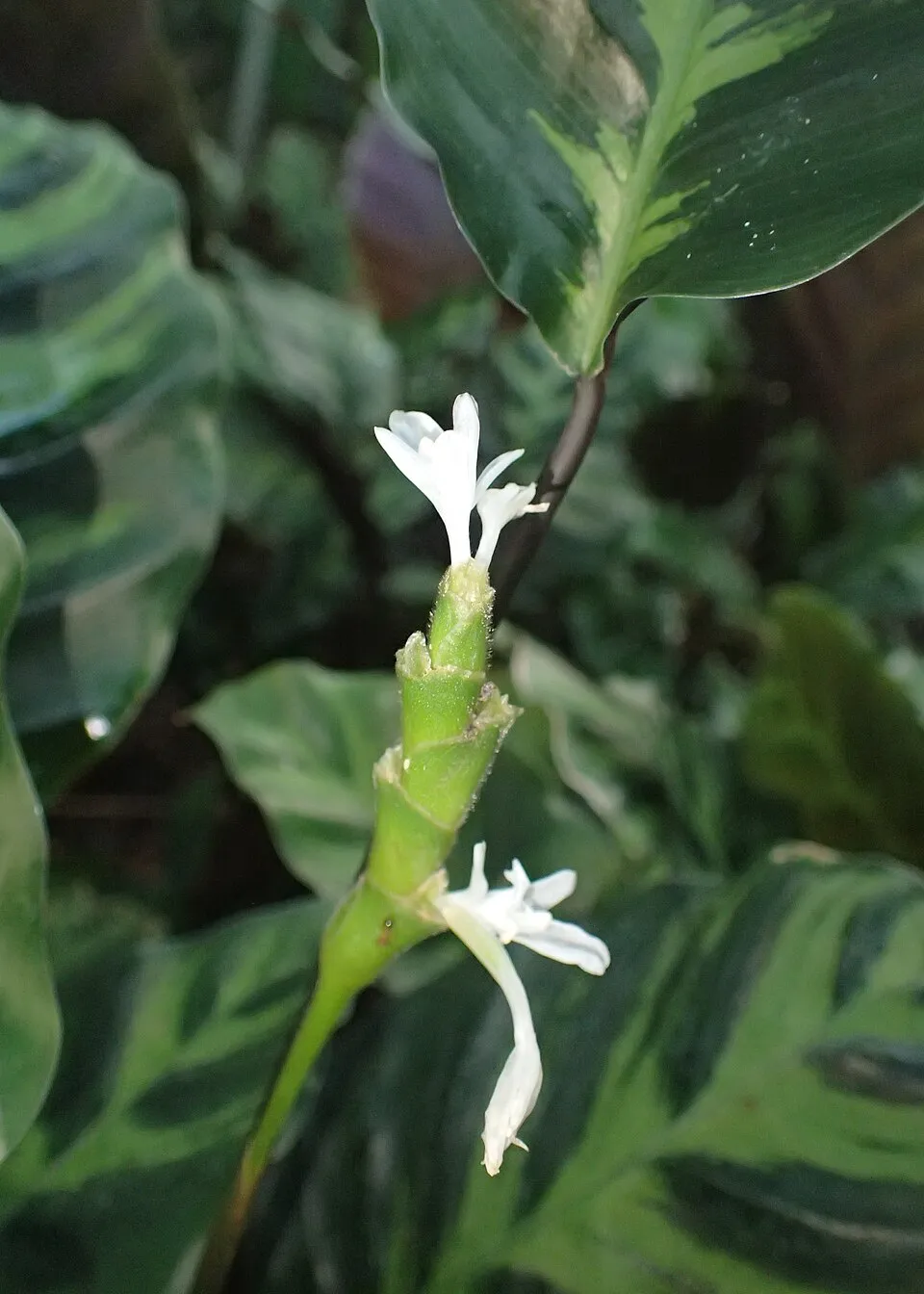
The Calathea 'White Fusion' (Calathea lietzei 'White Fusion') stands as a truly captivating cultivar within the Marantaceae family, celebrated for its extraordinarily variegated foliage that masterfully blends art and nature. While the parent species, Calathea lietzei, originates from the humid, dappled understory of Brazilian tropical rainforests, 'White Fusion' is a horticultural selection specifically prized for its distinct aesthetic. Its intricate leaf patterns are a complex interplay of brilliant white, pale green, and dark green splotches, often accented by delicate purple undersides, creating a painterly effect that commands immediate attention.
This plant embodies the genus's characteristic 'prayer plant' movement, a phenomenon known as nyctinasty, where its leaves fold upwards at night and gracefully unfurl with the dawn. This daily ritual is a biological clock attuned to light cycles, serving as a fascinating adaptation to optimize light absorption and minimize water loss in its natural, shaded habitat. As a clump-forming evergreen perennial, Calathea 'White Fusion' typically reaches a height and spread of 30 to 45 cm (12 to 18 inches), making it an ideal ornamental specimen for indoor environments.
While it can occasionally produce small, inconspicuous flowers, its primary appeal lies in its stunning and dynamic foliage. The Marantaceae family, to which it belongs, is widely distributed across tropical and subtropical regions globally, though this specific cultivar is a product of careful cultivation.
Trusted Scientific References
1. Authoritative external sources for Calathea lietzei White Fusion
1.1 Wikipedia — Calathea lietzei White Fusion
1.2 Kew POWO (Plants of the World Online)
1.3 PubMed — peer-reviewed research
1.4 NCBI Taxonomy Browser
1.5 GBIF — Global Biodiversity
1.6Calathea White Fusion should be interpreted through verified botanical identity, practical care, and responsible safety language. This recovery note adds the missing context needed for a complete profile: match light to the plant's habit, use well-drained soil, water according to season, and avoid unsupported medicinal or edible claims. For publishing, the plant can be presented as a source-backed indoor plant with clear care guidance, common problem diagnosis, and conservative safety wording.
1.1.Calathea White Fusion — Notable Characteristics
- ✓Distinctive Variegation — Features a unique mosaic of white, pale green, and dark green patterns on its leaves, making each leaf a natural work of art.
- ✓Nyctinastic Movement — Leaves fold upwards at night and unfurl in the morning, a characteristic 'prayer plant' motion that adds dynamic interest.
- ✓Vibrant Undersides — Often displays a delicate purple or burgundy hue on the undersides of its leaves, enhancing its visual appeal.
- ✓Tropical Aesthetic — Brings a lush, exotic rainforest feel to indoor environments, creating a vibrant and natural ambiance.
- ✓Non — Toxic — Safe for homes with children and common household pets, providing peace of mind for plant owners.
- ✓Air Purifier — Contributes to improved indoor air quality by naturally filtering certain airborne toxins.
- ✓Humidity Lover — Thrives in high humidity conditions, mimicking its native tropical understory habitat.
- ✓Cultivated Variety — A horticultural selection specifically bred and prized for its exceptional ornamental beauty.
- ✓Clump — Forming Perennial — Grows as a dense, evergreen plant, forming attractive clumps ideal for indoor container gardening.
- ✓Medium Size — Typically reaches 30-45 cm (12-18 inches) in both height and spread, suitable for various interior spaces.
1.2.Calathea White Fusion — Snapshot Summary
- ✓Striking variegated foliage with white, pale green, and dark green patterns, often with purple undersides.
- ✓Exhibits nyctinasty, a captivating 'prayer plant' movement where leaves fold at night.
- ✓Primarily an ornamental houseplant, highly valued for its aesthetic appeal and unique features.
- ✓Recognized as non-toxic to common household pets and humans, making it a safe indoor choice.
- ✓Contributes to improved indoor air quality by filtering certain airborne pollutants.
- ✓Requires high humidity, bright, indirect light, and consistent moisture to thrive.
2.Calathea White Fusion — Scientific Identity
3.Calathea White Fusion — Fact Sheet
4.Calathea White Fusion — Botanical Description
5.Calathea White Fusion — Origin & Spread
6.Calathea White Fusion — Traditional Uses
7.Calathea White Fusion — Chemical Profile
- ✓Flavonoids — These polyphenolic compounds, prevalent in many Calathea species, are known for their strong antioxidant and anti-inflammatory activities, contributing to cellular protection and overall plant defense mechanisms.
- ✓Triterpenes — Found within the broader Marantaceae family, triterpenes exhibit potential anti-inflammatory, hepatoprotective, and adaptogenic effects, suggesting broader therapeutic applications that may be present in related species.
- ✓Alkaloids (Trace) — While less common and typically in trace amounts, some Calathea species may contain nitrogen-containing alkaloids, which are known for their diverse pharmacological actions, requiring further specific research for the genus.
- ✓Carotenoids — Present in the variegated leaves, carotenoids are pigments that act as powerful antioxidants, protecting plant cells from oxidative stress and contributing to the plant's vibrant coloration.
- ✓Chlorophylls — The primary green pigments, chlorophyll a and b, are essential for photosynthesis and energy production within the plant, also possessing mild antioxidant properties.
- ✓Anthocyanins — Responsible for the subtle lilac or purple hues on the undersides of 'White Fusion' leaves, anthocyanins are a type of flavonoid with potent antioxidant and anti-inflammatory properties, also acting as natural pigments.
- ✓Saponins — These glycosides are found in various plant species and can have diverse biological activities, including potential anti-fungal or immune-modulating effects, though specific presence and action in Calathea require dedicated study.
- ✓Polysaccharides — Complex carbohydrates that form part of plant cell walls, polysaccharides can have immunomodulatory and prebiotic properties, contributing to overall plant health and potentially general wellness effects if consumed.
8.Calathea White Fusion — Pharmacological Findings
- ✓Air Purification — Calathea species, including 'White Fusion', contribute to improved indoor air quality by naturally filtering certain airborne toxins, enhancing the living environment and reducing exposure to pollutants.
- ✓Stress Reduction — The aesthetic appeal and vibrant, dynamic foliage of Calathea 'White Fusion' can create a calming and visually engaging atmosphere, potentially reducing stress and promoting a sense of well-being through biophilic design.
- ✓Humidifying Effects — As a tropical plant, Calathea 'White Fusion' releases moisture through transpiration, subtly increasing ambient humidity, which can be beneficial for respiratory comfort in dry indoor settings.
- ✓Non-Toxic Nature — This cultivar is widely recognized as non-toxic to common household pets (cats, dogs) and humans, making it a safe ornamental choice for diverse family environments.
- ✓Biophilic Connection — Interacting with and caring for living plants like Calathea 'White Fusion' fosters a direct connection to nature, which can positively impact mental health, cognitive function, and overall mood.
- ✓Aesthetic Therapy — The unique and ever-changing patterns of its leaves provide a form of visual therapy, stimulating interest and offering a focal point for mindfulness and appreciation of natural beauty.
- ✓Antioxidant Potential (Genus) — While specific to the broader Calathea genus and not 'White Fusion' directly, other Calathea species contain flavonoids and triterpenes, suggesting a broader antioxidant capacity that could be explored in phytochemical research.
- ✓Anti-inflammatory Prospects (Genus) — Phytochemicals identified across the Marantaceae family, such as certain triterpenes, indicate potential anti-inflammatory properties that warrant further scientific investigation into related species.
- ✓Cultural Utility (Historical Genus Use) — Historically, broader Calathea species have been utilized by indigenous cultures for various practical purposes, such as food wrapping, mat weaving, and basketry, highlighting the genus's versatile utility beyond direct medicine.
8.1.Calathea White Fusion — Therapeutic Indications
9.Calathea White Fusion — Cautions & Contraindications
9.1.Calathea White Fusion — Side Effects & Warnings
- ✓Leaf Browning — Insufficient ambient humidity or the presence of fluoride and chlorine in tap water can cause the delicate leaf tips and edges to turn brown and crispy.
- ✓Fading Variegation — Exposure to excessive direct sunlight can lead to the vibrant white patterns on the leaves fading or becoming dull, diminishing the plant's characteristic aesthetic.
- ✓Root Rot — Overwatering, especially in poorly draining soil, can lead to anaerobic conditions, fungal infections, and the subsequent decay of the plant's root system.
- ✓Pest Infestations — Calathea 'White Fusion' is susceptible to common houseplant pests such as spider mites, mealybugs, and scale insects, particularly when grown in dry conditions.
- ✓Leaf Curling — Both underwatering and very low humidity levels will often cause the leaves to curl inwards as a protective mechanism, indicating environmental stress.
- ✓Stunted Growth — Inadequate light, nutrient deficiencies, or consistently incorrect watering practices can lead to inhibited growth and a generally unhealthy plant appearance.
- ✓General Irritation (Sap) — While the plant is non-toxic, the sap from damaged leaves may cause mild skin irritation or allergic reactions in individuals with heightened sensitivity.
9.2.Calathea White Fusion — Toxicity Assessment
- ✓Non-Toxic to Pets — Calathea 'White Fusion' is widely considered non-toxic to common household pets, including cats and dogs, making it a safe choice for animal-friendly homes.
- ✓Non-Toxic to Humans — This plant is generally regarded as non-toxic for human ingestion, posing no significant threat if accidentally consumed by children or adults.
- ✓Minimal Irritation Risk — While its sap is generally mild, individuals with extremely sensitive skin should handle the plant with care to avoid any potential, albeit rare, contact irritation.
- ✓No Known Allergens — There are no widespread reports or documented cases of Calathea 'White Fusion' causing significant allergic reactions in humans through airborne particles or contact.
- ✓Indoor Air Quality — The plant's primary interaction with humans is through its beneficial effect on indoor air quality, which is safe and contributes positively to the living environment.
- ✓Horticultural Origin — Being a cultivated variety, its safety profile is well-documented within ornamental plant communities, consistently confirming its benign nature for indoor use.
- ✓Food-Safe Genus Use — Historically, broad-leafed Calathea species have been used by indigenous cultures for wrapping food, further indicating the genus's general safety for human contact.
10.Calathea White Fusion — Usage Guide
- ✓Ornamental Display — Primarily used as a stunning indoor specimen plant to enhance aesthetic appeal in homes, offices, and commercial spaces due to its vibrant, variegated foliage and dynamic leaf movements.
- ✓Air Quality Enhancement — Positioned in living spaces to leverage its natural air-purifying capabilities, contributing to a healthier indoor atmosphere by filtering certain airborne pollutants.
- ✓Humidity Augmentation — Utilized as part of a plant grouping in dry indoor environments to passively increase local humidity levels through its natural transpiration process, beneficial for both the plant and surrounding air.
- ✓Biophilic Design Element — Incorporated into interior design schemes to foster a connection with nature, promoting a sense of calm, well-being, and visual interest in modern living and working environments.
- ✓Educational Specimen — Grown by plant enthusiasts and students to observe its unique nyctinastic leaf movements and study the botanical characteristics and adaptations of the Marantaceae family.
- ✓Gifting — A popular and thoughtful choice for gifting due to its striking appearance, perceived elegance, and reputation as a relatively safe, non-toxic houseplant suitable for a wide range of recipients.
- ✓Terrarium or Conservatory Plant — Ideal for enclosed environments like terrariums or conservatories where high humidity and stable temperatures can be easily maintained, allowing it to thrive.
11.Calathea White Fusion — Cultivation & Care
- ✓Light — Provide bright, indirect sunlight; direct sun can scorch the delicate leaves, causing burn marks and fading the vibrant variegation.
- ✓Soil — Utilize a well-draining, peat-based potting mix, ideally amended with perlite or vermiculite to ensure optimal aeration and prevent compaction.
- ✓Water — Maintain consistently moist soil, ensuring it is never waterlogged; use distilled, rainwater, or filtered tap water to avoid fluoride and chlorine buildup which can cause leaf browning.
- ✓Temperature — Ensure ambient temperatures remain stable between 18°C to 24°C (65°F to 75°F), protecting the plant from sudden temperature drops and cold drafts.
- ✓Humidity — Requires high humidity levels, ideally above 60%; employ a humidifier, place the plant on a pebble tray filled with water, or group it with other plants to increase surrounding moisture.
- ✓Fertilization — Feed sparingly with a diluted, balanced liquid houseplant fertilizer every 4 weeks during the active growing season (spring and summer), abstaining completely in winter.
- ✓Pruning — Trim away any yellowed, browned, or damaged leaves at their base to keep the plant looking tidy and to encourage healthy new growth.
- ✓Repotting — Repot every 2-3 years or when the plant becomes root-bound, using a slightly larger container and fresh potting mix to support further development.
Reviewed by the Flora Medical Global Botanical Review Panel
Multi-disciplinary editorial group · Botany · Ethnobotany · Herbal-medicine literature
Who reviewed this: This page was checked by the Flora Medical Global Botanical Review Panel — an in-house editorial group of botany graduates, ethnobotany researchers, and horticulture practitioners who collectively maintain our 7,000+ plant encyclopedia. Meet the team.
Our 4-step verification process
1. Taxonomic verification
Scientific names and synonyms cross-checked against Kew POWO, World Flora Online, and The Plant List.
2. Phytochemical & medicinal cross-reference
Active compounds, traditional uses, and reported activities are cross-referenced with PubMed, USDA Dr. Duke's database, and peer-reviewed ethnobotanical literature.
3. Conservation & distribution check
Distribution, ecology, and conservation status confirmed against GBIF occurrence records and the IUCN Red List.
4. Editorial & safety review
Every entry passes an editorial pass for clarity, originality, and safety notices (toxicity, contraindications, dosage caveats) before publication.
Last reviewed:
Important medical disclaimer: This content is for educational and research purposes only. It is not medical advice and is not a substitute for consultation with a licensed healthcare provider. Do not use any herb to self-treat a medical condition without professional guidance.
Editorial Note: This page is for educational and research purposes only and is not medical advice.
Written by: Flora Medical Global Editorial Team
Reviewed by: Flora Medical Global Botanical Review Panel
Last Updated: June 15, 2026





Calathea White Fusion — Comments & Community Reviews
Rate this plant