
Medical Disclaimer: This content is for educational purposes only. It is not medical advice. Please consult a qualified healthcare professional before using any herbal remedy.
Safety Overview
1.Callicarpa Bodinieri — Plant Snapshot
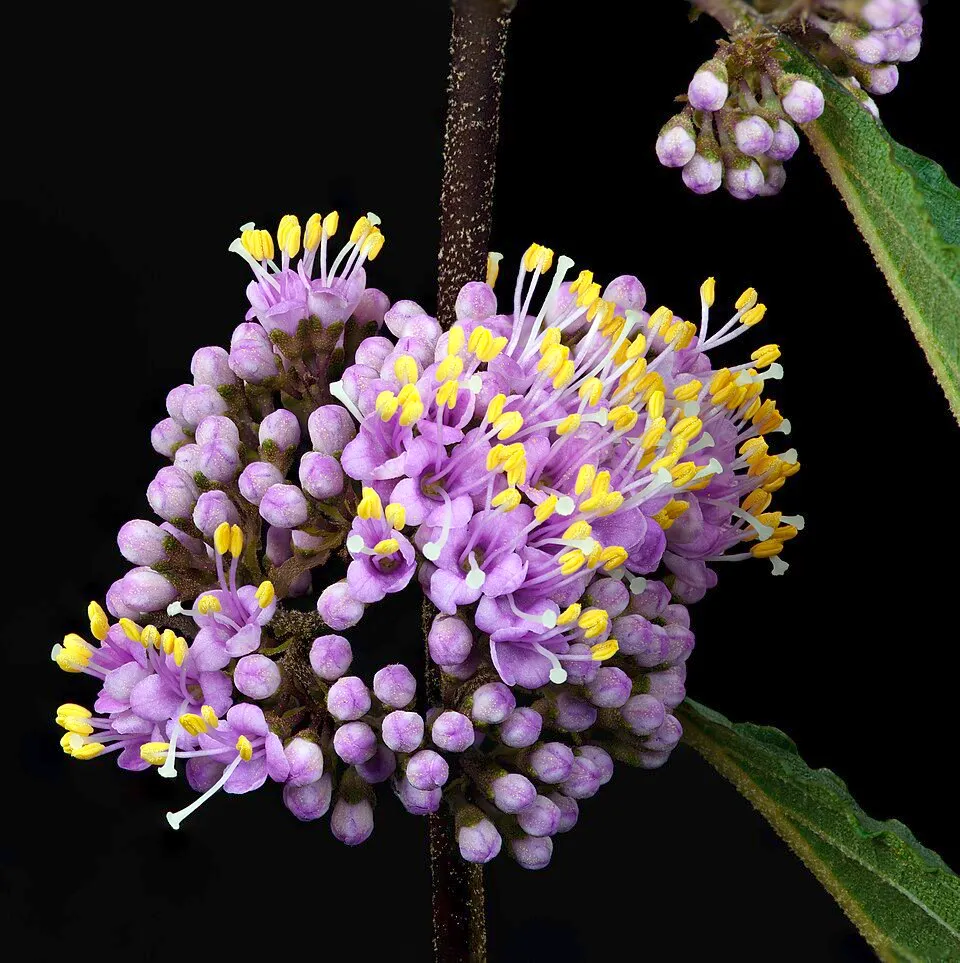
Callicarpa bodinieri, commonly known as Bodinier Beautyberry or Profusion Beautyberry, is a captivating deciduous shrub celebrated for its striking violet-purple berries that persist well into winter, providing exceptional late-season garden interest. Native to Southern China and Indochina, this species belongs to the Lamiaceae family, a taxonomic placement that reflects its botanical characteristics, though it was historically classified under Verbenaceae. The genus name 'Callicarpa' is derived from Greek words meaning 'beautiful fruit', a fitting description for its most distinctive feature. This upright shrub typically reaches heights of 6 to 10 feet, featuring slender, arching branches.
Its ovate-lanceolate leaves emerge with a bronze tint in spring, mature to a dark green in summer, and transform into a golden yellow or purplish hue in autumn before dropping. Small, inconspicuous lilac-colored flowers bloom in clusters along the new growth from June to August, serving as a vital nectar source for pollinators like bees and butterflies. These blossoms give way to the iconic berry clusters that encircle the stems, ripening by September and remaining vibrant long after the leaves have fallen. While primarily cultivated as an ornamental, its botanical relatives, including Callicarpa americana, also share some traditional uses.
This species thrives in temperate climates and is widely distributed in cultivation across various regions globally, valued for its hardiness and visual appeal. It is distinct from other similar species such as Callicarpa dichotoma or Callicarpa japonica, although they share the characteristic 'beautiful fruit' display.
Trusted Scientific References
1. Authoritative external sources for Callicarpa bodinieri
1.1 Wikipedia — Callicarpa bodinieri
1.2 Kew POWO (Plants of the World Online)
1.3 PubMed — peer-reviewed research
1.4 NCBI Taxonomy Browser
1.5 GBIF — Global Biodiversity
1.6Callicarpa Bodinieri should be interpreted through verified botanical identity, practical care, and responsible safety language. This recovery note adds the missing context needed for a complete profile: match light to the plant's habit, use well-drained soil, water according to season, and avoid unsupported medicinal or edible claims. For publishing, the plant can be presented as a source-backed garden plant with clear care guidance, common problem diagnosis, and conservative safety wording.
1.1.Callicarpa Bodinieri — Standout Qualities
- ✓Showy Violet — Purple Berries — Provides spectacular visual interest in fall and winter landscapes.
- ✓Deciduous Shrub — Offers seasonal beauty with changing leaf colors from bronze to golden yellow.
- ✓Native to Southern China and Indochina — Reflects its geographical origin and adaptation.
- ✓Attracts Pollinators — Its lilac flowers draw bees and butterflies, supporting local ecosystems.
- ✓Deer Resistant — The bitter taste of its fruits typically deters deer and other wildlife.
- ✓Low Maintenance — Generally easy to grow and care for once established in suitable conditions.
- ✓Traditional Medicinal Uses — Utilized in various folk medicine systems for a range of ailments.
- ✓Rich in Bioactive Compounds — Contains a spectrum of phytochemicals like flavonoids and diterpenoids.
- ✓Cold Tolerant — Exhibits good hardiness, making it suitable for diverse temperate climates.
- ✓Lamiaceae Family Member — Classified within the mint family, though not typically aromatic like mint.
1.2.Callicarpa Bodinieri — Snapshot Summary
- ✓Callicarpa bodinieri, or Bodinier Beautyberry, is an ornamental shrub famed for its vibrant purple berries.
- ✓Traditionally valued in herbal medicine for its purported anti-inflammatory, antimicrobial, and digestive benefits.
- ✓Rich in bioactive compounds including unique diterpenoids, triterpenoids, flavonoids, and phenolic acids.
- ✓Requires full sun and well-drained soil for vigorous growth and abundant fruit production.
- ✓Essential to consult a healthcare professional before medicinal use, especially for pregnant women or those on medication.
2.Callicarpa Bodinieri — Scientific Profile
3.Callicarpa Bodinieri — Quick Facts
4.Callicarpa Bodinieri — Plant Morphology
5.Callicarpa Bodinieri — Geographic Distribution
6.Callicarpa Bodinieri — Historical Applications
7.Callicarpa Bodinieri — Active Compounds
- ✓Diterpenoids — Callicarpa species are notable for unique diterpenoids like calliterpenone and various callicarpenals, which are often associated with anti-inflammatory, insecticidal, and cytotoxic properties.
- ✓Triterpenoids — Compounds such as ursolic acid, oleanolic acid, and their derivatives are present, known for their significant anti-inflammatory, hepatoprotective, and anticancer activities.
- ✓Flavonoids — A diverse group including quercetin, kaempferol, luteolin, and their glycosides, contributing to the plant's potent antioxidant, anti-inflammatory, and antimicrobial effects.
- ✓Phenolic Acids — Derivatives like caffeic acid, ferulic acid, and chlorogenic acid are found, acting as powerful antioxidants and free radical scavengers.
- ✓Essential Oils — While the specific 'minty' compounds like menthol, menthone, and pulegone are not characteristic of Callicarpa bodinieri, the plant does contain various monoterpenes and sesquiterpenes in its essential oil, contributing to its natural aroma and exhibiting potential antimicrobial actions.
- ✓Saponins — These glycosides can contribute to expectorant, anti-inflammatory, and immune-modulating effects, though their presence and specific roles in Callicarpa bodinieri require further study.
- ✓Lignans — Plant secondary metabolites with potential antioxidant, anti-inflammatory, and estrogenic modulating properties, found in various parts of the plant.
- ✓Phenylethanoid Glycosides — Compounds like verbascoside (acteoside) are present, known for their strong antioxidant, anti-inflammatory, and neuroprotective activities.
8.Callicarpa Bodinieri — Research Insights
- ✓Anti-inflammatory Support — Traditionally, Callicarpa bodinieri has been employed to alleviate inflammatory conditions, potentially due to the presence of specific diterpenoids and triterpenoids that modulate inflammatory pathways.
- ✓Antimicrobial Action — Extracts are believed to possess properties that help combat a range of microbial pathogens, including bacteria and fungi, contributing to its use in traditional remedies for infections.
- ✓Antifungal Properties — Specific compounds found in Bodinier Beautyberry may inhibit the growth of various fungal species, making it a subject of interest for natural antifungal applications.
- ✓Digestive Aid — In some traditional systems, preparations from Callicarpa bodinieri are utilized to soothe gastrointestinal discomfort, aid digestion, and alleviate symptoms like indigestion or bloating.
- ✓Respiratory Relief — Historically, this plant has been used to address respiratory issues, such as easing coughs, clearing congestion, and supporting overall lung health.
- ✓Immune System Enhancement — It is thought to bolster the body's natural defense mechanisms, helping to strengthen immunity against common ailments and promote general wellness.
- ✓Stress Reduction — The plant's subtle aromatic compounds, if present in sufficient quantities, are traditionally associated with calming effects, contributing to stress relief and mental tranquility.
- ✓Cognitive Clarity — Traditional uses suggest that certain components might support mental focus and reduce feelings of mental fogginess, promoting a clearer mind.
- ✓Antioxidant Activity — Rich in flavonoids and phenolic compounds, Callicarpa bodinieri exhibits significant antioxidant potential, helping to neutralize free radicals and protect cells from oxidative damage.
- ✓Skin Health Support — Topical applications in folk medicine are reported for minor skin irritations, leveraging its potential anti-inflammatory and antimicrobial qualities to soothe and protect the skin.
8.1.Callicarpa Bodinieri — Indications & Uses
9.Callicarpa Bodinieri — Adverse Effects
9.1.Callicarpa Bodinieri — Possible Adverse Reactions
- ✓Gastrointestinal Upset — Consumption of large quantities of the bitter berries or strong extracts may lead to nausea, vomiting, or diarrhea in sensitive individuals.
- ✓Allergic Reactions — Individuals with sensitivities to plants in the Lamiaceae family may experience allergic contact dermatitis or respiratory symptoms.
- ✓Photosensitivity — Some phytochemicals might potentially increase skin sensitivity to sunlight, though this is not commonly reported for Callicarpa bodinieri.
- ✓Drug Interactions — Potential interactions with certain medications, particularly anticoagulants or drugs metabolized by the liver, due to active plant compounds.
- ✓Pregnancy and Lactation Concerns — Lack of sufficient clinical safety data advises against medicinal use by pregnant or breastfeeding women.
- ✓Children's Use — Not recommended for infants or young children due to limited research on appropriate dosages and potential adverse effects.
9.2.Callicarpa Bodinieri — Safety Overview
- ✓Consult Healthcare Professional — Always seek advice from a qualified medical herbalist or healthcare provider before using Callicarpa bodinieri, especially if you have existing health conditions or are on medication.
- ✓Avoid During Pregnancy/Lactation — Due to insufficient scientific data on its effects, use of Bodinier Beautyberry is contraindicated for pregnant and breastfeeding individuals.
- ✓Pediatric Use Caution — The medicinal use of this plant is not recommended for children without specific guidance from a healthcare expert.
- ✓Potential Drug Interactions — Exercise caution if taking prescription medications, particularly blood thinners, immunosuppressants, or those affecting liver function, as interactions are possible.
- ✓Allergic Sensitivity — Discontinue use immediately if any signs of an allergic reaction, such as skin rash, itching, or respiratory distress, manifest.
- ✓Proper Plant Identification — Ensure absolute certainty of plant identification to avoid mistaking it for potentially toxic species or look-alikes.
- ✓Bitter Fruit Ingestion — While generally considered non-toxic, the berries are very bitter; consuming large quantities may induce gastrointestinal discomfort.
10.Callicarpa Bodinieri — Preparation & Dosage
- ✓Herbal Infusion — Dried leaves or berries can be steeped in hot water for 10-15 minutes to create a therapeutic tea, traditionally consumed for digestive or respiratory support.
- ✓Decoction — Tougher plant parts like roots or stems may be simmered in water for a longer period (20-30 minutes) to extract more potent compounds, often used for stronger internal remedies.
- ✓Tincture Preparation — Plant material can be macerated in alcohol to create a concentrated liquid extract, allowing for precise dosing and extended shelf life.
- ✓Topical Poultice — Crushed fresh leaves or berries can be applied directly to the skin as a poultice for localized relief of minor inflammation, bruises, or insect bites.
- ✓Herbal Compress — A cloth soaked in a strong, warm infusion or decoction can be applied externally to affected areas to soothe skin irritations or muscle aches.
- ✓Aromatic Steam Inhalation — In some traditional practices, inhaling steam from an infusion of the leaves may be used to help clear respiratory passages.
- ✓Herbal Bath Additive — A concentrated infusion can be added to bathwater to provide systemic or topical benefits, particularly for skin soothing and relaxation.
11.Callicarpa Bodinieri — Growing Guide
- ✓Soil Requirements — Callicarpa bodinieri thrives best in well-drained, fertile loamy soils that are rich in organic matter, ensuring adequate nutrient supply and moisture retention.
- ✓Light Exposure — For optimal growth and prolific fruit production, the shrub prefers a site with full sun exposure, receiving at least six hours of direct sunlight daily.
- ✓Watering Schedule — Maintain consistent soil moisture; water regularly, particularly during dry spells, allowing the top inch of soil to dry out between watering sessions.
- ✓Fertilization Needs — Apply a balanced, all-purpose fertilizer in early spring and again in mid-summer to promote vigorous growth, healthy foliage, and abundant fruit development.
- ✓Pruning Practices — Prune in late winter or early spring before new growth emerges, removing the oldest stems to encourage fresh growth, as flowers and fruits form on new wood.
- ✓Pollination Enhancement — Planting Callicarpa bodinieri in small groupings or with other Callicarpa species significantly improves cross-pollination, leading to a more abundant fruit set.
- ✓Pest and Disease Management — The shrub is generally robust and pest-resistant, but occasionally monitor for leaf spot, stem diseases, or black mold, treating promptly if issues arise.
Reviewed by the Flora Medical Global Botanical Review Panel
Multi-disciplinary editorial group · Botany · Ethnobotany · Herbal-medicine literature
Who reviewed this: This page was checked by the Flora Medical Global Botanical Review Panel — an in-house editorial group of botany graduates, ethnobotany researchers, and horticulture practitioners who collectively maintain our 7,000+ plant encyclopedia. Meet the team.
Our 4-step verification process
1. Taxonomic verification
Scientific names and synonyms cross-checked against Kew POWO, World Flora Online, and The Plant List.
2. Phytochemical & medicinal cross-reference
Active compounds, traditional uses, and reported activities are cross-referenced with PubMed, USDA Dr. Duke's database, and peer-reviewed ethnobotanical literature.
3. Conservation & distribution check
Distribution, ecology, and conservation status confirmed against GBIF occurrence records and the IUCN Red List.
4. Editorial & safety review
Every entry passes an editorial pass for clarity, originality, and safety notices (toxicity, contraindications, dosage caveats) before publication.
Last reviewed:
Important medical disclaimer: This content is for educational and research purposes only. It is not medical advice and is not a substitute for consultation with a licensed healthcare provider. Do not use any herb to self-treat a medical condition without professional guidance.
Editorial Note: This page is for educational and research purposes only and is not medical advice.
Written by: Flora Medical Global Editorial Team
Reviewed by: Flora Medical Global Botanical Review Panel
Last Updated: June 15, 2026





Callicarpa Bodinieri — Comments & Community Reviews
Rate this plant