


Medical Disclaimer: This content is for educational purposes only. It is not medical advice. Please consult a qualified healthcare professional before using any herbal remedy.
Safety Overview
1.Callirhoe Involucrata — At a Glance
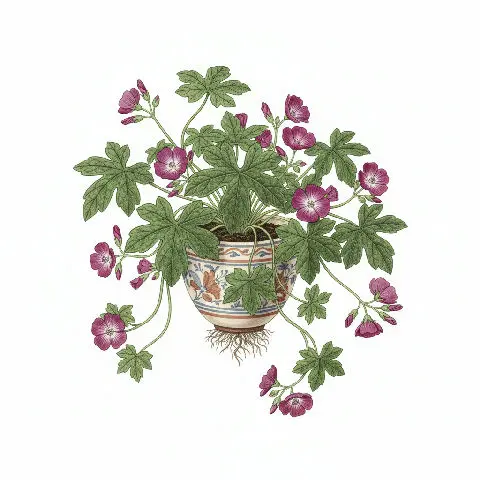
Callirhoe involucrata, commonly known as Winecups, Purple Poppy Mallow, or Buffalo Rose, is a captivating North American native perennial celebrated for its striking, chalice-shaped magenta to purplish-pink flowers and its distinctive low-growing, sprawling habit. This herbaceous member of the Malvaceae family, sharing lineage with cotton and hibiscus, exhibits a characteristic flower structure with five broad petals often featuring a white basal spot, opening with the morning sun and closing by evening or after pollination.
Its genus name, 'Callirhoe,' translates from Greek as 'beautiful flowing,' aptly describing its attractive, often trailing growth, while 'involucrata' refers to the prominent involucral bracts encircling the flower's base.
Indigenous to the Great Plains, Winecups thrives in dry, rocky areas, prairies, pastures, open woodlands, and roadsides across the central and southern United States, extending from southern Canada to Texas, Oklahoma, and Utah. A defining feature is its robust, woody taproot, which can reach up to 5 inches in diameter and delves deep into the soil, granting the plant exceptional drought tolerance and resilience in adverse conditions. This taproot was historically a significant food source for indigenous peoples and bison, earning it the name 'Buffalo Rose.' The plant emerges in early spring with deeply palmately lobed, hairy, deep green leaves, followed by a continuous display of blossoms from late spring through summer and often into early autumn.
Its stems, though only 4-6 inches tall, can sprawl up to 3 feet, intertwining with neighboring plants. Modern interest in Callirhoe involucrata spans its ecological value as a pollinator attractant, its aesthetic appeal as a groundcover, and its low-maintenance nature, making it a valuable addition to xeric and native plant landscapes.
Trusted Scientific References
1. Authoritative external sources for Callirhoe involucrata
1.1 Wikipedia — Callirhoe involucrata
1.2 Kew POWO (Plants of the World Online)
1.3 PubMed — peer-reviewed research
1.4 NCBI Taxonomy Browser
1.5 GBIF — Global Biodiversity
1.1.Callirhoe Involucrata — Notable Characteristics
- ✓Striking magenta to purplish — pink, cup-shaped flowers.
- ✓Sprawling, ground — hugging growth habit, reaching 3 feet in spread.
- ✓Possesses a large, woody, drought — resistant taproot.
- ✓Highly drought — tolerant once established, ideal for xeric conditions.
- ✓Attracts a variety — Attracts a variety of pollinators, including bees and butterflies.
- ✓Native to the — Native to the prairies and open woodlands of central North America.
- ✓Historically utilized for — Historically utilized for its edible and nutritious root.
- ✓Low — maintenance plant, adaptable to various well-drained soils.
- ✓Hardy in USDA zones 4 — 8, showing resilience to cold.
- ✓Features distinctive deeply — Features distinctive deeply palmately lobed, hairy, deep green leaves.
1.2.Callirhoe Involucrata — Snapshot Summary
- ✓Vibrant native perennial with magenta, cup-shaped flowers.
- ✓Possesses a deep, edible taproot, historically a food source for indigenous peoples.
- ✓Valued for its drought tolerance and low-maintenance nature.
- ✓Traditional uses include soothing digestive and skin irritations.
- ✓Attracts pollinators, making it an excellent ecological garden plant.
- ✓Belongs to the Malvaceae family, known for mucilage content.
2.Callirhoe Involucrata — Nomenclature & Classification
3.Callirhoe Involucrata — Key Data
4.Callirhoe Involucrata — Botanical Description
5.Callirhoe Involucrata — Origin & Spread
6.Callirhoe Involucrata — Heritage Uses
7.Callirhoe Involucrata — Phytochemistry
- ✓Polysaccharides (Mucilage) — Predominantly found in the roots and leaves, these complex sugars provide demulcent and emollient properties, soothing irritated tissues.
- ✓Flavonoids — Compounds like quercetin, kaempferol, and their glycosides are present, contributing antioxidant, anti-inflammatory, and antiallergic activities.
- ✓Anthocyanins — These vibrant pigments are responsible for the magenta to purplish-pink color of the flowers, acting as potent antioxidants.
- ✓Phenolic Acids — Derivatives such as caffeic acid and ferulic acid are likely present, offering antioxidant and potential antimicrobial benefits.
- ✓Tannins — Found in various plant parts, particularly the root, tannins provide astringent properties.
- ✓Fatty Acids — The seeds may contain various fatty acids, typical of Malvaceae family members.
- ✓Sterols — Plant sterols are likely present in the plant tissues, contributing to cellular structure and potentially offering health benefits.
- ✓Vitamins and Minerals — As an edible root, it contains various essential vitamins and dietary minerals, important for nutritional support.
- ✓Carbohydrates — The taproot is rich in starch and other complex carbohydrates, serving as an energy source.
- ✓Triterpenes — These compounds are common in many plants and may contribute to anti-inflammatory or adaptogenic effects.
8.Callirhoe Involucrata — Pharmacological Findings
- ✓Digestive Comfort — The plant's mucilaginous content, particularly in the roots, can help soothe irritated digestive tracts, offering relief from mild stomach upset or irritation.
- ✓Anti-inflammatory Support — Containing various flavonoids and phenolic compounds, Winecups may offer mild anti-inflammatory effects, traditionally applied to reduce local swelling.
- ✓Demulcent Properties — The high mucilage in its roots and leaves provides a protective, soothing layer over mucous membranes, beneficial for conditions like sore throats or coughs.
- ✓Wound Healing — Traditionally, poultices made from crushed leaves or roots were applied to minor cuts and abrasions to promote healing and reduce irritation.
- ✓Nutritional Supplementation — The starchy taproot served as a valuable food source for indigenous communities, providing carbohydrates and essential minerals, contributing to general well-being.
- ✓Mild Diuretic Action — Some traditional uses suggest a mild diuretic effect, aiding in the gentle elimination of excess fluids.
- ✓Skin Soothing — Extracts might be used topically to calm minor skin irritations, dryness, or insect bites due to their emollient and demulcent qualities.
- ✓Respiratory Relief — In line with other Malvaceae family members, the mucilage could help alleviate dry coughs and soothe bronchial passages.
- ✓Astringent Qualities — The presence of tannins, particularly in the root, may provide mild astringent effects, useful for toning tissues.
- ✓Antioxidant Protection — Flavonoids and anthocyanins in the flowers and leaves contribute antioxidant activity, helping to combat oxidative stress.
8.1.Callirhoe Involucrata — Reported Uses
9.Callirhoe Involucrata — Cautions & Contraindications
9.1.Callirhoe Involucrata — Caution Notes
- ✓Allergic Reactions — Though rare, individuals sensitive to plants in the Malvaceae family may experience skin irritation or mild allergic responses.
- ✓Digestive Upset — Excessive consumption of raw plant material, particularly the root, could lead to mild digestive discomfort due to high fiber content.
- ✓Medication Interactions — The mucilage content could theoretically interfere with the absorption of orally administered medications if taken concurrently; separate doses by a few hours.
- ✓Diuretic Effect — If a significant diuretic effect is present, it could potentially interact with diuretic medications or exacerbate dehydration in sensitive individuals.
- ✓Gastrointestinal Discomfort — Uncooked or improperly prepared roots might cause bloating or gas in some individuals.
- ✓Contamination Risk — Wild-harvested plants may be exposed to pesticides or pollutants, posing a risk if not sourced from clean environments.
9.2.Callirhoe Involucrata — Safety Profile
- ✓General Safety — Callirhoe involucrata is generally considered safe for culinary use when properly identified and prepared.
- ✓Pregnancy and Lactation — Pregnant or nursing women should exercise caution and consult a healthcare professional before using medicinally.
- ✓Children — Use in children should be approached with caution and under the guidance of a qualified practitioner.
- ✓Allergies — Individuals with known allergies to other Malvaceae family plants (e.g., mallow, hibiscus) should use with care.
- ✓Proper Identification — Always ensure correct plant identification before consumption or medicinal use to avoid toxic look-alikes.
- ✓Source Purity — When harvesting wild, ensure the plant is from an uncontaminated area free of pesticides or industrial runoff.
- ✓Professional Advice — For specific medicinal applications, consultation with a qualified medical herbalist or healthcare provider is recommended.
10.Callirhoe Involucrata — Preparations & Uses
- ✓Culinary Root — The large, starchy taproot can be cooked like a potato, roasted, or boiled, serving as a nutritious root vegetable.
- ✓Herbal Tea — Dried leaves and flowers can be steeped to make a mild, soothing tea, particularly for digestive or respiratory comfort.
- ✓Topical Poultice — Crushed fresh leaves or roots can be applied directly to minor skin irritations, cuts, or insect bites.
- ✓Tincture — The dried root can be macerated in alcohol to create a tincture for internal medicinal use, typically under professional guidance.
- ✓Infused Oil — Flowers and leaves can be infused into a carrier oil for topical application as a soothing balm for dry or irritated skin.
- ✓Groundcover Plant — Its sprawling habit makes it an excellent ornamental groundcover in rock gardens, informal borders, or native plant landscapes.
- ✓Pollinator Garden — Planted to attract bees, butterflies, and other beneficial pollinators to gardens.
- ✓Wild Edible Greens — Young leaves might be consumed raw in salads or cooked as greens, though the root is the primary edible part.
11.Callirhoe Involucrata — Cultivation & Care
- ✓Sun Exposure — Requires full sun exposure for optimal growth and abundant flowering.
- ✓Soil Requirements — Thrives in well-drained sandy or loamy soils, but tolerates clay and infertile conditions.
- ✓Water Needs — Drought-tolerant once established, making it suitable for xeric landscapes.
- ✓Hardiness Zones — Hardy in USDA zones 4-8, potentially zone 3 in very well-drained soil.
- ✓Propagation — Can be grown from seed; scarification (lightly sanding the seed coat) improves germination rates. Sow outdoors in late summer or early fall.
- ✓Transplanting — Difficult to transplant due to its deep, woody taproot, best planted in its final location.
- ✓Winter Dormancy — Plants die back completely in winter and re-emerge from the crown in spring.
- ✓Pest and Disease — Generally pest-free; however, crown rot can occur in poorly drained soils. Rabbits may browse leaves, but it is considered deer resistant.
Reviewed by the Flora Medical Global Botanical Review Panel
Multi-disciplinary editorial group · Botany · Ethnobotany · Herbal-medicine literature
Who reviewed this: This page was checked by the Flora Medical Global Botanical Review Panel — an in-house editorial group of botany graduates, ethnobotany researchers, and horticulture practitioners who collectively maintain our 7,000+ plant encyclopedia. Meet the team.
Our 4-step verification process
1. Taxonomic verification
Scientific names and synonyms cross-checked against Kew POWO, World Flora Online, and The Plant List.
2. Phytochemical & medicinal cross-reference
Active compounds, traditional uses, and reported activities are cross-referenced with PubMed, USDA Dr. Duke's database, and peer-reviewed ethnobotanical literature.
3. Conservation & distribution check
Distribution, ecology, and conservation status confirmed against GBIF occurrence records and the IUCN Red List.
4. Editorial & safety review
Every entry passes an editorial pass for clarity, originality, and safety notices (toxicity, contraindications, dosage caveats) before publication.
Last reviewed:
Important medical disclaimer: This content is for educational and research purposes only. It is not medical advice and is not a substitute for consultation with a licensed healthcare provider. Do not use any herb to self-treat a medical condition without professional guidance.
Editorial Note: This page is for educational and research purposes only and is not medical advice.
Written by: Flora Medical Global Editorial Team
Reviewed by: Flora Medical Global Botanical Review Panel
Last Updated: June 15, 2026





Callirhoe Involucrata — Comments & Community Reviews
Rate this plant