
Medical Disclaimer: This content is for educational purposes only. It is not medical advice. Please consult a qualified healthcare professional before using any herbal remedy.
Safety Overview
1.Calluna Vulgaris — At a Glance
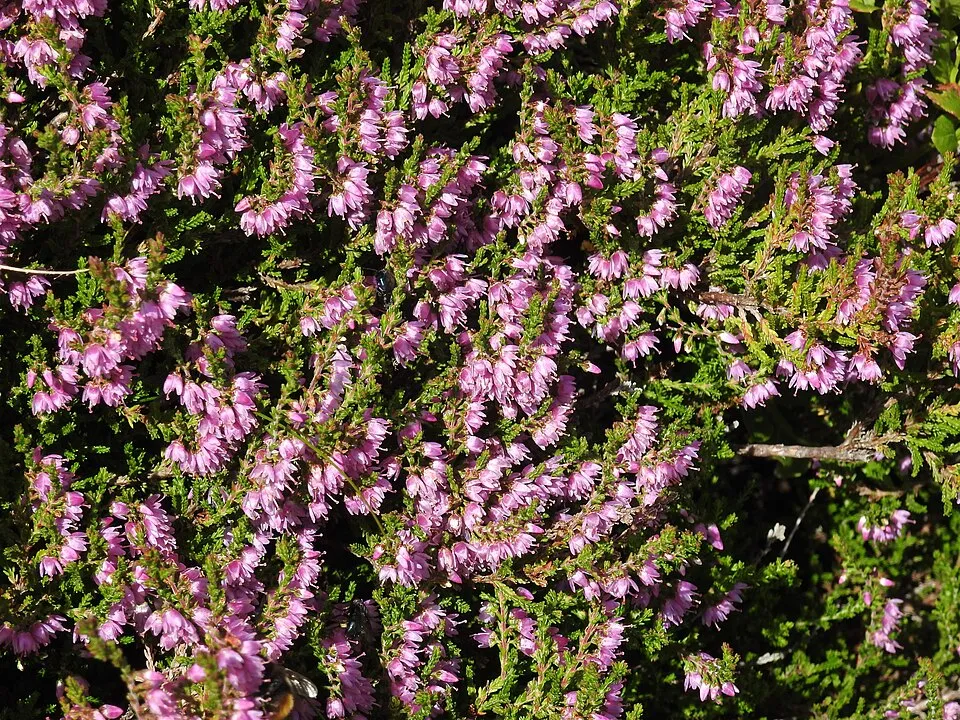
Calluna vulgaris, commonly known as Heather or Ling, is a monotypic genus in the Ericaceae family, widely recognized for its ecological dominance in moorlands and heathlands across Europe and parts of Asia, and naturalized in North America. This resilient evergreen dwarf shrub typically grows to a height of 20 to 50 centimeters, though it can reach up to 1 meter in sheltered locations. Its morphology is characterized by tiny, scale-like leaves, arranged in opposite decussate pairs, closely pressed against the stem, which helps reduce water loss in its often exposed habitats.
The plant produces abundant small, bell-shaped, typically purple-pink flowers, though white and crimson varieties also exist. These flowers are arranged in dense terminal racemes, blooming profusely from late summer through autumn, providing a crucial nectar source for bees and other pollinators. Calluna vulgaris thrives in acidic, nutrient-poor, well-drained soils, often forming extensive carpets that define the landscape of its native regions.
Its robust nature and attractive flowering make it a popular ornamental plant, while its historical and contemporary medicinal uses are deeply rooted in European herbal traditions, valuing various parts of the plant for their therapeutic properties.
Trusted Scientific References
1. Authoritative external sources for Calluna vulgaris
1.1 Wikipedia — Calluna vulgaris
1.2 Kew POWO (Plants of the World Online)
1.3 PubMed — peer-reviewed research
1.4 NCBI Taxonomy Browser
1.5 GBIF — Global Biodiversity
1.6Calluna Vulgaris should be interpreted through verified botanical identity, practical care, and responsible safety language. This recovery note adds the missing context needed for a complete profile: match light to the plant's habit, use well-drained soil, water according to season, and avoid unsupported medicinal or edible claims. For publishing, the plant can be presented as a source-backed garden plant with clear care guidance, common problem diagnosis, and conservative safety wording.
1.1.Calluna Vulgaris — Distinguishing Points
- ✓Common Name — Heather, Ling
- ✓Scientific Name — Calluna vulgaris
- ✓Family — Ericaceae
- ✓Plant Type — Evergreen dwarf shrub
- ✓Flowering Season — Late summer to autumn
- ✓Flower Color — Typically purple-pink, also white, crimson
- ✓Key Medicinal Actions — Diuretic, antiseptic, anti-inflammatory, antioxidant
- ✓Primary Chemical Constituents — Flavonoids, phenolic acids, arbutin
- ✓Habitat — Moorlands, heathlands, acidic woodlands
- ✓Ecological Importance — Crucial nectar source for bees, provides habitat
1.2.Calluna Vulgaris — In Brief
- ✓Calluna vulgaris, or Heather, is a hardy evergreen shrub valued for its ornamental beauty and medicinal properties.
- ✓Traditionally used for urinary tract issues, rheumatic conditions, and as an anti-inflammatory and antioxidant agent.
- ✓Rich in flavonoids, phenolic acids, and arbutin, contributing to its diverse health benefits.
- ✓Generally considered safe for most adults, but caution is advised during pregnancy and breastfeeding.
- ✓Cultivated widely, it thrives in acidic, well-drained soils and full sun, offering ecological value.
2.Calluna Vulgaris — Scientific Identity
3.Calluna Vulgaris — Key Data
4.Calluna Vulgaris — Botanical Description
5.Calluna Vulgaris — Native Range & Habitat
6.Calluna Vulgaris — Heritage Uses
7.Calluna Vulgaris — Key Phytochemicals
- ✓Flavonoids — Key compounds include quercetin, kaempferol, myricetin, and their glycosides, which are largely responsible for Calluna vulgaris's antioxidant and anti-inflammatory activities.
- ✓Phenolic Acids — Chlorogenic acid, caffeic acid, and ferulic acid are present, contributing significantly to the plant's antioxidant capacity and potentially its anti-inflammatory effects.
- ✓Proanthocyanidins — These condensed tannins provide astringent properties and act as potent antioxidants, supporting the plant's protective effects.
- ✓Hydroquinone Glycosides — Arbutin is a notable constituent, particularly in the leaves, known for its urinary antiseptic and diuretic actions, especially upon hydrolysis in the urinary tract.
- ✓Triterpenoids — Compounds like ursolic acid are found, which are recognized for their anti-inflammatory and potentially anti-cancer properties.
- ✓Coumarins — Various coumarins may be present, contributing to a range of biological activities, though their specific role in heather's medicinal profile is less defined.
- ✓Volatile Oils — Trace amounts of essential oils contribute to the plant's characteristic aroma and may possess mild antimicrobial activity.
- ✓Saponins — These compounds can have expectorant and diuretic effects, potentially contributing to heather's traditional uses for respiratory and urinary support.
- ✓Carotenoids — Present in the flowers and leaves, these pigments act as antioxidants and play a role in plant defense mechanisms.
8.Calluna Vulgaris — Evidence-Based Benefits
- ✓Urinary Tract Support — Calluna vulgaris is traditionally valued for its diuretic and antiseptic properties, aiding in the management of urinary tract infections (UTIs) and promoting kidney health by encouraging fluid excretion.
- ✓Anti-inflammatory Properties — Research suggests that heather contains compounds, particularly flavonoids, that can modulate inflammatory pathways, potentially offering relief for conditions characterized by chronic inflammation.
- ✓Antioxidant Activity — The plant is rich in polyphenolic compounds, including various flavonoids and phenolic acids, which act as potent antioxidants, scavenging free radicals and protecting cells from oxidative stress.
- ✓Hepatoprotective Potential — Preliminary studies indicate that Calluna vulgaris extracts may offer protective effects for the liver, with some research highlighting anti-hepatitis C virus activity and cellular protection.
- ✓Digestive Aid — Historically, infusions of heather have been used to soothe mild digestive discomforts, though specific mechanisms are not fully elucidated, its astringent qualities may contribute to gut health.
- ✓Rheumatic Pain Relief — Traditional European herbalism often employed heather preparations topically or internally to alleviate symptoms associated with rheumatic conditions and joint pain due to its anti-inflammatory actions.
- ✓Dermatological Applications — Extracts of Calluna vulgaris have shown photoprotective effects against UVB radiation and are traditionally used for skin conditions like eczema, minor wounds, and acne, owing to its antiseptic and soothing properties.
- ✓Support for Benign Prostatic Hyperplasia (BPH) — In some traditional contexts, heather has been used to support prostate health, particularly in cases of enlarged prostate, likely due to its diuretic and anti-inflammatory attributes.
- ✓Mild Astringent Action — The presence of tannins contributes to its astringent properties, making it useful in traditional remedies for mild diarrhea and as a general tonic for mucous membranes.
- ✓Respiratory Health — Infusions of heather have been traditionally used to alleviate symptoms of the common cold and coughs, acting as a mild expectorant and soothing agent for the respiratory tract.
8.1.Calluna Vulgaris — Therapeutic Indications
9.Calluna Vulgaris — Cautions & Contraindications
9.1.Calluna Vulgaris — Side Effects & Warnings
- ✓Allergic Reactions — While rare, individuals sensitive to plants in the Ericaceae family may experience mild skin irritation or allergic reactions.
- ✓Gastrointestinal Upset — High doses or sensitive individuals may experience mild stomach upset, nausea, or diarrhea.
- ✓Diuretic Effect — Its diuretic action can lead to increased urination, which might be inconvenient or interact with existing diuretic medications.
- ✓Dehydration Risk — Excessive consumption without adequate fluid intake could theoretically contribute to dehydration due to its diuretic properties.
- ✓Lack of Long-Term Data — Comprehensive long-term safety studies are limited, so prolonged use without professional guidance is not fully understood.
- ✓Potential Drug Interactions — Due to its diuretic effects, it may interact with prescription diuretics or medications affecting kidney function, necessitating caution.
9.2.Calluna Vulgaris — Safety Overview
- ✓Pregnancy and Breastfeeding — Avoid use during pregnancy and breastfeeding due as there is insufficient reliable information regarding its safety in these periods.
- ✓Medical Consultation — Always consult a healthcare professional before using heather, especially if you have pre-existing medical conditions or are taking medications.
- ✓Allergic Sensitivity — Individuals with known allergies to plants in the Ericaceae family should exercise caution or avoid use.
- ✓Dosage Adherence — Adhere to recommended dosages on product labels or as advised by a qualified herbalist to prevent potential side effects.
- ✓Children — Not recommended for use in children without the supervision and guidance of a healthcare provider.
- ✓Quality Sourcing — Ensure that any heather products are sourced from reputable suppliers to guarantee purity and prevent contamination.
- ✓Discontinue Use — Discontinue use immediately if any adverse reactions or unusual symptoms occur.
10.Calluna Vulgaris — Preparation Methods
- ✓Herbal Tea/Infusion — Prepare by steeping dried heather flowers and leaves in hot water for 5-10 minutes, commonly used for urinary tract support and as a general tonic.
- ✓Tincture Preparation — Macerate dried aerial parts in an alcohol-based solvent to create a concentrated extract, taken orally in drops.
- ✓Topical Poultice/Compress — Crush fresh or rehydrated dried plant material and apply directly to the skin for minor wounds, skin irritations, or rheumatic pains.
- ✓Herbal Baths — Add a strong infusion of heather to bathwater for a soothing and aromatic soak, beneficial for skin conditions and relaxation.
- ✓Encapsulated Powder — Dried and powdered heather aerial parts can be consumed in capsules for convenient internal administration, following recommended dosages.
- ✓Decoction — While less common for the delicate flowers, a decoction of tougher stems or roots could be prepared by simmering in water for a longer period, though aerial parts are primarily used.
- ✓Essential Oil Infusion — Infuse dried heather in a carrier oil (e.g., olive, almond) to create a macerated oil for topical application in massage or skincare.
11.Calluna Vulgaris — Garden Cultivation
- ✓Soil Preference — Thrives in acidic (pH 4.5-5.5), well-drained, sandy or peaty soils, mimicking its natural heathland habitat.
- ✓Light Requirements — Prefers full sun exposure to partial shade for optimal flowering and growth, requiring at least 6 hours of direct sunlight daily.
- ✓Watering Regimen — Requires consistent moisture, especially during establishment, but is intolerant of waterlogged conditions; allow soil to dry slightly between waterings.
- ✓Pruning Techniques — Prune annually in early spring after flowering to encourage dense growth and abundant blooms; avoid cutting into old wood.
- ✓Propagation Methods — Can be propagated from seeds, semi-ripe cuttings taken in late summer, or by layering, which mimics its natural spread.
- ✓Hardiness Zone — Highly tolerant to cold, generally hardy in USDA zones 4-8, making it suitable for various temperate climates.
- ✓Pest and Disease Management — Generally resistant to most pests and diseases, though root rot can occur in poorly drained soils; watch for fungal issues in humid conditions.
- ✓Fertilization — Typically requires minimal fertilization due to its adaptation to nutrient-poor soils; an acidic slow-release fertilizer can be applied sparingly if growth is poor.
Reviewed by the Flora Medical Global Botanical Review Panel
Multi-disciplinary editorial group · Botany · Ethnobotany · Herbal-medicine literature
Who reviewed this: This page was checked by the Flora Medical Global Botanical Review Panel — an in-house editorial group of botany graduates, ethnobotany researchers, and horticulture practitioners who collectively maintain our 7,000+ plant encyclopedia. Meet the team.
Our 4-step verification process
1. Taxonomic verification
Scientific names and synonyms cross-checked against Kew POWO, World Flora Online, and The Plant List.
2. Phytochemical & medicinal cross-reference
Active compounds, traditional uses, and reported activities are cross-referenced with PubMed, USDA Dr. Duke's database, and peer-reviewed ethnobotanical literature.
3. Conservation & distribution check
Distribution, ecology, and conservation status confirmed against GBIF occurrence records and the IUCN Red List.
4. Editorial & safety review
Every entry passes an editorial pass for clarity, originality, and safety notices (toxicity, contraindications, dosage caveats) before publication.
Last reviewed:
Important medical disclaimer: This content is for educational and research purposes only. It is not medical advice and is not a substitute for consultation with a licensed healthcare provider. Do not use any herb to self-treat a medical condition without professional guidance.
Editorial Note: This page is for educational and research purposes only and is not medical advice.
Written by: Flora Medical Global Editorial Team
Reviewed by: Flora Medical Global Botanical Review Panel
Last Updated: June 15, 2026





Calluna Vulgaris — Comments & Community Reviews
Rate this plant