

Medical Disclaimer: This content is for educational purposes only. It is not medical advice. Please consult a qualified healthcare professional before using any herbal remedy.
Safety Overview
1.Campanula Latifolia — Introduction & Highlights
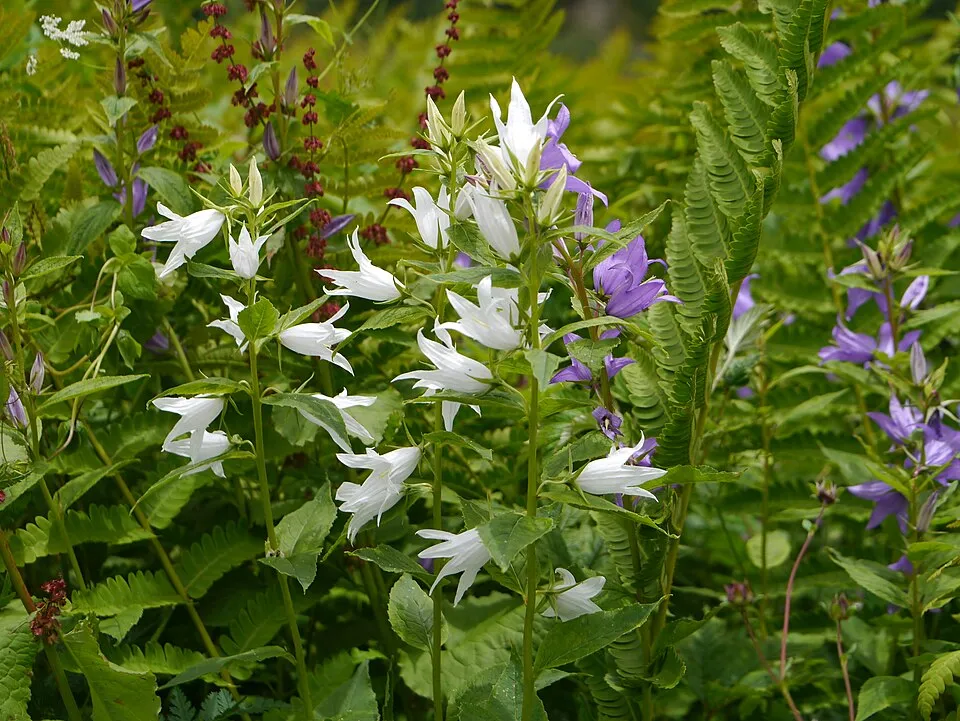
Campanula latifolia, commonly known as the Giant Bellflower or Broad-leaved Bellflower, is a striking herbaceous perennial belonging to the Campanulaceae family. This robust plant typically grows between 60 to 120 cm (2 to 4 feet) tall, sometimes reaching up to 150 cm, with an upright, sturdy stem that is often hairy. Its foliage consists of broad, ovate-lanceolate leaves with serrated margins, tapering to a point, and arranged alternately along the stem.
The basal leaves are larger and heart-shaped, forming a rosette. The most distinguishing feature of Campanula latifolia is its large, pendulous, bell-shaped flowers, which are typically a vibrant shade of blue or purple, though white varieties exist. These elegant blooms are borne singly or in loose racemes in the leaf axils, primarily flowering from early to late summer.
The plant develops a creeping rhizomatous root system, allowing it to spread gently over time.
Native to woodlands, moist meadows, and shaded areas across Europe and parts of Asia, the Giant Bellflower thrives in environments with dappled sunlight and consistently moist, well-drained, often calcareous soils. Its natural distribution spans from western Europe to the Caucasus mountains.
Taxonomically, it is classified within the genus Campanula, which encompasses over 400 species known for their characteristic bell-shaped flowers. This species is valued both for its ornamental appeal in gardens and its historical use in traditional herbal practices, making it a plant of interest for both horticulture and ethnobotany.
Trusted Scientific References
1. Authoritative external sources for Campanula latifolia
1.1 Wikipedia — Campanula latifolia
1.2 Kew POWO (Plants of the World Online)
1.3 PubMed — peer-reviewed research
1.4 NCBI Taxonomy Browser
1.5 GBIF — Global Biodiversity
1.6Campanula Latifolia should be interpreted through verified botanical identity, practical care, and responsible safety language. This recovery note adds the missing context needed for a complete profile: match light to the plant's habit, use well-drained soil, water according to season, and avoid unsupported medicinal or edible claims. For publishing, the plant can be presented as a source-backed garden plant with clear care guidance, common problem diagnosis, and conservative safety wording.
1.1.Campanula Latifolia — Key Features
- ✓Striking bell — shaped blue-purple flowers, making it an attractive ornamental.
- ✓Robust herbaceous perennial — Robust herbaceous perennial reaching significant heights (up to 1.5 meters).
- ✓Broad, serrated leaves — Broad, serrated leaves form a basal rosette and alternate along the stem.
- ✓Traditional uses in — Traditional uses in Ayurvedic medicine for inflammation and skin issues.
- ✓Contains beneficial phytochemicals — Contains beneficial phytochemicals such as flavonoids and tannins.
- ✓Adaptable to woodland — Adaptable to woodland garden settings and partial shade environments.
- ✓Supports digestive and — Supports digestive and respiratory health through traditional applications.
- ✓Relatively easy to — Relatively easy to cultivate, preferring moist, fertile soils.
- ✓Resilient plant with — Resilient plant with good cold hardiness in temperate zones.
- ✓Attracts pollinators, contributing — Attracts pollinators, contributing to garden biodiversity.
1.2.Campanula Latifolia — Quick Summary
- ✓Giant Bellflower (Campanula latifolia) is a perennial herb with vibrant blue-purple bell-shaped flowers.
- ✓Traditionally used in Ayurveda for its anti-inflammatory, antioxidant, and wound-healing properties.
- ✓Known for supporting skin health, digestive comfort, and respiratory function.
- ✓Rich in beneficial compounds like flavonoids, tannins, and phenolic acids.
- ✓Thrives in partial shade, moist, well-drained soil, and is easily cultivated.
- ✓Usage typically involves infusions, decoctions, and topical applications for various ailments.
2.Campanula Latifolia — Scientific Profile
3.Campanula Latifolia — Quick Facts
4.Campanula Latifolia — Structural Profile
5.Campanula Latifolia — Habitat & Distribution
6.Campanula Latifolia — Ethnobotanical Uses
7.Campanula Latifolia — Bioactive Constituents
- ✓Flavonoids — Key compounds include quercetin, kaempferol, and their glycosides, known for potent antioxidant, anti-inflammatory, and potentially immunomodulatory activities.
- ✓Tannins — Primarily gallotannins and condensed tannins, contributing to the plant's astringent properties and offering protective antioxidant effects.
- ✓Phenolic Acids — Such as caffeic acid, chlorogenic acid, and their derivatives, which are powerful antioxidants and contribute to anti-inflammatory actions.
- ✓Saponins — Triterpenoid saponins are present, which may contribute to expectorant and demulcent effects, particularly in the root.
- ✓Essential Oils — Volatile compounds are found in trace amounts, imparting subtle aromatic qualities and potentially contributing to mild antiseptic actions.
- ✓Polysaccharides — Mucilaginous compounds that provide demulcent properties, soothing irritated mucous membranes in the digestive and respiratory tracts.
- ✓Coumarins — A class of organic compounds with various biological activities, including anti-inflammatory and antioxidant effects.
- ✓Phytosterols — Plant sterols such as beta-sitosterol, which can have anti-inflammatory and cholesterol-lowering properties.
- ✓Vitamins — Contains various essential vitamins, including vitamin C and B-complex vitamins, supporting general health and metabolic functions.
- ✓Minerals — Provides essential dietary minerals such as potassium, calcium, and magnesium, vital for physiological processes.
8.Campanula Latifolia — Research Insights
- ✓Anti-inflammatory Support — Traditionally used to help reduce inflammation, particularly in cases of skin irritations and internal discomfort, likely due to its flavonoid content.
- ✓Antioxidant Properties — Rich in phenolic compounds and flavonoids, Campanula latifolia helps to neutralize free radicals, thereby protecting cells from oxidative stress and supporting overall cellular health.
- ✓Wound Healing Aid — Applied topically in traditional medicine, the plant's constituents are believed to assist in the healing of minor wounds and abrasions by potentially reducing inflammation and supporting tissue regeneration.
- ✓Digestive Comfort — Infusions prepared from the leaves have been traditionally consumed to soothe digestive issues, including mild indigestion and general gastrointestinal discomfort, acting as a demulcent.
- ✓Respiratory Health — Historically, the Giant Bellflower was used to alleviate symptoms related to respiratory problems, such as coughs and sore throats, possibly due to its mucilaginous and anti-inflammatory effects.
- ✓Skin Soothing — Its anti-inflammatory and antioxidant compounds contribute to its traditional use for various skin ailments, helping to calm irritation, redness, and minor dermatological issues.
- ✓Astringent Action — The presence of tannins provides mild astringent qualities, which can be beneficial in toning tissues and reducing secretions, for example, in cases of mild diarrhea or excessive mucus.
- ✓Mild Analgesic Effects — While not a primary analgesic, traditional uses suggest it may offer relief from mild pain associated with inflammation or irritation.
- ✓Immune System Modulation — Certain plant compounds, including flavonoids, are known to support and modulate immune responses, potentially enhancing the body's natural defenses.
- ✓Diuretic Potential — In some traditional contexts, Campanula species have been noted for mild diuretic properties, aiding the body in flushing excess fluids.
8.1.Campanula Latifolia — Conditions Traditionally Used For
9.Campanula Latifolia — Risk Profile
9.1.Campanula Latifolia — Caution Notes
- ✓Allergic Reactions — Individuals sensitive to plants in the Campanulaceae family may experience skin rashes, itching, or respiratory symptoms.
- ✓Gastrointestinal Upset — High doses or sensitive individuals may experience mild stomach upset, nausea, or diarrhea, particularly with internal consumption.
- ✓Skin Irritation — Direct contact with the sap from some Campanula species can occasionally cause mild skin irritation in sensitive individuals.
- ✓Astringency-Related Issues — Excessive consumption of tannin-rich preparations might interfere with nutrient absorption over time or cause constipation.
- ✓Bitter Taste — The inherent bitterness of some preparations may be unpalatable to certain individuals, potentially leading to mild nausea.
- ✓Hypotension Risk — While not strongly documented for this species, some plants with diuretic properties can theoretically affect blood pressure.
9.2.Campanula Latifolia — Safety Overview
- ✓Pregnancy and Lactation — Avoid use during pregnancy and breastfeeding due to insufficient safety data; consult a healthcare professional.
- ✓Children — Exercise caution when administering to children; dosage should be significantly reduced and supervised by a medical expert.
- ✓Drug Interactions — Potential interactions with medications are not well-studied; consult a doctor if taking prescription drugs, especially those affecting blood clotting or blood pressure.
- ✓Pre-existing Conditions — Individuals with chronic health conditions, particularly gastrointestinal sensitivities or kidney issues, should seek medical advice before use.
- ✓Dosage — Adhere strictly to recommended dosages; excessive consumption may lead to adverse effects.
- ✓Purity — Ensure the plant material is correctly identified and free from pesticides or contaminants if harvesting wild or purchasing from unverified sources.
- ✓Consultation — Always consult a qualified medical herbalist or healthcare provider before incorporating Campanula latifolia into a therapeutic regimen.
10.Campanula Latifolia — Preparation & Dosage
- ✓Herbal Infusion (Tea) — Prepare a soothing tea by steeping 1-2 teaspoons of dried Campanula latifolia leaves in hot water for 5-10 minutes; traditionally used for respiratory and digestive support.
- ✓Decoction (Root) — For more potent extraction, particularly from the root, simmer chopped fresh or dried root in water for 15-20 minutes; used for deeper internal issues.
- ✓Topical Poultice — Crush fresh leaves to form a paste and apply directly to minor skin irritations, small wounds, or insect bites to leverage its anti-inflammatory and wound-healing properties.
- ✓Compresses — Soak a clean cloth in a strong infusion or decoction, then apply as a warm compress to inflamed skin areas or sore muscles.
- ✓Tincture — Prepare an alcoholic extract of the leaves or roots, allowing for a concentrated form that can be taken internally in drops or applied topically.
- ✓Gargle/Mouthwash — Use a cooled leaf infusion as a gargle to alleviate sore throats or as a mouthwash for oral irritations due to its mild astringent action.
- ✓Culinary Use (Young Leaves) — Young leaves can be consumed raw in salads or cooked as a potherb, offering a mild, slightly bitter flavor and nutritional benefits.
11.Campanula Latifolia — Growth Requirements
- ✓Soil Preference — Thrives in well-drained, fertile, loamy soils rich in organic matter, with a slightly alkaline to neutral pH.
- ✓Light Requirements — Prefers partial shade, especially in hotter climates, but can tolerate full sun if the soil remains consistently moist.
- ✓Watering Regimen — Requires regular watering, particularly during dry spells, ensuring the soil is consistently moist but never waterlogged.
- ✓Fertilization — Benefit from feeding with a balanced, all-purpose fertilizer every few months during the active growing season (spring to mid-summer).
- ✓Pruning Techniques — Deadhead spent flowers to encourage further blooming and prune back after the main flowering period to promote bushier growth and prevent excessive self-seeding.
- ✓Propagation — Easily propagated by seeds sown in spring or autumn, or by division of established clumps in early spring or fall.
- ✓Pests and Diseases — Generally robust, but watch for slugs and snails, especially on young plants; powdery mildew can occur in humid conditions.
- ✓Cold Hardiness — Fully hardy in temperate zones, typically USDA Hardiness Zones 3-8.
Reviewed by the Flora Medical Global Botanical Review Panel
Multi-disciplinary editorial group · Botany · Ethnobotany · Herbal-medicine literature
Who reviewed this: This page was checked by the Flora Medical Global Botanical Review Panel — an in-house editorial group of botany graduates, ethnobotany researchers, and horticulture practitioners who collectively maintain our 7,000+ plant encyclopedia. Meet the team.
Our 4-step verification process
1. Taxonomic verification
Scientific names and synonyms cross-checked against Kew POWO, World Flora Online, and The Plant List.
2. Phytochemical & medicinal cross-reference
Active compounds, traditional uses, and reported activities are cross-referenced with PubMed, USDA Dr. Duke's database, and peer-reviewed ethnobotanical literature.
3. Conservation & distribution check
Distribution, ecology, and conservation status confirmed against GBIF occurrence records and the IUCN Red List.
4. Editorial & safety review
Every entry passes an editorial pass for clarity, originality, and safety notices (toxicity, contraindications, dosage caveats) before publication.
Last reviewed:
Important medical disclaimer: This content is for educational and research purposes only. It is not medical advice and is not a substitute for consultation with a licensed healthcare provider. Do not use any herb to self-treat a medical condition without professional guidance.
Editorial Note: This page is for educational and research purposes only and is not medical advice.
Written by: Flora Medical Global Editorial Team
Reviewed by: Flora Medical Global Botanical Review Panel
Last Updated: June 15, 2026





Campanula Latifolia — Comments & Community Reviews
Rate this plant