

Medical Disclaimer: This content is for educational purposes only. It is not medical advice. Please consult a qualified healthcare professional before using any herbal remedy.
Safety Overview
1.Campanula Rotundifolia — Botanical Snapshot
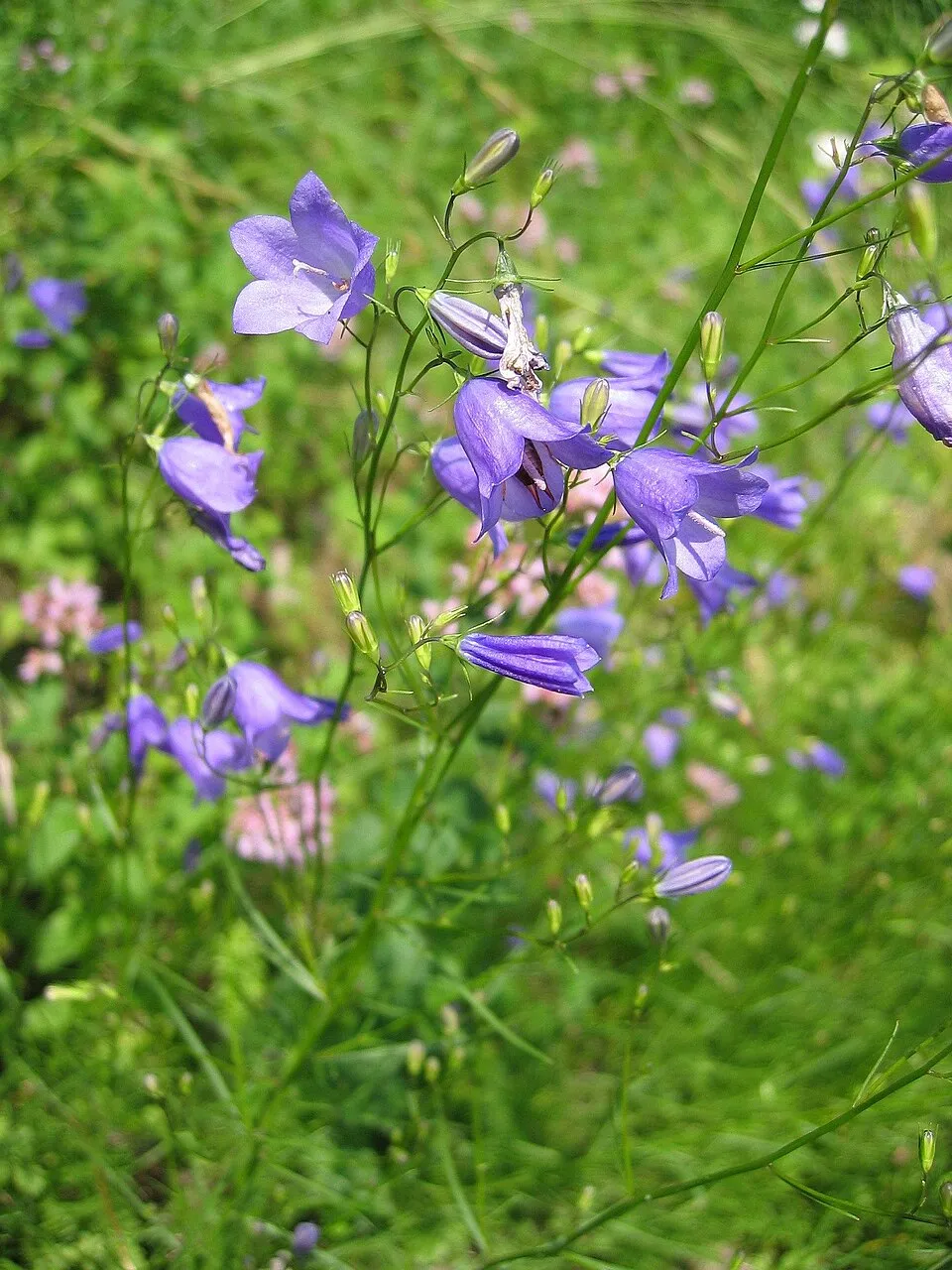
Campanula rotundifolia, commonly known as Harebell or Scottish Bluebell, is a graceful herbaceous perennial belonging to the Campanulaceae family. This resilient species thrives across the Northern Hemisphere, adapting to an impressive array of habitats from sun-drenched meadows and dry cliffs to shaded woodlands and coastal beaches, often found at elevations reaching up to 12,000 feet. Its distinctive morphology includes a slender, wiry stem typically growing 30 to 60 cm tall.
The plant exhibits dimorphic foliage: the basal leaves are notably rounded to heart-shaped, often with a slightly serrated margin, and may wither early, which gave rise to its specific epithet 'rotundifolia'. In contrast, the stem leaves are much narrower, linear, and grass-like. The delicate, bell-shaped flowers, usually 12-30 mm long, bloom in late summer and autumn, displaying shades of violet-blue, though pale pink or white variants can occur.
These elegant blossoms are borne on slender pedicels in a panicle or raceme and are primarily pollinated by bees, though self-fertilization is possible. A characteristic milky latex is exuded when the stem or leaves are broken, a common feature among many Campanula species. Despite its delicate appearance, Harebell is remarkably hardy, spreading through both seed dispersal and rhizomes, making it a persistent and cherished component of diverse ecosystems.
Trusted Scientific References
1. Authoritative external sources for Campanula Rotundifolia
1.1 Wikipedia — Campanula Rotundifolia
1.2 Kew POWO (Plants of the World Online)
1.3 PubMed — peer-reviewed research
1.4 NCBI Taxonomy Browser
1.5 GBIF — Global Biodiversity
1.6Campanula Rotundifolia should be interpreted through verified botanical identity, practical care, and responsible safety language. This recovery note adds the missing context needed for a complete profile: match light to the plant's habit, use well-drained soil, water according to season, and avoid unsupported medicinal or edible claims. For publishing, the plant can be presented as a source-backed garden plant with clear care guidance, common problem diagnosis, and conservative safety wording.
1.1.Campanula Rotundifolia — Highlights
- ✓Perennial herbaceous plant — Perennial herbaceous plant with a delicate appearance yet robust hardiness.
- ✓Distinctive dimorphic foliage — rounded basal leaves and linear stem leaves.
- ✓Produces charming violet — blue, bell-shaped flowers in late summer and autumn.
- ✓Widely distributed across — Widely distributed across a variety of habitats throughout the Northern Hemisphere.
- ✓Exudes a characteristic — Exudes a characteristic milky latex sap when plant parts are broken.
- ✓Primarily pollinated by bees, but capable of self — fertilization for propagation.
- ✓Historically significant as — Historically significant as a source of blue dye and a symbol for clans/nations.
- ✓Contains a range — Contains a range of phytochemicals including flavonoids, alkaloids, and phenolic acids.
- ✓Traditionally used in folk medicine for its anti — inflammatory and digestive properties.
- ✓Propagates effectively by — Propagates effectively by both seeds and rhizome division.
1.2.Campanula Rotundifolia — Concise Overview
- ✓Harebell is a graceful perennial wildflower found across the Northern Hemisphere.
- ✓Characterized by its unique round basal leaves and delicate violet-blue bell-shaped flowers.
- ✓Traditionally valued for its minor medicinal qualities, particularly for digestive and respiratory support.
- ✓Contains beneficial phytochemicals such as flavonoids, alkaloids, and essential oils.
- ✓Adaptable and hardy, thriving in diverse habitats from sun to partial shade.
- ✓A symbol of Scotland and Sweden, also historically used for dye and in folk beliefs.
2.Campanula Rotundifolia — Nomenclature & Classification
3.Campanula Rotundifolia — Vital Statistics
4.Campanula Rotundifolia — Physical Description
5.Campanula Rotundifolia — Origin & Spread
6.Campanula Rotundifolia — Folk Medicine Applications
7.Campanula Rotundifolia — Chemical Profile
- ✓Flavonoids — Key compounds include quercetin, kaempferol, luteolin, and apigenin, known for their potent antioxidant, anti-inflammatory, and neuroprotective activities.
- ✓Alkaloids — While not extensively characterized, various alkaloidal compounds are present, potentially contributing to the plant's diverse pharmacological effects.
- ✓Essential Oils — Small quantities of volatile aromatic compounds are found, which may impart subtle fragrance and possess antimicrobial or soothing properties.
- ✓Saponins — These glycosidic compounds are present and may contribute to expectorant, anti-inflammatory, and potentially adaptogenic effects.
- ✓Phenolic Acids — Including caffeic acid and chlorogenic acid, these compounds exhibit significant antioxidant, anti-inflammatory, and antimicrobial properties.
- ✓Polysaccharides — Complex carbohydrates that can have immunomodulatory, demulcent, and prebiotic effects, supporting gut health and immune function.
- ✓Triterpenes — A group of diverse compounds with potential anti-inflammatory, hepatoprotective, and cytotoxic activities, contributing to the plant's medicinal profile.
- ✓Coumarins — Naturally occurring compounds that can exhibit anti-inflammatory, anticoagulant, and antimicrobial actions, though specific types and concentrations vary.
- ✓Iridoids — Bitter principles that may contribute to digestive stimulation and possess anti-inflammatory and antiseptic qualities.
- ✓Tannins — Astringent compounds that can help tighten tissues, reduce inflammation, and offer antimicrobial benefits, often found in various plant parts.
8.Campanula Rotundifolia — Scientific Evidence
- ✓Anti-inflammatory Properties — Harebell has been traditionally employed to reduce minor inflammation, particularly in the gastrointestinal and respiratory tracts, likely due to its flavonoid content.
- ✓Antispasmodic Effects — Historically used to alleviate muscle spasms, providing relief from discomfort associated with digestive upset or mild cramps.
- ✓Digestive Aid — In various folk medicine systems, it was utilized to soothe gastrointestinal discomfort, promoting a sense of ease and supporting healthy digestion.
- ✓Respiratory Support — Traditional applications suggest its use in alleviating minor respiratory issues, such as soothing coughs or irritated airways.
- ✓Mild Diuretic Action — The plant is thought to possess gentle diuretic qualities, potentially assisting in the body's natural processes of fluid balance.
- ✓Antioxidant Activity — Rich in flavonoids and phenolic compounds, Campanula rotundifolia contributes to the neutralization of free radicals, offering cellular protection.
- ✓Skin Soothing — Topically, it may be used in traditional remedies to calm minor skin irritations or aid in the healing of small abrasions.
- ✓Gentle Analgesic — Folk traditions suggest minor pain-relieving properties, particularly for localized discomfort or mild aches.
- ✓Immune System Modulator — While not a primary immune booster, the presence of various phytochemicals may offer subtle support to the body's natural defenses.
- ✓Nervous System Calming — Anecdotal evidence points to a mild calming effect, potentially aiding in general relaxation and reducing nervous tension.
8.1.Campanula Rotundifolia — Indications & Uses
9.Campanula Rotundifolia — Safety Considerations
9.1.Campanula Rotundifolia — Possible Adverse Reactions
- ✓Gastrointestinal Upset — Some individuals may experience mild stomach discomfort, nausea, or diarrhea, particularly with excessive consumption.
- ✓Allergic Reactions — Sensitive individuals might develop skin rashes, itching, or other allergic symptoms, especially if they have allergies to the Campanulaceae family.
- ✓Diuretic Effect — Due to its potential diuretic properties, increased urination may occur, which could lead to electrolyte imbalance if consumed in large quantities.
- ✓Hypotension Risk — Theoretical potential for mild blood pressure reduction, which could be relevant for individuals on hypotensive medications.
- ✓Sedation — Very high doses might induce mild drowsiness or sedation, though this is not commonly reported with typical usage.
- ✓Skin Irritation from Sap — Contact with the milky latex exuded from broken stems or leaves may cause mild skin irritation in sensitive individuals.
- ✓Photosensitivity — While rare, some plant compounds can increase skin sensitivity to sunlight in susceptible individuals.
9.2.Campanula Rotundifolia — Clinical Safety Notes
- ✓Pregnancy and Lactation — Avoid use during pregnancy and breastfeeding due to insufficient research on its safety for these populations.
- ✓Children — Use in children should be avoided or administered only under the strict supervision of a qualified healthcare professional.
- ✓Allergies — Individuals with known allergies to plants in the Campanulaceae family (bellflower family) should avoid Campanula rotundifolia.
- ✓Drug Interactions — Exercise caution if taking diuretics, blood pressure medications, or sedatives, as Harebell may theoretically interact with these.
- ✓Pre-existing Conditions — Individuals with kidney disorders or other chronic health conditions should consult a healthcare provider before use.
- ✓External Contact — Avoid direct contact of the milky sap with eyes or mucous membranes, as it may cause irritation.
- ✓Dosage Adherence — Always adhere to recommended dosages and consult with a qualified herbalist or healthcare practitioner for appropriate use.
10.Campanula Rotundifolia — Preparation Methods
- ✓Herbal Tea Infusion — Prepare a mild tea by infusing dried leaves and flowers in hot water for 5-10 minutes, traditionally used for digestive comfort or respiratory support.
- ✓Tincture Preparation — Create an alcohol-based extract using fresh or dried plant material, allowing for concentrated internal use under professional guidance.
- ✓Topical Poultice — Crush fresh leaves and flowers to form a poultice, applied externally to soothe minor skin irritations or localized inflammation.
- ✓Edible Salad Greens — Young, tender basal leaves can be consumed raw in salads, offering a mild, earthy flavor and minor nutritional benefits.
- ✓Herbal Syrup — Infuse the aerial parts into a simple syrup with honey or sugar, traditionally used to alleviate coughs or sore throats.
- ✓Herbal Compress — Soak a cloth in a strong infusion of Harebell, then apply as a compress to calm skin or reduce swelling.
- ✓Bath Infusion — Add a strong infusion of the plant to bathwater for a soothing and aromatic experience, potentially beneficial for tired muscles or skin.
- ✓Decoction (limited) — While primarily aerial parts are used, a mild decoction of tougher stems might be considered for specific applications, though less common.
11.Campanula Rotundifolia — Garden Cultivation
- ✓Soil Preference — Thrives in well-drained, fertile soil rich in organic matter, but is also highly adaptable to sandy, gravelly, or even rocky substrates.
- ✓Light Requirements — Prefers full sun to partial shade, demonstrating considerable tolerance for varying light conditions across its natural range.
- ✓Watering Regime — Requires regular watering during dry periods to establish, but mature plants prefer moderate moisture and are intolerant of waterlogged conditions.
- ✓Propagation by Seed — Seeds are extremely small and can be collected, then sown directly onto the soil surface in spring for germination.
- ✓Division of Clumps — Established clumps of Harebell can be successfully divided in either spring or fall to create new plants.
- ✓Hardiness and Resilience — Remarkably hardy, Campanula rotundifolia is much more robust than its delicate appearance suggests, tolerating a wide range of temperatures.
- ✓Maintenance — Generally low-maintenance once established, requiring minimal intervention beyond ensuring appropriate light and moisture conditions.
- ✓Habitat Mimicry — For optimal growth, replicate its natural diverse habitats, from open meadows to the edges of woodlands.
Reviewed by the Flora Medical Global Botanical Review Panel
Multi-disciplinary editorial group · Botany · Ethnobotany · Herbal-medicine literature
Who reviewed this: This page was checked by the Flora Medical Global Botanical Review Panel — an in-house editorial group of botany graduates, ethnobotany researchers, and horticulture practitioners who collectively maintain our 7,000+ plant encyclopedia. Meet the team.
Our 4-step verification process
1. Taxonomic verification
Scientific names and synonyms cross-checked against Kew POWO, World Flora Online, and The Plant List.
2. Phytochemical & medicinal cross-reference
Active compounds, traditional uses, and reported activities are cross-referenced with PubMed, USDA Dr. Duke's database, and peer-reviewed ethnobotanical literature.
3. Conservation & distribution check
Distribution, ecology, and conservation status confirmed against GBIF occurrence records and the IUCN Red List.
4. Editorial & safety review
Every entry passes an editorial pass for clarity, originality, and safety notices (toxicity, contraindications, dosage caveats) before publication.
Last reviewed:
Important medical disclaimer: This content is for educational and research purposes only. It is not medical advice and is not a substitute for consultation with a licensed healthcare provider. Do not use any herb to self-treat a medical condition without professional guidance.
Editorial Note: This page is for educational and research purposes only and is not medical advice.
Written by: Flora Medical Global Editorial Team
Reviewed by: Flora Medical Global Botanical Review Panel
Last Updated: June 15, 2026





Campanula Rotundifolia — Comments & Community Reviews
Rate this plant