
Medical Disclaimer: This content is for educational purposes only. It is not medical advice. Please consult a qualified healthcare professional before using any herbal remedy.
Safety Overview
1.Canna Stuttgart — Botanical Snapshot
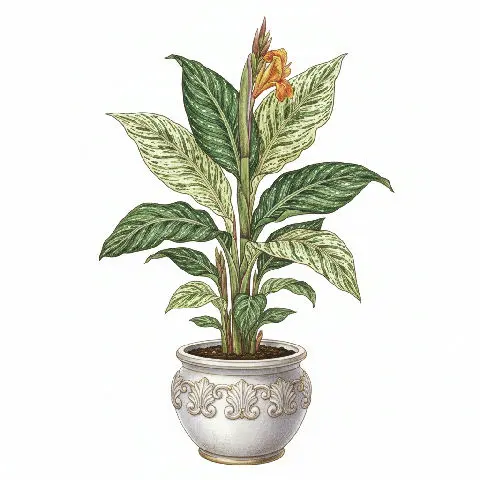
Canna 'Stuttgart', a striking horticultural hybrid, is primarily celebrated for its uniquely variegated foliage, making it a highly sought-after ornamental plant. While the genus Canna originates from the tropical and subtropical regions of the Americas and Asia, 'Stuttgart' is a specific cultivated variety, not found in the wild, likely a cultivar of Canna x generalis or Canna indica. Its history is rooted in plant breeding efforts focused on creating visually distinctive Canna cultivars.
'Stuttgart' is renowned for its large, paddle-like green leaves that feature unusual cream to white streaking and speckling, often acquiring a bronzy-purple tint when exposed to ample sunlight. This captivating variegation is a genetic trait, a result of mutation or meticulous cross-breeding. Botanically, like all Cannas, it belongs to the family Cannaceae, characterized by its robust growth habit and showy, orchid-like flowers.
Canna 'Stuttgart' typically produces vibrant orange flowers, which provide a dramatic and aesthetically pleasing contrast against its distinctive variegated leaves. Unlike many wild Canna species, particularly Canna indica, which have a long history of traditional medicinal usage for their starchy rhizomes and leaves, Canna 'Stuttgart' itself has no documented traditional medicinal uses. Its development and primary purpose are purely ornamental, enhancing garden aesthetics and attracting pollinators with its bright blooms.
Trusted Scientific References
1. Authoritative external sources for Canna stuttgart
1.1 Wikipedia — Canna stuttgart
1.2 Kew POWO (Plants of the World Online)
1.3 PubMed — peer-reviewed research
1.4 NCBI Taxonomy Browser
1.5 GBIF — Global Biodiversity
1.6Canna Stuttgart should be interpreted through verified botanical identity, practical care, and responsible safety language. This recovery note adds the missing context needed for a complete profile: match light to the plant's habit, use well-drained soil, water according to season, and avoid unsupported medicinal or edible claims. For publishing, the plant can be presented as a source-backed garden plant with clear care guidance, common problem diagnosis, and conservative safety wording.
1.1.Canna Stuttgart — Distinguishing Points
- ✓Striking Variegated Foliage — Large green leaves with unique cream to white streaking and speckling.
- ✓Vibrant Orange Flowers — Showy, orchid-like blooms that contrast beautifully with the foliage.
- ✓Ornamental Hybrid — Primarily bred for aesthetic garden appeal.
- ✓Tropical Aesthetic — Enhances garden designs with a lush, exotic feel.
- ✓Attracts Pollinators — Flowers serve as a nectar source for bees, butterflies, and hummingbirds.
- ✓Edible Rhizomes (Canna genus) — Starchy tubers offer nutritional value, similar to potatoes, when properly prepared.
- ✓Adaptable Growth — Thrives in various soil types and can be grown in borders, water gardens, or containers.
- ✓Low Maintenance — Relatively easy to care for with adequate sun and moisture.
- ✓Heat and Humidity Tolerant — Well-suited for warm climates.
- ✓Bold Architectural Presence — Provides strong vertical interest in landscapes.
1.2.Canna Stuttgart — In Brief
- ✓Canna 'Stuttgart' is a vibrant ornamental hybrid known for its variegated foliage and orange flowers.
- ✓While 'Stuttgart' itself has no traditional medicinal uses, its Canna ancestors (like C. indica) offer antioxidant, anti-inflammatory, and digestive benefits.
- ✓The genus Canna produces starchy, edible rhizomes that are nutritious when cooked.
- ✓It is a pollinator-friendly plant, attracting bees, butterflies, and hummingbirds to gardens.
- ✓Cultivated for tropical garden aesthetics, it thrives in full sun and moist, well-drained soil.
- ✓Caution is advised for any internal use of 'Stuttgart' due to its ornamental nature and lack of specific safety data.
2.Canna Stuttgart — Botanical Identity
3.Canna Stuttgart — Fact Sheet
4.Canna Stuttgart — Botanical Features
5.Canna Stuttgart — Origin & Spread
6.Canna Stuttgart — Folk Medicine Applications
7.Canna Stuttgart — Key Phytochemicals
- ✓Flavonoids — Key compounds include quercetin and kaempferol, known for their significant antioxidant, anti-inflammatory, and potentially antiviral properties.
- ✓Phenolic Acids — Such as gallic acid and caffeic acid, which contribute to the plant's antioxidant capacity and play a role in protecting cells from oxidative damage.
- ✓Alkaloids — Various nitrogen-containing compounds are present in trace amounts, which may contribute to some of the traditional analgesic or antispasmodic effects.
- ✓Starch — The primary carbohydrate found in the rhizomes, providing substantial nutritional value and acting as a demulcent agent.
- ✓Saponins — Glycosides that can have emulsifying properties and have been investigated for potential anti-inflammatory and immune-modulating effects.
- ✓Tannins — Astringent compounds that can contribute to wound healing and anti-diarrheal properties, often found in the leaves and rhizomes.
- ✓Triterpenes — A diverse group of compounds with various biological activities, including anti-inflammatory and hepatoprotective potential.
- ✓Glycosides — Various types of glycosides, beyond saponins, which can contribute to the plant's overall medicinal profile.
- ✓Minerals — Including potassium, magnesium, and calcium, essential micronutrients contributing to the nutritional value of the rhizomes.
- ✓Vitamins — Contains modest amounts of B vitamins and Vitamin C, further enhancing its dietary benefits.
8.Canna Stuttgart — Pharmacological Findings
- ✓Antioxidant Properties — Canna indica, a likely ancestor, contains phenolic compounds and flavonoids that exhibit potent antioxidant activity, helping to neutralize free radicals and mitigate oxidative stress in the body.
- ✓Anti-inflammatory Effects — Compounds found in the Canna genus, such as specific flavonoids, have been studied for their ability to modulate inflammatory pathways, potentially offering relief from inflammatory conditions.
- ✓Digestive Support — The starchy rhizomes of Canna species, when properly prepared, have traditionally been used as a demulcent, soothing irritated digestive tracts and aiding in nutrient absorption.
- ✓Nutritional Value — Edible tubers from the Canna genus are rich in carbohydrates, providing a substantial energy source and contributing to dietary diversity, similar to potatoes.
- ✓Minor Pain Relief — Traditional applications of Canna indica suggest its use in alleviating minor aches and pains, possibly due to its anti-inflammatory and analgesic-like compounds.
- ✓Wound Healing — Topically applied poultices made from Canna leaves in traditional medicine were believed to support the healing of minor cuts, abrasions, and skin irritations.
- ✓Fever Reduction — In some traditional systems, Canna rhizomes were employed to help reduce fever, though the exact mechanism requires further scientific investigation.
- ✓Diuretic Action — Certain Canna preparations have been used traditionally for their mild diuretic properties, potentially assisting in fluid balance.
- ✓Blood Sugar Regulation — Preliminary research on Canna indica suggests potential benefits in supporting healthy blood sugar levels, likely due to its fiber content and specific phytochemicals.
- ✓Antimicrobial Potential — Extracts from Canna species have shown some in vitro antimicrobial activity, indicating a potential role in combating certain microbial infections.
8.1.Canna Stuttgart — Health Applications
9.Canna Stuttgart — Safety & Side Effects
9.1.Canna Stuttgart — Warnings
- ✓Allergic Reactions — Sensitive individuals may experience skin irritation upon contact or allergic responses if consumed.
- ✓Digestive Upset — Ingesting improperly prepared or raw Canna rhizomes can cause gastrointestinal discomfort due to indigestible compounds.
- ✓Medication Interactions — Potential, though undocumented for 'Stuttgart', interactions with medications, especially those affecting blood sugar or inflammation, cannot be ruled out for Canna species.
- ✓Toxicity from Raw Consumption — While Canna rhizomes are edible when cooked, consuming raw plant parts (especially leaves or stems) may cause mild toxicity or gastric distress.
- ✓Contamination Risk — If not organically grown, plants may contain pesticide or herbicide residues, posing a risk if consumed.
- ✓Lack of Specific Data — Due to 'Stuttgart' being an ornamental hybrid, specific safety data on its internal consumption is absent, making caution paramount.
- ✓Pregnancy and Lactation — Insufficient safety data for pregnant or nursing individuals; consumption should be avoided.
9.2.Canna Stuttgart — Clinical Safety Notes
- ✓Ornamental Primary Use — Canna 'Stuttgart' is primarily an ornamental plant; its use for medicinal or culinary purposes should be approached with extreme caution.
- ✓Expert Consultation — Always consult a qualified healthcare professional or medical herbalist before using any part of Canna 'Stuttgart' for medicinal purposes.
- ✓Proper Identification — Ensure correct plant identification, as 'Stuttgart' is a specific cultivar, and not all Canna species are used similarly.
- ✓Avoid Raw Consumption — Canna rhizomes are starchy and require proper cooking to be digestible and safe for consumption.
- ✓Pregnancy & Lactation — Due to a lack of safety data, pregnant and breastfeeding individuals should avoid consuming Canna 'Stuttgart' or any Canna preparations.
- ✓Children & Vulnerable Populations — Exercise caution or avoid use in children, elderly, or individuals with compromised health conditions.
- ✓Pesticide Awareness — If considering culinary use, ensure the plant has been grown without harmful pesticides or chemicals.
10.Canna Stuttgart — Usage Guide
- ✓Culinary Use of Rhizomes — The starchy rhizomes of Canna species (like Canna indica, from which 'Stuttgart' is derived) can be boiled, roasted, or ground into flour, similar to potatoes or taro.
- ✓Traditional Decoction — For traditional medicinal applications, rhizomes may be decocted (boiled in water) to extract water-soluble compounds for internal use.
- ✓Leaf Poultices — Fresh Canna leaves can be crushed and applied externally as a poultice for minor skin irritations or wounds, as per folk traditions.
- ✓Tincture Preparation — Alcoholic extracts (tinctures) of Canna rhizomes can be made for concentrated medicinal use, though specific 'Stuttgart' data is lacking.
- ✓Ornamental Display — Canna 'Stuttgart' is primarily cultivated for its striking variegated foliage and vibrant flowers, enhancing garden aesthetics and attracting pollinators.
- ✓Habitat Enhancement — Planted to attract beneficial pollinators like bees, butterflies, and hummingbirds, supporting local biodiversity.
- ✓Garden Design Element — Utilized in tropical-themed gardens, mixed borders, or as a standalone specimen due to its bold visual impact.
- ✓Caution for 'Stuttgart' — Given its hybrid ornamental nature, direct internal medicinal use of Canna 'Stuttgart' specifically is not traditionally documented and should be approached with extreme caution and professional guidance.
11.Canna Stuttgart — Garden Cultivation
- ✓Site Selection — Plant Canna 'Stuttgart' in a location receiving full sun (at least 6 hours daily) for optimal growth and variegation.
- ✓Soil Requirements — Prefers moist, well-drained, fertile soil rich in organic matter. Adaptable to various soil types.
- ✓Watering — Requires consistent moisture, especially during dry periods; do not allow the soil to dry out completely.
- ✓Fertilization — Feed regularly during the growing season with a balanced, all-purpose fertilizer to support lush foliage and abundant blooms.
- ✓Propagation — Primarily propagated by dividing the rhizomes in spring, ensuring each division has at least one 'eye' or growth bud.
- ✓Winter Care — In colder climates (below USDA Zone 8), rhizomes should be lifted after the first frost, stored in a cool, dry, dark place over winter, and replanted in spring.
- ✓Pests & Diseases — Generally robust, but monitor for common pests like spider mites or slugs, and fungal issues in overly wet conditions.
- ✓Container Growing — Excellent choice for large containers, especially in cooler zones where rhizomes need to be easily overwintered.
Reviewed by the Flora Medical Global Botanical Review Panel
Multi-disciplinary editorial group · Botany · Ethnobotany · Herbal-medicine literature
Who reviewed this: This page was checked by the Flora Medical Global Botanical Review Panel — an in-house editorial group of botany graduates, ethnobotany researchers, and horticulture practitioners who collectively maintain our 7,000+ plant encyclopedia. Meet the team.
Our 4-step verification process
1. Taxonomic verification
Scientific names and synonyms cross-checked against Kew POWO, World Flora Online, and The Plant List.
2. Phytochemical & medicinal cross-reference
Active compounds, traditional uses, and reported activities are cross-referenced with PubMed, USDA Dr. Duke's database, and peer-reviewed ethnobotanical literature.
3. Conservation & distribution check
Distribution, ecology, and conservation status confirmed against GBIF occurrence records and the IUCN Red List.
4. Editorial & safety review
Every entry passes an editorial pass for clarity, originality, and safety notices (toxicity, contraindications, dosage caveats) before publication.
Last reviewed:
Important medical disclaimer: This content is for educational and research purposes only. It is not medical advice and is not a substitute for consultation with a licensed healthcare provider. Do not use any herb to self-treat a medical condition without professional guidance.
Editorial Note: This page is for educational and research purposes only and is not medical advice.
Written by: Flora Medical Global Editorial Team
Reviewed by: Flora Medical Global Botanical Review Panel
Last Updated: June 15, 2026





Canna Stuttgart — Comments & Community Reviews
Rate this plant