


Medical Disclaimer: This content is for educational purposes only. It is not medical advice. Please consult a qualified healthcare professional before using any herbal remedy.
Safety Overview
1.Canna Tropicanna — Overview
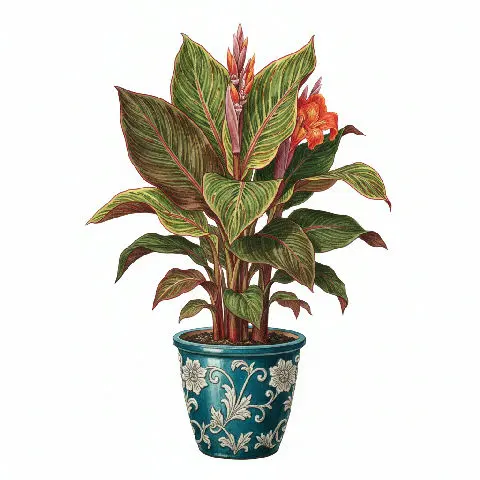
Canna Tropicanna, botanically known as Canna x generalis 'Tropicanna', is a magnificent ornamental hybrid celebrated globally for its unparalleled visual drama. While this specific cultivar is a modern development, its genetic lineage traces back to robust Canna species, predominantly Canna indica, which are indigenous to the tropical and subtropical regions of the Americas.
Unlike its wild ancestors, 'Tropicanna' was meticulously bred in the late 20th century by Ball Horticulture to amplify its aesthetic qualities, particularly its striking foliage and vibrant blooms, making it a garden showstopper.
Morphologically, Canna Tropicanna is distinguished by its broad, paddle-shaped leaves that serve as a living canvas, displaying a remarkable spectrum of colors including deep bronze, rich purple, fiery orange-red, lush green, and bright yellow stripes. This stable variegation ensures a consistent, eye-catching display from spring through fall. Standing tall on sturdy spikes, its vivid orange-red flowers emerge, creating a spectacular contrast against the multicolored foliage.
These flowers are sterile, a common trait in highly hybridized cultivars, which means they do not produce viable seeds but instead channel the plant's energy into continuous foliage and flower production. Growing from horizontal rhizomes, Canna Tropicanna forms dense, upright clumps, typically reaching heights of 4 to 6 feet in garden beds and around 4 feet in large containers, providing a lush, tropical presence that thrives in full sun to partial shade and adapts to various soil conditions, including poorly drained areas.
Trusted Scientific References
1. Authoritative external sources for Canna tropicanna
1.1 Wikipedia — Canna tropicanna
1.2 Kew POWO (Plants of the World Online)
1.3 PubMed — peer-reviewed research
1.4 NCBI Taxonomy Browser
1.5 GBIF — Global Biodiversity
1.6Canna Tropicanna should be interpreted through verified botanical identity, practical care, and responsible safety language. This recovery note adds the missing context needed for a complete profile: match light to the plant's habit, use well-drained soil, water according to season, and avoid unsupported medicinal or edible claims. For publishing, the plant can be presented as a source-backed garden plant with clear care guidance, common problem diagnosis, and conservative safety wording.
1.1.Canna Tropicanna — Key Features
- ✓Botanical Name — Canna x generalis 'Tropicanna'.
- ✓Family — Cannaceae.
- ✓Foliage — Broad, paddle-shaped leaves with unique stripes of bronze, purple, orange-red, green, and yellow.
- ✓Flowers — Striking, vivid orange-red blooms, sterile and borne on tall spikes.
- ✓Growth Habit — Upright, clump-forming herbaceous perennial growing from robust rhizomes.
- ✓Height — Typically reaches 4 to 6 feet (1.2-1.8m) in garden beds, and around 4 feet (1.2m) in containers.
- ✓Hardiness — Hardy in USDA Zones 7-11; rhizomes require winter storage in Zones 3-6.
- ✓Light Requirement — Prefers full sun for optimal color and growth, but tolerates partial shade.
- ✓Water Requirement — Demands consistent and frequent watering, especially during warmer periods, to thrive.
- ✓Special Trait — Award-winning ornamental cultivar, celebrated for its dramatic visual impact and low maintenance.
1.2.Canna Tropicanna — Concise Overview
- ✓Stunning Ornamental Hybrid — Canna Tropicanna is renowned for its vibrant, variegated foliage and intense orange-red flowers, providing dramatic garden appeal.
- ✓Tropical Aesthetic — Instantly brings an exotic, lush, and bold tropical feel to any landscape or container planting.
- ✓Canna Indica Ancestry — While primarily ornamental, its lineage connects it to Canna indica, traditionally used for anti-inflammatory and diuretic properties.
- ✓Low Maintenance & Robust — An easy-to-grow plant that is generally resistant to pests and diseases, thriving with minimal intervention.
- ✓Versatile Planting Options — Ideal for tall borders, focal points in large containers, or in boggy areas near water features.
- ✓Historical Food Source — Rhizomes of ancestral Canna species were historically utilized as a significant starchy food source.
2.Canna Tropicanna — Scientific Profile
3.Canna Tropicanna — Quick Facts
4.Canna Tropicanna — Morphological Account
5.Canna Tropicanna — Geographic Distribution
6.Canna Tropicanna — Cultural & Traditional Roles
7.Canna Tropicanna — Bioactive Constituents
- ✓Flavonoids — Compounds like quercetin and kaempferol derivatives are present, known for their potent antioxidant, anti-inflammatory, and potential cardioprotective actions.
- ✓Phenolic Compounds — Includes caffeic acid and ferulic acid, which are powerful antioxidants that contribute to cellular protection and overall plant defense mechanisms.
- ✓Triterpenoids — Such as ursolic acid and oleanolic acid, these compounds exhibit anti-inflammatory, hepatoprotective, and in some cases, cytotoxic properties.
- ✓Carbohydrates — Primarily starch, highly concentrated in the rhizomes, serving as a significant energy reserve and making them a historical food source.
- ✓Saponins — Glycosides that can possess surfactant properties and may contribute to anti-inflammatory and immune-modulating effects in the plant.
- ✓Tannins — Astringent compounds that contribute to the plant's antioxidant capacity and may offer mild antimicrobial benefits.
- ✓Glycosides — Various compounds bound to sugar molecules, which can have diverse biological activities depending on their specific aglycone structure.
- ✓Essential Minerals — Contains vital micronutrients such as potassium, calcium, and magnesium, crucial for various metabolic and physiological functions.
- ✓Vitamins — Small quantities of B-complex vitamins and Vitamin C may be present, contributing to the overall nutritional profile of the plant.
8.Canna Tropicanna — What Research Suggests
- ✓Anti-inflammatory Properties — Traditional uses of Canna indica suggest its efficacy in reducing inflammation, potentially attributed to the presence of flavonoids and triterpenoids.
- ✓Diuretic Effects — Historically, Canna indica rhizomes were utilized in Ayurvedic and Chinese Traditional Medicine to promote urination and aid in the body's fluid balance.
- ✓Antioxidant Activity — Phytochemicals such as phenols and flavonoids found in Canna species contribute to significant antioxidant capabilities, combating cellular damage from free radicals.
- ✓Starchy Food Source — The rhizomes of Canna species, including ancestors of 'Tropicanna', were a vital carbohydrate-rich food staple in indigenous cultures, providing essential energy.
- ✓Wound Healing Support — Traditional remedies often incorporated poultices made from Canna species for minor cuts, abrasions, and skin irritations to aid in recovery.
- ✓Fever Reduction — Certain Canna preparations were traditionally employed to help alleviate febrile conditions and reduce body temperature in folk medicine systems.
- ✓Digestive Aid — Rhizomes of Canna indica have been traditionally consumed to soothe mild gastrointestinal discomfort and support digestive health.
- ✓Antimicrobial Potential — Preliminary in vitro studies on Canna species indicate a potential for mild antimicrobial activity against certain bacterial or fungal strains.
- ✓Skin Soothing Applications — Topical use of Canna extracts or pastes has been traditionally noted for its ability to calm and soothe irritated skin, likely due to anti-inflammatory compounds.
- ✓Nutritional Support — Beyond starch, Canna rhizomes contain trace amounts of essential minerals and vitamins, contributing to general well-being when consumed as food.
8.1.Canna Tropicanna — Reported Uses
9.Canna Tropicanna — Precautions & Warnings
9.1.Canna Tropicanna — Warnings
- ✓Allergic Reactions — Sensitive individuals may experience skin irritation, itching, or mild respiratory issues upon contact with plant sap or pollen.
- ✓Digestive Discomfort — Ingesting raw Canna rhizomes can lead to gastrointestinal upset, bloating, or nausea due to high starch content and potential irritants.
- ✓Medication Interactions — Theoretical interactions may occur with diuretics, blood pressure medications, or anti-inflammatory drugs dueencing to similar purported effects of Canna species.
- ✓Hypotension Risk — High doses of Canna extracts could theoretically cause a drop in blood pressure, especially in individuals prone to hypotension.
- ✓Hypoglycemia Risk — There is a theoretical concern that Canna species might influence blood sugar levels, warranting caution for individuals with diabetes.
- ✓Pregnancy and Lactation — Due to a lack of sufficient safety data, internal use of Canna species is generally not recommended for pregnant or breastfeeding individuals.
9.2.Canna Tropicanna — Toxicity Assessment
- ✓External Handling — Generally safe for ornamental handling; however, avoid contact with open wounds, and wash hands after handling.
- ✓Internal Use Caution — Medicinal internal use is primarily associated with Canna indica and should only be undertaken under the strict guidance of a qualified medical herbalist.
- ✓Children and Pets — Keep all parts of Canna Tropicanna out of reach of young children and pets to prevent accidental ingestion, especially raw rhizomes.
- ✓Medical Consultation — Always consult a healthcare professional before considering Canna species for any medicinal purposes, particularly if you have underlying health conditions.
- ✓Allergic Sensitivities — Individuals with known allergies to plants in the Cannaceae family or related monocots should exercise caution.
- ✓Proper Preparation for Consumption — If Canna rhizomes are intended for consumption (referring to Canna indica), they must be thoroughly cooked to break down starches and neutralize potential irritants.
- ✓Dosage Adherence — No established medicinal dosages exist for Canna x generalis 'Tropicanna'; adhere strictly to traditional guidelines for ancestral Canna indica if used medicinally.
10.Canna Tropicanna — How to Use
- ✓Ornamental Planting — Canna Tropicanna is primarily used for its stunning visual impact as a tall border plant, a focal point in large patio containers, or alongside water features.
- ✓Rhizome Preparation (Traditional) — For ancestral Canna species like Canna indica, the starchy rhizomes were traditionally cooked, roasted, or boiled and consumed as a carbohydrate-rich food.
- ✓Topical Poultices (Traditional) — Crushed leaves or rhizomes of Canna indica were historically applied as poultices to minor wounds, insect bites, or skin irritations to soothe and support healing.
- ✓Decoctions (Traditional) — Rhizomes of related Canna species could be boiled to create a decoction, used internally in traditional medicine for diuretic effects or other therapeutic purposes.
- ✓Culinary Starch Extraction — The high starch content of Canna rhizomes can be extracted and used as a gluten-free thickener in various culinary applications.
- ✓Landscape Design Element — Professional landscapers frequently utilize Canna Tropicanna to create dramatic, tropical-themed displays or to add bold texture and color to planting schemes.
- ✓Indoor Container Plant — In regions with colder climates, Canna Tropicanna can be grown in large containers indoors near bright windows, bringing its exotic beauty inside.
11.Canna Tropicanna — Growth Requirements
- ✓Sunlight — Plant Canna Tropicanna in a position receiving full sun for the most vibrant foliage color and abundant flowering, though it can tolerate partial shade.
- ✓Soil — This adaptable plant thrives in most soil types, including poorly drained areas, but prefers rich, consistently moist, well-draining soil.
- ✓Watering — Due to its large, broad leaves, Canna Tropicanna requires frequent and consistent watering to perform at its best, especially during warm, dry periods.
- ✓Feeding — Apply a slow-release granular fertilizer in the spring to provide essential nutrients for vigorous growth throughout the growing season.
- ✓Hardiness Zones — Suitable for in-ground overwintering in USDA Zones 7-11; in Zones 3-6, rhizomes must be dug up and stored indoors over winter.
- ✓Pruning — Cut back all foliage to about 10 cm (4 inches) above soil level in late autumn or early winter to prepare for next summer's spectacular show.
- ✓Propagation — Primarily propagated by dividing the rhizomes in spring, as its flowers are sterile and do not produce viable seeds.
- ✓Container Growing — Excellent choice for large patio pots, where it can serve as a dramatic focal point; can also be grown indoors near brightly lit windows.
Reviewed by the Flora Medical Global Botanical Review Panel
Multi-disciplinary editorial group · Botany · Ethnobotany · Herbal-medicine literature
Who reviewed this: This page was checked by the Flora Medical Global Botanical Review Panel — an in-house editorial group of botany graduates, ethnobotany researchers, and horticulture practitioners who collectively maintain our 7,000+ plant encyclopedia. Meet the team.
Our 4-step verification process
1. Taxonomic verification
Scientific names and synonyms cross-checked against Kew POWO, World Flora Online, and The Plant List.
2. Phytochemical & medicinal cross-reference
Active compounds, traditional uses, and reported activities are cross-referenced with PubMed, USDA Dr. Duke's database, and peer-reviewed ethnobotanical literature.
3. Conservation & distribution check
Distribution, ecology, and conservation status confirmed against GBIF occurrence records and the IUCN Red List.
4. Editorial & safety review
Every entry passes an editorial pass for clarity, originality, and safety notices (toxicity, contraindications, dosage caveats) before publication.
Last reviewed:
Important medical disclaimer: This content is for educational and research purposes only. It is not medical advice and is not a substitute for consultation with a licensed healthcare provider. Do not use any herb to self-treat a medical condition without professional guidance.
Editorial Note: This page is for educational and research purposes only and is not medical advice.
Written by: Flora Medical Global Editorial Team
Reviewed by: Flora Medical Global Botanical Review Panel
Last Updated: June 15, 2026





Canna Tropicanna — Comments & Community Reviews
Rate this plant