

Medical Disclaimer: This content is for educational purposes only. It is not medical advice. Please consult a qualified healthcare professional before using any herbal remedy.
Safety Overview
1.Caragana Arborescens — Introduction & Highlights
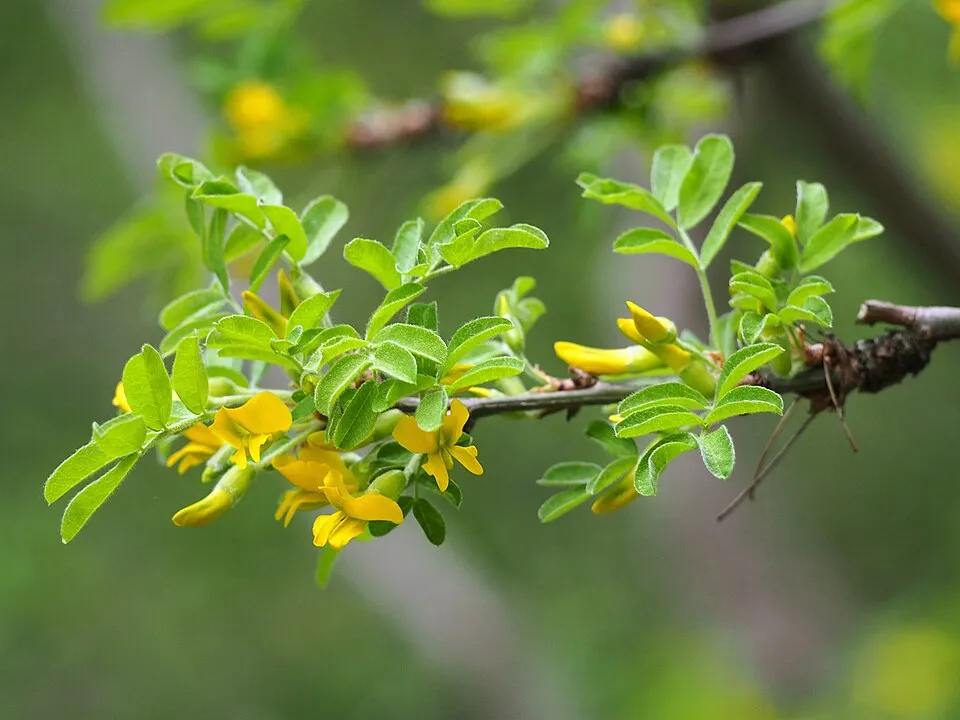
Caragana arborescens, commonly known as the Siberian Pea Tree or Siberian Peashrub, is a robust, deciduous shrub or small tree belonging to the Fabaceae family. Native to Eastern Asia, specifically Siberia and Mongolia, it has also become naturalized in parts of Europe, including France, thriving in diverse environments such as river banks, rocky slopes, open forests, and forest edges. This resilient plant typically grows to a height of 6 meters (19 feet) with a spread of 4 meters (13 feet), exhibiting a fast growth rate.
Its foliage consists of alternate, pinnately compound leaves with numerous small, oval leaflets that range from light to dark green. In late spring to early summer, Caragana arborescens produces an abundance of small, bright yellow, pea-like flowers that are often fragrant and highly attractive to pollinators. These blossoms are followed by slender, elongated pods that ripen in mid-summer, containing several small, edible seeds.
The plant's deep and extensive root system not only anchors it firmly in various soil types but also contributes to its ecological value as a nitrogen-fixer, enhancing soil fertility in its native and cultivated habitats. It is highly tolerant of cold, drought, and strong winds, making it a valuable species for challenging climates and soil stabilization efforts.
Trusted Scientific References
1. Authoritative external sources for Caragana arborescens
1.1 Wikipedia — Caragana arborescens
1.2 Kew POWO (Plants of the World Online)
1.3 PubMed — peer-reviewed research
1.4 NCBI Taxonomy Browser
1.5 GBIF — Global Biodiversity
1.6Caragana Arborescens should be interpreted through verified botanical identity, practical care, and responsible safety language. This recovery note adds the missing context needed for a complete profile: match light to the plant's habit, use well-drained soil, water according to season, and avoid unsupported medicinal or edible claims. For publishing, the plant can be presented as a source-backed garden plant with clear care guidance, common problem diagnosis, and conservative safety wording.
1.1.Caragana Arborescens — Key Features
- ✓Nitrogen — Fixing Legume — Enhances soil fertility.
- ✓Extreme Hardiness — Tolerates USDA zones 2-7.
- ✓Edible Seeds and Pods — High in protein and oil.
- ✓Attractive Yellow Flowers — Significant pollinator plant.
- ✓Traditional Medicinal Uses — Anti-inflammatory, digestive aid, gynecological support.
- ✓Drought and Wind Tolerant — Ideal for challenging environments.
- ✓Erosion Control Plant — Extensive root system stabilizes soil.
- ✓Source of Fibre and Dye — Bark for cordage, leaves for blue dye.
- ✓Fast — Growing Deciduous Shrub — Quick establishment for hedges or shelterbelts.
- ✓Rich in Bioactive Compounds — Flavonoids, saponins, alkaloids.
1.2.Caragana Arborescens — Snapshot Summary
- ✓Siberian Pea Tree is a hardy, nitrogen-fixing shrub from Eastern Asia.
- ✓Valued for traditional medicinal uses, including anti-inflammatory and digestive support.
- ✓Rich in flavonoids, saponins, and proteins, especially in its edible seeds.
- ✓Easy to cultivate, tolerating cold, drought, and poor soils.
- ✓Used in infusions, poultices, and as a cooked vegetable.
- ✓Contraindicated in pregnancy due to emmenagogue effects; professional advice recommended.
2.Caragana Arborescens — Scientific Profile
3.Caragana Arborescens — Quick Facts
4.Caragana Arborescens — Structural Profile
5.Caragana Arborescens — Where It Grows
6.Caragana Arborescens — Cultural & Traditional Roles
7.Caragana Arborescens — Secondary Metabolites
- ✓Flavonoids — These polyphenolic compounds, including various flavones and flavonols, contribute significantly to the plant's antioxidant and anti-inflammatory activities.
- ✓Saponins — Present in different parts of the plant, saponins may exert adaptogenic, immune-modulating, and hypocholesterolemic effects.
- ✓Alkaloids — While specific alkaloids require further identification, their presence suggests potential pharmacological activities, which could include analgesic or neuroactive properties.
- ✓Fatty Oils — The seeds are notably rich in fatty oils, comprising approximately 12.4%, providing essential fatty acids and energy.
- ✓Proteins — Caragana arborescens seeds contain a high protein content, up to 36%, making them a valuable nutritional resource.
- ✓Polysaccharides — Complex carbohydrates that can contribute to immune support and overall physiological balance.
- ✓Tannins — Astringent compounds that may offer anti-inflammatory, antimicrobial, and antioxidant benefits, particularly useful in topical applications for skin.
- ✓Carotenoids — Pigments found in the flowers and leaves, acting as antioxidants and precursors to Vitamin A.
- ✓Organic Acids — Various organic acids contribute to the plant's metabolic processes and may have subtle therapeutic effects.
8.Caragana Arborescens — Research Insights
- ✓Anti-inflammatory Support — Caragana arborescens is traditionally recognized for its capacity to reduce inflammation, potentially aiding in the management of various inflammatory conditions through its phytochemical compounds.
- ✓Digestive Health Aid — Historically used to soothe digestive disorders, it may help alleviate symptoms such as indigestion and discomfort by supporting gastrointestinal function.
- ✓Antioxidant Protection — Rich in antioxidant compounds, Siberian Pea Tree helps combat oxidative stress and neutralize free radicals, contributing to cellular health and disease prevention.
- ✓Skin Irritation Relief — Topically, its leaves have been applied in poultices to minor wounds and skin irritations, promoting healing and reducing localized inflammation.
- ✓Calming and Relaxation — Infusions made from the flowers are traditionally consumed for their reputed calming effects, assisting in relaxation and potentially easing mild nervous tension.
- ✓Gynecological Support — In traditional Asian medicine, the whole plant, known as 'ning tiao', is employed to address dysmenorrhea and other gynecological problems, suggesting an influence on female reproductive health.
- ✓Potential Anti-Cancer Properties — Traditional uses include the treatment of certain cancers, such as breast and uterine orifice cancers, indicating areas for modern pharmacological investigation.
- ✓Emmenagogue Action — The plant is noted for its emmenagogue properties, meaning it can stimulate or increase menstrual flow, which has traditional applications in managing menstrual irregularities.
- ✓Immune System Modulation — Its array of bioactive constituents may contribute to modulating immune responses, thereby supporting the body's natural defense mechanisms.
- ✓Nutritional Fortification — The seeds are a significant source of protein and fatty oils, offering nutritional benefits that can support general health and provide sustained energy.
8.1.Caragana Arborescens — Indications & Uses
9.Caragana Arborescens — Precautions & Warnings
9.1.Caragana Arborescens — Possible Adverse Reactions
- ✓Gastrointestinal Upset — Some individuals may experience mild digestive discomfort, such as bloating or nausea, especially with high doses.
- ✓Allergic Reactions — As with any plant, hypersensitive individuals may develop allergic responses, including skin rashes or respiratory symptoms.
- ✓Emmenagogue Effect — Due to its traditional use as an emmenagogue, it may induce or increase menstrual flow, which could be an unwanted side effect for non-pregnant individuals.
- ✓Hypothetical Toxicity — Although reports of toxicity are largely unsubstantiated, caution is advised, particularly with raw seeds in large quantities.
- ✓Drug Interactions — Potential for interaction with medications that affect menstrual cycles or blood clotting due to its emmenagogue properties.
- ✓Liver or Kidney Stress — Excessive, long-term use of any herbal remedy should be monitored for potential strain on detoxifying organs.
9.2.Caragana Arborescens — Risk Assessment
- ✓Pregnancy Contraindication — Due to its emmenagogue properties, Caragana arborescens is contraindicated during pregnancy to avoid potential uterine stimulation.
- ✓Lactation Caution — Insufficient data exists regarding its safety during breastfeeding; therefore, use should be avoided or approached with medical consultation.
- ✓Children and Infants — Not recommended for use in children or infants due to a lack of specific safety studies.
- ✓Medical Professional Consultation — Always consult a qualified healthcare provider before using Caragana arborescens, especially if you have pre-existing health conditions or are on medication.
- ✓Dosage Adherence — Adhere strictly to recommended dosages; excessive intake may increase the risk of adverse effects.
- ✓Allergy Awareness — Individuals with known allergies to plants in the Fabaceae family should exercise caution or avoid use.
- ✓Toxin Reports — Unsubstantiated reports of toxins exist; however, well-prepared and moderate use of traditionally edible parts is generally considered safe.
10.Caragana Arborescens — Application Forms
- ✓Herbal Infusions — Dried flowers or leaves can be steeped in hot water to create infusions, traditionally used for relaxation or digestive support.
- ✓Topical Poultices — Fresh or dried and rehydrated leaves can be crushed and applied as a poultice to minor skin irritations, cuts, or bruises.
- ✓Seed Consumption (Cooked) — The small seeds, harvested from ripe pods, can be cooked and incorporated into various dishes, offering a mild pea-like flavor and significant protein.
- ✓Young Pods as Vegetable — Tender young seed pods can be cooked and consumed as a green vegetable, similar to snap peas or green beans.
- ✓Tinctures — A concentrated alcoholic extract of the plant material can be prepared for internal use, allowing for precise dosing and extended shelf life.
- ✓Decoctions — Bark or root material, if used, can be simmered in water to extract compounds, suitable for more robust medicinal preparations.
- ✓Encapsulated Powder — Dried and powdered plant parts can be encapsulated for convenient oral administration, particularly for systemic benefits.
11.Caragana Arborescens — Propagation & Care
- ✓Soil Preference — Thrives in well-drained, loamy soils, adaptable to nutritionally poor conditions, and tolerates a wide pH range from mildly acidic to very alkaline.
- ✓Light Requirements — Requires full sun exposure, ideally at least six hours daily; cannot tolerate full shade conditions.
- ✓Watering Regime — Needs regular watering, especially during dry spells, but is highly drought-tolerant once established; avoid waterlogging.
- ✓Fertilization — Benefits from a balanced fertilizer application during the active growing season to enhance growth and flowering.
- ✓Hardiness Zones — Exceptionally hardy, suitable for USDA zones 2-7 and UK zone 2, demonstrating strong frost resistance.
- ✓Nitrogen Fixation — As a legume, it naturally fixes atmospheric nitrogen, improving soil fertility for itself and neighboring plants.
- ✓Wind and Erosion Control — Highly wind-resistant and its extensive root system makes it excellent for shelterbelts and soil stabilization.
Reviewed by the Flora Medical Global Botanical Review Panel
Multi-disciplinary editorial group · Botany · Ethnobotany · Herbal-medicine literature
Who reviewed this: This page was checked by the Flora Medical Global Botanical Review Panel — an in-house editorial group of botany graduates, ethnobotany researchers, and horticulture practitioners who collectively maintain our 7,000+ plant encyclopedia. Meet the team.
Our 4-step verification process
1. Taxonomic verification
Scientific names and synonyms cross-checked against Kew POWO, World Flora Online, and The Plant List.
2. Phytochemical & medicinal cross-reference
Active compounds, traditional uses, and reported activities are cross-referenced with PubMed, USDA Dr. Duke's database, and peer-reviewed ethnobotanical literature.
3. Conservation & distribution check
Distribution, ecology, and conservation status confirmed against GBIF occurrence records and the IUCN Red List.
4. Editorial & safety review
Every entry passes an editorial pass for clarity, originality, and safety notices (toxicity, contraindications, dosage caveats) before publication.
Last reviewed:
Important medical disclaimer: This content is for educational and research purposes only. It is not medical advice and is not a substitute for consultation with a licensed healthcare provider. Do not use any herb to self-treat a medical condition without professional guidance.
Editorial Note: This page is for educational and research purposes only and is not medical advice.
Written by: Flora Medical Global Editorial Team
Reviewed by: Flora Medical Global Botanical Review Panel
Last Updated: June 15, 2026





Caragana Arborescens — Comments & Community Reviews
Rate this plant