


Medical Disclaimer: This content is for educational purposes only. It is not medical advice. Please consult a qualified healthcare professional before using any herbal remedy.
Safety Overview
1.Caralluma — Botanical Snapshot
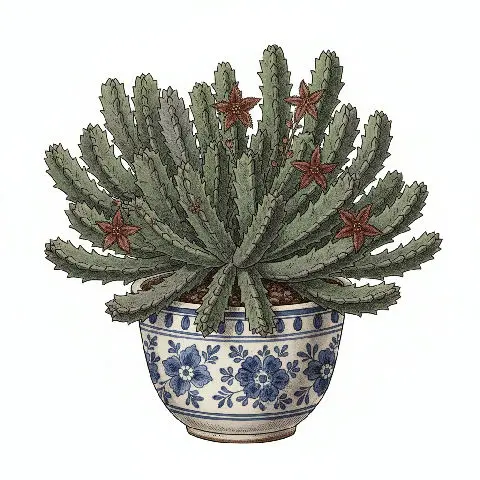
Caralluma fimbriata, commonly known as Caralluma, is a resilient perennial succulent belonging to the diverse Apocynaceae family. Indigenous to the arid and semi-arid landscapes of India, particularly states like Rajasthan, Gujarat, and Karnataka, its natural range extends across parts of Africa, the Middle East, and Southern Europe, including the Canary Islands. This widespread distribution underscores its remarkable adaptability to harsh, xeric conditions.
The plant typically forms dense clumps, reaching heights of 30 to 60 centimeters. Its most distinctive morphological features are its fleshy, segmented stems, which are sharply ribbed and taper towards the apex. These stems present a varied coloration, from vibrant green to grayish-green, often developing purplish tinges when exposed to environmental stress or intense sunlight.
The leaves are highly reduced, appearing as small, spine-like structures, typically 2 to 3 centimeters long. This adaptation significantly minimizes water loss through transpiration, a critical survival mechanism in its dry habitat.
Flowering usually occurs in late summer, with Caralluma fimbriata producing small, star-shaped blossoms that emerge in clusters along the stem segments. The flowers display a subtle color palette, ranging from pale green and yellowish-brown to purplish or reddish hues, often featuring intricate patterns. Despite their sometimes faint, carrion-like odor, characteristic of certain Apocynaceae members, these flowers effectively attract specific pollinators.
The fibrous root system is well-developed, adept at anchoring the plant in rocky, nutrient-poor soils and efficiently absorbing scarce moisture. Beyond its botanical intrigue, Caralluma fimbriata holds profound historical and cultural significance, traditionally consumed raw or cooked by indigenous populations in arid regions to suppress hunger and thirst during periods of scarcity.
Trusted Scientific References
1. Authoritative external sources for Caralluma fimbriata
1.1 Wikipedia — Caralluma fimbriata
1.2 Kew POWO (Plants of the World Online)
1.3 PubMed — peer-reviewed research
1.4 NCBI Taxonomy Browser
1.5 GBIF — Global Biodiversity
1.1.Caralluma — Distinguishing Points
- ✓Native to arid — Native to arid regions of India, Africa, and the Middle East, showcasing extreme drought tolerance.
- ✓Distinctive succulent morphology — Distinctive succulent morphology with fleshy, ribbed, segmented stems and reduced, spine-like leaves.
- ✓Traditionally consumed raw — Traditionally consumed raw by indigenous populations to suppress hunger and thirst during scarcity.
- ✓Primary active compounds — Primary active compounds are pregnane glycosides, particularly Fimbriatosides, linked to appetite control.
- ✓Widely studied for — Widely studied for its potential in weight management and metabolic health support.
- ✓Exhibits antioxidant and anti — inflammatory properties due to its rich phytochemical profile.
- ✓Adaptable plant, requiring — Adaptable plant, requiring minimal water and full sun, making it suitable for xeriscaping.
- ✓Flowers are small, star — shaped, often with a subtle, sometimes foul, scent, attracting specific pollinators.
- ✓Represents a significant — Represents a significant ethnobotanical resource with cultural and nutritional importance.
- ✓Available in various — Available in various forms, including fresh plant material, standardized extracts, and dietary supplements.
1.2.Caralluma — At-a-Glance Summary
- ✓Caralluma fimbriata is a succulent native to arid regions, traditionally used as an appetite suppressant.
- ✓Its primary medicinal use is for weight management, attributed to pregnane glycosides.
- ✓Offers potential benefits like metabolic support, antioxidant activity, and energy enhancement.
- ✓Requires well-draining soil and full sun for cultivation, indicative of its desert origins.
- ✓Available as fresh stems, extracts, or powders, with specific dosages for efficacy and safety.
- ✓Mild side effects like digestive upset are possible; contraindications include pregnancy and certain medical conditions.
2.Caralluma — Botanical Identity
3.Caralluma — Vital Statistics
4.Caralluma — Botanical Description
5.Caralluma — Origin & Spread
6.Caralluma — Heritage Uses
7.Caralluma — Key Phytochemicals
- ✓Pregnane Glycosides — These are the primary bioactive compounds in Caralluma fimbriata, notably Fimbriatosides, which are believed to modulate appetite signals in the hypothalamus, contributing to hunger suppression.
- ✓Flavonoids — Compounds like quercetin and kaempferol derivatives are present, acting as potent antioxidants and contributing to anti-inflammatory effects.
- ✓Triterpenes — Including compounds like lupeol and β-sitosterol, which offer anti-inflammatory, antioxidant, and potential cardioprotective activities.
- ✓Saponins — These glycosides contribute to the plant's bitter taste and may have cholesterol-lowering and immune-modulating properties.
- ✓Megastigmane Glycosides — A class of compounds that may contribute to the plant's overall biological activity, although less studied than pregnane glycosides.
- ✓Glycosides — Beyond pregnane glycosides, various other glycosidic compounds are found, contributing to the plant's diverse pharmacological profile.
- ✓Alkaloids — While less prominent, some alkaloidal compounds may be present, influencing various physiological processes.
- ✓Volatile Compounds — Trace amounts of volatile organic compounds contribute to the plant's distinctive aroma and may possess antimicrobial properties.
- ✓Vitamins and Minerals — The succulent contains essential vitamins (e.g., Vitamin C) and minerals (e.g., calcium, iron), providing nutritional value.
8.Caralluma — Evidence-Based Benefits
- ✓Appetite Suppression — Caralluma fimbriata is widely recognized for its traditional use in reducing hunger and enhancing satiety, primarily attributed to its pregnane glycosides which are believed to influence the hypothalamus, the brain's appetite control center.
- ✓Weight Management Support — By helping to control appetite and reduce caloric intake, Caralluma fimbriata extract can contribute to healthy weight management and support weight loss efforts.
- ✓Metabolic Boost — Some research suggests that constituents in Caralluma fimbriata may positively impact metabolic rate, aiding in more efficient fat burning.
- ✓Energy Enhancement — Traditionally, the plant was consumed by hunters to combat fatigue, suggesting a potential role in boosting energy levels and endurance.
- ✓Blood Sugar Regulation — Preliminary studies indicate Caralluma fimbriata may help in modulating blood glucose levels, potentially beneficial for metabolic health.
- ✓Antioxidant Properties — The plant contains various phytochemicals, including flavonoids, which possess antioxidant activity, helping to combat oxidative stress and cellular damage.
- ✓Anti-inflammatory Effects — Certain compounds within Caralluma fimbriata may exhibit anti-inflammatory actions, contributing to overall well-being.
- ✓Digestive Aid — Historically, the plant was consumed to alleviate minor digestive discomfort and promote regularity due to its fibrous nature.
- ✓Thirst Quenching — In its native arid environments, Caralluma fimbriata was traditionally chewed to help quench thirst and prevent dehydration.
- ✓Lipase Inhibition — Some evidence suggests that Caralluma fimbriata may help inhibit pancreatic lipase, an enzyme crucial for fat digestion, potentially reducing fat absorption.
8.1.Caralluma — Therapeutic Indications
9.Caralluma — Safety & Side Effects
9.1.Caralluma — Side Effects & Warnings
- ✓Gastrointestinal Discomfort — May cause mild stomach upset, nausea, constipation, or diarrhea, especially with initial use or high doses.
- ✓Headache — Some individuals report experiencing headaches as a side effect.
- ✓Insomnia — Due to potential mild stimulant effects, it may interfere with sleep in sensitive individuals if taken late in the day.
- ✓Increased Thirst — Paradoxically, some users report increased thirst, though traditionally it was used to quench thirst.
- ✓Allergic Reactions — Rare cases of allergic reactions like skin rash or itching may occur.
- ✓Drug Interactions — Potential to interact with medications for diabetes or other chronic conditions; consult a healthcare provider.
- ✓Dizziness — Occasional reports of mild dizziness, particularly when starting supplementation.
9.2.Caralluma — Safety Profile
- ✓Pregnancy and Breastfeeding — Not recommended for use during pregnancy or breastfeeding due to insufficient safety data.
- ✓Children — Avoid use in children as safety and efficacy have not been established.
- ✓Pre-existing Conditions — Individuals with diabetes, heart conditions, or other chronic illnesses should consult a doctor before use.
- ✓Medication Interactions — May interact with blood sugar-lowering drugs, anticoagulants, or other medications; seek medical advice.
- ✓Dosage — Adhere strictly to recommended dosages on product labels or as advised by a qualified herbalist or healthcare professional.
- ✓Allergic Sensitivity — Discontinue use if allergic reactions such as skin rash, itching, or swelling occur.
- ✓Quality Control — Opt for reputable brands that provide third-party tested products to ensure purity and potency.
10.Caralluma — Preparation Methods
- ✓Raw Consumption — Traditionally, fresh Caralluma fimbriata stems are eaten raw to suppress hunger and thirst, particularly in foraging contexts.
- ✓Cooked Vegetable — Stems can be lightly cooked, similar to asparagus or green beans, and incorporated into stews, curries, or stir-fries.
- ✓Herbal Extract — Standardized extracts, often concentrated for specific pregnane glycosides, are available in capsule or tablet form for targeted medicinal use.
- ✓Powdered Supplement — Dried and powdered Caralluma fimbriata can be encapsulated or mixed into beverages and foods as a dietary supplement.
- ✓Infusion/Tea — While less common for the fleshy stems, a mild infusion can be prepared from dried plant material for general wellness.
- ✓Topical Application — Less prevalent, but in some traditional practices, poultices of crushed stems might be applied for minor skin irritations.
- ✓Juices and Smoothies — Fresh stems can be blended into juices or smoothies, offering a convenient way to consume the plant's nutrients.
- ✓Traditional Appetizer — In certain cultures, fresh Caralluma fimbriata is served as an appetizer to reduce overall food intake during meals.
11.Caralluma — Garden Cultivation
- ✓Climate — Thrives in hot, dry climates; prefers USDA zones 9-11, intolerant of frost.
- ✓Soil — Requires well-draining, sandy or rocky soil, ideally a cactus and succulent mix, with a pH between 6.0 and 7.5.
- ✓Light — Needs full sun exposure for at least 6-8 hours daily to ensure robust growth and flowering.
- ✓Watering — Drought-tolerant; water sparingly, allowing the soil to dry out completely between waterings, especially during dormant periods.
- ✓Propagation — Can be propagated from seeds, stem cuttings, or by division of clumps, with cuttings being the most common method.
- ✓Pests and Diseases — Generally resistant, but watch for mealybugs and root rot in overly wet conditions.
- ✓Fertilization — Benefits from a diluted, low-nitrogen succulent fertilizer during the active growing season (spring/summer).
- ✓Harvesting — Stems can be harvested sustainably by cutting segments, allowing the plant to regrow.
Reviewed by the Flora Medical Global Botanical Review Panel
Multi-disciplinary editorial group · Botany · Ethnobotany · Herbal-medicine literature
Who reviewed this: This page was checked by the Flora Medical Global Botanical Review Panel — an in-house editorial group of botany graduates, ethnobotany researchers, and horticulture practitioners who collectively maintain our 7,000+ plant encyclopedia. Meet the team.
Our 4-step verification process
1. Taxonomic verification
Scientific names and synonyms cross-checked against Kew POWO, World Flora Online, and The Plant List.
2. Phytochemical & medicinal cross-reference
Active compounds, traditional uses, and reported activities are cross-referenced with PubMed, USDA Dr. Duke's database, and peer-reviewed ethnobotanical literature.
3. Conservation & distribution check
Distribution, ecology, and conservation status confirmed against GBIF occurrence records and the IUCN Red List.
4. Editorial & safety review
Every entry passes an editorial pass for clarity, originality, and safety notices (toxicity, contraindications, dosage caveats) before publication.
Last reviewed:
Important medical disclaimer: This content is for educational and research purposes only. It is not medical advice and is not a substitute for consultation with a licensed healthcare provider. Do not use any herb to self-treat a medical condition without professional guidance.
Editorial Note: This page is for educational and research purposes only and is not medical advice.
Written by: Flora Medical Global Editorial Team
Reviewed by: Flora Medical Global Botanical Review Panel
Last Updated: June 15, 2026





Caralluma — Comments & Community Reviews
Rate this plant