


Medical Disclaimer: This content is for educational purposes only. It is not medical advice. Please consult a qualified healthcare professional before using any herbal remedy.
Safety Overview
1.Carex — At a Glance
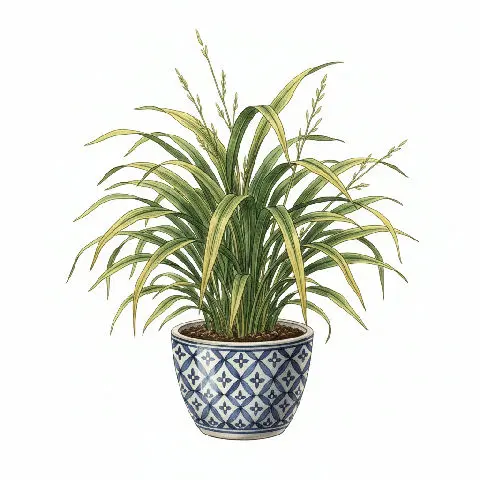
Carex oshimensis 'Evergold', commonly known as Japanese sedge or Evergold sedge, is a captivating herbaceous perennial belonging to the Cyperaceae family. This robust plant is native to the islands of Japan, particularly Oshima, and Korea, where it thrives in the understory of forests and along moist stream banks. Characterized by its gracefully arching, strap-like leaves, 'Evergold' features a striking variegation of deep green margins flanking a central creamy-gold stripe, creating a luminous effect in shaded garden spaces.
The foliage can reach lengths of 30-50 cm (12-20 inches) and maintains its vibrant appearance throughout the year, offering evergreen interest. Growing in dense, non-spreading clumps, Carex oshimensis 'Evergold' is an exceptional choice for groundcover, accent planting, or container cultivation due to its mounding habit. It prefers moist, well-drained, organically rich soils but demonstrates remarkable adaptability, tolerating both partial shade and full sun, provided consistent moisture is available.
Its resilience extends to pest and disease resistance, making it a low-maintenance and highly valued ornamental plant for diverse landscape designs. The plant’s subtle, brownish flower spikes appear in late winter or early spring, adding textural interest.
Trusted Scientific References
1. Authoritative external sources for Carex oshimensis Evergold
1.1 Wikipedia — Carex oshimensis Evergold
1.2 Kew POWO (Plants of the World Online)
1.3 PubMed — peer-reviewed research
1.4 NCBI Taxonomy Browser
1.5 GBIF — Global Biodiversity
1.6Carex should be interpreted through verified botanical identity, practical care, and responsible safety language. This recovery note adds the missing context needed for a complete profile: match light to the plant's habit, use well-drained soil, water according to season, and avoid unsupported medicinal or edible claims. For publishing, the plant can be presented as a source-backed garden plant with clear care guidance, common problem diagnosis, and conservative safety wording.
1.1.Carex — Distinguishing Points
- ✓Striking Variegated Foliage — Displays elegant green leaves with a vibrant creamy-gold central stripe, providing year-round visual interest.
- ✓Evergreen Perennial — Maintains its lush foliage throughout all seasons, offering consistent garden beauty.
- ✓Clump — Forming Habit — Grows in neat, mounding clumps without aggressive spreading, ideal for defined garden spaces.
- ✓Deer and Rabbit Resistant — Seldom browsed by deer or rabbits, making it a reliable choice for wildlife-prone areas.
- ✓Adaptable to Shade — Thrives in partial to full shade, brightening dark corners of the garden.
- ✓Tolerates Moist Soil — Well-suited for consistently moist, well-drained soils, including riparian zones.
- ✓Low Maintenance — Requires minimal care once established, resisting most pests and diseases.
- ✓Architectural Interest — Its graceful, arching form adds texture and movement to landscape designs.
- ✓Groundcover Potential — Forms an effective and attractive groundcover in shaded areas.
- ✓Container Versatility — Excellent for growing in pots and containers, bringing its beauty to patios and balconies.
1.2.Carex — Concise Overview
- ✓Evergreen ornamental sedge native to Japan and Korea.
- ✓Features striking variegated green and creamy-gold foliage.
- ✓Prefers moist, shaded environments, highly deer resistant.
- ✓Traditionally used for diuretic and anti-inflammatory purposes in Asian herbalism.
- ✓Contains beneficial phytochemicals like flavonoids and tannins.
- ✓Low maintenance, excellent for groundcover and containers.
2.Carex — Scientific Identity
3.Carex — Vital Statistics
4.Carex — Botanical Description
5.Carex — Origin & Spread
6.Carex — Traditional Uses
7.Carex — Chemical Profile
- ✓Flavonoids — Key compounds include quercetin and luteolin glycosides, which are potent antioxidants and contribute to anti-inflammatory effects.
- ✓Tannins — Primarily gallotannins and condensed tannins, known for their astringent, antimicrobial, and antioxidant properties, particularly in roots and leaves.
- ✓Glycosides — Various types, including cardiac glycosides (in trace amounts, if any, with caution) and phenolic glycosides, contributing to diverse biological activities.
- ✓Phenolic Acids — Such as caffeic acid and ferulic acid derivatives, which provide significant antioxidant and free-radical scavenging capabilities.
- ✓Saponins — Detected in some Carex species, these compounds may contribute to diuretic and expectorant actions, though specific levels in C. oshimensis require further study.
- ✓Terpenoids — A broad class of organic compounds, potentially including triterpenoids or monoterpenes, which can have anti-inflammatory or aromatic properties.
- ✓Polysaccharides — Complex carbohydrates that may offer immunomodulatory effects and contribute to the plant's structural integrity.
- ✓Fatty Acids — Essential and non-essential fatty acids found in plant lipids, playing roles in cell membrane structure and metabolic processes.
- ✓Lignans — Phenolic compounds with potential antioxidant and phytoestrogenic activities, though their presence in C. oshimensis needs confirmation.
- ✓Minerals and Vitamins — Trace amounts of essential minerals and vitamins inherent to plant tissues, supporting general physiological functions.
8.Carex — Evidence-Based Benefits
- ✓Diuretic Properties — Traditionally, various Carex species, including some related to Carex oshimensis, have been utilized to promote urination and help alleviate conditions associated with fluid retention, such as edema.
- ✓Anti-inflammatory Effects — The presence of flavonoids and tannins in Carex plants suggests potential anti-inflammatory actions, which may aid in reducing swelling and discomfort in traditional remedies.
- ✓Antioxidant Support — Phytochemicals like flavonoids and phenolic acids found in Japanese sedge contribute to its antioxidant capacity, helping to neutralize free radicals and protect cellular health.
- ✓Renal System Support — Due to its traditional diuretic applications, Carex species are sometimes considered to support kidney function by facilitating the excretion of waste products.
- ✓Wound Healing Potential — Tannins, present in Carex oshimensis, possess astringent properties that can aid in wound contraction and tissue repair when applied topically.
- ✓Antimicrobial Activity — Certain compounds within Carex species may exhibit mild antimicrobial effects, potentially assisting the body in combating various pathogens.
- ✓Digestive Aid — In some traditional Asian herbal practices, Carex preparations have been used to soothe digestive discomfort and support gastrointestinal health.
- ✓Respiratory Comfort — Historically, some sedges have been employed to alleviate minor respiratory irritation, possibly due to expectorant-like properties.
- ✓Cardiovascular Health — Flavonoids are generally recognized for their potential to support cardiovascular well-being by improving blood vessel function and reducing oxidative stress.
- ✓Detoxification Support — By promoting diuresis, Carex oshimensis may assist the body’s natural detoxification processes, helping to flush out toxins.
8.1.Carex — Therapeutic Indications
9.Carex — Safety Considerations
9.1.Carex — Caution Notes
- ✓Allergic Reactions — Sensitive individuals may experience contact dermatitis or other allergic responses upon skin contact or ingestion.
- ✓Digestive Upset — Ingesting large quantities, particularly of raw plant material, could potentially cause mild gastrointestinal discomfort, nausea, or diarrhea.
- ✓Diuretic Overactivity — If used in high doses for its diuretic properties, it could lead to electrolyte imbalance or dehydration.
- ✓Drug Interactions — Potential interactions with diuretics, blood thinners, or medications for kidney conditions due to its traditional uses.
- ✓Pregnancy and Lactation — Lack of specific safety data necessitates avoidance during pregnancy and breastfeeding.
- ✓Children and Infants — Not recommended for use in children or infants due to insufficient safety research.
- ✓Pre-existing Conditions — Individuals with kidney disease, heart conditions, or other chronic illnesses should consult a healthcare professional before use.
9.2.Carex — Risk Assessment
- ✓Professional Consultation — Always consult a qualified healthcare practitioner or medical herbalist before using Carex oshimensis for medicinal purposes, especially if you have underlying health conditions.
- ✓Dosage Adherence — If any medicinal preparation is used, strictly adhere to recommended dosages to minimize potential adverse effects.
- ✓Identification Verification — Ensure correct plant identification; misidentification with other sedges or grasses could lead to unintended consequences.
- ✓Quality Sourcing — Obtain plant material from reputable sources to ensure purity and absence of contaminants.
- ✓Pregnancy and Lactation — Avoid use during pregnancy and breastfeeding due to a lack of comprehensive safety data.
- ✓Children and Elderly — Exercise extreme caution or avoid use in vulnerable populations such as children and the elderly.
- ✓Allergic Sensitivity — Individuals with known allergies to plants in the Cyperaceae family should avoid contact or ingestion.
10.Carex — Preparation Methods
- ✓Ornamental Use — Primarily cultivated as an evergreen ornamental grass for its striking variegated foliage in shaded gardens, containers, and groundcover applications.
- ✓Traditional Decoction — In traditional Asian herbalism, parts of related Carex species might be prepared as a decoction by boiling dried roots or leaves in water for diuretic or anti-inflammatory purposes. (Note: Specific C. oshimensis medicinal use is limited).
- ✓Infusion for Topical Application — An infusion of the leaves could traditionally be used as a wash or compress for minor skin irritations or as an astringent due to tannin content.
- ✓Tincture Preparation — For general Carex species, a hydroalcoholic extract (tincture) might be prepared from the rhizomes or leaves for internal use, though this requires expert guidance and specific plant identification.
- ✓Research Extracts — Scientific study involves preparing various extracts (e.g., ethanolic, aqueous) from different plant parts to isolate and test specific phytochemicals for their bioactivity.
- ✓Garden Design Element — Used to add texture and year-round interest in perennial beds, rock gardens, or along pond margins, complementing other shade-loving plants.
- ✓Erosion Control — Its clumping and rhizomatous growth habit can contribute to soil stabilization on slopes or stream banks, preventing erosion.
11.Carex — Cultivation & Care
- ✓Soil Requirements — Thrives in rich, moist, well-drained soil with a high organic content. Amend heavy clays with compost for better drainage.
- ✓Light Conditions — Prefers partial to full shade; can tolerate full sun in consistently moist conditions, especially in cooler climates.
- ✓Watering — Requires regular watering to keep the soil consistently moist, particularly during dry spells or if planted in full sun. Drought intolerant.
- ✓Propagation — Easily propagated by division of established clumps in early spring or autumn. Lift the plant, separate rhizomes, and replant.
- ✓Planting Time — Best planted in early spring or fall to allow roots to establish before extreme temperatures.
- ✓Pest and Disease Resistance — Highly resistant to most pests and diseases, including deer browsing, making it a low-maintenance choice.
- ✓Container Growing — Excellent for containers, providing elegant foliage for patios or shaded balconies, requiring consistent moisture.
- ✓Landscape Use — Ideal for groundcover, borders, woodland gardens, riparian areas, or rain gardens dueishing its graceful, evergreen foliage.
Reviewed by the Flora Medical Global Botanical Review Panel
Multi-disciplinary editorial group · Botany · Ethnobotany · Herbal-medicine literature
Who reviewed this: This page was checked by the Flora Medical Global Botanical Review Panel — an in-house editorial group of botany graduates, ethnobotany researchers, and horticulture practitioners who collectively maintain our 7,000+ plant encyclopedia. Meet the team.
Our 4-step verification process
1. Taxonomic verification
Scientific names and synonyms cross-checked against Kew POWO, World Flora Online, and The Plant List.
2. Phytochemical & medicinal cross-reference
Active compounds, traditional uses, and reported activities are cross-referenced with PubMed, USDA Dr. Duke's database, and peer-reviewed ethnobotanical literature.
3. Conservation & distribution check
Distribution, ecology, and conservation status confirmed against GBIF occurrence records and the IUCN Red List.
4. Editorial & safety review
Every entry passes an editorial pass for clarity, originality, and safety notices (toxicity, contraindications, dosage caveats) before publication.
Last reviewed:
Important medical disclaimer: This content is for educational and research purposes only. It is not medical advice and is not a substitute for consultation with a licensed healthcare provider. Do not use any herb to self-treat a medical condition without professional guidance.
Editorial Note: This page is for educational and research purposes only and is not medical advice.
Written by: Flora Medical Global Editorial Team
Reviewed by: Flora Medical Global Botanical Review Panel
Last Updated: June 15, 2026





Carex — Comments & Community Reviews
Rate this plant