


Medical Disclaimer: This content is for educational purposes only. It is not medical advice. Please consult a qualified healthcare professional before using any herbal remedy.
Safety Overview
1.Caryopteris Clandonensis — Overview
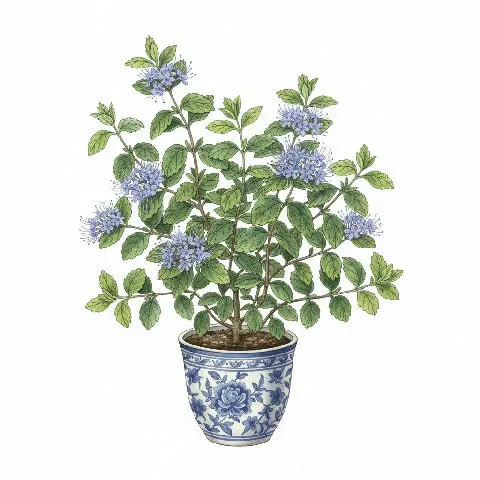
Caryopteris x clandonensis, commonly known as bluebeard, blue mist shrub, or blue spirea, is a captivating deciduous hybrid shrub belonging to the Lamiaceae, or mint family. This ornamental plant is a cross between Caryopteris incana and Caryopteris mongholica, creating a robust and visually appealing specimen. It typically grows to an average height of 2 to 3 feet (0.6-0.9 m) with a similar spread, exhibiting an attractive mounding or rounded growth habit.
The plant's lanceolate, gray-green leaves are highly aromatic, releasing a pleasant fragrance when crushed, adding a sensory dimension to any garden. From late summer through fall, Caryopteris x clandonensis produces abundant clusters of vibrant bluish-purple flowers. These inflorescences, often described as fluffy or cloud-like, emerge from the leaf axils and feature a distinctive beard-like elongation at the base of each petal, hence the 'bluebeard' moniker.
Native to regions of China and Japan (owing to its parentage), this hybrid thrives in full sun exposure and well-drained, loamy soils. It is remarkably drought-tolerant once established and demonstrates considerable resistance to common pests and diseases, making it a low-maintenance choice for various landscape applications. Beyond its aesthetic appeal, the blue mist shrub is a significant late-season nectar source, actively attracting butterflies, bees, and other beneficial pollinators, thereby contributing to local biodiversity.
Trusted Scientific References
1. Authoritative external sources for Caryopteris x clandonensis
1.1 Wikipedia — Caryopteris x clandonensis
1.2 Kew POWO (Plants of the World Online)
1.3 PubMed — peer-reviewed research
1.4 NCBI Taxonomy Browser
1.5 GBIF — Global Biodiversity
1.6Caryopteris Clandonensis should be interpreted through verified botanical identity, practical care, and responsible safety language. This recovery note adds the missing context needed for a complete profile: match light to the plant's habit, use well-drained soil, water according to season, and avoid unsupported medicinal or edible claims. For publishing, the plant can be presented as a source-backed garden plant with clear care guidance, common problem diagnosis, and conservative safety wording.
1.1.Caryopteris Clandonensis — Standout Qualities
- ✓Botanical Name — Caryopteris x clandonensis.
- ✓Common Names — Bluebeard, Blue Mist Shrub, Blue Spirea.
- ✓Plant Family — Lamiaceae (Mint Family).
- ✓Growth Habit — Deciduous, mounding shrub, typically 2-3 feet tall and wide.
- ✓Foliage — Fragrant, lanceolate, gray-green leaves.
- ✓Flowers — Showy, fluffy blue-purple blooms from late summer to fall.
- ✓Ecological Role — Excellent pollinator plant, attracting bees and butterflies.
- ✓Cultivation — Thrives in full sun, well-drained soil, drought-tolerant once established.
- ✓Aromatic Profile — Rich in essential oils, flavonoids, and rosmarinic acid.
- ✓Landscape Value — Ideal for borders, mass plantings, cottage gardens, and sensory gardens.
1.2.Caryopteris Clandonensis — At-a-Glance Summary
- ✓Ornamental Hybrid Shrub — Valued for its late-season blue flowers and aromatic foliage.
- ✓Pollinator Magnet — Attracts bees and butterflies, enhancing garden biodiversity.
- ✓Low Maintenance & Drought Tolerant — Resilient and easy to grow in full sun and well-drained soil.
- ✓Aromatic Properties — Leaves contain essential oils, flavonoids, and rosmarinic acid, contributing to its fragrance.
- ✓Potential Wellness Benefits — Phytochemicals suggest antioxidant and anti-inflammatory potential, though direct medicinal use is not established.
2.Caryopteris Clandonensis — Systematic Position
3.Caryopteris Clandonensis — Reference Facts
4.Caryopteris Clandonensis — Morphological Account
5.Caryopteris Clandonensis — Where It Grows
6.Caryopteris Clandonensis — Cultural & Traditional Roles
7.Caryopteris Clandonensis — Secondary Metabolites
- ✓Essential Oils — Comprise various volatile organic compounds, including monoterpenes like linalool, alpha-pinene, and limonene, which contribute to the plant's characteristic aroma and may possess antimicrobial and insect-repellent properties.
- ✓Flavonoids — A diverse group of polyphenolic compounds such as quercetin, kaempferol, and their glycosides, known for potent antioxidant, anti-inflammatory, and potentially antiallergic activities.
- ✓Rosmarinic Acid — A prominent phenolic acid, highly characteristic of the Lamiaceae family, renowned for its strong antioxidant, anti-inflammatory, and antiviral effects.
- ✓Phenolic Acids (Other) — Beyond rosmarinic acid, other related compounds like caffeic acid may be present, contributing to the plant’s overall antioxidant capacity.
- ✓Triterpenes — These compounds, often found in plant waxes and resins, may contribute to the plant's protective mechanisms and could have anti-inflammatory or cytotoxic potential.
- ✓Tannins — Astringent polyphenols that may offer antioxidant and antimicrobial benefits, often contributing to the plant's defense against herbivores and pathogens.
- ✓Saponins — Glycosides that can form a soapy lather, with potential expectorant, anti-inflammatory, and immune-modulating properties, though usually in small concentrations.
- ✓Iridoids — A class of monoterpenoids that can possess a range of biological activities, including anti-inflammatory, antimicrobial, and insecticidal effects, commonly found in certain Lamiaceae members.
8.Caryopteris Clandonensis — Research Insights
- ✓Antioxidant Support — The presence of rosmarinic acid and various flavonoids suggests potential for combating cellular damage caused by free radicals, supporting overall cellular health.
- ✓Anti-inflammatory Action — Phytochemicals like rosmarinic acid and certain flavonoids are known for their anti-inflammatory properties, potentially modulating the body's inflammatory responses.
- ✓Antimicrobial Properties — Essential oils extracted from similar Lamiaceae species often exhibit antimicrobial activity, suggesting a potential role in inhibiting the growth of certain bacteria and fungi, though specific research on Caryopteris x clandonensis is limited.
- ✓Aromatic Therapy — The plant's fragrant foliage, rich in essential oils, has a pleasant scent that could be utilized in aromatherapy for its calming or uplifting effects, promoting a sense of well-being.
- ✓Respiratory Comfort — Aromatic vapors from the crushed leaves or infusions might offer mild support for respiratory pathways, potentially easing minor congestion through their aromatic compounds.
- ✓Skin Health Support — Antioxidant and anti-inflammatory compounds, if applied topically (with caution), could theoretically contribute to maintaining healthy skin or soothing minor irritations.
- ✓Digestive Comfort (Traditional Family Uses) — While not directly studied for this hybrid, many plants in the Lamiaceae family are traditionally used to aid mild digestive discomfort, suggesting a potential, albeit unproven, role.
- ✓Stress Reduction — The soothing aroma of blue mist shrub could contribute to a reduction in stress and anxiety when used in sensory gardens or as a fragrant element in indoor spaces.
8.1.Caryopteris Clandonensis — Conditions Traditionally Used For
9.Caryopteris Clandonensis — Adverse Effects
9.1.Caryopteris Clandonensis — Possible Adverse Reactions
- ✓Allergic Contact Dermatitis — Sensitive individuals may experience skin irritation or allergic reactions upon direct contact with the foliage or sap of Caryopteris x clandonensis.
- ✓Respiratory Sensitivity — Inhaling concentrated aromatic compounds, especially from essential oil forms, might trigger mild respiratory irritation or allergic responses in susceptible individuals.
- ✓Gastrointestinal Discomfort — Although not recommended for internal use, ingestion of significant plant material could theoretically lead to mild digestive upset, nausea, or vomiting.
- ✓Potential Drug Interactions — Due to the presence of bioactive compounds, theoretical interactions with certain medications (e.g., sedatives, blood thinners) could exist if ingested, though direct evidence is lacking.
- ✓Phototoxicity (Rare) — While uncommon for this species, some Lamiaceae members can induce phototoxic reactions in highly sensitive individuals when skin is exposed to sunlight after contact.
9.2.Caryopteris Clandonensis — Safety Profile
- ✓External Use Only — Caryopteris x clandonensis is primarily an ornamental plant; internal consumption is not advised due to a lack of established safety data and medicinal uses.
- ✓Avoid Ingestion — No part of the bluebeard plant should be ingested, as its safety for human consumption has not been scientifically validated.
- ✓Pregnancy and Lactation — Pregnant or nursing individuals should strictly avoid any medicinal or internal use of this plant due to insufficient research on its effects.
- ✓Children and Pets — Keep all plant parts out of reach of children and pets to prevent accidental ingestion or potential adverse reactions.
- ✓Allergic Individuals — Individuals with known allergies to plants in the Lamiaceae family or to specific aromatic compounds should exercise caution when handling the plant.
- ✓Topical Patch Test — If considering topical application of any preparation from the plant, perform a patch test on a small skin area first to check for sensitivity or allergic reactions.
- ✓Consult a Healthcare Professional — Always consult a qualified medical herbalist or healthcare provider before using this plant for any therapeutic purpose, especially if you have underlying health conditions or are on medication.
10.Caryopteris Clandonensis — Application Forms
- ✓Aromatic Infusion (Topical) — Dried leaves and flowers can be steeped in hot water to create an aromatic infusion suitable for topical compresses or as a fragrant bath additive, potentially for soothing purposes.
- ✓Essential Oil Extraction (Theoretical) — While not widely produced commercially, the aromatic foliage could theoretically be steam-distilled to yield an essential oil for aromatherapy, though specific safety and efficacy would require dedicated research.
- ✓Herbal Sachets — The highly fragrant, dried leaves and flowers of blue mist shrub are excellent for crafting natural sachets to freshen linen closets, drawers, or small indoor spaces.
- ✓Potpourri Ingredient — Its vibrant blue flowers and aromatic foliage make an attractive and fragrant addition to homemade potpourri mixes, offering long-lasting scent and visual appeal.
- ✓Sensory Garden Element — Integrate Caryopteris x clandonensis into sensory gardens where visitors can crush the leaves to release their distinctive, pleasant fragrance, promoting olfactory engagement.
- ✓Landscape Enhancement — Primarily utilized in garden design for its late-season blooms, aromatic foliage, and ability to attract beneficial pollinators like bees and butterflies.
- ✓Dried Floral Arrangements — The delicate blue flower clusters can be dried and incorporated into everlasting floral arrangements, adding color and a subtle fragrance.
11.Caryopteris Clandonensis — Growing Guide
- ✓Planting Location — Ensure full sun exposure, providing at least six hours of direct sunlight daily, for optimal flowering and compact growth of Caryopteris x clandonensis.
- ✓Soil Requirements — Plant in loose, well-drained, loamy soil; heavy clay or overly sandy conditions should be amended to prevent crown rot and ensure proper root development.
- ✓Watering Regimen — Water consistently after planting until the blue mist shrub is well-established, then it becomes highly drought-tolerant and requires minimal supplemental irrigation.
- ✓Pruning Practices — Prune aggressively in late winter or early spring, cutting stems back to 6-12 inches from the ground, as flowers bloom on new wood.
- ✓Fertilization — Fertilize sparingly, if at all; excessive nutrients can lead to leggy growth and reduced flowering in Caryopteris x clandonensis.
- ✓Hardiness & Protection — Hardy in USDA Zones 6-9; in colder climates, stems may die back in winter but typically regrow vigorously from the base in spring.
- ✓Pest and Disease Management — This bluebeard shrub is notably resistant to most common pests and diseases, with crown rot being the primary concern in poorly drained soils.
Reviewed by the Flora Medical Global Botanical Review Panel
Multi-disciplinary editorial group · Botany · Ethnobotany · Herbal-medicine literature
Who reviewed this: This page was checked by the Flora Medical Global Botanical Review Panel — an in-house editorial group of botany graduates, ethnobotany researchers, and horticulture practitioners who collectively maintain our 7,000+ plant encyclopedia. Meet the team.
Our 4-step verification process
1. Taxonomic verification
Scientific names and synonyms cross-checked against Kew POWO, World Flora Online, and The Plant List.
2. Phytochemical & medicinal cross-reference
Active compounds, traditional uses, and reported activities are cross-referenced with PubMed, USDA Dr. Duke's database, and peer-reviewed ethnobotanical literature.
3. Conservation & distribution check
Distribution, ecology, and conservation status confirmed against GBIF occurrence records and the IUCN Red List.
4. Editorial & safety review
Every entry passes an editorial pass for clarity, originality, and safety notices (toxicity, contraindications, dosage caveats) before publication.
Last reviewed:
Important medical disclaimer: This content is for educational and research purposes only. It is not medical advice and is not a substitute for consultation with a licensed healthcare provider. Do not use any herb to self-treat a medical condition without professional guidance.
Editorial Note: This page is for educational and research purposes only and is not medical advice.
Written by: Flora Medical Global Editorial Team
Reviewed by: Flora Medical Global Botanical Review Panel
Last Updated: June 15, 2026





Caryopteris Clandonensis — Comments & Community Reviews
Rate this plant