


Medical Disclaimer: This content is for educational purposes only. It is not medical advice. Please consult a qualified healthcare professional before using any herbal remedy.
Safety Overview
1.Caryopteris Clandonensis — Essential Profile
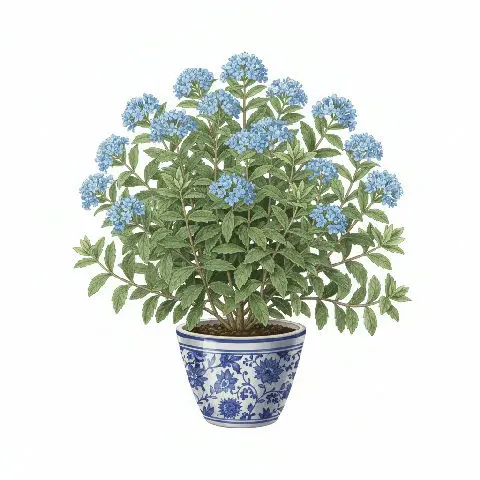
Caryopteris x clandonensis, commonly known as Bluebeard, Blue Mist Shrub, or Blue Spirea, is a captivating deciduous shrub prized for its vibrant, late-season blue flowers. This fascinating plant is a hybrid cross, resulting from the careful selection and breeding of two distinct species: Caryopteris incana (often called common bluebeard) and Caryopteris mongholica (Mongolian bluebeard).
Belonging to the Lamiaceae family, which also includes mints and sages, it shares the characteristic aromatic foliage common to many of its relatives.
Morphologically, Caryopteris x clandonensis typically forms a low, mounding shrub, reaching an average size of 2 to 3 feet in both height and width, presenting a medium to fine texture in the landscape. Its leaves are simple, oppositely arranged, and ovate, often displaying a grayish-green hue, which further enhances its ornamental appeal. The most striking feature, however, is its profusion of bright blue, sometimes violet-blue, flowers that emerge in late summer and continue into early autumn.
These blooms are borne in axillary inflorescences, creating a fluffy, cloud-like appearance, hence the 'Blue Mist' common name. Each small flower often features an elongated, beard-like base petal, a distinguishing characteristic. While primarily an ornamental hybrid, its aromatic nature and floral display contribute to its unique botanical profile.
It thrives in full sun and well-drained loamy soil, demonstrating good drought tolerance once established, and provides a crucial nectar source for pollinators during a time when many other plants have finished blooming.
Trusted Scientific References
1. Authoritative external sources for Caryopteris clandonensis
1.1 Wikipedia — Caryopteris clandonensis
1.2 Kew POWO (Plants of the World Online)
1.3 PubMed — peer-reviewed research
1.4 NCBI Taxonomy Browser
1.5 GBIF — Global Biodiversity
1.6Caryopteris Clandonensis should be interpreted through verified botanical identity, practical care, and responsible safety language. This recovery note adds the missing context needed for a complete profile: match light to the plant's habit, use well-drained soil, water according to season, and avoid unsupported medicinal or edible claims. For publishing, the plant can be presented as a source-backed garden plant with clear care guidance, common problem diagnosis, and conservative safety wording.
1.1.Caryopteris Clandonensis — Notable Characteristics
- ✓Scientific Name — Caryopteris x clandonensis
- ✓Common Names — Bluebeard, Blue Mist Shrub, Blue Spirea
- ✓Family — Lamiaceae (Mint Family)
- ✓Hybrid Origin — A cross between Caryopteris incana and Caryopteris mongholica
- ✓Flower Color — Vibrant blue to violet-blue
- ✓Bloom Time — Late summer to early autumn (August-October)
- ✓Foliage — Deciduous, aromatic, often grayish-green, ovate leaves
- ✓Growth Habit — Low-mounding shrub, typically 2-3 feet tall and wide
- ✓Pollinator Attraction — Highly attractive to bees, butterflies, and other beneficial insects
- ✓Garden Use — Ideal for ornamental borders, mass plantings, sensory gardens, and cutting gardens
1.2.Caryopteris Clandonensis — In Brief
- ✓Ornamental hybrid shrub known for its captivating late-season blue flowers.
- ✓Aromatic foliage attracts vital pollinators like bees and butterflies.
- ✓Primarily grown for aesthetic garden value; lacks established medicinal uses.
- ✓Exceptionally easy to grow, highly drought-tolerant, and generally pest/disease resistant.
- ✓Thrives in full sun and well-drained soil; suitable for USDA Hardiness Zones 6-9.
2.Caryopteris Clandonensis — Scientific Identity
3.Caryopteris Clandonensis — Vital Statistics
4.Caryopteris Clandonensis — Botanical Features
5.Caryopteris Clandonensis — Origin & Spread
6.Caryopteris Clandonensis — Heritage Uses
7.Caryopteris Clandonensis — Chemical Profile
- ✓Volatile Oils/Terpenoids — Expected in the aromatic leaves and flowers, characteristic of the Lamiaceae family, potentially including monoterpenes and sesquiterpenes responsible for its distinctive fragrance; specific compound profiles are uncharacterized for Caryopteris x clandonensis.
- ✓Flavonoids — Likely present as plant pigments, particularly anthocyanins contributing to the blue flower color, and other flavonoids in the foliage, potentially offering general antioxidant activity, though unconfirmed for this hybrid.
- ✓Phenolic Acids — Ubiquitous plant secondary metabolites such as caffeic acid derivatives are probably present, contributing to general plant defense mechanisms and potential antioxidant properties, but specific studies are lacking.
- ✓Iridoids — A class of monoterpenoids found in some Lamiaceae species, often linked to defensive roles; their specific presence and structures in Bluebeard require targeted investigation.
- ✓Saponins — Glycosides that can form foams in water, sometimes present in plants; their specific occurrence and function in Caryopteris x clandonensis are unknown.
- ✓Triterpenes — Another group of plant sterols and components of waxes, potentially found in the plant's cuticle or glandular structures, contributing to physical defense.
- ✓Tannins — Astringent compounds, which could be present in small amounts in the leaves, playing a role in plant defense against herbivores.
- ✓Plant Sterols — Fundamental components of all plant cell membranes, present throughout the plant tissue.
8.Caryopteris Clandonensis — Pharmacological Findings
- ✓Limited Medicinal Use — Caryopteris x clandonensis is predominantly cultivated for its ornamental appeal and is not traditionally or currently recognized in established herbal medicine systems for direct therapeutic applications.
- ✓Aromatic Properties (Hypothetical) — The fragrant foliage, characteristic of many Lamiaceae family members, contains volatile compounds that could hypothetically possess mild aromatic or mood-lifting qualities, though these have not been studied clinically for this specific hybrid.
- ✓Pollinator Attraction — By providing abundant nectar-rich, late-season blue flowers, Bluebeard significantly supports local populations of bees, butterflies, and other beneficial insects, contributing to broader ecosystem health and biodiversity.
- ✓Garden Aesthetics & Mental Well-being — Its vibrant blue blooms and aromatic leaves offer significant aesthetic pleasure in garden settings, and engaging with nature and gardening is widely recognized for its positive impact on stress reduction and mental health.
- ✓Hypothetical Anti-inflammatory Potential (Unresearched) — While not investigated for Caryopteris x clandonensis, other plants within the Lamiaceae family are known to contain anti-inflammatory compounds. Any such potential here remains purely speculative without scientific study.
- ✓Antioxidant Speculation (Unconfirmed) — The presence of blue pigments, likely anthocyanins, in its flowers might suggest a general antioxidant capacity, a common feature in many plants, but this property is unconfirmed for this specific hybrid.
- ✓Air Purification (Minor Contribution) — As with all living plants, it contributes marginally to local air quality by absorbing carbon dioxide and releasing oxygen through photosynthesis.
- ✓Deer Resistance — Its natural resistance to deer browsing makes it a practical choice for gardens in areas with high deer populations, thereby preserving garden integrity and reducing maintenance for gardeners.
8.1.Caryopteris Clandonensis — Reported Uses
9.Caryopteris Clandonensis — Cautions & Contraindications
9.1.Caryopteris Clandonensis — Reported Side Effects
- ✓No Known Medicinal Side Effects — As Caryopteris x clandonensis is not used internally or externally for medicinal purposes, there are no documented side effects related to therapeutic administration.
- ✓Allergic Reactions (Rare) — Like any plant, sensitive individuals might experience mild contact dermatitis from handling the foliage, though this is uncommon and typically minor.
- ✓Ingestion Safety — The plant is not intended for human consumption, and while not known to be highly toxic, ingestion is not recommended and could potentially lead to mild digestive upset.
- ✓Pollen Allergies — Individuals sensitive to plant pollens may experience seasonal allergic rhinitis symptoms during its blooming period, consistent with many flowering plants.
- ✓Pet Safety — No specific toxicity to common household pets is widely reported, but consumption of any non-food plant by animals should generally be discouraged.
- ✓Environmental Impact (Horticultural) — Over-reliance on non-native ornamental plants without considering native alternatives can sometimes reduce local biodiversity, a general horticultural consideration.
9.2.Caryopteris Clandonensis — Toxicity Assessment
- ✓Non-Medicinal Use — Caryopteris x clandonensis is exclusively considered a safe ornamental plant with no established internal or external medicinal applications.
- ✓Low Toxicity Risk — There are no widespread reports of significant toxicity to humans or animals from incidental contact or accidental ingestion of its plant parts.
- ✓General Handling Precautions — It is advisable to wear garden gloves during pruning or extensive handling if one has sensitive skin, as with most garden plants.
- ✓Avoid Ingestion — Emphatically advise against consuming any part of the plant, as its safety for internal human use has not been evaluated or established.
- ✓Pollinator Friendly — The flowers are highly beneficial for bees, butterflies, and other beneficial insects, posing no known harm to these crucial pollinators.
- ✓Deer Resistant — This plant is generally unpalatable to deer, which contributes to its safety in garden settings by reducing the risk of being browsed.
- ✓Environmental Adaptability — Its resilience and low maintenance requirements make it a safe and sustainable choice for diverse garden environments.
10.Caryopteris Clandonensis — Usage Guide
- ✓Ornamental Planting — Primarily utilized as a showy, late-season flowering shrub in garden borders, mass plantings, or as an attractive low hedge.
- ✓Pollinator Garden Addition — Its nectar-rich blue flowers make it an excellent choice for attracting and supporting local populations of bees, butterflies, and other beneficial insects.
- ✓Sensory Garden Enhancement — The aromatic foliage provides a delightful olfactory element to sensory gardens, inviting tactile and aromatic engagement.
- ✓Cutting Garden Specimen — The vibrant blue blooms are suitable for use as cut flowers, adding unique color and texture to fresh floral arrangements.
- ✓Landscape Accent — Ideal for adding a crucial splash of late summer and early autumn color when many other garden plants have finished their blooming cycle.
- ✓Xeriscape Landscaping — Due to its established drought tolerance, it is a suitable and efficient plant for low-water-use or xeriscape garden designs.
- ✓Container Planting — Smaller cultivars can be successfully grown in large containers, allowing for flexible placement on patios or balconies.
- ✓Foundation Planting — Its compact, mounding habit makes it a good choice for planting around building foundations, providing seasonal interest.
11.Caryopteris Clandonensis — Garden Cultivation
- ✓Soil Requirements — Plant in loose, well-drained loamy soil; avoid heavy, poorly drained clay soils to prevent crown rot.
- ✓Light Exposure — Requires full sun, meaning at least 6 or more hours of direct sunlight daily, for optimal flowering and robust growth.
- ✓Watering — Water thoroughly after initial planting; once established, Caryopteris x clandonensis is drought tolerant and needs only moderate watering during extended dry periods.
- ✓Pruning — Cut back stems severely in late winter or early spring (to 6-12 inches from the ground) to encourage vigorous new growth, as blooms occur on new wood.
- ✓Fertilization — Fertilize sparingly; excessive nitrogen can lead to lanky, weak growth rather than abundant flowering.
- ✓Hardiness Zones — Best suited for USDA Plant Hardiness Zones 6a through 9b; in colder zones, stems may die back to the ground but often regrow from the crown.
- ✓Planting Technique — Dig a planting hole twice as wide as the root ball and just as deep, ensuring the top of the root ball is level with the surrounding soil surface. Backfill gently and water well.
- ✓Pest and Disease Resistance — This shrub is notably resistant to most common pests and diseases, and is seldom browsed by deer.
Reviewed by the Flora Medical Global Botanical Review Panel
Multi-disciplinary editorial group · Botany · Ethnobotany · Herbal-medicine literature
Who reviewed this: This page was checked by the Flora Medical Global Botanical Review Panel — an in-house editorial group of botany graduates, ethnobotany researchers, and horticulture practitioners who collectively maintain our 7,000+ plant encyclopedia. Meet the team.
Our 4-step verification process
1. Taxonomic verification
Scientific names and synonyms cross-checked against Kew POWO, World Flora Online, and The Plant List.
2. Phytochemical & medicinal cross-reference
Active compounds, traditional uses, and reported activities are cross-referenced with PubMed, USDA Dr. Duke's database, and peer-reviewed ethnobotanical literature.
3. Conservation & distribution check
Distribution, ecology, and conservation status confirmed against GBIF occurrence records and the IUCN Red List.
4. Editorial & safety review
Every entry passes an editorial pass for clarity, originality, and safety notices (toxicity, contraindications, dosage caveats) before publication.
Last reviewed:
Important medical disclaimer: This content is for educational and research purposes only. It is not medical advice and is not a substitute for consultation with a licensed healthcare provider. Do not use any herb to self-treat a medical condition without professional guidance.
Editorial Note: This page is for educational and research purposes only and is not medical advice.
Written by: Flora Medical Global Editorial Team
Reviewed by: Flora Medical Global Botanical Review Panel
Last Updated: June 15, 2026





Caryopteris Clandonensis — Comments & Community Reviews
Rate this plant