


Medical Disclaimer: This content is for educational purposes only. It is not medical advice. Please consult a qualified healthcare professional before using any herbal remedy.
Safety Overview
1.Cascarilla — Plant Snapshot
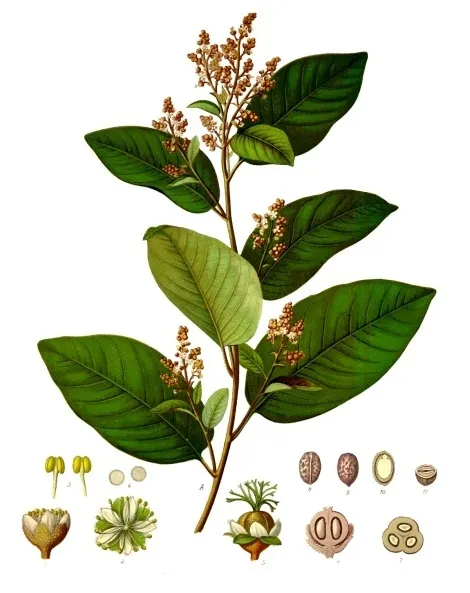
Cascarilla, known scientifically as Croton eluteria, is a resilient perennial woody shrub or small tree native to the tropical and subtropical regions of the Caribbean, particularly found in the Bahamas, Cuba, Dominican Republic, Haiti, and Jamaica. It thrives in thickets and woodlands, predominantly on limestone soils, from sea level up to 870 meters in elevation, adapting to both dry and wet conditions. This species typically reaches heights of 3 to 6 meters, though mature specimens can sometimes extend up to 12 meters, forming a dense, upright canopy.
Its alternately arranged leaves are lanceolate to ovate, measuring 4 to 14 cm, with a glossy dark green upper surface and a finely indumentum-covered, velvety underside. The prominent pinnate venation and slightly wavy, entire margins contribute to its distinctive appearance. The bark, which is the primary medicinally utilized part, ranges from light gray to brownish, developing a rough, papery texture that peels to reveal a reddish-brown inner layer.
This bark is notably aromatic, emitting a pleasant, spicy, and slightly musky fragrance, especially when crushed or burned. Throughout the year, Croton eluteria produces small, inconspicuous greenish-yellow flowers borne in terminal racemes or panicles, often with a subtle, sweet scent. These monoecious flowers develop into small, round, brownish capsular fruits, approximately 1 cm in diameter, which dehisce to release several small, ovoid, shiny seeds.
Trusted Scientific References
1. Authoritative external sources for Croton eluteria
1.1 Wikipedia — Croton eluteria
1.2 Kew POWO (Plants of the World Online)
1.3 PubMed — peer-reviewed research
1.4 NCBI Taxonomy Browser
1.5 GBIF — Global Biodiversity
1.6Cascarilla should be interpreted through verified botanical identity, practical care, and responsible safety language. This recovery note adds the missing context needed for a complete profile: match light to the plant's habit, use well-drained soil, water according to season, and avoid unsupported medicinal or edible claims. For publishing, the plant can be presented as a source-backed medicinal plant with clear care guidance, common problem diagnosis, and conservative safety wording.
1.1.Cascarilla — Defining Traits
- ✓Aromatic Bark — Distinctive spicy, musky fragrance from volatile oils.
- ✓Digestive Bitter — Potent stimulant for gastric acid secretion.
- ✓Febrifuge Properties — Traditional use for reducing fevers.
- ✓Antispasmodic Action — Helps relieve digestive cramps and spasms.
- ✓Expectorant Qualities — Aids in clearing respiratory passages.
- ✓Antimicrobial Activity — Essential oil shows efficacy against microbes.
- ✓Rich Phytochemistry — Contains cascarillins, tannins, and resins.
- ✓Tropical Origin — Native to the Caribbean, thriving in limestone soils.
- ✓Euphorbiaceae Family — Member of a diverse and often medicinal plant family.
- ✓Traditional Herbalism — Long history of use in various folk medicine systems.
1.2.Cascarilla — Quick Summary
- ✓Cascarilla (Croton eluteria) is an aromatic Caribbean shrub.
- ✓Bark is traditionally used as a digestive bitter and febrifuge.
- ✓Rich in volatile oils and bitter neoclerodane diterpenoids like cascarillin A.
- ✓Modern research confirms its gastric acid stimulating and antimicrobial properties.
- ✓Used in decoctions, tinctures, and essential oil for various health benefits.
- ✓Contraindicated in pregnancy, lactation, and for individuals with gallstones.
2.Cascarilla — Scientific Profile
3.Cascarilla — Botanical Stats
4.Cascarilla — Plant Morphology
5.Cascarilla — Geographic Distribution
6.Cascarilla — Historical Applications
7.Cascarilla — Bioactive Constituents
- ✓Volatile Oils — Comprising 1.5% to 3% of the bark, these oils contain monoterpenes like limonene and p-cymene, and phenylpropanoids such as eugenol, responsible for the characteristic aromatic fragrance and some antimicrobial actions.
- ✓Cascarillin A — A prominent neoclerodane diterpenoid, this bitter compound is a key active constituent responsible for Cascarilla's digestive stimulant effects, particularly its ability to increase gastric acid secretion.
- ✓Neoclerodane Diterpenoids — Beyond Cascarillin A, other cascarillins are present, contributing to the bark's bitter taste and pharmacological activities, including potential anti-inflammatory properties.
- ✓Resins — A complex mixture of organic compounds that contribute to the bark's overall chemical profile and may have fixative or mild stimulant effects.
- ✓Tannins — Polyphenolic compounds present in the bark, providing astringent properties that can help reduce inflammation and exert anti-diarrheal effects.
- ✓Lipids — Fatty components that are part of the bark's cellular structure, influencing its texture and potentially aiding in the absorption of fat-soluble compounds.
- ✓Flavonoids — Although in smaller concentrations, various flavonoids may be present, offering antioxidant and anti-inflammatory benefits.
- ✓Alkaloids — Some species in the Croton genus contain alkaloids; while not primary in Cascarilla, trace amounts might contribute to its overall pharmacological profile.
- ✓Triterpenes — These compounds are common in many plants and could contribute to the anti-inflammatory or adaptogenic potential of Cascarilla.
8.Cascarilla — Modern Studies
- ✓Aromatic Bitter — Cascarilla bark acts as an aromatic bitter, stimulating taste receptors to promote the secretion of digestive juices and increase gastric acid production, thereby enhancing overall digestion.
- ✓Digestive Aid — Historically used to alleviate various digestive complaints, it helps to improve dyspepsia, reduce intestinal bloating, and relieve gas by supporting healthy gastrointestinal function.
- ✓Carminative — Its volatile oils exhibit carminative properties, assisting in the expulsion of gas from the intestines and reducing discomfort associated with flatulence and colic.
- ✓Antispasmodic — Cascarilla can help relax smooth muscles, making it beneficial for easing intestinal spasms, abdominal cramps, and other spasmodic conditions of the digestive tract.
- ✓Febrifuge — Traditionally employed to reduce fevers, particularly intermittent and low-grade fevers, by potentially supporting the body's natural thermoregulatory processes.
- ✓Expectorant — The bark has been used as an expectorant, helping to loosen and expel phlegm from the respiratory passages, which can be beneficial in cases of chronic bronchitis and coughs.
- ✓Antitussive — By soothing the respiratory tract and reducing irritation, Cascarilla may help to suppress coughing, offering relief from chronic cough symptoms.
- ✓Astringent — Containing tannins, it possesses astringent qualities that can help to tone mucous membranes and reduce excessive secretions, useful in managing diarrhea and dysentery.
- ✓Cholagogue — It stimulates the flow of bile from the gallbladder, aiding in fat digestion and liver detoxification processes.
- ✓Hypotensive Support — In traditional applications, it has been noted for its potential to assist in managing high blood pressure, although modern research is limited in this area.
- ✓General Tonic — Often used during convalescence, it acts as a restorative tonic, helping to invigorate the body and support recovery from illness.
- ✓Antimicrobial — Research indicates that the essential oil derived from Cascarilla bark exhibits antimicrobial activity, suggesting potential for combating various pathogenic microorganisms.
8.1.Cascarilla — Therapeutic Indications
9.Cascarilla — Precautions & Warnings
9.1.Cascarilla — Caution Notes
- ✓Gastrointestinal Upset — High doses or prolonged use may cause stomach irritation, nausea, or diarrhea due to its stimulant bitter properties.
- ✓Allergic Reactions — Individuals sensitive to plants in the Euphorbiaceae family may experience allergic reactions, though rare.
- ✓Medication Interactions — Potential to interact with blood pressure-lowering medications due to its traditional hypotensive use, requiring caution.
- ✓Pregnancy and Lactation — Contraindicated during pregnancy and breastfeeding due to insufficient safety data and the presence of potent compounds.
- ✓Gallstones — As a cholagogue, it should be used with caution by individuals with gallstones or bile duct obstruction, as it may exacerbate symptoms.
- ✓Overstimulation — Excessive consumption might lead to overstimulation of the digestive system, causing discomfort rather than relief.
- ✓Liver Concerns — While generally considered safe, individuals with pre-existing liver conditions should consult a healthcare professional before use.
9.2.Cascarilla — Safety Profile
- ✓Professional Consultation — Always consult a qualified healthcare professional or medical herbalist before using Cascarilla, especially if pregnant, breastfeeding, or on medication.
- ✓Pregnancy & Lactation — Strictly contraindicated during pregnancy and lactation due to lack of safety data regarding potential effects on fetal development or infant health.
- ✓Dosage Adherence — Adhere strictly to recommended dosages; excessive intake can lead to adverse gastrointestinal effects.
- ✓Pre-existing Conditions — Individuals with gallstones, bile duct obstruction, or severe gastrointestinal inflammatory conditions should exercise extreme caution or avoid use.
- ✓Allergic Sensitivity — Discontinue use immediately if any signs of allergic reaction, such as skin rash or respiratory difficulty, occur.
- ✓Children & Infants — Not recommended for use in children or infants due to the potency of its active compounds and lack of pediatric safety studies.
- ✓Quality Sourcing — Ensure Cascarilla bark is sourced from reputable suppliers to guarantee purity and prevent adulteration, which can impact safety and efficacy.
10.Cascarilla — Application Forms
- ✓Decoction — The most common method: simmer 1-2 teaspoons of dried, crushed Cascarilla bark in a cup of water for 10-15 minutes, then strain. Typically consumed before meals as a digestive bitter.
- ✓Tincture — A concentrated alcoholic extract of the bark, usually taken in drops (e.g., 20-40 drops) mixed with water, often preferred for its convenience and longer shelf life.
- ✓Infusion (Limited) — While bark is usually decocted, a strong infusion can be made by steeping bark in hot water, though extraction of key compounds may be less efficient than decoction.
- ✓Essential Oil — Cascarilla essential oil, obtained via hydrodistillation, is used externally in aromatherapy or as a component in cosmetic formulations for its aromatic properties. Not for internal consumption unless under expert guidance.
- ✓Powdered Bark — Dried bark can be powdered and encapsulated or mixed with other herbs for various preparations, often used in traditional formulations.
- ✓Topical Applications — Extracts or diluted essential oil might be used topically for their antimicrobial or anti-inflammatory potential, though less common.
- ✓Syrups — Infusions or decoctions can be sweetened to create medicinal syrups, particularly for respiratory conditions like chronic bronchitis.
11.Cascarilla — Growing Guide
- ✓Habitat Mimicry — Best cultivated in environments that mimic its native Caribbean habitat, favoring warm, tropical to subtropical climates.
- ✓Soil Preference — Thrives in limestone-rich soils, but can adapt to a wide range of well-drained soil types, including disturbed and undisturbed vegetation.
- ✓Light Requirements — Prefers full sun to partial shade for optimal growth and flowering.
- ✓Watering — Requires moderate watering, especially during dry periods, but is somewhat tolerant to drought once established due to its adaptability to varying moisture levels.
- ✓Propagation — Primarily propagated by seed, which should be sown in a well-draining medium and kept consistently moist until germination.
- ✓Flowering — Produces small, fragrant greenish-yellow flowers almost year-round in suitable tropical conditions.
- ✓Pest Resistance — Generally robust, showing reasonable resistance to common pests and diseases in its native range.
- ✓Pruning — Light pruning can help maintain shape and encourage denser growth, especially for specimens cultivated for bark harvesting.
Reviewed by the Flora Medical Global Botanical Review Panel
Multi-disciplinary editorial group · Botany · Ethnobotany · Herbal-medicine literature
Who reviewed this: This page was checked by the Flora Medical Global Botanical Review Panel — an in-house editorial group of botany graduates, ethnobotany researchers, and horticulture practitioners who collectively maintain our 7,000+ plant encyclopedia. Meet the team.
Our 4-step verification process
1. Taxonomic verification
Scientific names and synonyms cross-checked against Kew POWO, World Flora Online, and The Plant List.
2. Phytochemical & medicinal cross-reference
Active compounds, traditional uses, and reported activities are cross-referenced with PubMed, USDA Dr. Duke's database, and peer-reviewed ethnobotanical literature.
3. Conservation & distribution check
Distribution, ecology, and conservation status confirmed against GBIF occurrence records and the IUCN Red List.
4. Editorial & safety review
Every entry passes an editorial pass for clarity, originality, and safety notices (toxicity, contraindications, dosage caveats) before publication.
Last reviewed:
Important medical disclaimer: This content is for educational and research purposes only. It is not medical advice and is not a substitute for consultation with a licensed healthcare provider. Do not use any herb to self-treat a medical condition without professional guidance.
Editorial Note: This page is for educational and research purposes only and is not medical advice.
Written by: Flora Medical Global Editorial Team
Reviewed by: Flora Medical Global Botanical Review Panel
Last Updated: June 15, 2026




Cascarilla — Comments & Community Reviews
Rate this plant