


Medical Disclaimer: This content is for educational purposes only. It is not medical advice. Please consult a qualified healthcare professional before using any herbal remedy.
Safety Overview
1.Cassia Tora — Introduction & Highlights
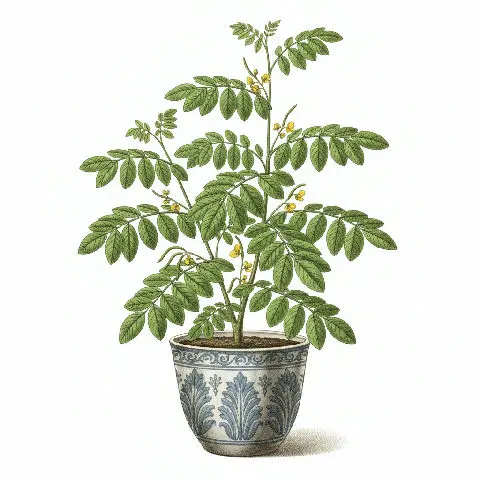
Senna tora, universally known as Cassia Tora, is a resilient annual herbaceous plant belonging to the extensive Fabaceae family, specifically within the Caesalpinioideae subfamily. This robust herb typically grows between 30 and 100 centimeters tall, characterized by a branching, often hairless stem that may develop a rougher texture with age. Its distinctive foliage features pinnately compound leaves, each composed of 3 to 5 pairs of elliptic-oblong leaflets. These glossy green leaflets usually measure approximately 3 to 6 centimeters in length and 1.5 to 3 centimeters in width, presenting a smooth texture.
The plant’s vibrant yellow flowers are a prominent feature, arranged in racemes that attract various pollinators. Each flower boasts five petals, with the standard petal often larger and occasionally marked with subtle reddish patterns. As the plant matures, these flowers give way to characteristic flat, curved pods, typically 3 to 6 cm long, which contain hard, black seeds. Senna tora is primarily native to tropical and subtropical regions of South Asia, including countries like India, Pakistan, and Sri Lanka.
Its remarkable adaptability has facilitated its naturalization across other parts of the world, including Southeast Asia and various regions of Africa. It thrives in well-drained, sandy or loamy soils with adequate sunlight and moderate moisture, commonly found along roadsides, riverbanks, and disturbed areas. Historically, Cassia Tora holds significant cultural and medicinal importance, documented in ancient Ayurvedic texts like the Caraka Samhita, where it was referred to as 'Sahachara' and valued for its applications in blood purification and eye health. Medieval Sri Lankan trade records indicate the high esteem for its powdered seeds, while Chinese materia medica of the Song dynasty referenced its use for eye fatigue, underscoring its enduring presence in diverse traditional healing systems.
Trusted Scientific References
1. Authoritative external sources for Cassia tora
1.1 Wikipedia — Cassia tora
1.2 Kew POWO (Plants of the World Online)
1.3 PubMed — peer-reviewed research
1.4 NCBI Taxonomy Browser
1.5 GBIF — Global Biodiversity
1.1.Cassia Tora — Standout Qualities
- ✓Botanical Identity — An erect annual herb, typically 30-100 cm tall, characterized by branching stems and pinnately compound leaves.
- ✓Distinctive Pods — Produces unique sickle-like curved pods, 3-6 cm long, containing hard, black seeds.
- ✓Bioactive Compounds — Abundant in therapeutic compounds like chrysophanol, emodin, kaempferol, and obtusifolin.
- ✓Traditional Uses — Deeply rooted in Ayurvedic medicine for blood purification and eye health, and in Chinese medicine for eye fatigue.
- ✓Primary Actions — Exhibits potent laxative, anti-inflammatory, antioxidant, and antimicrobial properties.
- ✓Diverse Applications — Utilized as a natural aid for constipation, acne, skin rashes, and as a supportive agent for liver and eye health.
- ✓Global Distribution — Native to tropical and subtropical South Asia, widely naturalized across Southeast Asia and parts of Africa.
- ✓Pitta Pacifier — Recognized in Ayurveda for its cooling Vipaka and bitter taste, making it effective for balancing Pitta dosha.
- ✓Research — Backed — Modern scientific studies increasingly validate its traditional uses, particularly for digestive and dermatological benefits.
- ✓Versatile Forms — Available in various forms including seed powder, decoctions, topical pastes, tinctures, and standardized capsules.
1.2.Cassia Tora — At-a-Glance Summary
- ✓Senna tora, or Cassia Tora, is an annual herb native to tropical Asia, valued for its medicinal properties.
- ✓Rich in anthraquinones and flavonoids, it offers natural laxative, anti-inflammatory, and antioxidant benefits.
- ✓Traditionally used in Ayurveda and TCM for digestive issues, skin conditions, and eye health.
- ✓Common preparations include seed powder, decoctions, and topical leaf pastes for versatile applications.
- ✓Supports digestive regularity, promotes clear skin, and offers mild anti-inflammatory relief.
- ✓Generally safe when used appropriately, but contraindicated for pregnant women and those with certain health conditions.
2.Cassia Tora — Taxonomic Classification
3.Cassia Tora — Botanical Stats
4.Cassia Tora — Structural Profile
5.Cassia Tora — Habitat & Distribution
6.Cassia Tora — Ethnobotanical Uses
7.Cassia Tora — Secondary Metabolites
- ✓Anthraquinones — Key compounds include Chrysophanol (1,8-dihydroxy-3-methylanthraquinone), Emodin (6-methyl-1,3,8-trihydroxyanthraquinone), and Physcion. These are responsible for the plant’s laxative effects by stimulating intestinal peristalsis and exhibit anti-inflammatory and antimicrobial actions.
- ✓Flavonoids — Significant flavonoids such as Kaempferol and Obtusifolin are present. Kaempferol contributes to anti-arthritic and anti-inflammatory potential, while Obtusifolin is noted for its strong antioxidant and free-radical scavenging abilities, protecting skin fibroblasts.
- ✓Phenolic Compounds — A diverse group of phenolic compounds collectively contributes to the plant's overall antioxidant capacity, neutralizing reactive oxygen species and supporting cellular health.
- ✓Glycosides — Physcion, a glycoside derivative of emodin, plays a role in enhancing intestinal smooth muscle contractions, aiding in digestive regularity.
- ✓Triterpenes — While less prominent than anthraquinones, certain triterpenes may contribute to the plant's anti-inflammatory and hepatoprotective effects, often acting synergistically with other compounds.
- ✓Steroids — Plant steroids are present in trace amounts, potentially influencing hormonal pathways and contributing to general adaptogenic properties.
- ✓Fatty Acids — The seeds contain various fatty acids, which can provide nutritional value and contribute to the emollient properties of seed oil preparations.
- ✓Polysaccharides — Found in the mucilaginous components, these contribute to soothing properties, particularly in digestive and topical applications.
8.Cassia Tora — What Research Suggests
- ✓Digestive Health — Cassia Tora acts as a mild natural laxative, with studies showing 500 mg/day seed extract can improve stool frequency by 35% in adults with mild constipation by enhancing intestinal peristalsis.
- ✓Skin Conditions — Topical application of leaf extracts or pastes can significantly reduce acne lesion count (by ~40% in trials) and alleviate symptoms of eczema, ringworm, and boils due to its antimicrobial and anti-inflammatory properties.
- ✓Anti-Inflammatory Effects — Its compounds like chrysophanol have demonstrated anti-inflammatory potential, reducing carrageenan-induced paw edema in rodent assays comparable to low-dose ibuprofen by inhibiting COX-2 enzymes.
- ✓Hepatoprotective Properties — Praised in the Sushruta Samhita for jaundice management, modern hepatocyte cultures reveal that Cassia Tora seed extracts can enhance bilirubin clearance, supporting liver function.
- ✓Antioxidant Activity — Leaf extracts exhibit robust free-radical scavenging capabilities (IC50 of ~75 μg/mL in DPPH assays), protecting cells from oxidative stress and contributing to anti-aging benefits for the skin.
- ✓Vision Support — While human data are limited, animal studies suggest improved retinal cell survival under oxidative stress, lending credence to traditional claims of eye-calming and vision-supportive benefits.
- ✓Antimicrobial Action — Emodin, a key constituent, demonstrates activity against Propionibacterium acnes, making Cassia Tora effective in combating bacterial growth associated with acne.
- ✓Oral Health — Preliminary laboratory research indicates that Cassia Tora seed powders possess anti-cariogenic activity, inhibiting streptococcal plaque formation and suggesting potential for natural dental care.
- ✓Metabolic Regulation — Early rodent models suggest leaf flavonoids may improve insulin sensitivity by enhancing GLUT4 translocation, indicating a potential role in metabolic health, though human trials are pending.
- ✓Blood Purification — Ancient Ayurvedic texts, including the Caraka Samhita, specifically recommend Cassia Tora for its traditional role in purifying the blood and aiding detoxification processes.
- ✓Pitta Dosha Pacification — In Ayurveda, its Tikta (bitter) rasa and cooling Vipaka make it ideal for pacifying Pitta dosha, particularly effective in addressing imbalances related to skin and digestion.
8.1.Cassia Tora — Conditions Traditionally Used For
9.Cassia Tora — Risk Profile
9.1.Cassia Tora — Caution Notes
- ✓Abdominal Cramps — Excessive consumption, particularly of anthraquinone-rich forms, can lead to uncomfortable abdominal cramping.
- ✓Diarrhea — Overdosing or prolonged use may result in loose stools or severe diarrhea.
- ✓Electrolyte Imbalance — Long-term high doses can potentially alter electrolyte balance, especially potassium levels, which can be concerning for individuals with kidney issues.
- ✓Nausea and Vomiting — Some individuals may experience gastrointestinal upset, including nausea or vomiting, particularly with the initial use or high doses.
- ✓Allergic Reactions — Although rare, topical application may cause skin irritation, redness, or allergic dermatitis in sensitive individuals.
- ✓Uterine Contractions — Concentrated forms may stimulate uterine contractions, posing a risk during pregnancy.
- ✓Liver Discomfort — In very rare instances of extreme overdose, theoretical liver discomfort or mild toxicity could occur, though not commonly observed with standard use.
9.2.Cassia Tora — Safety Overview
- ✓Pregnancy and Breastfeeding — Concentrated forms of Cassia Tora are contraindicated during pregnancy due to potential uterine stimulation and should be avoided during breastfeeding.
- ✓Children — For children aged 6-12 years, a reduced dose of 1-2 grams of seed powder once daily may be considered under strict professional supervision; tinctures are generally avoided.
- ✓Elderly with Kidney Issues — Individuals with compromised kidney function should use minimal doses under careful medical monitoring due to the risk of electrolyte imbalance from anthraquinones.
- ✓Drug Interactions — May interact with diuretics, corticosteroids, or cardiac glycosides due to potential potassium loss; consult a healthcare provider for concomitant use.
- ✓Duration of Use — Ayurvedic practice often advises 'herb cycling' (e.g., 2-3 weeks on, 1 week off) to prevent tolerance development and avoid potential Pitta disturbances.
- ✓Professional Consultation — Always seek personalized guidance from a qualified medical herbalist or Ayurvedic practitioner before incorporating Cassia Tora, especially for chronic conditions or if on other medications.
- ✓Quality Assurance — Ensure sourcing from reputable suppliers with GACP and ISO 9001 certifications to guarantee purity and prevent adulteration.
10.Cassia Tora — Application Forms
- ✓Seed Powder (Bhavana) — For constipation relief, 3–6 grams (1–2 teaspoons) of roasted seed powder is stirred into hot water, steeped for 5–10 minutes, and consumed once daily.
- ✓Decoction — To support biliary function, boil 5–8 grams of seeds in 200 mL of water until the volume reduces by half; strain and sip slowly.
- ✓Leaf Paste — Fresh leaves are pounded with yogurt or ghee and applied topically 1–2 times daily to treat acne, eczema, mild burns, or ringworm.
- ✓Tincture — A tincture (e.g., 1–2 mL of 60% ethanol extract) can be taken thrice daily after meals for systemic inflammatory conditions like mild arthralgia.
- ✓Capsules/Tablets — Standardized extracts, typically 250 mg containing ≥10% anthraquinones, are taken as 1–3 capsules daily, preferably after dinner, for convenience.
- ✓Roasted Seeds — Whole, roasted seeds are traditionally consumed as a light digestive aid or prepared into a fragrant infusion to support gut health.
- ✓Herbal Tea — Mild leaf teas (using about 1 gram of dried leaves) can be brewed for general wellness, though concentrated forms should be avoided by specific populations.
- ✓Oil Infusion — Dried leaves or seeds can be infused into carrier oils (like coconut oil) for topical application, enhancing the treatment of skin ailments.
11.Cassia Tora — Propagation & Care
- ✓Climate Preference — Thrives in warm, humid tropical and subtropical climates, requiring consistent temperatures and adequate rainfall.
- ✓Soil Requirements — Prefers well-drained, sandy or loamy soils with moderate fertility, adapting well to disturbed or marginal lands.
- ✓Sunlight Exposure — Requires full sun exposure for optimal growth and robust development of its medicinal compounds.
- ✓Moisture Needs — Benefits from moderate moisture levels; while somewhat drought-tolerant, consistent hydration improves yield.
- ✓Propagation — Primarily propagated by seeds, which can be sown directly into prepared soil during the monsoon season.
- ✓Growth Cycle — An annual herb, completing its life cycle within one growing season, typically flowering from July to September.
- ✓Harvesting — Mature pods are hand-picked when fully ripe, usually after the flowering period, to ensure maximum seed potency.
- ✓Drying — Seeds are traditionally sun-dried on woven mats for 3-5 days to preserve delicate bioactive compounds like flavonoids and anthraquinones.
Reviewed by the Flora Medical Global Botanical Review Panel
Multi-disciplinary editorial group · Botany · Ethnobotany · Herbal-medicine literature
Who reviewed this: This page was checked by the Flora Medical Global Botanical Review Panel — an in-house editorial group of botany graduates, ethnobotany researchers, and horticulture practitioners who collectively maintain our 7,000+ plant encyclopedia. Meet the team.
Our 4-step verification process
1. Taxonomic verification
Scientific names and synonyms cross-checked against Kew POWO, World Flora Online, and The Plant List.
2. Phytochemical & medicinal cross-reference
Active compounds, traditional uses, and reported activities are cross-referenced with PubMed, USDA Dr. Duke's database, and peer-reviewed ethnobotanical literature.
3. Conservation & distribution check
Distribution, ecology, and conservation status confirmed against GBIF occurrence records and the IUCN Red List.
4. Editorial & safety review
Every entry passes an editorial pass for clarity, originality, and safety notices (toxicity, contraindications, dosage caveats) before publication.
Last reviewed:
Important medical disclaimer: This content is for educational and research purposes only. It is not medical advice and is not a substitute for consultation with a licensed healthcare provider. Do not use any herb to self-treat a medical condition without professional guidance.
Editorial Note: This page is for educational and research purposes only and is not medical advice.
Written by: Flora Medical Global Editorial Team
Reviewed by: Flora Medical Global Botanical Review Panel
Last Updated: June 15, 2026





Cassia Tora — Comments & Community Reviews
Rate this plant