


Medical Disclaimer: This content is for educational purposes only. It is not medical advice. Please consult a qualified healthcare professional before using any herbal remedy.
Safety Overview
1.Catalpa Bignonioides — At a Glance
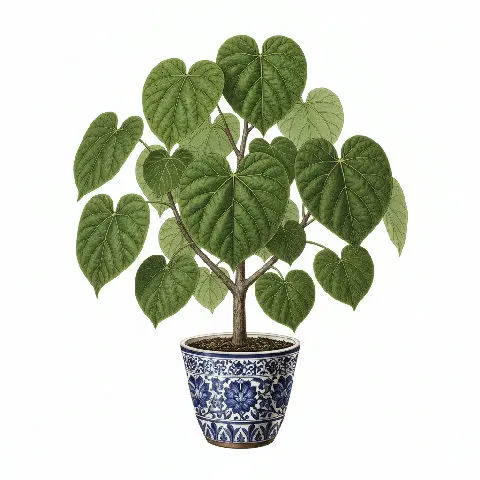
Catalpa bignonioides, widely recognized as the Southern Catalpa, Indian Bean Tree, or Cigar Tree, is a striking deciduous tree native to the diverse ecosystems of the southeastern United States. This fast-growing species typically achieves heights of 10 to 20 meters, with some mature specimens reaching over 30 meters, establishing a broad, impressive crown that can extend 12 to 18 meters in width. Its aesthetic appeal is rooted in several distinctive morphological characteristics.
The foliage consists of remarkably large, heart-shaped (cordate) to ovate leaves, often growing up to 30 centimeters long and 20 centimeters wide, arranged in whorls of three or opposite pairs. These leaves feature a vibrant, smooth green upper surface and a finely hairy underside, providing dense, cooling shade throughout the warmer seasons. The bark of young Catalpa bignonioides trees is initially smooth and grayish-brown, gradually developing a textured appearance with age, characterized by shallow furrows and scaly ridges that enhance its winter profile.
One of the most captivating aspects of the Southern Catalpa is its abundant and spectacular floral display, which occurs from late spring to early summer. It produces large, showy, bell-shaped flowers, predominantly white or creamy-white, intricately marked with purple or brownish-purple spots and streaks, along with prominent yellow stripes in their throats. These fragrant blossoms are borne in upright, pyramidal panicles, often 15-25 cm in length, making them highly attractive to a wide range of pollinators, including various bee species, hummingbirds, and other insects.
Following this impressive bloom, the tree develops its eponymous fruit: long, slender, cylindrical seed pods that strikingly resemble green beans or cigars, giving rise to one of its common names. These distinctive pods can grow to lengths of 20 to 40 centimeters, often remaining on the tree through autumn and winter before eventually splitting open to release numerous flat, winged seeds that are efficiently dispersed by wind, contributing to the tree's ecological role.
Trusted Scientific References
1. Authoritative external sources for Catalpa bignonioides
1.1 Wikipedia — Catalpa bignonioides
1.2 Kew POWO (Plants of the World Online)
1.3 PubMed — peer-reviewed research
1.4 NCBI Taxonomy Browser
1.5 GBIF — Global Biodiversity
1.1.Catalpa Bignonioides — Distinguishing Points
- ✓Rapid Growth Rate — A fast-growing shade tree reaching significant heights and canopy spread.
- ✓Distinctive Foliage — Large, heart-shaped leaves provide dense shade and ornamental value.
- ✓Showy Flowers — Large, bell-shaped white flowers with purple and yellow markings appear in late spring/early summer.
- ✓Unique Seed Pods — Long, slender, cigar-like pods persist through winter, giving it the 'Cigar Tree' moniker.
- ✓Native to Southeastern US — Well-adapted to its indigenous climate and soil conditions.
- ✓Antidiabetic Potential — Scientifically studied for its α-glucosidase inhibitory and insulin-secreting activities.
- ✓Rich in Iridoids and Flavonoids — Key chemical constituents with various therapeutic actions.
- ✓Traditional Medicinal History — Used in South American folk medicine for a range of ailments including diabetes and skin conditions.
- ✓Attracts Pollinators — Flowers are highly attractive to bees, hummingbirds, and other insects.
- ✓Urban Tolerance — Exhibits good tolerance to urban pollution and various environmental stresses.
1.2.Catalpa Bignonioides — Snapshot Summary
- ✓Southern Catalpa, or Indian Bean Tree, is a fast-growing deciduous tree native to the southeastern US.
- ✓Known for large heart-shaped leaves, showy white flowers, and distinctive long, cigar-like seed pods.
- ✓Traditionally used in South America for diabetes, gastric issues, and skin ailments.
- ✓Modern research highlights its antidiabetic potential through α-glucosidase inhibition and insulin secretion.
- ✓Rich in iridoids (like catalpol) and flavonoids, which contribute to its medicinal properties.
- ✓Caution is advised for use, especially in pregnant individuals, children, and those on antidiabetic medications.
2.Catalpa Bignonioides — Botanical Identity
3.Catalpa Bignonioides — Fact Sheet
4.Catalpa Bignonioides — Physical Description
5.Catalpa Bignonioides — Ecological Habitat
6.Catalpa Bignonioides — Folk Medicine Applications
7.Catalpa Bignonioides — Chemical Profile
- ✓Iridoids — This significant class includes catalpol, widely recognized for its antidiabetic and anti-inflammatory properties. Secoiridoid derivatives are also present, contributing to α-glucosidase inhibition and insulin secretion.
- ✓Flavonoids — Compounds like specific flavone glycosides, including 5,6-dihydroxy-7,4’-dimethoxyflavone-6-O-sophoroside, are found, exhibiting α-glucosidase inhibitory activity and insulin-secreting effects. They typically offer antioxidant benefits.
- ✓Phenolic Compounds — A broad category encompassing various compounds with antioxidant and anti-inflammatory activities, contributing to the plant's overall therapeutic potential.
- ✓Triterpenes — These diverse compounds are often associated with anti-inflammatory, antimicrobial, and adaptogenic properties in medicinal plants.
- ✓Steroids — Present in the plant, these compounds can have a range of biological activities, though specific medicinal roles in Catalpa bignonioides are still being explored.
- ✓Alkaloids — While often present in small amounts, alkaloids can possess potent pharmacological effects, though specific active alkaloids in Catalpa bignonioides require further investigation.
- ✓Quinones — These compounds are known for their antioxidant, antimicrobial, and sometimes cytotoxic activities, contributing to the plant's traditional uses.
- ✓Tannins — Astringent compounds that can contribute to wound healing, anti-inflammatory effects, and antimicrobial activity, supporting traditional uses for skin and gastrointestinal issues.
- ✓Catalpic Acid — A unique fatty acid derivative primarily found in the seeds, demonstrated to modulate lipid metabolism and improve glucose and insulin homeostasis.
- ✓Sugars and Fats — Basic metabolic compounds that provide energy and serve as precursors for other secondary metabolites.
8.Catalpa Bignonioides — Scientific Evidence
- ✓Antidiabetic Activity — Research indicates that compounds from Catalpa bignonioides fruits can inhibit α-glucosidase, an enzyme that breaks down carbohydrates, and stimulate insulin secretion from pancreatic β-cells, offering potential for managing type 2 diabetes.
- ✓Glucose Regulation — Key compounds like specific iridoids and flavone glycosides have been shown to improve glucose-stimulated insulin secretion and enhance the expression of proteins vital for β-cell function, contributing to better blood sugar control.
- ✓Anti-inflammatory Effects — Aqueous extracts of Catalpa bignonioides have demonstrated anti-inflammatory properties, which may help in reducing inflammation associated with various chronic conditions.
- ✓Analgesic (Pain-Relieving) Properties — The plant's extracts have also exhibited anti-nociceptive activity, suggesting its traditional use for pain relief.
- ✓Gastrointestinal Support — Traditionally, the plant has been used in South American folk medicine to address gastric diseases, potentially alleviating stomach discomfort and digestive issues.
- ✓Antiparasitic Action — Folk medicine records indicate its use against helmintic infections, suggesting potential anthelmintic properties to combat parasitic worms.
- ✓Bronchial Ailment Relief — In traditional practices, Catalpa bignonioides was employed for bronchial diseases, possibly helping to ease respiratory symptoms.
- ✓Skin Condition Management — Historically, it has been applied topically for carbuncles, scabs, and abscesses, pointing to potential antiseptic or healing effects on skin lesions.
- ✓Antioxidant Potential — Like many plants rich in flavonoids and phenolics, Catalpa bignonioides likely possesses antioxidant properties, which help combat oxidative stress and cellular damage.
- ✓Lipid Metabolism Modulation — Catalpic acid, found in Catalpa seeds, has been shown to decrease abdominal fat deposition and triglyceride concentrations while increasing beneficial HDL cholesterol, indicating a role in metabolic health.
8.1.Catalpa Bignonioides — Reported Uses
9.Catalpa Bignonioides — Safety & Side Effects
9.1.Catalpa Bignonioides — Side Effects & Warnings
- ✓Gastrointestinal Upset — High doses or sensitive individuals may experience nausea, vomiting, or diarrhea.
- ✓Allergic Reactions — Skin rashes, itching, or respiratory issues can occur in individuals sensitive to the plant.
- ✓Hypoglycemia Risk — When combined with antidiabetic medications, it may excessively lower blood sugar levels, leading to hypoglycemia.
- ✓Potential Toxicity — Certain parts of the plant, especially seeds, are considered mildly toxic if ingested in large quantities, causing gastrointestinal distress.
- ✓Drug Interactions — May interact with medications for diabetes, blood thinners, or other chronic conditions, altering their efficacy or increasing side effects.
- ✓Drowsiness — Some traditional accounts suggest a sedative effect, which could lead to drowsiness or impaired concentration.
- ✓Uterine Contractions — There is a theoretical risk of inducing uterine contractions, making it unsuitable for pregnant individuals.
9.2.Catalpa Bignonioides — Toxicity Assessment
- ✓Pregnancy and Lactation — Contraindicated due to insufficient safety data and potential for uterine stimulation; avoid use during pregnancy and breastfeeding.
- ✓Children — Not recommended for use in children due to lack of safety studies and potential toxicity.
- ✓Diabetes Patients — Individuals with diabetes should use with extreme caution and only under strict medical supervision due to its potent blood sugar-lowering effects.
- ✓Surgical Procedures — Discontinue use at least two weeks before any scheduled surgery due to potential interactions with anesthesia or blood clotting.
- ✓Pre-existing Conditions — Individuals with liver or kidney disease, or other chronic health issues, should avoid use or consult a physician.
- ✓Dosage Adherence — Adhere strictly to recommended dosages from a qualified practitioner; excessive intake can lead to adverse effects.
- ✓Professional Consultation — Always seek advice from a healthcare professional or qualified herbalist before incorporating Catalpa bignonioides into a therapeutic regimen.
10.Catalpa Bignonioides — Usage Guide
- ✓Decoction of Pods/Fruits — Traditionally, dried fruits or pods are simmered in water to create a decoction, used orally for conditions like diabetes in South American folk medicine.
- ✓Bark Tincture — The bark may be used to prepare a tincture by soaking in alcohol, traditionally applied or ingested for its purported anti-inflammatory or gastric benefits.
- ✓Leaf Poultice — Fresh or dried leaves, crushed and moistened, can be applied externally as a poultice for skin ailments such as carbuncles, scabs, and abscesses.
- ✓Herbal Tea from Leaves — Dried leaves can be steeped in hot water to make a tea, traditionally consumed for general wellness or specific mild complaints.
- ✓Seed Extracts — Seeds, rich in compounds like catalpic acid, may be processed into extracts for targeted metabolic support, though this is primarily for research or specialized preparations.
- ✓Root Preparations — While less common, some traditional systems may utilize root preparations for deeper-acting remedies; however, caution is advised due to potential toxicity.
- ✓Professional Guidance — Always consult a qualified medical herbalist or healthcare professional before using Catalpa bignonioides for medicinal purposes, especially given its potent compounds.
11.Catalpa Bignonioides — Garden Cultivation
- ✓Site Selection — Plant in a location with full sun exposure for optimal growth and flowering, though it can tolerate partial shade.
- ✓Soil Requirements — Thrives in deep, moist, well-drained loamy soils but is tolerant of a wide range of soil types, including clay and sandy soils.
- ✓Watering — Requires regular watering, especially during dry periods and in its establishment phase; mature trees are moderately drought-tolerant.
- ✓Propagation — Primarily propagated by seeds, which require stratification, or by softwood cuttings taken in late spring to early summer.
- ✓Pruning — Prune in late winter or early spring to remove dead or diseased branches and to shape the tree, promoting a strong structure.
- ✓Pest and Disease Management — Generally a robust tree, but can be susceptible to Catalpa sphinx moth larvae and occasional leaf spot diseases; minimal intervention is usually required.
- ✓Hardiness — Hardy in USDA zones 4-9, demonstrating good cold tolerance once established.
- ✓Spacing — Allow ample space for its broad, spreading crown, typically planting at least 10-15 meters away from structures or other large trees.
Reviewed by the Flora Medical Global Botanical Review Panel
Multi-disciplinary editorial group · Botany · Ethnobotany · Herbal-medicine literature
Who reviewed this: This page was checked by the Flora Medical Global Botanical Review Panel — an in-house editorial group of botany graduates, ethnobotany researchers, and horticulture practitioners who collectively maintain our 7,000+ plant encyclopedia. Meet the team.
Our 4-step verification process
1. Taxonomic verification
Scientific names and synonyms cross-checked against Kew POWO, World Flora Online, and The Plant List.
2. Phytochemical & medicinal cross-reference
Active compounds, traditional uses, and reported activities are cross-referenced with PubMed, USDA Dr. Duke's database, and peer-reviewed ethnobotanical literature.
3. Conservation & distribution check
Distribution, ecology, and conservation status confirmed against GBIF occurrence records and the IUCN Red List.
4. Editorial & safety review
Every entry passes an editorial pass for clarity, originality, and safety notices (toxicity, contraindications, dosage caveats) before publication.
Last reviewed:
Important medical disclaimer: This content is for educational and research purposes only. It is not medical advice and is not a substitute for consultation with a licensed healthcare provider. Do not use any herb to self-treat a medical condition without professional guidance.
Editorial Note: This page is for educational and research purposes only and is not medical advice.
Written by: Flora Medical Global Editorial Team
Reviewed by: Flora Medical Global Botanical Review Panel
Last Updated: June 15, 2026





Catalpa Bignonioides — Comments & Community Reviews
Rate this plant