
Medical Disclaimer: This content is for educational purposes only. It is not medical advice. Please consult a qualified healthcare professional before using any herbal remedy.
Safety Overview
1.Catmint — Introduction & Highlights
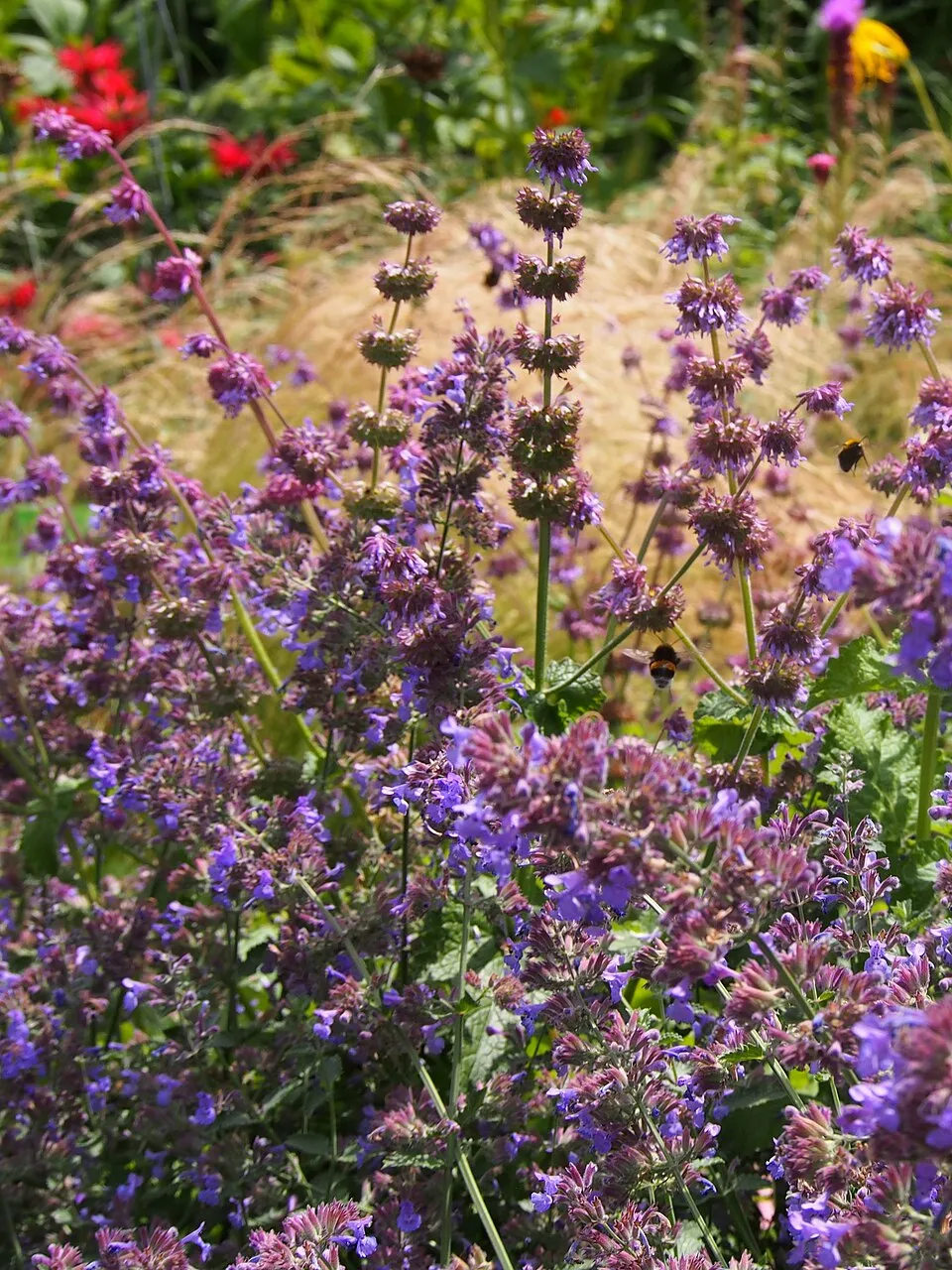
Catmint, scientifically known as Nepeta x faassenii, is a popular hybrid perennial herb belonging to the expansive Lamiaceae family, commonly recognized as the mint family. This robust plant is celebrated for its highly aromatic foliage and profusion of delicate lavender-blue flowers, which grace gardens from late spring through early autumn, acting as a significant magnet for a diverse array of pollinators, including various species of bees and butterflies. Typically, Catmint exhibits a bushy and upright growth habit, reaching heights of approximately 60 to 90 centimeters.
Its stems are characteristically square, a hallmark feature across many members of the mint family. The leaves are ovate to lanceolate in shape, distinguished by a subtly fuzzy texture resulting from minute hairs that blanket their surface, a physiological adaptation that aids in minimizing moisture loss, particularly in drier conditions. Densely packed flowering spikes emerge gracefully from the leaf axils, creating a vibrant and continuous display of color within the garden landscape.
While Nepeta, the genus, originates from Temperate Eurasia, Macaronesia, and Eastern Tropical Africa, Nepeta x faassenii itself is a cultivated hybrid renowned for its adaptability. It thrives in a wide range of environments, particularly favoring well-drained soil and abundant full sunlight, demonstrating remarkable resilience to periods of drought once its root system is well-established. Its notable features include exceptional hardiness and remarkably low maintenance requirements, making Catmint an outstanding selection for gardeners seeking a resilient, long-flowering perennial that also offers ecological benefits.
Trusted Scientific References
1. Authoritative external sources for Nepeta x faassenii
1.1 Wikipedia — Nepeta x faassenii
1.2 Kew POWO (Plants of the World Online)
1.3 PubMed — peer-reviewed research
1.4 NCBI Taxonomy Browser
1.5 GBIF — Global Biodiversity
1.6Catmint should be interpreted through verified botanical identity, practical care, and responsible safety language. This recovery note adds the missing context needed for a complete profile: match light to the plant's habit, use well-drained soil, water according to season, and avoid unsupported medicinal or edible claims. For publishing, the plant can be presented as a source-backed garden plant with clear care guidance, common problem diagnosis, and conservative safety wording.
1.1.Catmint — Standout Qualities
- ✓Hybrid Perennial Herb — Hybrid Perennial Herb
- ✓Aromatic Foliage — Aromatic Foliage
- ✓Vibrant Lavender — Blue Flowers
- ✓Attracts Bees and — Attracts Bees and Butterflies
- ✓Highly Drought — Tolerant
- ✓Deer and Rabbit — Deer and Rabbit Resistant
- ✓Low Maintenance Plant — Low Maintenance Plant
- ✓Mild Sedative Properties — Mild Sedative Properties
- ✓Digestive Aid — Digestive Aid
- ✓Natural Insect Repellent — Natural Insect Repellent (aphids, squash bugs)
1.2.Catmint — Quick Summary
- ✓Catmint (Nepeta x faassenii) is a hardy, aromatic perennial from the Lamiaceae family.
- ✓Known for its vibrant lavender-blue flowers and ability to attract pollinators.
- ✓Traditionally used for its mild calming, digestive, and respiratory supportive properties.
- ✓The key active compound is nepetalactone, contributing to its unique effects.
- ✓It is a low-maintenance garden plant, highly drought-tolerant and deer-resistant.
- ✓Generally safe for use but requires caution during pregnancy and with sedative medications.
2.Catmint — Taxonomic Classification
3.Catmint — Quick Facts
4.Catmint — Plant Morphology
5.Catmint — Habitat & Distribution
6.Catmint — Ethnobotanical Uses
7.Catmint — Secondary Metabolites
- ✓Nepetalactone — This iridoid monoterpenoid is the primary active compound, particularly the (Z,E)-nepetalactone isomer, responsible for the plant's characteristic aroma, its attraction to felines, and its mild sedative and anxiolytic effects.
- ✓Flavonoids — Compounds such as apigenin, luteolin, and quercetin derivatives are present, contributing significant antioxidant, anti-inflammatory, and potentially anxiolytic activities.
- ✓Tannins — These polyphenolic compounds lend astringent properties to Catmint, which can be beneficial for digestive health and as a mild antiseptic.
- ✓Volatile Oils — Beyond nepetalactone, other monoterpenes and sesquiterpenes like citronellol, geraniol, and beta-caryophyllene are found in the essential oil, contributing to its aroma and various therapeutic effects.
- ✓Phenolic Acids — Rosmarinic acid, caffeic acid, and chlorogenic acid are prevalent, offering potent antioxidant and anti-inflammatory benefits, crucial for cellular protection.
- ✓Iridoids (other than nepetalactone) — Other minor iridoid compounds may be present, contributing to the plant's overall biological activity.
- ✓Phytosterols — Plant sterols are found in Catmint, known for their potential cholesterol-lowering and anti-inflammatory effects.
- ✓Saponins — These glycosides are present in small amounts and may contribute to expectorant properties and general tonic effects.
- ✓Coumarins — Minor amounts of coumarin derivatives may be present, which can have anticoagulant and anti-inflammatory properties.
8.Catmint — Modern Studies
- ✓Calming and Sedative Effects — Catmint is traditionally valued for its mild sedative properties, which can help alleviate anxiety, nervous tension, and promote a sense of calm, potentially aiding in restful sleep.
- ✓Digestive Support — As a carminative, Catmint can help soothe various digestive complaints, including bloating, gas, and mild stomach cramps, by relaxing the smooth muscles of the gastrointestinal tract.
- ✓Respiratory Relief — The plant has been historically used to ease symptoms of colds, flu, and other respiratory conditions, acting as a mild expectorant to help clear congestion and soothe coughs.
- ✓Anti-inflammatory Action — Certain compounds within Catmint, such as flavonoids and phenolic acids, contribute to its anti-inflammatory potential, which may help reduce minor aches and discomfort.
- ✓Antispasmodic Properties — Catmint can exhibit antispasmodic effects, which may be beneficial in relieving muscle spasms and tension throughout the body.
- ✓Diaphoretic Activity — Traditionally, Catmint has been employed to induce sweating, making it useful in fevers to help cool the body and promote detoxification.
- ✓Mild Antimicrobial Effects — Volatile oils present in Catmint may possess mild antiseptic and antimicrobial properties, contributing to its use in traditional remedies for minor infections.
- ✓Nervine Tonic — It acts as a nervine, gently supporting the nervous system, which can be helpful during periods of stress or overstimulation without causing excessive drowsiness.
- ✓Headache Alleviation — Due to its calming and antispasmodic qualities, Catmint has been anecdotally used to help relieve tension headaches.
- ✓Stress Reduction — The overall adaptogenic and calming influence of Catmint can contribute to general stress reduction and improved emotional well-being.
8.1.Catmint — Reported Uses
9.Catmint — Precautions & Warnings
9.1.Catmint — Caution Notes
- ✓Drowsiness — Excessive consumption of Catmint may lead to drowsiness, impacting alertness and coordination.
- ✓Gastrointestinal Upset — In rare instances or very high doses, some individuals may experience mild stomach upset, nausea, or diarrhea.
- ✓Allergic Reactions — Sensitive individuals may develop allergic reactions such as skin rashes, itching, or hives, particularly if allergic to other Lamiaceae family plants.
- ✓Uterine Stimulation — Though largely theoretical and based on high doses, Catmint may possess mild emmenagogue properties, potentially stimulating uterine contractions.
- ✓Interaction with Sedatives — Due to its mild sedative effect, Catmint may potentiate the effects of pharmaceutical sedatives, leading to increased drowsiness.
- ✓Diuretic Effect — Some individuals might experience a mild increase in urination due to potential diuretic properties.
- ✓Blood Pressure Changes — Rarely, very high doses might theoretically influence blood pressure, though this is not well-documented for typical use.
9.2.Catmint — Clinical Safety Notes
- ✓Pregnancy and Lactation — Avoid use during pregnancy and lactation due to insufficient research and the theoretical risk of uterine stimulation.
- ✓Children — Use with caution and in reduced dosages for children; always consult a pediatrician or qualified herbalist before administering.
- ✓Surgery — Discontinue Catmint at least two weeks prior to any scheduled surgery due to its potential sedative effects and possible interactions with anesthesia.
- ✓Drug Interactions — Exercise caution if taking sedative medications, blood pressure drugs, or any medications where an additive effect could be detrimental.
- ✓Allergy Risk — Individuals with known allergies to plants in the Lamiaceae family (e.g., mint, basil, oregano) should use Catmint with caution.
- ✓Dosage Adherence — Always adhere to recommended dosages and consult a healthcare professional for personalized guidance, especially for therapeutic use.
- ✓Long-Term Use — While generally considered safe for short-term use, long-term safety data for continuous, high-dose consumption is limited.
10.Catmint — How to Use
- ✓Herbal Tea — Infuse 1-2 teaspoons of dried Catmint leaves and flowers in hot water for 5-10 minutes to create a calming and digestive tea.
- ✓Tincture — A concentrated alcoholic extract can be made from fresh or dried Catmint, typically taken in drops for systemic effects.
- ✓Poultice — Fresh, crushed Catmint leaves can be applied topically as a poultice to soothe minor skin irritations or insect bites.
- ✓Inhalation — A steam inhalation prepared with Catmint can help clear nasal passages and ease respiratory discomfort during colds.
- ✓Culinary Use — The minty, slightly pungent leaves can be added sparingly to salads, soups, or used as a garnish for a unique flavor.
- ✓Herbal Bath — Add a strong infusion of Catmint to bathwater for a relaxing and aromatic experience, beneficial for easing tension.
- ✓Essential Oil (caution) — While an essential oil exists, it should be used with extreme caution and diluted properly, primarily for aromatic diffusion, not internal use.
11.Catmint — Propagation & Care
- ✓Soil Preference — Catmint thrives in well-drained soil, tolerating a range from clay to sandy or rocky conditions, but it is intolerant of waterlogged roots.
- ✓Sun Exposure — Full sun is preferred for optimal growth and flowering, requiring at least 6 hours of direct sunlight daily.
- ✓Watering Regime — Once established, Nepeta x faassenii is highly drought-tolerant and requires minimal supplemental watering; overwatering should be avoided.
- ✓Fertilization — Fertilize sparingly, if at all, as excessive nitrogen can promote lush foliage growth at the expense of flower production.
- ✓Pruning for Rebloom — Shearing back the spent flower spikes after the first flush encourages a second, often more prolific, wave of blooms and maintains a tidy plant shape.
- ✓Propagation — Catmint can be readily propagated by division in spring or fall, or by collecting and sowing seeds, though hybrids may not come true from seed.
- ✓Pest and Disease Resistance — Generally robust, Catmint shows good resistance to most common pests and diseases, often deterring deer and rabbits.
- ✓Garden Placement — Its spreading, clumping habit makes it ideal for borders, rock gardens, containers, or as a groundcover in naturalized areas.
Reviewed by the Flora Medical Global Botanical Review Panel
Multi-disciplinary editorial group · Botany · Ethnobotany · Herbal-medicine literature
Who reviewed this: This page was checked by the Flora Medical Global Botanical Review Panel — an in-house editorial group of botany graduates, ethnobotany researchers, and horticulture practitioners who collectively maintain our 7,000+ plant encyclopedia. Meet the team.
Our 4-step verification process
1. Taxonomic verification
Scientific names and synonyms cross-checked against Kew POWO, World Flora Online, and The Plant List.
2. Phytochemical & medicinal cross-reference
Active compounds, traditional uses, and reported activities are cross-referenced with PubMed, USDA Dr. Duke's database, and peer-reviewed ethnobotanical literature.
3. Conservation & distribution check
Distribution, ecology, and conservation status confirmed against GBIF occurrence records and the IUCN Red List.
4. Editorial & safety review
Every entry passes an editorial pass for clarity, originality, and safety notices (toxicity, contraindications, dosage caveats) before publication.
Last reviewed:
Important medical disclaimer: This content is for educational and research purposes only. It is not medical advice and is not a substitute for consultation with a licensed healthcare provider. Do not use any herb to self-treat a medical condition without professional guidance.
Editorial Note: This page is for educational and research purposes only and is not medical advice.
Written by: Flora Medical Global Editorial Team
Reviewed by: Flora Medical Global Botanical Review Panel
Last Updated: June 15, 2026





Catmint — Comments & Community Reviews
Rate this plant