


Medical Disclaimer: This content is for educational purposes only. It is not medical advice. Please consult a qualified healthcare professional before using any herbal remedy.
Safety Overview
1.Cat's Claw — Botanical Snapshot
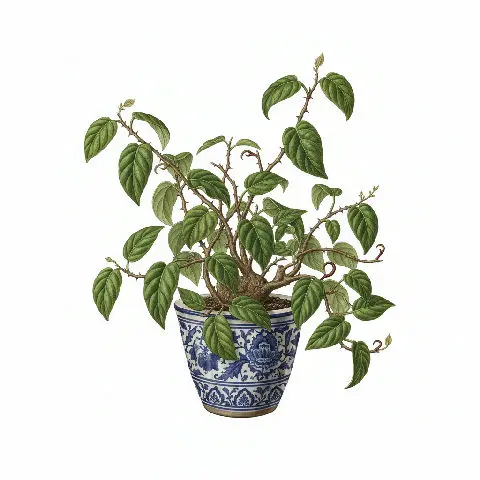
Cat's Claw, primarily referring to the species Uncaria tomentosa and occasionally Uncaria guianensis, is a magnificent woody liana native to the biodiverse rainforests of the Amazon basin, spanning South and Central America. This robust vine is renowned for its vigorous climbing ability, often ascending to heights of up to 30 meters by anchoring itself to the towering canopy trees.
A distinctive feature, lending the plant its common name, is the pair of recurved, claw-like thorns that emerge from the leaf axils, providing crucial support for its upward growth. These thorns are a key identifying characteristic, strikingly resembling a feline's claw.
The foliage of Cat's Claw is equally unique. Its leaves are oppositely arranged along the stem, typically measuring between 7 and 12 centimeters in length, with an elegant elliptical to ovate shape. The upper surface of the leaves exhibits a glossy, deep green hue, which may transition to a yellowish shade during drier seasons as an adaptation to reduce transpiration. The venation is prominent and often reticulate.
The stem itself is woody and substantial, encased in a grayish-brown, fibrous bark that possesses a rough, furrowed texture, characteristic of many mature rainforest lianas. This inner bark is the primary part utilized in traditional medicine. Flowering occurs in clusters, producing small, tubular blossoms that range in color from a pale yellow to a creamy white. These delicate flowers are highly attractive to a diverse array of pollinators, contributing to the rich biodiversity of its ecosystem.
Following successful pollination, the plant produces small, inconspicuous fruits, typically capsules containing numerous tiny seeds, aiding in its widespread natural propagation. Uncaria tomentosa thrives in warm, humid, tropical climates, preferring well-drained, fertile soils found across its native range from Peru, Ecuador, and Colombia to parts of Brazil and Guyana.
Trusted Scientific References
1. Authoritative external sources for Uncaria tomentosa
1.1 Wikipedia — Uncaria tomentosa
1.2 Kew POWO (Plants of the World Online)
1.3 PubMed — peer-reviewed research
1.4 NCBI Taxonomy Browser
1.5 GBIF — Global Biodiversity
1.1.Cat's Claw — Notable Characteristics
- ✓Indigenous to the — Indigenous to the Amazon rainforests of South and Central America.
- ✓Characterized by distinctive recurved, claw — like thorns on its stem.
- ✓Primary medicinal part — Primary medicinal part is the inner bark of the liana.
- ✓Rich in unique — Rich in unique oxindole alkaloids, flavonoids, and triterpenes.
- ✓Traditionally used by — Traditionally used by indigenous communities for centuries.
- ✓Modern research supports its immunomodulatory and anti — inflammatory actions.
- ✓Commonly used for — Commonly used for joint support, immune enhancement, and digestive health.
- ✓Available in various forms — decoctions, tinctures, capsules, and extracts.
- ✓Important to differentiate — Important to differentiate Uncaria tomentosa from Uncaria guianensis due to varying chemical profiles.
- ✓Recognized for its — Recognized for its adaptogenic properties, helping the body cope with stress.
1.2.Cat's Claw — Concise Overview
- ✓Amazonian liana, known as Uncaria tomentosa or Uncaria guianensis.
- ✓Distinguished by its unique claw-like thorns.
- ✓Inner bark is traditionally used for medicinal purposes.
- ✓Renowned for immune-modulating and anti-inflammatory properties.
- ✓Used for joint health, digestive support, and as an antioxidant.
- ✓Requires caution due to potential drug interactions and contraindications.
2.Cat's Claw — Scientific Identity
3.Cat's Claw — Fact Sheet
4.Cat's Claw — Physical Description
5.Cat's Claw — Native Range & Habitat
6.Cat's Claw — Heritage Uses
7.Cat's Claw — Chemical Profile
- ✓Pentacyclic Oxindole Alkaloids (POAs) — Key compounds such as mitraphylline, pteropodine, isomitraphylline, speciophylline, and uncarine F, known for their immunomodulatory and anti-inflammatory activities.
- ✓Tetracyclic Oxindole Alkaloids (TOAs) — Including rhynchophylline and isorhynchophylline, which are associated with cardiovascular effects like blood pressure reduction and potential anti-platelet aggregation.
- ✓Glycosides — Various triterpenoid glycosides, which contribute to the plant's overall biological activity, including anti-inflammatory effects.
- ✓Flavonoids — Such as epicatechin and proanthocyanidins, potent antioxidants that help protect cells from oxidative stress and contribute to anti-inflammatory actions.
- ✓Triterpenes — Including oleanolic acid and ursolic acid, recognized for their anti-inflammatory, anticancer, and hepatoprotective properties.
- ✓Sterols — Compounds like beta-sitosterol and campesterol, which have anti-inflammatory and immune-modulating effects.
- ✓Organic Acids — Notably quinic acid, which is a significant antioxidant and anti-inflammatory agent.
- ✓Tannins — Present in the bark, contributing to its astringent properties and potential antimicrobial effects.
- ✓Polysaccharides — Complex carbohydrates that can also play a role in immune system modulation.
8.Cat's Claw — Evidence-Based Benefits
- ✓Immune System Support — Cat's Claw contains oxindole alkaloids that are believed to stimulate the immune system, enhancing the body's natural defenses against pathogens.
- ✓Anti-inflammatory Properties — Compounds in Uncaria tomentosa, particularly quinic acid and certain alkaloids, have demonstrated significant anti-inflammatory effects, potentially reducing swelling and pain.
- ✓Joint Health and Osteoarthritis Relief — Its anti-inflammatory action may help alleviate symptoms of osteoarthritis and rheumatoid arthritis by reducing inflammation in the joints.
- ✓Antioxidant Activity — The plant's rich phytochemical profile, including flavonoids and polyphenols, contributes to its potent antioxidant capacity, neutralizing harmful free radicals.
- ✓Digestive Health — Traditionally used to support gut health, Cat's Claw may help soothe the digestive tract and maintain a healthy microbial balance.
- ✓Antiviral Potential — Preliminary research suggests that certain constituents of Cat's Claw may exhibit antiviral properties, potentially inhibiting viral replication.
- ✓Supports Cellular Health — Some studies indicate that extracts may promote healthy cell growth and inhibit the proliferation of abnormal cells, though more research is needed.
- ✓Blood Pressure Regulation — Certain alkaloids, like rhynchophylline, may contribute to a modest lowering of blood pressure by acting as a vasodilator.
- ✓Neuroprotective Effects — There is emerging interest in its potential to protect neuronal cells from damage, possibly due to its antioxidant and anti-inflammatory actions.
- ✓Detoxification Support — Historically, it has been used as a depurative, aiding the body's natural detoxification processes.
8.1.Cat's Claw — Health Applications
9.Cat's Claw — Safety & Side Effects
9.1.Cat's Claw — Possible Adverse Reactions
- ✓Gastrointestinal Upset — May cause mild side effects like nausea, diarrhea, or stomach discomfort in some individuals.
- ✓Headaches — Occasional reports of headaches have been associated with Cat's Claw use.
- ✓Dizziness — Some users might experience dizziness, particularly if blood pressure is affected.
- ✓Hypotension — Due to its potential to lower blood pressure, it may lead to excessively low blood pressure in susceptible individuals.
- ✓Increased Bleeding Risk — Can slow blood clotting, increasing the risk of bruising and bleeding, especially with concurrent anticoagulant use.
- ✓Skin Reactions — Although rare, topical application or internal use might lead to allergic skin reactions in sensitive individuals.
- ✓Liver Enzyme Elevation — In very rare cases, high doses or prolonged use might impact liver enzyme levels, requiring monitoring.
9.2.Cat's Claw — Clinical Safety Notes
- ✓Pregnancy and Breastfeeding — Possibly unsafe during pregnancy due to potential effects on uterine contractions; avoid use during breastfeeding due to insufficient data.
- ✓Autoimmune Diseases — May stimulate the immune system, potentially exacerbating symptoms in individuals with autoimmune conditions like lupus, MS, or rheumatoid arthritis.
- ✓Kidney Disease — There is concern that Cat's Claw might injure the kidneys; consult a healthcare provider before use.
- ✓Parkinson's Disease — May worsen tremors or movements in individuals with Parkinson's disease; consult a healthcare provider.
- ✓Surgery — Discontinue use at least two weeks before any scheduled surgery due to its potential to slow blood clotting.
- ✓Organ Transplant Recipients — Avoid use as it may interfere with immunosuppressant medications and compromise transplant outcomes.
- ✓Drug Interactions — Moderate interactions with medications metabolized by CYP3A4, antihypertensives, immunosuppressants, calcium channel blockers, and anticoagulants.
10.Cat's Claw — Preparations & Uses
- ✓Decoction — The dried inner bark is commonly simmered in water to create a potent tea or decoction, a traditional method for extracting active compounds.
- ✓Tincture — Alcohol-based extracts (tinctures) are prepared from the inner bark, offering a concentrated form that is convenient for modern use.
- ✓Capsules/Tablets — Powdered inner bark or standardized extracts are encapsulated for easy oral administration, providing precise dosing.
- ✓Topical Preparations — Less common, but extracts can be incorporated into gels or creams for external application, particularly for localized inflammation or pain.
- ✓Fluid Extracts — Concentrated liquid forms where the plant material is extracted with a solvent like alcohol and water, often taken in drops.
- ✓Root Preparations — While primarily the inner bark, sometimes the root is also used, particularly in some traditional practices, prepared as decoctions.
- ✓Standardized Extracts — Modern preparations often focus on standardizing the content of key active compounds, such as pentacyclic oxindole alkaloids, for consistent efficacy.
11.Cat's Claw — Cultivation & Care
- ✓Climate — Requires warm, humid, tropical climates with consistent rainfall, mirroring its native Amazonian environment.
- ✓Soil — Thrives in well-drained, fertile, humus-rich soils, typical of rainforest floor conditions.
- ✓Light — Prefers partial shade, especially when young, but can tolerate more sun as it matures, typical of a liana growing into the canopy.
- ✓Propagation — Primarily propagated from seeds or stem cuttings, with seeds requiring specific germination conditions.
- ✓Support Structure — As a climbing liana, it requires robust support structures like mature trees or trellises to facilitate its upward growth.
- ✓Water — Needs abundant and consistent moisture, but waterlogging should be avoided.
- ✓Harvesting — The inner bark is typically harvested from mature vines, often done sustainably by stripping bark without felling the entire plant.
- ✓Pest Management — Generally resilient, but susceptible to common tropical plant pests if not properly managed.
Reviewed by the Flora Medical Global Botanical Review Panel
Multi-disciplinary editorial group · Botany · Ethnobotany · Herbal-medicine literature
Who reviewed this: This page was checked by the Flora Medical Global Botanical Review Panel — an in-house editorial group of botany graduates, ethnobotany researchers, and horticulture practitioners who collectively maintain our 7,000+ plant encyclopedia. Meet the team.
Our 4-step verification process
1. Taxonomic verification
Scientific names and synonyms cross-checked against Kew POWO, World Flora Online, and The Plant List.
2. Phytochemical & medicinal cross-reference
Active compounds, traditional uses, and reported activities are cross-referenced with PubMed, USDA Dr. Duke's database, and peer-reviewed ethnobotanical literature.
3. Conservation & distribution check
Distribution, ecology, and conservation status confirmed against GBIF occurrence records and the IUCN Red List.
4. Editorial & safety review
Every entry passes an editorial pass for clarity, originality, and safety notices (toxicity, contraindications, dosage caveats) before publication.
Last reviewed:
Important medical disclaimer: This content is for educational and research purposes only. It is not medical advice and is not a substitute for consultation with a licensed healthcare provider. Do not use any herb to self-treat a medical condition without professional guidance.
Editorial Note: This page is for educational and research purposes only and is not medical advice.
Written by: Flora Medical Global Editorial Team
Reviewed by: Flora Medical Global Botanical Review Panel
Last Updated: June 15, 2026





Cat's Claw — Comments & Community Reviews
Rate this plant