


Medical Disclaimer: This content is for educational purposes only. It is not medical advice. Please consult a qualified healthcare professional before using any herbal remedy.
Safety Overview
1.Cattleya Indoor — Botanical Snapshot
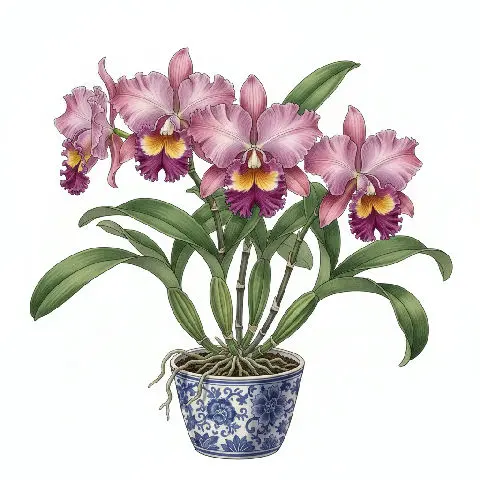
Cattleya labiata, affectionately known as the 'Crimson Cattleya' or 'Ruby-lipped Cattleya,' stands as a foundational species within the Orchidaceae family. This epiphytic and occasionally lithophytic orchid is indigenous to the tropical Atlantic forests of northeastern Brazil, thriving in the humid, warm climates of states such as Pernambuco, Alagoas, Sergipe, and Bahia.
Its discovery and formal description by John Lindley in 1821 were pivotal, establishing the genus Cattleya and initiating the 'orchidelirium' that captivated European collectors in the 19th century. This species is the archetype for a vast array of horticulturally significant orchids, lending its name to the entire genus.
Botanically, C. labiata exhibits a sympodial growth habit, generating new shoots from a creeping rhizome. Each growth culminates in a distinct, club-shaped or spindle-shaped pseudobulb, typically ranging from 15 to 30 cm in height, which functions as a vital reservoir for water and nutrients, enabling the plant to endure dry spells.
Surmounting each pseudobulb is a single, leathery, oblong-lanceolate leaf, measuring approximately 15 to 25 cm in length. The plant is unifoliate, meaning it produces just one leaf per pseudobulb. The most captivating feature is its large, fragrant flowers, which generally emerge in the autumn months.
Floral scapes bear one to five magnificent blooms, often reaching up to 20 cm in diameter. The sepals and petals are usually a striking rosy-purple to lilac, frequently displaying a subtle metallic sheen. The most distinctive component is the three-lobed, trumpet-shaped labellum (lip), which is intricately ruffled or fimbriated along its margins, often featuring contrasting colors or patterns, contributing to the species' high variability in flower color and form.
Trusted Scientific References
1. Authoritative external sources for Cattleya labiata
1.1 Wikipedia — Cattleya labiata
1.2 Kew POWO (Plants of the World Online)
1.3 PubMed — peer-reviewed research
1.4 NCBI Taxonomy Browser
1.5 GBIF — Global Biodiversity
1.1.Cattleya Indoor — Highlights
- ✓Type Species — The foundational species for the entire Cattleya genus, establishing its botanical classification.
- ✓Showy Flowers — Produces magnificent, large (up to 20 cm) and highly fragrant blooms.
- ✓Vibrant Coloration — Flowers typically display striking rosy-purple to lilac hues with a glistening sheen.
- ✓Distinctive Labellum — Features a prominent, three-lobed, trumpet-shaped lip that is often ruffled or fimbriated.
- ✓Epiphytic Growth — Naturally grows on tree branches, adapting to its arboreal habitat with specialized aerial roots.
- ✓Pseudobulbs — Possesses club-shaped pseudobulbs for efficient water and nutrient storage, aiding drought tolerance.
- ✓Unifoliate — Characterized by a single, leathery leaf emerging from each pseudobulb.
- ✓Historical Significance — Its discovery sparked 'orchidelirium' and revolutionized orchidology in the 19th century.
- ✓Autumn Bloomer — Typically flowers in the autumn months, providing seasonal beauty.
- ✓Ornamental Value — Highly prized worldwide for its aesthetic appeal in horticulture and floral design.
1.2.Cattleya Indoor — Quick Summary
- ✓Iconic Brazilian epiphytic orchid known for its large, fragrant flowers.
- ✓Type species of the Cattleya genus, pivotal in orchid history.
- ✓Features showy rosy-purple to lilac blooms with a distinctive ruffled lip.
- ✓Cultivated globally as a prized ornamental houseplant.
- ✓Generally non-toxic to humans and pets, safe for indoor display.
- ✓Requires bright, indirect light, high humidity, and warm temperatures.
2.Cattleya Indoor — Nomenclature & Classification
3.Cattleya Indoor — Fact Sheet
4.Cattleya Indoor — Physical Description
5.Cattleya Indoor — Origin & Spread
6.Cattleya Indoor — Folk Medicine Applications
7.Cattleya Indoor — Chemical Profile
- ✓Flavonoids — These ubiquitous plant pigments, such as anthocyanins, are primarily responsible for the vibrant rosy-purple and lilac hues of Cattleya labiata's flowers, offering potential antioxidant activity.
- ✓Terpenoids — Volatile terpenes, including compounds like linalool and geraniol, contribute significantly to the characteristic sweet and often intense fragrance of the blooms, playing a role in attracting pollinators.
- ✓Polysaccharides — Complex carbohydrates are stored within the pseudobulbs and roots, serving as vital energy reserves and structural components, enabling the plant to withstand periods of drought.
- ✓Phenolic Acids — Compounds like caffeic acid and ferulic acid may be present in the leaves and pseudobulbs, potentially contributing to the plant's defense mechanisms against pathogens and environmental stress.
- ✓Alkaloids (Trace) — While not a primary class, some orchids may contain trace amounts of alkaloids, which are nitrogen-containing compounds often involved in plant defense.
- ✓Lipids — Fats and oils are present in various plant tissues, particularly in seeds, providing energy storage and structural integrity for cellular membranes.
- ✓Sterols — Plant sterols, such as beta-sitosterol, are common constituents in many plant cell membranes and may have mild anti-inflammatory properties in other species.
- ✓Amino Acids — Essential building blocks of proteins, amino acids are fundamental for plant growth, metabolism, and enzyme synthesis, found throughout the plant's tissues.
8.Cattleya Indoor — Scientific Evidence
- ✓Aesthetic Enhancement — The striking beauty of Cattleya labiata's large, fragrant flowers is widely recognized for its ability to uplift mood and provide visual pleasure, contributing to psychological well-being.
- ✓Stress Reduction — Engaging in the cultivation and appreciation of this ornamental orchid can serve as a calming activity, promoting relaxation and aiding in the reduction of daily stress.
- ✓Indoor Air Quality Improvement — Like many houseplants, Cattleya labiata contributes to a healthier indoor environment by absorbing common airborne toxins and releasing oxygen through photosynthesis.
- ✓Horticultural Therapy — The process of nurturing and observing the growth cycle of a complex orchid like Cattleya labiata offers therapeutic benefits, fostering patience and mindfulness.
- ✓Botanical Study — As the type species of its genus, Cattleya labiata provides an excellent subject for botanical research and education, enhancing understanding of orchid biology and evolution.
- ✓Non-Allergenic Properties — Generally considered non-allergenic, this orchid can be a suitable choice for individuals sensitive to common plant allergens, promoting a comfortable living space.
- ✓Cultural Significance — Its historical role in horticulture and orchid breeding offers a unique connection to botanical history, enriching appreciation for plant diversity.
- ✓Natural Fragrance — The sweet, often intense fragrance of Cattleya labiata flowers can naturally enhance the ambiance of a room, providing a pleasant sensory experience without artificial chemicals.
8.1.Cattleya Indoor — Health Applications
9.Cattleya Indoor — Safety Considerations
9.1.Cattleya Indoor — Warnings
- ✓Allergic Reactions — Rare instances of contact dermatitis or mild skin irritation may occur in highly sensitive individuals upon direct contact with plant sap.
- ✓Gastrointestinal Upset — While generally non-toxic, ingestion of large quantities of plant material could potentially lead to mild digestive discomfort.
- ✓Pest Infestations — As a cultivated plant, it is susceptible to common orchid pests such as scale insects, thrips, and spider mites, which can damage the plant.
- ✓Fungal or Bacterial Infections — Overwatering or poor air circulation can lead to root rot and other fungal or bacterial diseases, harming plant health.
- ✓Environmental Stress — Improper light, humidity, or temperature can cause leaf yellowing, pseudobulb shriveling, or failure to flower, impacting its aesthetic value.
- ✓Damage from Slugs and Snails — If grown outdoors or in a greenhouse, tender new growths and flower buds can be susceptible to damage by slugs and snails.
9.2.Cattleya Indoor — Safety Profile
- ✓Non-Toxic — Cattleya labiata is generally considered non-toxic to humans and common household pets, including dogs, cats, and horses, making it safe for indoor environments.
- ✓Minimal Irritation Risk — Direct contact with plant sap is unlikely to cause significant irritation, though sensitive individuals should exercise caution.
- ✓Edibility — Not intended for human consumption; while not poisonous, it lacks nutritional value and specific culinary uses.
- ✓Allergen Status — Low allergenicity; generally well-tolerated by individuals with plant sensitivities compared to many other flowering plants.
- ✓Handling Precautions — Standard horticultural practices should be followed, such as washing hands after handling, especially if sap contact occurs.
- ✓Environmental Safety — Poses no known threat to local ecosystems when cultivated responsibly outside its native range, as it is primarily an indoor ornamental.
10.Cattleya Indoor — Preparations & Uses
- ✓Ornamental Display — Cattleya labiata is primarily cultivated for its exceptional beauty, serving as a focal point in indoor gardens, conservatories, and floral arrangements.
- ✓Horticultural Specimen — Valued by collectors and enthusiasts, it is grown as a prized specimen plant to showcase its magnificent blooms and historical significance.
- ✓Breeding Programs — Its robust genetics and desirable flower characteristics make it a key parent in hybridizing programs to create new Cattleya cultivars with enhanced traits.
- ✓Botanical Education — Utilized in botanical gardens and educational institutions as a living example of a classic orchid species, demonstrating epiphytic growth and complex flower morphology.
- ✓Home Decor Accent — The large, showy flowers and elegant growth habit make it a sophisticated accent piece for home or office environments, adding natural elegance.
- ✓Fragrance Source — The sweet and potent fragrance of its flowers can naturally perfume indoor spaces, offering an alternative to artificial air fresheners.
- ✓Photography Subject — Its intricate floral structure and vibrant colors make it a popular subject for botanical photography and artistic representation.
11.Cattleya Indoor — Cultivation & Care
- ✓Substrate Choice — Use a well-draining, coarse orchid mix typically composed of bark, perlite, charcoal, and sphagnum moss to mimic its epiphytic habitat.
- ✓Watering Regime — Water thoroughly when the growing medium is nearly dry, allowing for a distinct wet-dry cycle; reduce watering significantly during dormancy or cooler months.
- ✓Light Exposure — Provide bright, indirect light; ideally, morning sun or dappled light for 4-6 hours daily, avoiding harsh midday sun which can scorch leaves.
- ✓Humidity Levels — Maintain high humidity, ideally between 60-80%, which can be achieved through humidifiers, humidity trays, or grouping plants together.
- ✓Temperature Control — Thrive in warm conditions, with daytime temperatures between 21-29°C (70-85°F) and a nighttime drop of 5-10°C (10-15°F) to encourage flowering.
- ✓Fertilization — Feed regularly during active growth with a balanced orchid-specific fertilizer, typically at a quarter to half strength, reducing or stopping during dormancy.
- ✓Air Circulation — Ensure good airflow around the plant to prevent fungal diseases and promote healthy root growth, especially in high-humidity environments.
- ✓Repotting Frequency — Repot every 1-2 years or when the medium breaks down, typically after flowering, to provide fresh substrate and accommodate new growth.
Reviewed by the Flora Medical Global Botanical Review Panel
Multi-disciplinary editorial group · Botany · Ethnobotany · Herbal-medicine literature
Who reviewed this: This page was checked by the Flora Medical Global Botanical Review Panel — an in-house editorial group of botany graduates, ethnobotany researchers, and horticulture practitioners who collectively maintain our 7,000+ plant encyclopedia. Meet the team.
Our 4-step verification process
1. Taxonomic verification
Scientific names and synonyms cross-checked against Kew POWO, World Flora Online, and The Plant List.
2. Phytochemical & medicinal cross-reference
Active compounds, traditional uses, and reported activities are cross-referenced with PubMed, USDA Dr. Duke's database, and peer-reviewed ethnobotanical literature.
3. Conservation & distribution check
Distribution, ecology, and conservation status confirmed against GBIF occurrence records and the IUCN Red List.
4. Editorial & safety review
Every entry passes an editorial pass for clarity, originality, and safety notices (toxicity, contraindications, dosage caveats) before publication.
Last reviewed:
Important medical disclaimer: This content is for educational and research purposes only. It is not medical advice and is not a substitute for consultation with a licensed healthcare provider. Do not use any herb to self-treat a medical condition without professional guidance.
Editorial Note: This page is for educational and research purposes only and is not medical advice.
Written by: Flora Medical Global Editorial Team
Reviewed by: Flora Medical Global Botanical Review Panel
Last Updated: June 15, 2026





Cattleya Indoor — Comments & Community Reviews
Rate this plant