


Medical Disclaimer: This content is for educational purposes only. It is not medical advice. Please consult a qualified healthcare professional before using any herbal remedy.
Safety Overview
1.Ceiba — Plant Snapshot
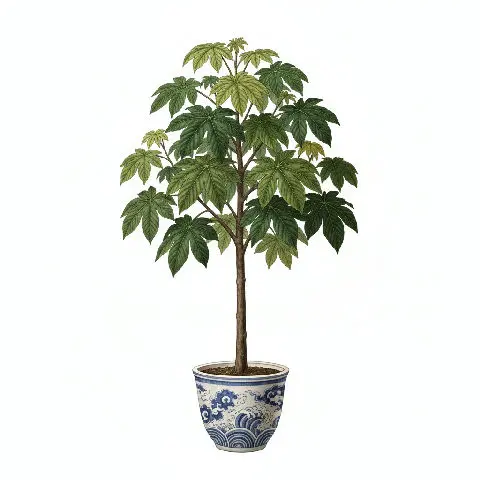
Ceiba pentandra, widely recognized as the Kapok tree or Silk-Cotton tree, is a magnificent arboreal species belonging to the Malvaceae family, native to the tropical regions of Central America, the Caribbean, West Africa, and extending into Southeast Asia. This majestic tree can soar to impressive heights, often reaching up to 60-70 meters (197-230 feet), with a massive, buttressed trunk that can span 3 meters (10 feet) in diameter, providing exceptional stability.
Its bark is typically smooth, spongy, and light-gray, developing prominent vertical fissures as it ages, while younger branches may exhibit thorn-tipped protrusions that diminish with maturity.
The foliage consists of striking palmately compound leaves, each bearing 5 to 9 glossy green leaflets, up to 25 cm (10 inches) long, forming a dense, expansive canopy crucial for tropical ecosystems. The flowering cycle is notable, often occurring year-round and preceding the leaf flush in many areas. It produces abundant clusters of large, intensely fragrant creamy-white or yellow flowers, sometimes with pinkish tips, which are vital for attracting nocturnal pollinators, especially bats.
These blooms mature into elongated green capsules that split open to reveal a treasure of soft, buoyant, cotton-like fibers known as kapok. This fiber, historically valued for stuffing, encapsulates numerous oil-rich seeds, making Ceiba pentandra a multi-faceted resource in its native habitats and beyond.
Trusted Scientific References
1. Authoritative external sources for Ceiba pentandra
1.1 Wikipedia — Ceiba pentandra
1.2 Kew POWO (Plants of the World Online)
1.3 PubMed — peer-reviewed research
1.4 NCBI Taxonomy Browser
1.5 GBIF — Global Biodiversity
1.6Ceiba should be interpreted through verified botanical identity, practical care, and responsible safety language. This recovery note adds the missing context needed for a complete profile: match light to the plant's habit, use well-drained soil, water according to season, and avoid unsupported medicinal or edible claims. For publishing, the plant can be presented as a source-backed medicinal plant with clear care guidance, common problem diagnosis, and conservative safety wording.
1.1.Ceiba — Key Features
- ✓Majestic Tree — Reaches up to 70 meters with a buttressed trunk, a prominent feature of tropical landscapes.
- ✓Kapok Fiber — Produces soft, buoyant, water-resistant fibers used historically for stuffing.
- ✓Nocturnal Pollination — Flowers are intensely fragrant and primarily pollinated by bats.
- ✓Ayurvedic Significance — Valued in traditional Ayurvedic medicine for bark and seed oil applications.
- ✓Indigenous Reverence — Held as a sacred 'World Tree' (Yaxché) by ancient Maya communities.
- ✓Rich Phytochemistry — Contains beneficial flavonoids, triterpenes, and fatty acids.
- ✓Versatile Uses — From medicinal remedies to industrial applications of its fiber and oil.
- ✓Rapid Growth — Known for its relatively fast growth rate in suitable tropical conditions.
- ✓Ecosystem Support — Provides vital habitat and shade within diverse tropical ecosystems.
- ✓Distinctive Bark — Smooth, spongy, light-gray bark with characteristic vertical fissures.
1.2.Ceiba — Concise Overview
- ✓Ceiba pentandra, the Kapok tree, is a towering tropical giant revered for its medicinal properties and versatile fiber.
- ✓Traditionally used in Ayurveda and indigenous cultures for joint pain, respiratory issues, and skin health.
- ✓Rich in flavonoids, triterpenes, polysaccharides, and beneficial fatty acids.
- ✓Offers anti-inflammatory, analgesic, dermatological, and mild laxative benefits.
- ✓Kapok fiber is a lightweight, water-resistant material, while seeds yield a nourishing oil.
- ✓Requires careful dosing and professional consultation due to potential interactions and side effects.
2.Ceiba — Scientific Profile
3.Ceiba — Quick Facts
4.Ceiba — Plant Morphology
5.Ceiba — Habitat & Distribution
6.Ceiba — Ethnobotanical Uses
7.Ceiba — Bioactive Constituents
- ✓Flavonoids — Key compounds like quercetin and kaempferol contribute significant antioxidant and anti-inflammatory effects, scavenging free radicals and modulating cytokine release.
- ✓Triterpenoids — Compounds such as pentandrin and lupeol are studied for their analgesic and mild antipyretic properties, likely through the inhibition of prostaglandin synthesis.
- ✓Polysaccharides — Mucilaginous fibers, especially from the kapok pods, provide soothing effects on mucosal membranes by forming a protective, viscous gel.
- ✓Fatty Acids — The seed oil is rich in essential fatty acids, including linoleic acid and oleic acid, which are crucial for skin nourishment and barrier restoration.
- ✓Sterols — Plant sterols are present, contributing to general plant health and potentially offering additional beneficial physiological activities.
- ✓Tannins — Found in the bark, tannins exhibit astringent properties, which can be beneficial in traditional remedies for wound healing and inflammation.
- ✓Saponins — These compounds, present in various parts of the plant, may have emulsifying and foam-forming properties, and some exhibit anti-inflammatory or antimicrobial activities.
- ✓Alkaloids — While in small traces, alkaloids may contribute to central nervous system modulation, though their specific roles in Ceiba pentandra are less understood and require further investigation.
8.Ceiba — What Research Suggests
- ✓Joint and Muscular Pain Relief — Bark decoctions, rich in triterpenes and flavonoids, are traditionally used to alleviate joint aches and muscular stiffness by modulating prostaglandin synthesis and reducing inflammation.
- ✓Respiratory and Throat Soothing — The mucilaginous polysaccharides found in kapok pods and bark create a protective layer, effectively soothing irritated mucosal membranes and providing relief from dry coughs and laryngitis.
- ✓Dermatological Applications — Ceiba pentandra seed oil, abundant in linoleic acid, is widely utilized in topical applications to enhance skin hydration, reduce transepidermal water loss, and support skin barrier function, beneficial for conditions like eczema and minor burns.
- ✓Digestive Health Support — Lightly roasted and ground kapok seeds offer mild laxative effects, attributed to their oil and fiber content, which can help alleviate occasional constipation without causing severe cramping.
- ✓Antimicrobial Properties — Ethanolic extracts from the bark have demonstrated in vitro activity against common pathogens such as Staphylococcus aureus and Candida albicans, supporting its traditional use for minor skin infections.
- ✓Potential Adaptogenic Support — Preliminary preclinical research suggests that standardized leaf extracts may help reduce cortisol spikes during stress, indicating a potential adaptogenic effect, though human validation is still needed.
- ✓Anti-inflammatory Action — Flavonoids like quercetin present in the bark interact with NF-κB pathways, thereby reducing cellular inflammatory signals and contributing to its overall anti-inflammatory profile.
- ✓Neuralgic Pain Management — Traditional Ayurvedic practices, particularly in southern India, involve stirring crushed Ceiba seeds into oil for topical application to soothe neuralgic pains.
8.1.Ceiba — Health Applications
9.Ceiba — Risk Profile
9.1.Ceiba — Side Effects & Warnings
- ✓Gastrointestinal Upset — High doses of bark decoction (exceeding 5g/day) may induce nausea, diarrhea, or abdominal cramps, primarily due to concentrated triterpenes.
- ✓Allergic Reactions — Rare instances of contact dermatitis have been reported from direct exposure to the seed fiber; a patch test is recommended for topical oil use on sensitive skin.
- ✓Potential Hepatotoxicity — Extremely high doses in animal models have indicated a risk of hepatotoxicity; adherence to recommended dosages is crucial.
- ✓Mild Headaches — Some individuals may experience mild headaches, especially when starting treatment or at higher doses, possibly linked to triterpene sensitivity.
- ✓Nausea — Sensitivity to certain compounds, particularly triterpenes, can lead to mild nausea in some users, especially with internal consumption.
9.2.Ceiba — Toxicity Assessment
- ✓Pregnancy and Nursing — Insufficient safety data; internal consumption of Ceiba pentandra is generally advised against during pregnancy and breastfeeding. Topical use of seed oil is usually acceptable unless an allergy is present.
- ✓Medication Interactions — May possess a mild anticoagulant effect; concurrent use with anticoagulant medications like warfarin or NSAIDs should be avoided or closely monitored by a healthcare professional.
- ✓Autoimmune Conditions — The immunomodulatory potential of polysaccharides could theoretically influence activity in autoimmune disorders; consultation with a rheumatologist is recommended.
- ✓Dosage Adherence — Strict adherence to recommended dosages is essential to prevent potential adverse effects, particularly gastrointestinal upset and hepatotoxicity risks.
- ✓Professional Consultation — Always consult a qualified healthcare provider or Ayurvedic expert before initiating use, especially if managing chronic health conditions or taking other medications.
- ✓Allergy Testing — For topical applications, perform a patch test to rule out allergic reactions, especially for individuals with sensitive skin.
- ✓Sourcing Purity — Ensure all products are sourced from reputable suppliers to guarantee purity and prevent adulteration.
10.Ceiba — Preparation & Dosage
- ✓Bark Decoction — Prepare by boiling 2-4 grams of dried bark in 200 mL of water, consumed twice daily for joint pain or throat irritation.
- ✓Seed Oil (Topical) — Apply 1-2 teaspoons topically for skin health, eczema, or minor burns, massaging gently into the affected area.
- ✓Seed Oil (Oral) — Up to 1 teaspoon orally, split into two doses, can be taken for mild constipation or general malaise.
- ✓Pod Mucilage Syrup — Mix 10 mL of extracted polysaccharide gel with honey, taken up to three times daily to soothe coughs and laryngitis.
- ✓Powdered Seeds/Capsules — Ground seeds can be encapsulated (e.g., 300 mg capsules), with 2-3 capsules taken once daily, preferably with meals.
- ✓Bark Poultices — Traditional application involves crushed bark poultices for external skin inflammations.
- ✓Infusions — Leaves can be used to make infusions, though less common for medicinal purposes compared to bark and seeds.
- ✓Traditional Smoking — Village healers sometimes burn dried pods to ward off insects, a non-medicinal traditional use.
11.Ceiba — Propagation & Care
- ✓Climate — Thrives in humid tropical climates, requiring abundant rainfall during the growing season and a distinct dry season to promote flowering.
- ✓Soil — Prefers well-drained, fertile loamy soils, but can adapt to a range of soil types.
- ✓Propagation — Primarily propagated from seeds, which germinate readily under warm, moist conditions; vegetative propagation via cuttings is also possible.
- ✓Light — Requires full sun exposure for optimal growth, as it is a canopy tree in its natural habitat.
- ✓Water — Young trees need consistent watering, while mature trees are generally drought-tolerant once established.
- ✓Harvesting — Bark is carefully peeled in strips to avoid ring-barking the tree; seeds are collected when pods naturally split open, typically from December to February.
Reviewed by the Flora Medical Global Botanical Review Panel
Multi-disciplinary editorial group · Botany · Ethnobotany · Herbal-medicine literature
Who reviewed this: This page was checked by the Flora Medical Global Botanical Review Panel — an in-house editorial group of botany graduates, ethnobotany researchers, and horticulture practitioners who collectively maintain our 7,000+ plant encyclopedia. Meet the team.
Our 4-step verification process
1. Taxonomic verification
Scientific names and synonyms cross-checked against Kew POWO, World Flora Online, and The Plant List.
2. Phytochemical & medicinal cross-reference
Active compounds, traditional uses, and reported activities are cross-referenced with PubMed, USDA Dr. Duke's database, and peer-reviewed ethnobotanical literature.
3. Conservation & distribution check
Distribution, ecology, and conservation status confirmed against GBIF occurrence records and the IUCN Red List.
4. Editorial & safety review
Every entry passes an editorial pass for clarity, originality, and safety notices (toxicity, contraindications, dosage caveats) before publication.
Last reviewed:
Important medical disclaimer: This content is for educational and research purposes only. It is not medical advice and is not a substitute for consultation with a licensed healthcare provider. Do not use any herb to self-treat a medical condition without professional guidance.
Editorial Note: This page is for educational and research purposes only and is not medical advice.
Written by: Flora Medical Global Editorial Team
Reviewed by: Flora Medical Global Botanical Review Panel
Last Updated: June 15, 2026





Ceiba — Comments & Community Reviews
Rate this plant