


Medical Disclaimer: This content is for educational purposes only. It is not medical advice. Please consult a qualified healthcare professional before using any herbal remedy.
Safety Overview
1.Celosia — Plant Snapshot
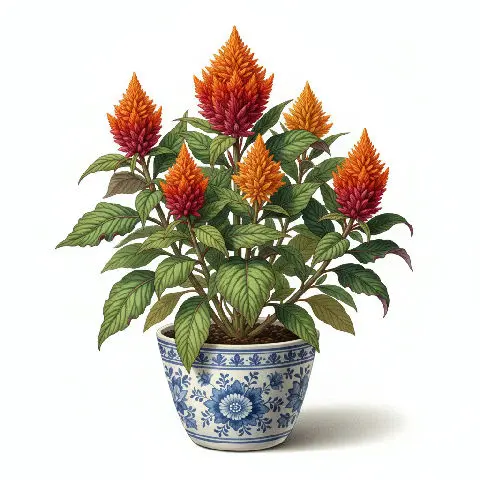
Celosia argentea, widely recognized as cockscomb or woolflower, is a vibrant annual herbaceous plant within the Amaranthaceae family, which notably includes other significant crops like amaranth and quinoa. This resilient species typically grows to about 1 meter in height, though cultivated varieties can vary. Its most striking feature is its brilliant inflorescence, which manifests in two primary forms: the feathery plumes of Celosia argentea var. plumosa or the intricately folded, brain-like crests of Celosia argentea var. cristata.
These showy flower heads display a rich spectrum of colors, encompassing brilliant yellows, fiery oranges, deep reds, and soft pinks, making Celosia a highly valued ornamental plant globally. The leaves are generally lanceolate to ovate, measuring 5 to 20 cm, featuring a smooth, often glossy texture and a deep green hue. They are arranged alternately along erect, branching stems that may exhibit slight ridging. Its fibrous root system anchors the plant firmly across various soil types. Post-flowering, Celosia argentea produces numerous small, shiny black seeds, which are known as 'Semen Celosiae' in traditional medicinal systems.
Originally native to tropical and subtropical regions of Africa, Asia, and South America, Celosia argentea has become a cosmopolitan species, thriving in warm climates worldwide. It prefers well-drained, fertile soils with a pH of 6.0-7.0 and requires full sun exposure, ideally 6-8 hours daily, to achieve its most intense coloration and robust growth. Its hardiness and capacity for prolific self-seeding often lead to dense colonies in disturbed areas. Beyond its aesthetic appeal, Celosia argentea holds deep historical and cultural significance, particularly in traditional medicine.
Trusted Scientific References
1. Authoritative external sources for Celosia argentea
1.1 Wikipedia — Celosia argentea
1.2 Kew POWO (Plants of the World Online)
1.3 PubMed — peer-reviewed research
1.4 NCBI Taxonomy Browser
1.5 GBIF — Global Biodiversity
1.6Celosia should be interpreted through verified botanical identity, practical care, and responsible safety language. This recovery note adds the missing context needed for a complete profile: match light to the plant's habit, use well-drained soil, water according to season, and avoid unsupported medicinal or edible claims. For publishing, the plant can be presented as a source-backed medicinal plant with clear care guidance, common problem diagnosis, and conservative safety wording.
1.1.Celosia — Defining Traits
- ✓Scientific Name — Celosia argentea
- ✓Family — Amaranthaceae
- ✓Common Names — Cockscomb, Woolflower
- ✓Distinctive Feature — Vibrant, plumed or crested inflorescences
- ✓Primary Medicinal Part — Seeds (Semen Celosiae)
- ✓Key Phytochemicals — Saponins (Celosins), Betalains, Phenolic compounds
- ✓Traditional Uses — Eye health, liver detoxification (TCM)
- ✓Pharmacological Actions — Antioxidant, hepatoprotective, anti-diabetic, anti-hypertensive
- ✓Global Distribution — Native to tropics, widely cultivated worldwide
- ✓Ornamental Value — Highly prized for its showy, colorful flowers
1.2.Celosia — In Brief
- ✓Celosia argentea is a striking ornamental plant with significant medicinal value.
- ✓Known as cockscomb or woolflower, its seeds (Semen Celosiae) are prominent in TCM.
- ✓Rich in saponins, betalains, and phenols, offering potent antioxidant and anti-inflammatory benefits.
- ✓Traditionally used for eye health, liver support, and modern research highlights anti-diabetic and hepatoprotective actions.
- ✓Requires full sun and well-drained soil for cultivation, thriving in warm climates.
- ✓Caution is advised due to potential drug interactions and for specific populations like pregnant women.
2.Celosia — Scientific Profile
3.Celosia — Reference Facts
4.Celosia — Morphological Account
5.Celosia — Where It Grows
6.Celosia — Ethnobotanical Uses
7.Celosia — Bioactive Constituents
- ✓Saponins — These triterpenoid glycosides, including celosins (Celosin I, II, III), are considered characteristic active constituents, contributing to hepatoprotective, anti-inflammatory, and anti-diabetic effects.
- ✓Betalains — Comprising red-purple betacyanins and yellow-orange betaxanthins, these nitrogen-containing pigments are responsible for the plant's vibrant colors and exhibit potent antioxidant properties.
- ✓Phenols — A diverse group including phenolic acids (e.g., p-coumaric acid) and flavonoids (e.g., kaempferol derivatives), known for their significant antioxidant, anti-inflammatory, and hepatoprotective activities.
- ✓Peptides — Various peptides have been isolated, some of which may contribute to the plant's biological activities, although their specific roles are still under investigation.
- ✓Fatty Acids — Seeds are rich in various fatty acids, providing nutritional value and potentially contributing to membrane integrity and anti-inflammatory responses.
- ✓Amino Acids — The plant contains a range of essential and non-essential amino acids, supporting its nutritional profile, especially when consumed as a leafy green.
- ✓Polysaccharides — Complex carbohydrates found in the plant may contribute to immunomodulatory and anti-diabetic effects, influencing blood sugar regulation.
- ✓Steroids — Phytosteroids have been identified, which can possess anti-inflammatory and hormone-modulating properties, though in minor concentrations.
- ✓Vitamins — Contains essential vitamins such as Vitamin C and carotenoids (precursors to Vitamin A), contributing to its nutritional and antioxidant benefits.
- ✓Minerals — Provides various essential minerals, including potassium, calcium, and iron, supporting overall health and physiological functions.
8.Celosia — What Research Suggests
- ✓Purges Hepatic Pathogenic Fire — In Traditional Chinese Medicine (TCM), Semen Celosiae is used to clear 'liver fire,' addressing symptoms like red, swollen, or painful eyes, and headaches.
- ✓Improves Eyesight and Treats Eye Diseases — Historically used to enhance visual acuity and alleviate various ocular conditions such as conjunctivitis, blurred vision, and cataracts.
- ✓Hepatoprotective Activity — Research indicates that compounds in Celosia argentea may protect liver cells from damage, potentially by reducing oxidative stress and inflammation.
- ✓Antitumor and Anticancer Potential — Experimental studies suggest certain extracts possess antiproliferative effects against various cancer cell lines, inhibiting tumor growth.
- ✓Anti-diarrhea Properties — Traditionally employed to manage diarrhea and dysentery, with studies supporting its ability to reduce intestinal motility and fluid secretion.
- ✓Anti-diabetic Effects — Active constituents have shown potential to lower blood glucose levels and improve insulin sensitivity in preclinical models, aiding in diabetes management.
- ✓Potent Antioxidant Activity — Rich in betalains and phenolic compounds, Celosia argentea effectively scavenges free radicals, protecting cells from oxidative damage.
- ✓Anti-hypertensive Action — Extracts have demonstrated a capacity to reduce blood pressure, potentially by influencing vascular tone and fluid balance.
- ✓Anti-inflammatory Effects — Specific compounds within the plant help to modulate inflammatory pathways, reducing swelling and pain associated with inflammatory conditions.
- ✓Antimicrobial Properties — Studies suggest that Celosia argentea possesses inhibitory effects against certain bacteria and fungi, contributing to its traditional use in infections.
8.1.Celosia — Conditions Traditionally Used For
9.Celosia — Risk Profile
9.1.Celosia — Caution Notes
- ✓Allergic Reactions — Some individuals may experience skin rashes, itching, or other allergic responses, particularly with topical application or sensitive internal use.
- ✓Digestive Upset — High doses or sensitive individuals may report mild gastrointestinal discomfort, including nausea, stomach cramps, or loose stools.
- ✓Hypotension Risk — Due to its potential anti-hypertensive properties, Celosia argentea may lower blood pressure, which could be problematic for individuals already on hypotensive medication.
- ✓Hypoglycemia Risk — Its anti-diabetic effects suggest a potential to lower blood sugar, requiring caution for individuals with diabetes, especially those on anti-diabetic medications.
- ✓Drug Interactions — May interact with certain medications, including blood pressure drugs, diabetes medications, and potentially anticoagulants, due to its various pharmacological activities.
- ✓Pregnancy and Lactation — Insufficient safety data exists for use during pregnancy and breastfeeding; therefore, it is generally advised to avoid consumption during these periods.
- ✓Kidney or Liver Conditions — Individuals with pre-existing kidney or liver conditions should exercise caution and consult a healthcare provider before use.
9.2.Celosia — Safety Profile
- ✓Professional Consultation — Always consult a qualified healthcare professional or medical herbalist before using Celosia argentea, especially for therapeutic purposes, chronic conditions, or if pregnant/nursing.
- ✓Avoid Self-Medication — Do not self-diagnose or self-treat serious health conditions with Celosia argentea without professional guidance.
- ✓Patch Test for Topical Use — Before widespread topical application, perform a patch test on a small skin area to check for allergic reactions or sensitivities.
- ✓Start with Low Doses — Begin with the lowest effective dose and gradually increase if necessary, while monitoring for any adverse reactions.
- ✓Monitor for Interactions — Be aware of potential interactions with prescription medications, particularly those for blood pressure, blood sugar, and blood thinning.
- ✓Not for Long-Term Unsupervised Use — Prolonged use without professional oversight is not recommended due to potential cumulative effects or interactions.
- ✓Reputable Sourcing — Ensure that all Celosia argentea products are sourced from reputable suppliers to guarantee purity, quality, and absence of contaminants.
10.Celosia — How to Use
- ✓Traditional Chinese Medicine (Semen Celosiae) — The dried seeds are typically prepared as a decoction, often combined with other herbs, for internal use to address eye conditions and liver imbalances.
- ✓Herbal Decoctions — Leaves, flowers, or seeds can be boiled in water to create a concentrated liquid extract for internal consumption, usually 1-3 times daily.
- ✓Infusions/Teas — Dried leaves and flowers can be steeped in hot water to make a milder tea, commonly consumed for general wellness or mild inflammatory conditions.
- ✓Culinary Use — Young leaves and tender shoots are consumed as a leafy green vegetable in various cuisines, often stir-fried, boiled, or added to soups.
- ✓Topical Applications — Crushed leaves or flower extracts can be prepared into poultices, compresses, or washes for external application on skin irritations, wounds, or swollen areas.
- ✓Powdered Form — Dried seeds or plant material can be ground into a fine powder, which can then be encapsulated, mixed into beverages, or incorporated into topical formulations.
- ✓Standardized Extracts — Modern formulations may include standardized extracts of specific active compounds for targeted therapeutic effects, ensuring consistent potency.
- ✓Dosage Guidance — Always consult with a qualified medical herbalist or healthcare professional for appropriate dosages, especially when using for therapeutic purposes.
11.Celosia — Propagation & Care
- ✓Soil Requirements — Thrives in well-drained, fertile loamy soils with a slightly acidic to neutral pH range of 6.0-7.0, avoiding heavy clay or waterlogged conditions.
- ✓Sunlight Exposure — Requires full sun, ideally 6-8 hours of direct sunlight daily, to promote robust growth and the most vibrant, intensely colored inflorescences.
- ✓Watering — Needs consistent moisture, especially during dry periods, but allow the topsoil to dry slightly between waterings to prevent root rot; established plants tolerate some drought.
- ✓Propagation — Primarily propagated from seeds, which can be sown directly outdoors after the last frost or started indoors 6-8 weeks prior; seeds germinate readily.
- ✓Temperature and Climate — Best suited for warm, tropical, and subtropical climates; it is frost-sensitive and will not tolerate cold temperatures, performing as an annual in temperate zones.
- ✓Fertilization — Benefits from a balanced, all-purpose fertilizer applied every 4-6 weeks during the growing season, especially for container-grown plants, to support vigorous flowering.
- ✓Pest and Disease Management — Generally robust, but watch for common garden pests like aphids and spider mites, and fungal diseases such as powdery mildew in humid conditions.
- ✓Harvesting — Leaves can be harvested young for culinary use; flowers are typically harvested when fully open for ornamental or medicinal purposes; seeds are collected when mature and dry.
Reviewed by the Flora Medical Global Botanical Review Panel
Multi-disciplinary editorial group · Botany · Ethnobotany · Herbal-medicine literature
Who reviewed this: This page was checked by the Flora Medical Global Botanical Review Panel — an in-house editorial group of botany graduates, ethnobotany researchers, and horticulture practitioners who collectively maintain our 7,000+ plant encyclopedia. Meet the team.
Our 4-step verification process
1. Taxonomic verification
Scientific names and synonyms cross-checked against Kew POWO, World Flora Online, and The Plant List.
2. Phytochemical & medicinal cross-reference
Active compounds, traditional uses, and reported activities are cross-referenced with PubMed, USDA Dr. Duke's database, and peer-reviewed ethnobotanical literature.
3. Conservation & distribution check
Distribution, ecology, and conservation status confirmed against GBIF occurrence records and the IUCN Red List.
4. Editorial & safety review
Every entry passes an editorial pass for clarity, originality, and safety notices (toxicity, contraindications, dosage caveats) before publication.
Last reviewed:
Important medical disclaimer: This content is for educational and research purposes only. It is not medical advice and is not a substitute for consultation with a licensed healthcare provider. Do not use any herb to self-treat a medical condition without professional guidance.
Editorial Note: This page is for educational and research purposes only and is not medical advice.
Written by: Flora Medical Global Editorial Team
Reviewed by: Flora Medical Global Botanical Review Panel
Last Updated: June 15, 2026





Celosia — Comments & Community Reviews
Rate this plant