
Medical Disclaimer: This content is for educational purposes only. It is not medical advice. Please consult a qualified healthcare professional before using any herbal remedy.
Safety Overview
1.Centaurea Montana — Overview
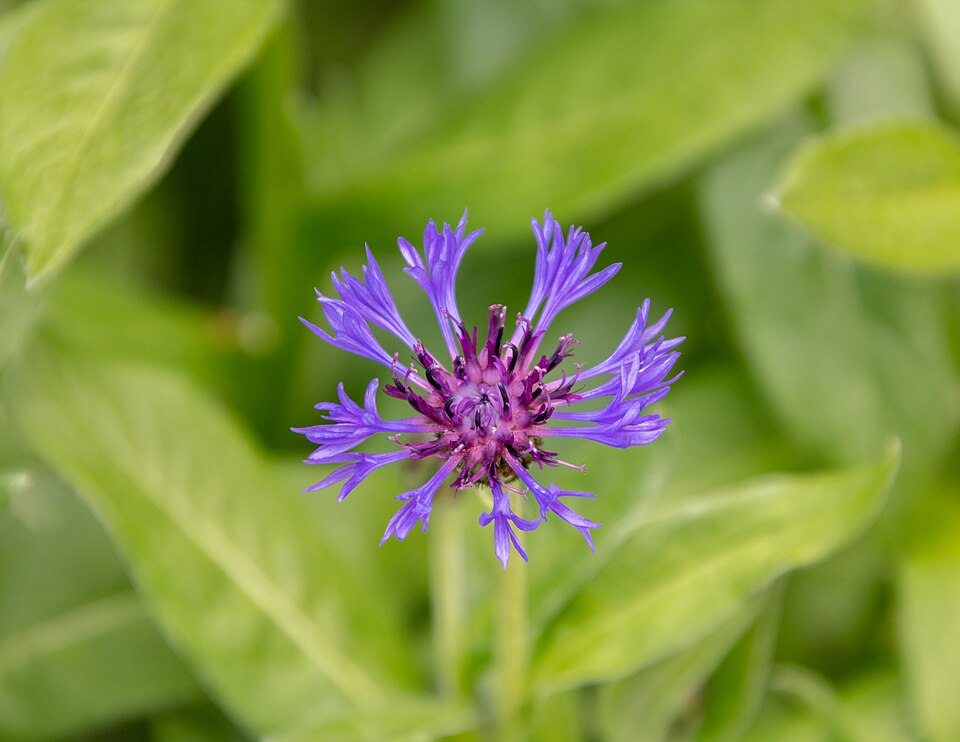
Centaurea montana, commonly known as mountain cornflower, perennial bachelor's button, or mountain bluet, is a robust herbaceous perennial native to the mountainous regions of central and southern Europe. Belonging to the vast Asteraceae family, it forms a basal rosette of grayish-green, lanceolate to ovate-lanceolate leaves, often with a slightly woolly texture that aids in drought tolerance. From this rosette, upright, usually unbranched stems emerge, reaching heights of 30 to 70 cm (1-2 feet). The most striking feature of Centaurea montana is its vibrant blue, thistle-like flower heads, typically 3-5 cm in diameter.
These composite structures, characteristic of the Asteraceae, feature showy, sterile, elongated outer ray florets and shorter, fertile inner tubular florets, creating a distinctive fringed appearance. The involucral bracts enclosing the flower head are often black-edged or fringed. Its spreading rhizomatous root system allows it to form dense clumps and slowly colonize areas, contributing to its resilience and ease of propagation. This species thrives in subalpine meadows, open woodlands, forest edges, and rocky slopes, showing a remarkable adaptation to poor, well-drained, and often calcareous soils.
Its natural distribution spans from France and Spain eastward through the Alps and Carpathians. Due to its hardiness, aesthetic appeal, and low maintenance, Centaurea montana has been widely introduced and naturalized in various temperate regions globally.
Trusted Scientific References
1. Authoritative external sources for Centaurea montana
1.1 Wikipedia — Centaurea montana
1.2 Kew POWO (Plants of the World Online)
1.3 PubMed — peer-reviewed research
1.4 NCBI Taxonomy Browser
1.5 GBIF — Global Biodiversity
1.6Centaurea Montana should be interpreted through verified botanical identity, practical care, and responsible safety language. This recovery note adds the missing context needed for a complete profile: match light to the plant's habit, use well-drained soil, water according to season, and avoid unsupported medicinal or edible claims. For publishing, the plant can be presented as a source-backed garden plant with clear care guidance, common problem diagnosis, and conservative safety wording.
1.1.Centaurea Montana — Defining Traits
- ✓Striking Blue Flowers — Distinctive, fringed, vibrant blue flower heads from late spring to fall.
- ✓Drought Tolerant — Highly resilient, thrives in dry conditions once established.
- ✓Low Maintenance — Requires minimal care, suitable for beginner gardeners.
- ✓Pollinator Friendly — Attracts bees, butterflies, and other beneficial insects.
- ✓Spreading Habit — Forms clumps and slowly colonizes areas via rhizomes.
- ✓Cold Hardy — Tolerates cold temperatures, growing in USDA Zones 3-8.
- ✓Native to Europe — Indigenous to mountainous regions of central and southern Europe.
- ✓Adaptable to Poor Soils — Thrives in well-drained, average to poor, often calcareous soils.
- ✓Ornamental Value — Ideal for cottage gardens, borders, and naturalized landscapes.
- ✓Perennial Growth — Returns year after year, providing long-term beauty.
1.2.Centaurea Montana — Quick Summary
- ✓Hardy perennial with vibrant blue, thistle-like flowers, native to European mountains.
- ✓Primarily valued for its ornamental appeal in gardens and attracting pollinators.
- ✓Low maintenance, drought-tolerant, and adaptable to various soil conditions.
- ✓The Centaurea genus has historical medicinal associations, but C. montana lacks specific documented uses.
- ✓Contains general phytochemicals like flavonoids and sesquiterpene lactones, common in the Asteraceae family.
2.Centaurea Montana — Systematic Position
3.Centaurea Montana — Quick Facts
4.Centaurea Montana — Structural Profile
5.Centaurea Montana — Where It Grows
6.Centaurea Montana — Ethnobotanical Uses
7.Centaurea Montana — Secondary Metabolites
- ✓Flavonoids — Key compounds like apigenin, luteolin, and their glycosides, known for potent antioxidant, anti-inflammatory, and neuroprotective activities.
- ✓Sesquiterpene Lactones — Such as centaurein and cnicin, responsible for the characteristic bitter taste and exhibiting anti-inflammatory, antimicrobial, and cytotoxic properties.
- ✓Phenolic Acids — Including chlorogenic acid, caffeic acid, and ferulic acid, contributing significantly to the plant's antioxidant and potentially hepatoprotective effects.
- ✓Triterpenes — Compounds like alpha-amyrin and beta-amyrin derivatives, which are often associated with anti-inflammatory and adaptogenic actions.
- ✓Polysaccharides — Complex carbohydrates found in the plant, potentially contributing to immunomodulatory and demulcent properties.
- ✓Coumarins — Simple phenolic compounds that can possess anti-inflammatory, anticoagulant, and antimicrobial activities.
- ✓Alkaloids — Various nitrogen-containing compounds, typically present in trace amounts, with diverse pharmacological activities depending on their structure.
- ✓Sterols — Including beta-sitosterol and stigmasterol, which are plant sterols known for anti-inflammatory and cholesterol-lowering potential.
- ✓Tannins — Astringent compounds that can bind to proteins, contributing to wound healing and antimicrobial effects, often found in leaves and stems.
- ✓Essential Oils — Volatile compounds present in small quantities, contributing to the plant's aroma and potentially offering mild antiseptic or calming properties.
8.Centaurea Montana — Modern Studies
- ✓Anti-inflammatory Support — While Centaurea montana is primarily ornamental, related Centaurea species contain sesquiterpene lactones and flavonoids that may help modulate inflammatory responses, potentially reducing swelling and discomfort.
- ✓Antioxidant Activity — The presence of phenolic compounds and flavonoids in the Centaurea genus suggests a capacity to neutralize free radicals, offering cellular protection against oxidative stress.
- ✓Digestive Aid — Some Centaurea species are traditionally used as bitter tonics, which can stimulate digestive secretions and improve appetite by acting on taste receptors.
- ✓Antimicrobial Properties — Certain phytochemicals found in the Centaurea genus, such as sesquiterpene lactones, have demonstrated in vitro activity against various bacteria and fungi, suggesting potential for topical applications.
- ✓Diuretic Effect — Traditionally, some 'cornflowers' have been used to promote urine flow, aiding in the body's natural detoxification processes and supporting urinary tract health.
- ✓Wound Healing Potential — Extracts from related Centaurea plants have shown properties that could support skin regeneration and protect against infection when applied topically to minor cuts and abrasions.
- ✓Hepatoprotective Action — Phenolic acids, such as caffeoylquinic acids, present in the genus may contribute to liver protection by mitigating oxidative damage and supporting detoxification pathways.
- ✓Immunomodulatory Effects — Polysaccharides identified in some Asteraceae members, including Centaurea, are thought to influence immune system function, potentially enhancing the body's natural defenses.
- ✓Antipyretic (Fever-Reducing) — Traditional European folk medicine occasionally used 'cornflowers' for reducing fevers, likely due to their potential anti-inflammatory actions.
- ✓Astringent Qualities — The tannins present in some Centaurea species can exert an astringent effect, useful for tightening tissues and reducing minor bleeding or discharges.
8.1.Centaurea Montana — Reported Uses
9.Centaurea Montana — Adverse Effects
9.1.Centaurea Montana — Caution Notes
- ✓Allergic Reactions — Individuals sensitive to the Asteraceae family (e.g., ragweed, chamomile) may experience allergic contact dermatitis from handling or ingestive reactions.
- ✓Gastrointestinal Upset — Internal consumption of large quantities, particularly due to bitter sesquiterpene lactones, could potentially lead to stomach discomfort, nausea, or diarrhea.
- ✓Skin Irritation — Direct contact with the plant's sap or foliage may cause mild skin irritation or dermatitis in susceptible individuals.
- ✓Photosensitivity — While rare, some Asteraceae species contain compounds that can increase skin sensitivity to sunlight (phototoxicity) in certain individuals.
- ✓Hypothetical Drug Interactions — Due to the presence of various phytochemicals, theoretical interactions with medications (e.g., blood thinners, immunosuppressants) are possible, though not specifically documented for C. montana.
9.2.Centaurea Montana — Safety Profile
- ✓External Use Primarily — Centaurea montana is predominantly cultivated for ornamental purposes; its internal medicinal use is not well-established or recommended without expert guidance.
- ✓Allergic Sensitivity — Exercise caution if you have known allergies to plants in the Asteraceae family; perform a patch test if using topically.
- ✓Pregnancy and Lactation — Due to insufficient data, pregnant or breastfeeding individuals should avoid internal use of Centaurea montana or its preparations.
- ✓Children — Internal use in children is not advised due to lack of safety data and potential for adverse effects.
- ✓Consultation with Healthcare Professional — Always consult a qualified medical herbalist or healthcare provider before using any plant for medicinal purposes, especially if on medication or having underlying health conditions.
- ✓Identification — Ensure correct plant identification; avoid misidentification with other Centaurea species or look-alikes that may have different chemical profiles or toxicity.
- ✓Topical Application — For external use, apply to a small area first to check for skin sensitivity or irritation.
10.Centaurea Montana — Application Forms
- ✓Ornamental Garden Plant — Primarily used for its striking blue flowers in borders, cottage gardens, naturalized areas, and pollinator gardens.
- ✓Cut Flowers — The vibrant blooms are excellent for fresh cut flower arrangements, adding texture and color to bouquets.
- ✓Dried Flowers — Flowers can be dried for decorative purposes, retaining some of their color and form for long-lasting displays.
- ✓Pollinator Attraction — Planted to attract bees, butterflies, and other beneficial insects, enhancing garden biodiversity and ecosystem health.
- ✓Groundcover (in specific settings) — Due to its spreading habit, it can function as an informal groundcover in sunny, well-drained areas, though not aggressively invasive.
- ✓Herbal Infusions (General Genus Use) — While not specifically for C. montana, related Centaurea species may be used to prepare mild herbal infusions (teas) from dried flowers or leaves, traditionally for digestive support or as a general tonic, with caution and expert guidance.
- ✓Topical Poultices (General Genus Use) — Historically, some Centaurea species were prepared as poultices from fresh crushed leaves for minor skin irritations or wounds, applied externally.
11.Centaurea Montana — Growth Requirements
- ✓Site Selection — Plant Centaurea montana in full sun (at least 6 hours direct sunlight daily) for optimal flowering and robust growth.
- ✓Soil Requirements — It thrives in average, dry to medium moisture, well-drained soils, tolerating poor and calcareous conditions, making it adaptable to various garden types.
- ✓Watering — Once established, mountain cornflower is highly drought-tolerant; water regularly during prolonged dry spells, especially in its first year.
- ✓Propagation — Easily propagated by seed or by division of its spreading rhizomes every 2-3 years in spring or fall to maintain vigor and control spread.
- ✓Deadheading — Remove spent flower heads (deadhead) to encourage additional blooms in late summer or early fall and to prevent prolific self-seeding.
- ✓Maintenance — This is a low-maintenance perennial; no significant pest or disease problems are commonly observed, though occasional division is beneficial.
- ✓Hardiness Zones — Centaurea montana is remarkably cold-hardy, suitable for USDA Plant Hardiness Zones 3a through 8b.
Reviewed by the Flora Medical Global Botanical Review Panel
Multi-disciplinary editorial group · Botany · Ethnobotany · Herbal-medicine literature
Who reviewed this: This page was checked by the Flora Medical Global Botanical Review Panel — an in-house editorial group of botany graduates, ethnobotany researchers, and horticulture practitioners who collectively maintain our 7,000+ plant encyclopedia. Meet the team.
Our 4-step verification process
1. Taxonomic verification
Scientific names and synonyms cross-checked against Kew POWO, World Flora Online, and The Plant List.
2. Phytochemical & medicinal cross-reference
Active compounds, traditional uses, and reported activities are cross-referenced with PubMed, USDA Dr. Duke's database, and peer-reviewed ethnobotanical literature.
3. Conservation & distribution check
Distribution, ecology, and conservation status confirmed against GBIF occurrence records and the IUCN Red List.
4. Editorial & safety review
Every entry passes an editorial pass for clarity, originality, and safety notices (toxicity, contraindications, dosage caveats) before publication.
Last reviewed:
Important medical disclaimer: This content is for educational and research purposes only. It is not medical advice and is not a substitute for consultation with a licensed healthcare provider. Do not use any herb to self-treat a medical condition without professional guidance.
Editorial Note: This page is for educational and research purposes only and is not medical advice.
Written by: Flora Medical Global Editorial Team
Reviewed by: Flora Medical Global Botanical Review Panel
Last Updated: June 15, 2026





Centaurea Montana — Comments & Community Reviews
Rate this plant