


Medical Disclaimer: This content is for educational purposes only. It is not medical advice. Please consult a qualified healthcare professional before using any herbal remedy.
Safety Overview
1.Centaury — Overview
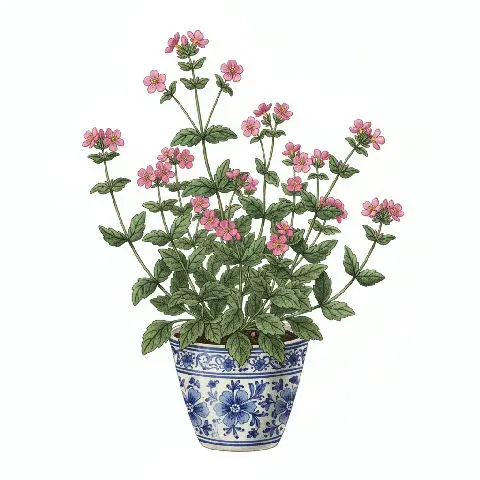
Centaury, known scientifically as Centaurium erythraea, is an elegant herbaceous plant typically growing as a biennial or annual. It belongs to the Gentianaceae family, a group renowned for its intensely bitter medicinal species. This delicate herb is widely distributed across diverse landscapes throughout Europe, extending into western Asia and northern Africa.
Centaury thrives in dry, open habitats such as grassy meadows, pastures, and woodlands, showing a particular affinity for calcareous or lime-rich soils. Its morphology is characterized by smooth, erect stems, often quadrangular in cross-section, which can reach heights ranging from 10 to 50 centimeters. At the base, Centaury forms a distinctive rosette of oval to spatulate leaves that are greyish-green, sessile, and entire.
Along the stem, the leaves are oppositely arranged, gradually becoming smaller and lanceolate towards the apex.
The most striking feature of Centaurium erythraea is its vibrant floral display. The small, tubular flowers possess five distinct lobes, forming a star-shaped appearance. These blossoms exhibit a range of pink to purplish-pink hues and are typically arranged in dense, terminal cymes, creating a flat-topped inflorescence.
Blooming usually occurs from mid-summer through early autumn, adding a splash of color to its habitat. Following successful pollination, the plant produces small, elongated capsules containing numerous minute seeds. Its root system is generally fibrous and shallow, an adaptation to its preferred drier soil conditions.
Taxonomically, Centaury is sometimes referred to as 'Small Centaury' to differentiate it from 'Greater Centaury' (Centaurea centaurium), which belongs to the distinct Asteraceae family. Historically, Centaury has been valued since antiquity, with its name often linked to the mythical centaur Chiron, who reputedly used the herb for healing. Ancient Greek, Roman, and medieval European herbalists extensively documented its therapeutic properties, primarily as a bitter tonic for digestive complaints and febrile conditions, underscoring its deep cultural and medicinal significance.
Trusted Scientific References
1. Authoritative external sources for Centaurium erythraea
1.1 Wikipedia — Centaurium erythraea
1.2 Kew POWO (Plants of the World Online)
1.3 PubMed — peer-reviewed research
1.4 NCBI Taxonomy Browser
1.5 GBIF — Global Biodiversity
1.1.Centaury — Defining Traits
- ✓Intense Bitter Taste — Characteristic feature due to secoiridoid glycosides.
- ✓Digestive Stimulant — Enhances appetite and aids digestion by stimulating secretions.
- ✓Antidiabetic Potential — Shown to lower blood glucose and improve lipid profiles in studies.
- ✓Antioxidant Rich — Contains numerous polyphenols with free radical scavenging activity.
- ✓Anti — inflammatory Actions — Compounds like xanthones contribute to reducing inflammation.
- ✓Hepatoprotective — Demonstrated protective effects on the liver.
- ✓Traditional European Herb — Deeply rooted in European folk medicine since antiquity.
- ✓Gentianaceae Family Member — Shares family traits of bitterness and medicinal value.
- ✓Distinct Pink Flowers — Small, star-shaped blossoms clustered in terminal cymes.
- ✓Calcareous Soil Preference — Thrives in lime-rich, dry, grassy habitats.
1.2.Centaury — Concise Overview
- ✓Centaurium erythraea is a bitter herb from the Gentianaceae family.
- ✓Traditionally used for digestive issues, fevers, and as a general tonic.
- ✓Modern research supports its antidiabetic, antioxidant, and anti-inflammatory properties.
- ✓Key compounds include secoiridoids, xanthones, and various polyphenols.
- ✓Primarily affects digestion, blood sugar regulation, and liver health.
- ✓Should be used with caution in pregnancy, lactation, and certain gastrointestinal conditions.
2.Centaury — Taxonomic Classification
3.Centaury — Quick Facts
4.Centaury — Structural Profile
5.Centaury — Habitat & Distribution
6.Centaury — Historical Applications
7.Centaury — Bioactive Constituents
- ✓Secoiridoid Glycosides — These are the primary bitter principles, notably swertiamarin, gentiopicroside, and centapicrin, responsible for stimulating digestive secretions, bile flow, and influencing glucose metabolism.
- ✓Xanthones — Compounds like mangiferin and eustomoside contribute to Centaury's antioxidant, anti-inflammatory, and potentially antidiabetic effects.
- ✓Flavonoids — A diverse group including apigenin, luteolin, quercetin, astragalin, isoquercitrin, and naringenin, which provide significant antioxidant, anti-inflammatory, and capillary-strengthening properties.
- ✓Phenolic Acids — Such as caffeic acid, sinapic acid, ferulic acid, and p-coumaric acid, known for their potent antioxidant activity and ability to scavenge various free radicals.
- ✓Triterpenes — Compounds like oleanolic acid and ursolic acid are present, contributing to anti-inflammatory and hepatoprotective actions.
- ✓Alkaloids — While less prominent than other classes, trace amounts may be present, influencing various physiological pathways.
- ✓Volatile Oils — Present in small quantities, contributing subtly to the plant's aroma and potential antimicrobial properties.
- ✓Sterols — Including beta-sitosterol, which can have anti-inflammatory and cholesterol-lowering effects.
- ✓Sugars — Simple carbohydrates that provide basic metabolic energy within the plant structure.
- ✓Resins — Complex mixtures that can contribute to the plant's protective mechanisms and traditional medicinal uses.
8.Centaury — Research Insights
- ✓Digestive Tonic — Centaury's intensely bitter secoiridoid glycosides stimulate the production of digestive enzymes, bile, and gastric juices, enhancing appetite and improving overall digestion.
- ✓Antidiabetic Effects — Animal studies suggest Centaurium erythraea extract can lower hyperglycemia, improve serum lipid status, and stimulate insulin secretion, similar to glibenclamide.
- ✓Anti-inflammatory Properties — Constituents like xanthones and polyphenols contribute to its anti-inflammatory actions, potentially mitigating inflammatory responses in various tissues.
- ✓Antioxidant Activity — The rich array of polyphenols, including flavonoids and phenolic acids, provides potent antioxidant effects, scavenging free radicals and protecting cells from oxidative stress.
- ✓Hepatoprotective Action — Research indicates that Centaury extract can protect the liver from damage, including in models of nonalcoholic liver steatosis and acute liver injury.
- ✓Fever Reduction (Traditional) — Historically used as a febrifuge, its bitter principles were believed to help reduce fever, possibly by stimulating detoxification pathways.
- ✓Blood Glucose Regulation — The extract has been shown to improve the functional properties of erythrocytes and microcirculation in diabetic models, contributing to better oxygen supply to tissues.
- ✓Pancreatic Protection — Centaury extract may protect pancreatic islets from oxidative stress-induced damage, thereby helping to preserve insulin-producing beta cells.
- ✓Improved Lipid Metabolism — Studies in diabetic rats have demonstrated Centaury's ability to improve serum lipid profiles, which is beneficial for cardiovascular health.
- ✓Wound Healing (Traditional) — Ancient uses linked Centaury to wound healing, though modern research primarily focuses on its internal effects.
8.1.Centaury — Health Applications
9.Centaury — Risk Profile
9.1.Centaury — Side Effects & Warnings
- ✓Gastrointestinal Upset — High doses or sensitive individuals may experience nausea, vomiting, or stomach discomfort due to its intense bitterness.
- ✓Hypoglycemia — Individuals with diabetes, especially those on medication, should monitor blood glucose due to potential blood sugar-lowering effects.
- ✓Allergic Reactions — Rare, but individuals sensitive to Gentianaceae family plants may experience allergic skin reactions or respiratory symptoms.
- ✓Increased Gastric Acid — Due to its bitter tonic action, it can increase stomach acid, which might aggravate existing hyperacidity or ulcers.
- ✓Bile Duct Obstruction — Should be avoided in cases of bile duct obstruction as it stimulates bile flow.
- ✓Pregnancy and Lactation — Lack of sufficient safety data advises against use during pregnancy and breastfeeding.
- ✓Drug Interactions — Potential interactions with antidiabetic medications, antacids, and drugs for gastric ulcers.
9.2.Centaury — Toxicity Assessment
- ✓Pregnancy and Lactation — Not recommended due to insufficient safety data and potential uterine stimulant effects.
- ✓Gastric Ulcers/Hyperacidity — Contraindicated in individuals with active stomach ulcers or severe hyperacidity, as it can stimulate gastric acid secretion.
- ✓Gallstones/Bile Duct Obstruction — Use with caution in gallstone sufferers and contraindicated in bile duct obstruction.
- ✓Diabetes Management — Individuals with diabetes should use Centaury under medical supervision due to its potential hypoglycemic effects.
- ✓Children — Generally not recommended for young children due to its intense bitterness and lack of specific pediatric safety data.
- ✓Dosage — Adhere to recommended dosages; excessive intake can lead to pronounced gastrointestinal upset.
- ✓Allergic Sensitivity — Individuals with known allergies to the Gentianaceae family should avoid Centaury.
10.Centaury — How to Use
- ✓Herbal Infusion (Tea) — Steep 1-2 teaspoons of dried Centaury herb in hot water for 5-10 minutes; consumed before meals as a bitter tonic.
- ✓Decoction — For tougher plant parts, simmer in water for a longer period, though Centaury is typically used as an infusion.
- ✓Tincture — Macerate dried Centaury in alcohol (e.g., 40-60% ethanol) for several weeks; dose is usually drops or small amounts taken diluted.
- ✓Powdered Herb — Dried herb can be finely ground and encapsulated or mixed with water, though its intense bitterness makes this less common.
- ✓Syrups — Infusions or decoctions can be combined with honey or sugar to mask the bitterness, often used for digestive complaints.
- ✓Compresses (Traditional) — Historically, strong infusions were sometimes used externally as compresses for minor skin ailments, though internal use is primary.
- ✓Culinary Bitter — Occasionally used in very small quantities in traditional bitter liqueurs or aperitifs to stimulate digestion.
11.Centaury — Growth Requirements
- ✓Soil Preference — Thrives in well-drained, calcareous (lime-rich) soils, often found in dry, grassy areas.
- ✓Light Requirements — Prefers full sun to partial shade for optimal growth and flowering.
- ✓Water Needs — Drought-tolerant once established, requiring minimal watering; avoid waterlogged conditions.
- ✓Propagation — Primarily propagated by seed, typically sown in spring or autumn directly into prepared soil.
- ✓Spacing — Allow adequate space between plants, usually 15-20 cm apart, to ensure good air circulation.
- ✓Harvesting — Aerial parts (leaves, stems, flowers) are typically harvested during the blooming period in summer, when the bitter compounds are most concentrated.
- ✓Pest and Disease — Generally robust, with few significant pest or disease issues when grown in suitable conditions.
- ✓Fertilization — Rarely requires fertilization; excessive nutrients can reduce the concentration of bitter compounds.
Reviewed by the Flora Medical Global Botanical Review Panel
Multi-disciplinary editorial group · Botany · Ethnobotany · Herbal-medicine literature
Who reviewed this: This page was checked by the Flora Medical Global Botanical Review Panel — an in-house editorial group of botany graduates, ethnobotany researchers, and horticulture practitioners who collectively maintain our 7,000+ plant encyclopedia. Meet the team.
Our 4-step verification process
1. Taxonomic verification
Scientific names and synonyms cross-checked against Kew POWO, World Flora Online, and The Plant List.
2. Phytochemical & medicinal cross-reference
Active compounds, traditional uses, and reported activities are cross-referenced with PubMed, USDA Dr. Duke's database, and peer-reviewed ethnobotanical literature.
3. Conservation & distribution check
Distribution, ecology, and conservation status confirmed against GBIF occurrence records and the IUCN Red List.
4. Editorial & safety review
Every entry passes an editorial pass for clarity, originality, and safety notices (toxicity, contraindications, dosage caveats) before publication.
Last reviewed:
Important medical disclaimer: This content is for educational and research purposes only. It is not medical advice and is not a substitute for consultation with a licensed healthcare provider. Do not use any herb to self-treat a medical condition without professional guidance.
Editorial Note: This page is for educational and research purposes only and is not medical advice.
Written by: Flora Medical Global Editorial Team
Reviewed by: Flora Medical Global Botanical Review Panel
Last Updated: June 15, 2026





Centaury — Comments & Community Reviews
Rate this plant