

Medical Disclaimer: This content is for educational purposes only. It is not medical advice. Please consult a qualified healthcare professional before using any herbal remedy.
Safety Overview
1.Cerastium — Introduction & Highlights
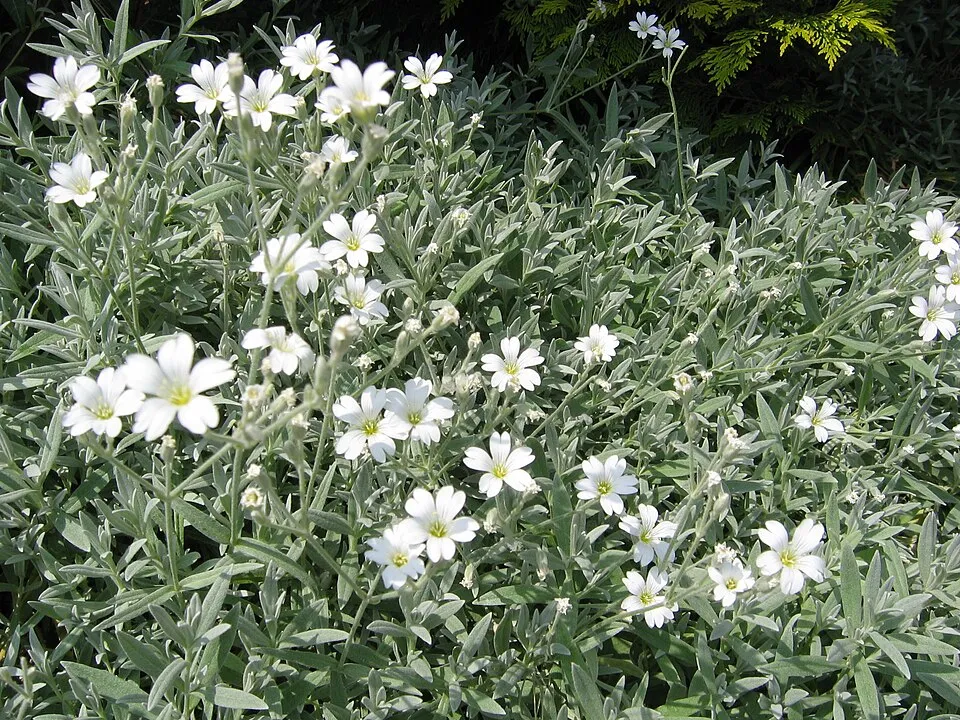
Cerastium tomentosum, widely known as Snow-in-summer, is a charming perennial herbaceous plant belonging to the Caryophyllaceae family. This low-growing species forms a dense, attractive mat, typically reaching a height of 15 to 30 centimeters (6 to 12 inches), and spreads gracefully by underground runners, making it an excellent ground cover.
Its distinctive foliage consists of narrow, silvery-gray leaves that are densely covered with fine, woolly hairs, giving the plant a soft, felt-like texture and contributing to its common name 'Wooly Mouse-Ear Chickweed'.
Native to mountainous regions of Europe and parts of Asia, particularly Italy, Snow-in-summer thrives in well-drained, often rocky, sandy, or gravelly soils, reflecting its preference for drier, leaner conditions. In late spring to early summer, the plant erupts in a spectacular display of small, star-shaped white flowers, borne in profuse clusters on stems that rise slightly above the foliage. This abundance of blooms creates a breathtaking carpet of white, reminiscent of freshly fallen snow, which is the origin of its most popular common name, 'Snow-in-summer'.
The genus name 'Cerastium' derives from the Greek word 'keras', meaning horn, referring to the slightly bent seed capsule in some species, while 'tomentosum' aptly describes its woolly leaves and stems. Valued for its ornamental appeal, ability to suppress weeds, and soil stabilization properties, Cerastium tomentosum is a popular choice for rock gardens, borders, and xeriscaping, especially in cooler summer climates where it truly flourishes, though it can be short-lived in less ideal conditions.
Trusted Scientific References
1. Authoritative external sources for Cerastium tomentosum
1.1 Wikipedia — Cerastium tomentosum
1.2 Kew POWO (Plants of the World Online)
1.3 PubMed — peer-reviewed research
1.4 NCBI Taxonomy Browser
1.5 GBIF — Global Biodiversity
1.6Cerastium should be interpreted through verified botanical identity, practical care, and responsible safety language. This recovery note adds the missing context needed for a complete profile: match light to the plant's habit, use well-drained soil, water according to season, and avoid unsupported medicinal or edible claims. For publishing, the plant can be presented as a source-backed garden plant with clear care guidance, common problem diagnosis, and conservative safety wording.
1.1.Cerastium — Defining Traits
- ✓Mat — forming herbaceous perennial, creating a dense groundcover.
- ✓Distinctive silvery — gray, woolly foliage.
- ✓Profuse, star — shaped white flowers blooming in late spring to early summer.
- ✓Highly drought — tolerant and thrives in poor, well-drained soils.
- ✓Deer — resistant, making it suitable for various landscapes.
- ✓Spreads by underground — Spreads by underground runners, capable of forming large colonies.
- ✓Low — maintenance plant, requiring minimal care once established.
- ✓Valued for its — Valued for its ornamental appeal in rock gardens and borders.
- ✓Contains beneficial phenolic — Contains beneficial phenolic compounds and flavonoids.
- ✓Best suited for — Best suited for external herbal applications for skin health.
1.2.Cerastium — In Brief
- ✓Ornamental groundcover with silvery foliage and white flowers.
- ✓Traditionally used topically for anti-inflammatory and skin-soothing benefits.
- ✓Rich in flavonoids and phenolic compounds, contributing to antioxidant activity.
- ✓Drought-tolerant and low-maintenance, ideal for rock gardens.
- ✓Primarily for external use; internal consumption is not recommended.
- ✓Can be vigorous and short-lived in certain climates.
2.Cerastium — Systematic Position
3.Cerastium — Quick Facts
4.Cerastium — Morphological Account
5.Cerastium — Habitat & Distribution
6.Cerastium — Historical Applications
7.Cerastium — Secondary Metabolites
- ✓Flavonoids — Key compounds include quercetin and kaempferol derivatives, which are potent antioxidants and contribute significantly to the plant's anti-inflammatory effects.
- ✓Phenolic Acids — Such as caffeic acid and chlorogenic acid, these compounds exhibit strong antioxidant activity, protecting cellular structures from oxidative damage.
- ✓Tannins — These polyphenolic compounds provide the plant with its astringent properties, useful for tissue toning and as mild antiseptics on the skin.
- ✓Saponins — While not extensively studied in Cerastium tomentosum, saponins are common in the Caryophyllaceae family and may contribute to some anti-inflammatory or cleansing actions.
- ✓Phytosterols — Plant sterols are known for their anti-inflammatory effects and their role in maintaining cellular membrane integrity.
- ✓Polysaccharides — These complex carbohydrates offer soothing and emollient properties, potentially contributing to the plant's traditional use for skin irritation relief.
- ✓Triterpenoids — A diverse group of compounds, triterpenoids often possess anti-inflammatory, antimicrobial, and adaptogenic properties, common in many medicinal plants.
- ✓Ascorbic Acid (Vitamin C) — A crucial antioxidant, Vitamin C supports immune function and collagen synthesis, contributing to overall skin health.
8.Cerastium — What Research Suggests
- ✓Anti-inflammatory Properties — Cerastium tomentosum is traditionally recognized for its ability to reduce inflammation, likely due to the presence of flavonoids and phenolic compounds that modulate inflammatory pathways.
- ✓Skin Irritation Relief — Topically applied, preparations from Snow-in-summer may help soothe various skin irritations, including redness, itching, and minor rashes, by calming inflamed tissues.
- ✓Wound Healing Support — Folk medicine suggests that this plant aids in the healing of minor cuts and abrasions, promoting tissue regeneration and protecting the affected area.
- ✓Antioxidant Activity — The plant's rich content of phenolic compounds contributes to its antioxidant capacity, helping to neutralize free radicals and protect cells from oxidative stress.
- ✓Astringent Qualities — Cerastium tomentosum exhibits mild astringent properties, which can help to tighten and tone skin tissues, reducing minor bleeding and promoting a protective barrier.
- ✓Mild Antiseptic Action — Its constituents may offer a gentle antiseptic effect, assisting in keeping superficial wounds clean and reducing the risk of infection.
- ✓Eczema Management — For mild cases of eczema or dermatitis, the plant's soothing and anti-inflammatory actions may provide symptomatic relief and comfort.
- ✓Insect Bite Soother — Applying a poultice or infused wash can help alleviate the itching and swelling associated with insect bites and stings.
- ✓Sunburn Care — The cooling and anti-inflammatory effects of Snow-in-summer may offer comfort and aid recovery for mild sunburned skin.
8.1.Cerastium — Indications & Uses
9.Cerastium — Risk Profile
9.1.Cerastium — Warnings
- ✓Allergic Reactions — Individuals with sensitivities may experience contact dermatitis, itching, or redness upon topical application.
- ✓Skin Irritation — Overuse or application to highly sensitive skin may cause mild irritation or dryness, especially if astringent properties are pronounced.
- ✓Photosensitivity — While rare, some plant constituents can theoretically increase skin sensitivity to sunlight in susceptible individuals.
- ✓Internal Ingestion Effects — Due to limited research, internal consumption is not recommended and potential adverse effects are largely unknown.
- ✓Interaction with Medications — Hypothetically, topical application could interfere with other dermatological treatments or creams.
- ✓Drying Effect — Prolonged use of highly concentrated preparations might lead to skin dryness due to its astringent nature.
9.2.Cerastium — Safety Profile
- ✓External Use Only — Cerastium tomentosum is primarily recommended for external, topical applications; internal use is not advised due to insufficient research.
- ✓Patch Test — Always perform a patch test on a small area of skin before widespread application to check for allergic reactions or sensitivities.
- ✓Pregnancy and Lactation — Pregnant or breastfeeding individuals should consult a healthcare professional before using any herbal remedies, including topical Cerastium preparations.
- ✓Children and Infants — Exercise caution when using on children; consult a pediatrician or qualified herbalist for appropriate guidance.
- ✓Discontinue Use — If any adverse reactions, irritation, or discomfort occur, discontinue use immediately and rinse the affected area.
- ✓Open Wounds — Avoid applying directly to deep, infected, or profusely bleeding wounds without medical supervision.
- ✓Storage — Store dried plant material in a cool, dark, dry place to maintain potency and prevent degradation.
10.Cerastium — Application Forms
- ✓Topical Infusion (Wash/Compress) — Steep dried or fresh leaves in hot water to create a soothing wash for skin irritations, minor burns, or insect bites.
- ✓Fresh Poultice — Crush fresh leaves and apply directly to affected skin areas to reduce inflammation and aid wound healing.
- ✓Herbal Salve/Ointment — Infuse dried Cerastium tomentosum in a carrier oil (e.g., olive oil) and combine with beeswax to create a topical balm for dry skin, rashes, or minor abrasions.
- ✓Tincture (External) — Prepare an alcohol-based extract for concentrated topical application on localized skin issues, ensuring it is diluted if skin is sensitive.
- ✓Herbal Bath — Add a strong infusion of the plant to bathwater to alleviate widespread skin discomfort, such as mild eczema or general irritation.
- ✓Infused Oil — Gently heat dried plant material in a carrier oil for several hours to create an infused oil, which can be used directly or as a base for other topical preparations.
- ✓Foot Soak — Use a warm infusion as a foot soak to soothe tired, irritated feet or address minor skin issues on the soles.
11.Cerastium — Propagation & Care
- ✓Soil Preference — Plant in well-drained soil; it tolerates poor, sandy, or gravelly conditions but dislikes heavy, waterlogged soil.
- ✓Light Requirements — Prefers full sun to partial shade for optimal flowering and growth, though full sun encourages the densest mat.
- ✓Climate Adaptation — Thrives in cool summer climates; it struggles in high heat and humidity, which can lead to decline and root rot.
- ✓Propagation Methods — Easily propagated by seeds sown in spring, division of established clumps in spring or fall, or cuttings taken in early summer.
- ✓Watering — Highly drought-tolerant once established; water sparingly, allowing the soil to dry out completely between waterings.
- ✓Maintenance — Requires minimal care; prune spent blooms to prevent excessive self-seeding and mow large beds on a high setting to maintain vigor.
- ✓Pest and Disease — Generally deer-resistant; susceptible to root rot in poorly drained conditions or areas with high humidity.
- ✓Spreading Habit — Can be a vigorous spreader; consider less aggressive cultivars like 'Columnae' or 'Silberteppich' for contained areas.
Reviewed by the Flora Medical Global Botanical Review Panel
Multi-disciplinary editorial group · Botany · Ethnobotany · Herbal-medicine literature
Who reviewed this: This page was checked by the Flora Medical Global Botanical Review Panel — an in-house editorial group of botany graduates, ethnobotany researchers, and horticulture practitioners who collectively maintain our 7,000+ plant encyclopedia. Meet the team.
Our 4-step verification process
1. Taxonomic verification
Scientific names and synonyms cross-checked against Kew POWO, World Flora Online, and The Plant List.
2. Phytochemical & medicinal cross-reference
Active compounds, traditional uses, and reported activities are cross-referenced with PubMed, USDA Dr. Duke's database, and peer-reviewed ethnobotanical literature.
3. Conservation & distribution check
Distribution, ecology, and conservation status confirmed against GBIF occurrence records and the IUCN Red List.
4. Editorial & safety review
Every entry passes an editorial pass for clarity, originality, and safety notices (toxicity, contraindications, dosage caveats) before publication.
Last reviewed:
Important medical disclaimer: This content is for educational and research purposes only. It is not medical advice and is not a substitute for consultation with a licensed healthcare provider. Do not use any herb to self-treat a medical condition without professional guidance.
Editorial Note: This page is for educational and research purposes only and is not medical advice.
Written by: Flora Medical Global Editorial Team
Reviewed by: Flora Medical Global Botanical Review Panel
Last Updated: June 15, 2026





Cerastium — Comments & Community Reviews
Rate this plant