


Medical Disclaimer: This content is for educational purposes only. It is not medical advice. Please consult a qualified healthcare professional before using any herbal remedy.
Safety Overview
1.Cerbera — Introduction & Highlights
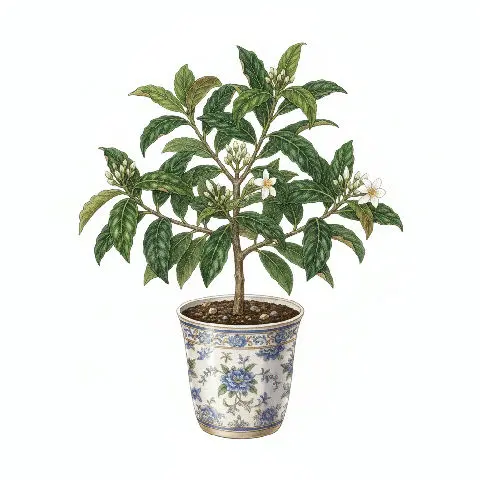
Cerbera manghas, widely recognized as the beach apple, pong-pong, or the infamous 'Indian suicide tree' due to its profound toxicity, is a distinctive small to medium-sized evergreen tree within the Apocynaceae family. This resilient species typically attains heights ranging from 4 to 15 meters, characterized by its striking glossy, dark green foliage. The leaves are simple, exhibiting a lanceolate to obovate shape, and typically measure between 10 to 25 cm in length and 3 to 6 cm in width. They are alternately arranged along the stems, featuring a prominent midrib and distinct venation that contributes to their vibrant appearance. The tree's bark is generally smooth, grayish-brown, and, like many members of the Apocynaceae family, exudes a milky white, highly toxic sap when injured.
The flowers of Cerbera manghas are notably beautiful, presenting as tubular structures, predominantly white to pale yellow, often adorned with a yellow or reddish throat. These blossoms emit a sweet, jasmine-like fragrance, particularly pronounced at night, which serves to attract nocturnal pollinators. Arranged in terminal cymes, each flower measures approximately 2 to 5 cm in diameter. Post-pollination, the tree yields a unique ovoid or spherical fruit, often likened to a green mango, thus inspiring its 'beach apple' moniker. Known as 'Othalanga' in some regions, these fruits mature to a bright red or purple hue, reaching up to 5-10 cm across.
Each fruit encases a single, extremely poisonous seed within a fibrous husk, containing potent cardiotoxic compounds. The robust root system of Cerbera manghas is well-adapted to its specific ecological niche, often developing pneumatophores in marshy conditions, underscoring its resilience in saline or waterlogged soils. This species thrives predominantly in tropical and subtropical coastal regions, including delicate mangrove ecosystems, sandy beaches, and marshy areas along seashores and riverbanks, with a natural distribution spanning South Asia, Southeast Asia, parts of Australia, and Madagascar.
Trusted Scientific References
1. Authoritative external sources for Cerbera manghas
1.1 Wikipedia — Cerbera manghas
1.2 Kew POWO (Plants of the World Online)
1.3 PubMed — peer-reviewed research
1.4 NCBI Taxonomy Browser
1.5 GBIF — Global Biodiversity
1.1.Cerbera — Key Features
- ✓Extreme Toxicity — All parts, especially seeds, are highly poisonous.
- ✓Cardiotoxic Glycosides — Contains lethal compounds like Cerberin.
- ✓Coastal Habitat — Thrives in saline, marshy, and sandy coastal environments.
- ✓Evergreen Tree — Small to medium-sized tree with glossy foliage.
- ✓Fragrant Flowers — White to pale yellow, jasmine-scented flowers.
- ✓Distinctive Fruit — Green mango-like fruit turning red/purple upon ripening.
- ✓Resilient Nature — Adaptable to harsh coastal conditions.
- ✓Bioactive Compounds — Rich in alkaloids, terpenoids, and saponins.
- ✓Pest Control Potential — Explored for natural insecticide/pesticide use.
- ✓Ornamental Value (Caution) — Cultivated for aesthetic appeal with strict warnings.
1.2.Cerbera — Snapshot Summary
- ✓Extremely toxic plant, especially seeds, containing lethal cardiac glycosides.
- ✓Known as 'Indian suicide tree' due to documented poisoning fatalities.
- ✓Native to tropical coastal regions of Asia, Australia, and Madagascar.
- ✓Research explores potential anticancer, antioxidant, and antimicrobial properties.
- ✓Utilized historically and currently for external pest control applications.
- ✓Requires extreme caution; never for internal human consumption.
2.Cerbera — Taxonomic Classification
3.Cerbera — Botanical Stats
4.Cerbera — Plant Morphology
5.Cerbera — Habitat & Distribution
6.Cerbera — Historical Applications
7.Cerbera — Secondary Metabolites
- ✓Cardiac Glycosides — The most critical compounds, notably Cerberin, are potent cardiotoxins that disrupt calcium ion channels in heart muscles, leading to fatal arrhythmias. Other related glycosides like Thevetin and Neriifolin are also present.
- ✓Alkaloids — Various alkaloids contribute to the plant's diverse bioactivities, including some with potential antimicrobial and cytotoxic effects, though their exact roles require further elucidation.
- ✓Steroids — Steroidal compounds are found throughout the plant, often acting as precursors for other bioactive molecules or contributing to general plant defense mechanisms.
- ✓Terpenoids — A wide array of terpenoids are present, known for their potential anti-inflammatory, antimicrobial, and insecticidal properties, contributing to the plant's defense system.
- ✓Saponins — These compounds contribute to the plant's foam-forming properties and may possess some pharmacological activities, including hemolytic effects and potential antifungal actions.
- ✓Flavonoids — Identified in leaf extracts, flavonoids are potent antioxidants known for their free-radical scavenging capabilities and potential protective effects against oxidative damage.
- ✓Tannins — Present in various plant parts, tannins are polyphenolic compounds recognized for their astringent properties and potential antimicrobial and antioxidant activities.
- ✓Phenolic Compounds — Beyond flavonoids and tannins, other diverse phenolic compounds contribute to the plant's overall antioxidant capacity and defense mechanisms against pathogens and herbivores.
8.Cerbera — Research Insights
- ✓Potential Anticancer Activity — Research indicates that compounds within Cerbera manghas seeds may exhibit cytotoxic activity against various cancer cell lines, potentially inducing apoptosis (programmed cell death).
- ✓Antioxidant Properties — Leaf extracts of Cerbera manghas have demonstrated antioxidant activities, suggesting a capacity to neutralize free radicals and mitigate oxidative stress.
- ✓Antimicrobial Effects — Phytochemicals present in the plant, including alkaloids and terpenoids, have been reported to possess antimicrobial properties against certain bacteria and fungi.
- ✓Insecticidal Agent — Historically and in some modern applications, extracts from Cerbera manghas have been utilized as a natural insecticide to control agricultural pests.
- ✓Pesticidal Use — The plant’s toxic compounds are effective as a broad-spectrum pesticide, offering an eco-friendly alternative in pest management strategies.
- ✓Antifungal Properties — Specific plant components show antifungal activity, which could be harnessed for protecting crops or in traditional remedies against fungal infections.
- ✓Anti-inflammatory Research — Preliminary studies suggest that certain constituents may possess anti-inflammatory effects, though further research is required to confirm this.
- ✓Analgesic Potential — Some traditional uses and early research hint at analgesic (pain-relieving) properties, likely due to specific alkaloid content, but this requires significant validation.
8.1.Cerbera — Health Applications
9.Cerbera — Adverse Effects
9.1.Cerbera — Side Effects & Warnings
- ✓Severe Cardiac Toxicity — Ingestion of any part, especially the seeds, causes severe cardiotoxicity, leading to irregular heartbeats (arrhythmias), bradycardia, and heart block.
- ✓Gastrointestinal Distress — Initial symptoms often include nausea, vomiting, abdominal pain, and profuse diarrhea, indicating systemic poisoning.
- ✓Neurological Symptoms — Can induce dizziness, headache, confusion, and in severe cases, convulsions, progressing to coma.
- ✓Respiratory Depression — High doses can lead to respiratory distress, difficulty breathing, and eventual respiratory arrest.
- ✓Fatal Outcome — Due to its potent cardiotoxic effects, ingestion of even a small amount can be rapidly fatal, earning it the 'suicide tree' moniker.
- ✓Dermatitis — Contact with the milky sap can cause skin irritation, redness, and blistering in sensitive individuals.
- ✓Ocular Irritation — Sap contact with eyes can cause severe pain, inflammation, and temporary or permanent vision impairment.
9.2.Cerbera — Clinical Safety Notes
- ✓Extreme Toxicity — Cerbera manghas is highly poisonous in all its parts, particularly the seeds, which contain lethal cardiac glycosides like Cerberin.
- ✓No Safe Internal Use — This plant should NEVER be ingested by humans or animals. It is a non-meal plant with documented fatal poisoning cases.
- ✓Handling Precautions — Always wear gloves and eye protection when handling any part of the plant, especially when cutting or processing, due to the irritating sap.
- ✓Keep Away from Children and Pets — Ensure the plant is inaccessible to children and pets, who may be attracted to the fruit's appearance.
- ✓Contraindications — Absolutely contraindicated for pregnant or lactating women, individuals with heart conditions, children, and anyone without expert guidance and safety protocols.
- ✓Proper Disposal — Dispose of plant waste carefully to prevent accidental exposure to humans or wildlife.
- ✓Emergency Protocol — In case of accidental ingestion or exposure, seek immediate emergency medical attention.
10.Cerbera — How to Use
- ✓External Pest Control — Extracts from the plant, particularly the seeds, are traditionally and experimentally used as a potent natural insecticide and pesticide for agricultural applications.
- ✓Antifungal Preparations (External) — In some traditional practices, non-ingestible preparations derived from the plant are applied externally as antifungal agents.
- ✓Eco-Friendly Biopesticide — Due to its efficacy, Cerbera manghas is being researched for development into commercial biopesticides for sustainable pest management.
- ✓Traditional Ceremonial Use (Toxic) — Historically, in regions like Madagascar, the highly toxic seeds were used in judicial rituals as an ordeal poison, not for medicinal purposes.
- ✓Fish Poisoning (Traditional) — In certain indigenous communities, the crushed seeds or fruit pulp were traditionally used to stun fish in small bodies of water, highlighting extreme toxicity.
- ✓Cautionary Ornamental Planting — Occasionally cultivated as an ornamental shade tree in tropical landscapes, but requires strict public awareness due to extreme toxicity.
- ✓Research Material — Plant parts are extensively used in scientific research to isolate and study its potent cardiotoxic glycosides and other bioactive compounds for drug discovery.
11.Cerbera — Growth Requirements
- ✓Habitat Preference — Thrives in tropical and subtropical coastal areas, including mangrove fringes, sandy beaches, and marshy riverbanks.
- ✓Soil Requirements — Prefers well-draining, saline-tolerant soils, often found in waterlogged or estuarine environments, indicating high adaptability.
- ✓Light Exposure — Requires full sun to partial shade for optimal growth, typical of its natural open coastal habitats.
- ✓Watering — Tolerant of both wet conditions and occasional drought once established, but benefits from consistent moisture in its early stages.
- ✓Propagation — Primarily propagated by seeds, which germinate readily in suitable warm, moist conditions, or sometimes through cuttings.
- ✓Growth Rate — Known for its resilient nature and relatively speedy growth, making it suitable for shade tree applications in appropriate climates.
- ✓Pest and Disease Resistance — Generally robust against most pests and diseases, likely due to its inherent toxicity and adaptive mechanisms.
- ✓Environmental Role — Often planted in coastal areas for erosion control and as a windbreak due to its hardy nature.
Reviewed by the Flora Medical Global Botanical Review Panel
Multi-disciplinary editorial group · Botany · Ethnobotany · Herbal-medicine literature
Who reviewed this: This page was checked by the Flora Medical Global Botanical Review Panel — an in-house editorial group of botany graduates, ethnobotany researchers, and horticulture practitioners who collectively maintain our 7,000+ plant encyclopedia. Meet the team.
Our 4-step verification process
1. Taxonomic verification
Scientific names and synonyms cross-checked against Kew POWO, World Flora Online, and The Plant List.
2. Phytochemical & medicinal cross-reference
Active compounds, traditional uses, and reported activities are cross-referenced with PubMed, USDA Dr. Duke's database, and peer-reviewed ethnobotanical literature.
3. Conservation & distribution check
Distribution, ecology, and conservation status confirmed against GBIF occurrence records and the IUCN Red List.
4. Editorial & safety review
Every entry passes an editorial pass for clarity, originality, and safety notices (toxicity, contraindications, dosage caveats) before publication.
Last reviewed:
Important medical disclaimer: This content is for educational and research purposes only. It is not medical advice and is not a substitute for consultation with a licensed healthcare provider. Do not use any herb to self-treat a medical condition without professional guidance.
Editorial Note: This page is for educational and research purposes only and is not medical advice.
Written by: Flora Medical Global Editorial Team
Reviewed by: Flora Medical Global Botanical Review Panel
Last Updated: June 15, 2026





Cerbera — Comments & Community Reviews
Rate this plant