


Medical Disclaimer: This content is for educational purposes only. It is not medical advice. Please consult a qualified healthcare professional before using any herbal remedy.
Safety Overview
1.Chamaerops — Botanical Snapshot
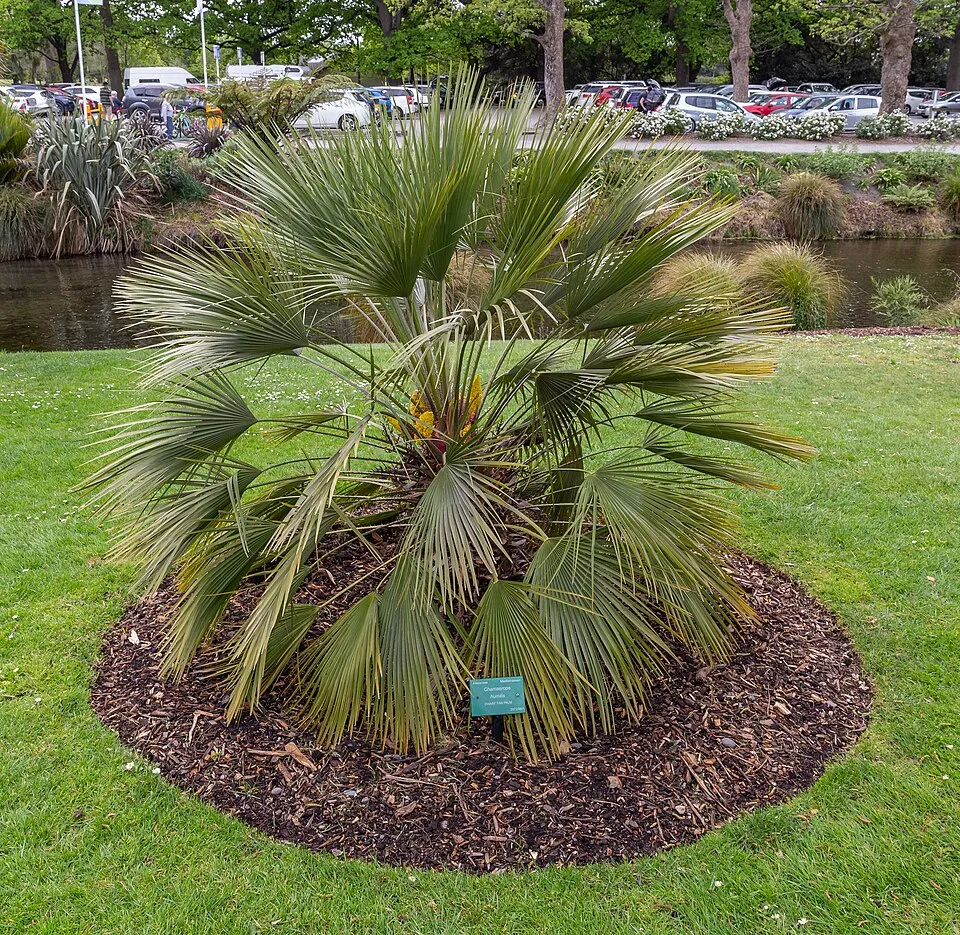
Chamaerops humilis, commonly known as the European fan palm or Mediterranean dwarf palm, is a distinctive, slow-growing, multi-stemmed perennial shrub or small tree belonging to the Arecaceae family. Native to the Mediterranean Basin, it is widely distributed across Southern Europe and Northwest Africa, thriving in coastal areas, rocky hillsides, and maquis shrubland.
This resilient palm typically forms dense clumps from its base, reaching heights of up to 3-5 meters (10-16 feet), though solitary trunk forms can also occur. Its stout, fibrous trunks are often covered with persistent old leaf bases, providing protection and a characteristic rugged texture.
The most striking feature of Chamaerops humilis is its stiff, costapalmate leaves, which are deeply divided into numerous narrow, linear segments, creating a fan-like appearance. These glaucous green to silvery-blue fronds can measure 60-90 cm (2-3 feet) in diameter, often armed with sharp, orange-brown petioles that deter herbivores. In spring, inconspicuous yellow flowers emerge in dense panicles between the leaf bases, giving way to small, ovoid drupes that ripen from green to a dark reddish-brown.
These fruits, approximately 1-2 cm (0.4-0.8 inches) in diameter, contain a single seed. Chamaerops humilis exhibits remarkable drought tolerance and adaptability to various soil types, preferring full sun and well-drained conditions, making it a popular choice for xeriscaping and ornamental horticulture in temperate and subtropical climates.
Trusted Scientific References
1. Authoritative external sources for Chamaerops humilis
1.1 Wikipedia — Chamaerops humilis
1.2 Kew POWO (Plants of the World Online)
1.3 PubMed — peer-reviewed research
1.4 NCBI Taxonomy Browser
1.5 GBIF — Global Biodiversity
1.6Chamaerops should be interpreted through verified botanical identity, practical care, and responsible safety language. This recovery note adds the missing context needed for a complete profile: match light to the plant's habit, use well-drained soil, water according to season, and avoid unsupported medicinal or edible claims. For publishing, the plant can be presented as a source-backed garden plant with clear care guidance, common problem diagnosis, and conservative safety wording.
1.1.Chamaerops — Distinguishing Points
- ✓Multi — stemmed growth habit, often forming dense clumps.
- ✓Distinctive, stiff, costapalmate (fan — shaped) leaves.
- ✓Armed petioles with sharp, orange — brown spines.
- ✓Highly drought — tolerant and adaptable to various poor soils.
- ✓Native to the — Native to the Mediterranean Basin, indicating resilience to hot, dry climates.
- ✓Produces small, ovoid, reddish — brown fruits with a single seed.
- ✓Valued ornamentally for — Valued ornamentally for its architectural form and hardiness.
- ✓Leaf fibers are historically used for weaving and rope — making.
- ✓Relatively slow — growing, long-lived perennial plant.
- ✓Tolerant of coastal — Tolerant of coastal conditions and salinity.
1.2.Chamaerops — Quick Summary
- ✓European fan palm, Chamaerops humilis, native to the Mediterranean, is a resilient, multi-stemmed palm.
- ✓Known for its distinctive fan-shaped leaves and drought tolerance, popular in xeriscaping.
- ✓Traditionally used for its strong leaf fibers in crafts and its fruits for nutritional value.
- ✓Contains fatty acids, phytosterols, flavonoids, and phenolic acids.
- ✓Limited scientific research on specific medicinal properties; primarily valued for ornamental and traditional non-medicinal uses.
- ✓Generally considered safe for ornamental use, but medicinal consumption lacks comprehensive safety data.
2.Chamaerops — Botanical Identity
3.Chamaerops — Vital Statistics
4.Chamaerops — Botanical Description
5.Chamaerops — Ecological Habitat
6.Chamaerops — Folk Medicine Applications
7.Chamaerops — Chemical Profile
- ✓Cellulose and Hemicellulose — Major structural polysaccharides found abundantly in the leaf fibers and stem, providing rigidity and contributing to dietary fiber content when consumed.
- ✓Lignin — A complex polymer that provides structural support and strength to plant cell walls, particularly prominent in the woody parts and leaf bases of the palm.
- ✓Fatty Acids — The fruits contain various saturated and unsaturated fatty acids, including palmitic acid, oleic acid, and linoleic acid, which are important for nutrition and cellular function.
- ✓Phytosterols — Notably beta-sitosterol, campesterol, and stigmasterol, found in the fruits and other tissues, known for their potential cholesterol-lowering and anti-inflammatory properties.
- ✓Flavonoids — Compounds like quercetin, kaempferol, and their glycosides may be present, contributing to antioxidant and potentially anti-inflammatory activity.
- ✓Phenolic Acids — Such as caffeic acid, ferulic acid, and gallic acid derivatives, which are common plant antioxidants and contribute to the plant's defense mechanisms.
- ✓Carotenoids — Pigments present in the ripe fruits, including beta-carotene, which act as antioxidants and precursors to Vitamin A.
- ✓Triterpenes — A class of organic compounds, often found in plant resins and waxes, with potential anti-inflammatory and protective roles.
- ✓Saponins — Glycosides that can have detergent-like properties and are sometimes associated with immune-modulating or cholesterol-binding effects.
- ✓Waxes and Resins — Present on the leaves and stems, providing protection against desiccation and pathogens, composed of complex lipid and hydrocarbon mixtures.
- ✓Minerals — The fruit and other parts contain essential minerals such as potassium, magnesium, calcium, and iron, vital for various physiological processes.
- ✓Vitamins — Including Vitamin C and B-complex vitamins, found in the fruit, which are crucial for metabolic functions and immune support.
8.Chamaerops — Evidence-Based Benefits
- ✓Nutritional Support — The fruits of Chamaerops humilis are traditionally consumed in some regions and are believed to offer a source of dietary fiber, vitamins, and minerals, contributing to overall well-being.
- ✓Digestive Health — The fibrous nature of the fruit and possibly other plant parts may aid in promoting healthy digestion and regular bowel movements, similar to other plant-based fibers.
- ✓Antioxidant Properties — Preliminary phytochemical analysis suggests the presence of phenolic compounds and flavonoids, which could provide antioxidant activity, helping to combat oxidative stress.
- ✓Anti-inflammatory Potential — Certain plant constituents, such as sterols and fatty acids, often exhibit mild anti-inflammatory effects that could support the body's natural healing processes.
- ✓Skin Health — Extracts, though not widely studied, might possess emollient properties, potentially supporting skin hydration and barrier function.
- ✓Cardiovascular Support — The presence of beneficial fatty acids and phytosterols, like beta-sitosterol, could theoretically contribute to maintaining healthy cholesterol levels, though specific research is lacking.
- ✓Immune Modulation — Plant polysaccharides and other complex carbohydrates are sometimes associated with supporting immune system function.
- ✓Bone Health — Trace minerals found in the fruit could contribute to bone density and strength, although this is a general plant-derived benefit rather than a specific attribute of this palm.
- ✓Traditional Fiber Source — Historically, the strong leaf fibers have been used for textiles, ropes, and baskets, indicating potential for material science applications and sustainable resource utilization.
- ✓Environmental Resilience — The plant's ability to thrive in harsh, dry environments suggests a robust biochemical defense system, which may contain compounds of interest for further research.
8.1.Chamaerops — Indications & Uses
9.Chamaerops — Cautions & Contraindications
9.1.Chamaerops — Reported Side Effects
- ✓Allergic Reactions — Individuals sensitive to palms or other plant pollens may experience allergic reactions, such as skin irritation or respiratory symptoms.
- ✓Digestive Upset — Ingesting large quantities of the fruit or other plant parts may cause mild gastrointestinal discomfort, including bloating or diarrhea, due to high fiber content.
- ✓Physical Injury — The sharp spines on the petioles can cause cuts or punctures if handled carelessly.
- ✓Oral Irritation — Unripe fruits may contain tannins or other compounds that can cause a dry, astringent sensation or mild irritation in the mouth.
- ✓Unknown Interactions — Due to a lack of extensive medicinal research, potential interactions with medications or other supplements are unknown.
9.2.Chamaerops — Toxicity Assessment
- ✓Pregnancy and Lactation — Insufficient data exists regarding the safety of Chamaerops humilis consumption during pregnancy or lactation; use is not recommended.
- ✓Children — Use in children is not advised due to limited safety data and the potential for physical injury from sharp leaf spines.
- ✓Allergies — Individuals with known allergies to plants in the Arecaceae family or general plant allergies should exercise caution.
- ✓Drug Interactions — No specific drug interactions have been reported, but caution is warranted due to the lack of research on its medicinal properties.
- ✓Moderation — When consuming fruits, do so in moderation, as excessive intake may lead to digestive upset.
- ✓External Use — Exercise extreme care during external application due to the presence of sharp spines on the plant.
- ✓Identification — Ensure correct plant identification, as misidentification could lead to consumption of toxic look-alikes.
10.Chamaerops — Preparation Methods
- ✓Fruit Consumption — Ripe fruits are consumed raw in some traditional Mediterranean cultures, offering nutritional benefits. Ensure proper identification before consumption.
- ✓Fiber Extraction — The tough leaf fibers are traditionally harvested and processed for making ropes, mats, baskets, and other woven goods.
- ✓Sap Collection — In certain regions, the sap from the trunk or young inflorescences is carefully tapped and consumed fresh or fermented, similar to other palm saps.
- ✓Decoction of Leaves — For potential general tonic or digestive aid, a decoction could be prepared by simmering dried leaves in water, though specific medicinal efficacy is not well-established.
- ✓Macerated Fruit Extract — To explore its nutritional or antioxidant properties, macerated fresh or dried fruits could be used to create a simple water or alcohol extract.
- ✓Topical Application — A poultice made from crushed leaves or fruit pulp might be traditionally applied to skin for soothing purposes, though caution is advised due to sharp spines.
- ✓Seed Oil Extraction — While not common, the seeds may contain oils that could be extracted and explored for cosmetic or nutritional applications, similar to other palm oils.
11.Chamaerops — Cultivation & Care
- ✓Sun Exposure — Requires full sun to partial shade for optimal growth, thriving in bright, open conditions.
- ✓Soil Type — Prefers well-drained, sandy, or loamy soils; it is tolerant of poor, rocky soils but dislikes heavy clay.
- ✓Watering — Highly drought-tolerant once established, requiring infrequent watering. Overwatering can lead to root rot.
- ✓Temperature — Hardy in USDA zones 8-11, tolerating temperatures down to -12°C (10°F) for short periods.
- ✓Fertilization — Benefits from a balanced palm fertilizer applied during the growing season (spring to early summer), especially in nutrient-poor soils.
- ✓Pruning — Remove dead or damaged fronds as needed to maintain appearance and plant health; exercise caution due to sharp petioles.
- ✓Propagation — Can be propagated from seeds, which require warm stratification, or by separating suckers from the base of mature plants.
- ✓Pest and Disease — Generally resistant to most pests and diseases, but can occasionally be affected by scale insects or fungal spots in overly humid conditions.
Reviewed by the Flora Medical Global Botanical Review Panel
Multi-disciplinary editorial group · Botany · Ethnobotany · Herbal-medicine literature
Who reviewed this: This page was checked by the Flora Medical Global Botanical Review Panel — an in-house editorial group of botany graduates, ethnobotany researchers, and horticulture practitioners who collectively maintain our 7,000+ plant encyclopedia. Meet the team.
Our 4-step verification process
1. Taxonomic verification
Scientific names and synonyms cross-checked against Kew POWO, World Flora Online, and The Plant List.
2. Phytochemical & medicinal cross-reference
Active compounds, traditional uses, and reported activities are cross-referenced with PubMed, USDA Dr. Duke's database, and peer-reviewed ethnobotanical literature.
3. Conservation & distribution check
Distribution, ecology, and conservation status confirmed against GBIF occurrence records and the IUCN Red List.
4. Editorial & safety review
Every entry passes an editorial pass for clarity, originality, and safety notices (toxicity, contraindications, dosage caveats) before publication.
Last reviewed:
Important medical disclaimer: This content is for educational and research purposes only. It is not medical advice and is not a substitute for consultation with a licensed healthcare provider. Do not use any herb to self-treat a medical condition without professional guidance.
Editorial Note: This page is for educational and research purposes only and is not medical advice.
Written by: Flora Medical Global Editorial Team
Reviewed by: Flora Medical Global Botanical Review Panel
Last Updated: June 15, 2026





Chamaerops — Comments & Community Reviews
Rate this plant