
Medical Disclaimer: This content is for educational purposes only. It is not medical advice. Please consult a qualified healthcare professional before using any herbal remedy.
Safety Overview
1.Chamaerops Humilis Indoor — Plant Snapshot
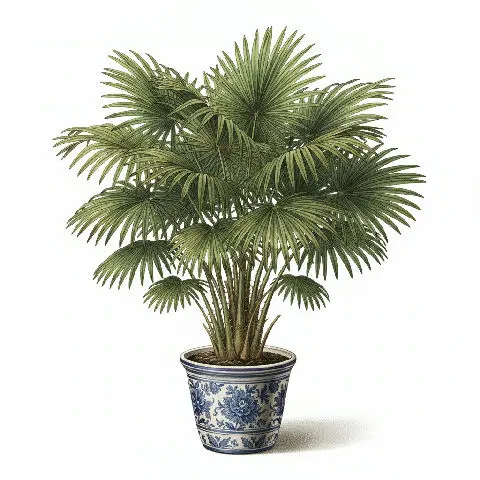
Chamaerops humilis, commonly known as the European fan palm or Mediterranean fan palm, stands as the sole palm species native to continental Europe, thriving across the arid landscapes of the Mediterranean basin. This remarkably resilient member of the Arecaceae family exhibits a distinctive clumping growth habit, characterized by multiple stems emerging from its base, culminating in a crown of rigid, fan-shaped fronds.
Each palmate leaf, typically blue-green to grayish-green, radiates from a central point, supported by petioles often armed with sharp spines, a botanical adaptation for defense in its natural habitat.
When cultivated indoors, the European fan palm retains its robust and architectural elegance, making it a highly valued ornamental plant. Its slow growth rate allows for manageable size within controlled environments such as conservatories, offices, and larger residential spaces, providing a unique Mediterranean aesthetic. Taxonomically, its genus, Chamaerops, is monotypic, emphasizing its singular distinction within the palm family.
Historically, indigenous communities in its native range have utilized its durable leaves for practical purposes, including basketry, mat weaving, and thatched roofing, highlighting its versatility beyond mere aesthetics. While not traditionally codified as a medicinal plant in major systems like Ayurveda or TCM, ethnobotanical records indicate localized, unformalized uses, such as the occasional consumption of young shoots for sustenance. Modern scientific inquiry into Chamaerops humilis generally focuses on its rich phytochemical profile, particularly its high content of phenolic compounds and flavonoids, which contribute to its inherent resilience and potential for various applications.
The 'indoor' designation underscores its cultivation for interior design and ambient enhancement, where its hardiness and minor air-purifying capabilities are particularly appreciated.
Trusted Scientific References
1. Authoritative external sources for Chamaerops humilis indoor
1.1 Wikipedia — Chamaerops humilis indoor
1.2 Kew POWO (Plants of the World Online)
1.3 PubMed — peer-reviewed research
1.4 NCBI Taxonomy Browser
1.5 GBIF — Global Biodiversity
1.1.Chamaerops Humilis Indoor — Standout Qualities
- ✓Botanical Name — Chamaerops humilis.
- ✓Common Names — European Fan Palm, Mediterranean Fan Palm.
- ✓Family — Arecaceae (Palm family).
- ✓Native Region — Mediterranean Basin, sole European native palm.
- ✓Growth Habit — Multi-stemmed, clumping, slow-growing.
- ✓Leaf Type — Rigid, palmate, fan-shaped fronds.
- ✓Indoor Adaptability — Highly tolerant to varied indoor conditions, including lower light.
- ✓Aesthetic Value — Provides a distinctive architectural and tropical element to interiors.
- ✓Resilience — Known for its drought tolerance and general hardiness.
- ✓Phytochemicals — Rich in antioxidants, including phenolic compounds and flavonoids.
- ✓Air Purification — Contributes minimally to indoor air quality through photosynthesis.
1.2.Chamaerops Humilis Indoor — At-a-Glance Summary
- ✓European fan palm, native to the Mediterranean, ideal indoor ornamental.
- ✓Renowned for its hardiness, distinctive fan-shaped leaves, and architectural appeal.
- ✓Contains beneficial phytochemicals like flavonoids and phenolic acids with antioxidant potential.
- ✓Offers minor indoor air purification and significant biophilic benefits for well-being.
- ✓Low maintenance, adaptable to various indoor conditions, and generally non-toxic.
- ✓Ethnobotanical history includes fiber use and occasional consumption of young shoots.
2.Chamaerops Humilis Indoor — Systematic Position
3.Chamaerops Humilis Indoor — Reference Facts
4.Chamaerops Humilis Indoor — Structural Profile
5.Chamaerops Humilis Indoor — Habitat & Distribution
6.Chamaerops Humilis Indoor — Ethnobotanical Uses
7.Chamaerops Humilis Indoor — Bioactive Constituents
- ✓Flavonoids — Key compounds include quercetin, luteolin, apigenin, and their glycosides, known for their potent antioxidant and anti-inflammatory activities.
- ✓Phenolic Acids — Such as caffeic acid, ferulic acid, gallic acid, and p-coumaric acid, contributing significantly to the plant's antioxidant capacity and protective mechanisms.
- ✓Tannins — Primarily condensed tannins, which possess astringent properties and contribute to the plant's defense against herbivores and pathogens, also showing antioxidant potential.
- ✓Carotenoids — Including beta-carotene and lutein, vital pigments with antioxidant functions, playing a role in protecting plant tissues from oxidative damage.
- ✓Saponins — Glycosides that can have emulsifying properties and are sometimes associated with adaptogenic or immune-modulating effects, though less studied in this species.
- ✓Phytosterols — Notably beta-sitosterol, which is recognized for its anti-inflammatory and cholesterol-lowering properties in human health contexts.
- ✓Fatty Acids — Present in seeds and tissues, contributing to the plant's energy storage and structural integrity, with some polyunsaturated types having nutritional value.
- ✓Polysaccharides — Complex carbohydrates that form structural components and energy reserves, potentially offering immune-modulating effects when isolated.
- ✓Volatile Organic Compounds (VOCs) — Released in trace amounts, contributing to the plant's scent and potentially interacting with indoor air quality.
- ✓Minerals — Essential macro and micronutrients like potassium, calcium, magnesium, and iron, critical for plant physiological processes and general plant health.
8.Chamaerops Humilis Indoor — Modern Studies
- ✓Enhanced Indoor Air Quality — Through the natural process of photosynthesis, Chamaerops humilis contributes to minor oxygen production and the absorption of some volatile organic compounds, fostering a subtly healthier indoor environment.
- ✓Psychological Well-being — The presence of an indoor European fan palm can evoke a sense of calm and connection to nature, known as biophilia, potentially reducing stress and improving mood in occupants.
- ✓Antioxidant Support (potential) — Research on Chamaerops humilis extracts suggests a rich profile of phenolic compounds and flavonoids, which possess antioxidant properties that may help combat oxidative stress in biological systems.
- ✓Anti-inflammatory Potential (research focus) — Certain phytochemicals identified in the European fan palm are being investigated for their potential to modulate inflammatory pathways, though specific medicinal applications are not established for the indoor plant.
- ✓Digestive Health (ethnobotanical note) — Historically, young shoots of Chamaerops humilis were occasionally consumed in its native regions, suggesting traditional, unformalized use for general digestive support, not applicable to the indoor ornamental.
- ✓Skin Health (topical extract potential) — The antioxidant and anti-inflammatory compounds found in the general plant material could theoretically be beneficial in topical applications for skin protection and soothing, if formulated into extracts.
- ✓Immune System Modulation (phyto-compound research) — Flavonoids and other plant compounds are widely studied for their potential roles in supporting immune function, a general attribute that might extend to Chamaerops humilis constituents.
- ✓Respiratory Comfort (indirect benefit) — By contributing to cleaner indoor air and offering aesthetic appeal, the plant can indirectly support a more comfortable and pleasant environment for respiratory health.
- ✓Aesthetic Stress Reduction — The visual appeal and natural form of the European fan palm contribute to a more pleasant and calming living or working space, which can indirectly alleviate daily stress and mental fatigue.
- ✓Low Allergen Impact — Compared to many flowering plants, Chamaerops humilis pollen production is generally low indoors, making it a suitable choice for individuals sensitive to airborne allergens.
8.1.Chamaerops Humilis Indoor — Therapeutic Indications
9.Chamaerops Humilis Indoor — Adverse Effects
9.1.Chamaerops Humilis Indoor — Warnings
- ✓Mechanical Irritation — The sharp spines on the petioles of Chamaerops humilis can cause minor scratches or skin irritation if handled without care.
- ✓Allergic Reactions — While rare, sensitive individuals might experience mild contact dermatitis from sap or pollen, though indoor pollen production is typically low.
- ✓Digestive Upset — Ingesting plant material, though generally considered non-toxic, can lead to mild stomach upset, nausea, or vomiting due to indigestible fibers or compounds.
- ✓Pest Infestations — Indoor fan palms can become hosts for common houseplant pests like spider mites or mealybugs, which can cause plant stress and potentially spread to other plants.
- ✓Overwatering-induced Issues — Excessive watering can lead to root rot, manifesting as yellowing leaves, stunted growth, and eventually plant decline, impacting its aesthetic value.
- ✓Environmental Stress Symptoms — Inadequate light, extreme temperatures, or low humidity can cause leaf tip browning, overall plant stress, and reduced vigor.
9.2.Chamaerops Humilis Indoor — Toxicity Assessment
- ✓Non-Toxic — Chamaerops humilis is generally considered non-toxic to humans and common household pets, making it a safe choice for most indoor environments.
- ✓Handling Precautions — Due to the presence of sharp spines on the leaf petioles, it is advisable to wear gloves when handling or pruning the plant to prevent minor cuts or skin irritation.
- ✓Allergen Potential — The plant has a low allergen potential, as it produces minimal airborne pollen indoors, making it suitable for individuals with mild plant sensitivities.
- ✓Accidental Ingestion — While not toxic, ingestion of plant parts is not recommended and should be prevented, especially for young children and pets, to avoid mild digestive upset.
- ✓Environmental Impact — When grown indoors, Chamaerops humilis poses no environmental risk as an invasive species and contributes positively to indoor aesthetics.
- ✓Recommended Placement — Position the plant in areas where its spiny fronds are less likely to cause accidental contact or injury, particularly in high-traffic zones.
10.Chamaerops Humilis Indoor — How to Use
- ✓Aesthetic Integration — Position the European fan palm strategically in interior spaces to enhance visual appeal, create a calming atmosphere, and contribute to biophilic design.
- ✓Indoor Air Enhancement — Utilize the plant as a natural, albeit minor, contributor to indoor air quality, placing it in areas where fresh greenery is desired for ambient improvement.
- ✓Horticultural Therapy — Incorporate the plant into therapeutic gardening activities, leveraging its tactile leaves and robust nature to engage individuals in plant care and foster well-being.
- ✓Ethnobotanical Study — For academic or historical interest, research the traditional, unformalized uses of the general Chamaerops humilis species, such as its historical fiber applications for crafts.
- ✓Extract Preparation (research only) — In a controlled research setting, prepare solvent extracts from plant material to isolate and study its antioxidant and anti-inflammatory compounds for potential future applications.
- ✓Decorative Crafting (from fallen fronds) — Collect and dry fallen fronds for use in decorative crafts, echoing the historical utility of the palm's leaves in basketry and mat making.
- ✓General Wellness Support — Simply enjoying the presence of the live plant can contribute to a sense of natural tranquility and connection, promoting general mental and emotional wellness.
11.Chamaerops Humilis Indoor — Growing Guide
- ✓Light — Provide bright indirect light; can tolerate some direct sun for a few hours daily, but avoid harsh afternoon sun.
- ✓Watering — Allow the top 2-3 inches of soil to dry out completely between waterings; overwatering is a common cause of issues.
- ✓Soil — Use a well-draining potting mix, ideally one formulated for palms or cacti, with added perlite or sand to enhance drainage.
- ✓Temperature — Thrives in average room temperatures between 65-75°F (18-24°C); protect from cold drafts and temperatures below 50°F (10°C).
- ✓Humidity — Tolerates average indoor humidity; misting occasionally can be beneficial, especially in dry environments, but is not strictly necessary.
- ✓Fertilization — Feed sparingly during the growing season (spring and summer) with a balanced liquid fertilizer diluted to half strength, once every 1-2 months.
- ✓Pruning — Remove dead or yellowing fronds at the base of the stem using sharp, sterile pruning shears to maintain appearance and plant health.
- ✓Repotting — Repot only when root-bound, typically every 2-3 years, in a pot only slightly larger than the previous one to avoid overwatering issues.
Reviewed by the Flora Medical Global Botanical Review Panel
Multi-disciplinary editorial group · Botany · Ethnobotany · Herbal-medicine literature
Who reviewed this: This page was checked by the Flora Medical Global Botanical Review Panel — an in-house editorial group of botany graduates, ethnobotany researchers, and horticulture practitioners who collectively maintain our 7,000+ plant encyclopedia. Meet the team.
Our 4-step verification process
1. Taxonomic verification
Scientific names and synonyms cross-checked against Kew POWO, World Flora Online, and The Plant List.
2. Phytochemical & medicinal cross-reference
Active compounds, traditional uses, and reported activities are cross-referenced with PubMed, USDA Dr. Duke's database, and peer-reviewed ethnobotanical literature.
3. Conservation & distribution check
Distribution, ecology, and conservation status confirmed against GBIF occurrence records and the IUCN Red List.
4. Editorial & safety review
Every entry passes an editorial pass for clarity, originality, and safety notices (toxicity, contraindications, dosage caveats) before publication.
Last reviewed:
Important medical disclaimer: This content is for educational and research purposes only. It is not medical advice and is not a substitute for consultation with a licensed healthcare provider. Do not use any herb to self-treat a medical condition without professional guidance.
Editorial Note: This page is for educational and research purposes only and is not medical advice.
Written by: Flora Medical Global Editorial Team
Reviewed by: Flora Medical Global Botanical Review Panel
Last Updated: June 15, 2026





Chamaerops Humilis Indoor — Comments & Community Reviews
Rate this plant