

Medical Disclaimer: This content is for educational purposes only. It is not medical advice. Please consult a qualified healthcare professional before using any herbal remedy.
Safety Overview
1.Chaparro Amargoso — At a Glance
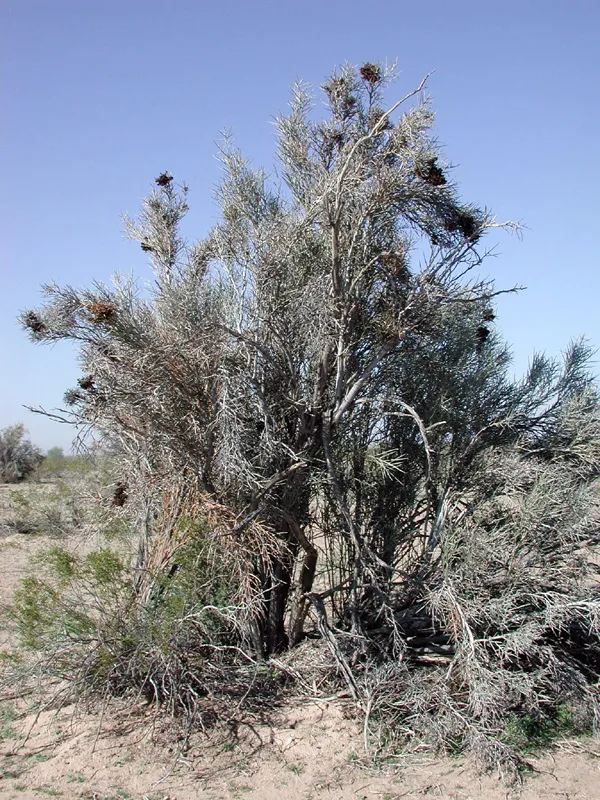
Chaparro Amargoso, scientifically known as Castela emoryi, is a robust perennial shrub belonging to the botanical family Simaroubaceae. This distinctive plant typically attains a height of 1 to 3 meters, characterized by its sturdy, often highly thorny branches, a feature that aptly contributes to its common name 'Allthorn Castela'. The foliage of Chaparro Amargoso is composed of small, alternate, lanceolate to oblong leaves, which generally measure between 2 to 7 cm in length. These leaves display a striking glossy dark green on their upper surface, offering a visual contrast to their lighter, sometimes pubescent underside.
The plant's reproductive cycle brings forth clusters of small, tubular flowers, typically yellow to greenish in hue and approximately 1 cm long. These inconspicuous blossoms emerge from spring through early summer, serving as an important nectar source for various pollinators in its arid ecosystem. A prominent feature of the Chaparro Amargoso is its deeply furrowed bark, which presents a characteristic grayish-brown coloration, adding to its rugged appearance. This robust shrub is a native inhabitant of semi-arid and subtropical regions, predominantly found across the Southwestern United States (Arizona, Texas) and extending deeply into Mexico.
It thrives in challenging environments, particularly in rocky, well-drained soils typical of desert scrub, chaparral, and pinyon-juniper woodlands, showcasing remarkable drought resilience. Its ecological niche underscores its adaptation to harsh conditions, making it a subject of interest in both botanical and ecological studies, as well as for its traditional medicinal value. As a member of the Simaroubaceae family, Chaparro Amargoso shares kinship with other plants renowned for their pronounced bitter constituents, such as Quassia, hinting at the presence of potent secondary metabolites, particularly quassinoids, responsible for its intense bitterness and significant biological activities.
Trusted Scientific References
1. Authoritative external sources for Castela emoryi
1.1 Wikipedia — Castela emoryi
1.2 Kew POWO (Plants of the World Online)
1.3 PubMed — peer-reviewed research
1.4 NCBI Taxonomy Browser
1.5 GBIF — Global Biodiversity
1.1.Chaparro Amargoso — Distinguishing Points
- ✓Resilient thorny shrub — Resilient thorny shrub native to arid regions.
- ✓Characterized by intensely — Characterized by intensely bitter quassinoid compounds.
- ✓Traditional Mexican remedy — Traditional Mexican remedy for amoebiasis and digestive issues.
- ✓Exhibits notable antiprotozoal and anti — inflammatory activities.
- ✓Possesses documented antimutagenic — Possesses documented antimutagenic and antioxidant properties.
- ✓Supports liver function — Supports liver function and can stimulate appetite.
- ✓Used externally for — Used externally for skin conditions like eczema and acne.
- ✓Requires careful dosage — Requires careful dosage and limited duration of internal use.
- ✓Part of the — Part of the Simaroubaceae family, known for bitter principles.
- ✓Adaptable to challenging, well — drained soil conditions.
1.2.Chaparro Amargoso — Quick Summary
- ✓Chaparro Amargoso (Castela emoryi) is a thorny desert shrub native to the SW US and Mexico.
- ✓Renowned for its potent bitter quassinoids, used in traditional Mexican medicine.
- ✓Primary uses include antiprotozoal action (amoebiasis), GI support, and liver tonic.
- ✓Research indicates antimutagenic and antioxidant properties, protecting against cellular damage.
- ✓Available as teas, tinctures, and capsules, also used topically for skin conditions.
- ✓Requires strict adherence to dosage and duration due to potential liver and kidney toxicity with prolonged use.
2.Chaparro Amargoso — Nomenclature & Classification
3.Chaparro Amargoso — Key Data
4.Chaparro Amargoso — Botanical Description
5.Chaparro Amargoso — Native Range & Habitat
6.Chaparro Amargoso — Folk Medicine Applications
7.Chaparro Amargoso — Phytochemistry
- ✓Quassinoids — These are the primary active bitter triterpenoids, including compounds like chaparrin, castelanolide, and chaparrolide, responsible for the plant's potent antiprotozoal, anti-inflammatory, and potential anticancer activities.
- ✓Flavonoids — A diverse group of polyphenolic compounds contributing to the plant's antioxidant and anti-inflammatory properties, helping to protect cells from oxidative damage.
- ✓Phenolic Acids — Such as gallic acid and caffeic acid derivatives, which possess significant antioxidant, antimicrobial, and anti-inflammatory effects.
- ✓Tannins — Astringent polyphenols found in the bark and leaves, contributing to its traditional use for diarrhea and topical skin conditions by tightening tissues.
- ✓Triterpenes — Beyond quassinoids, other triterpenes may be present, contributing to various biological activities, including anti-inflammatory and cytotoxic effects.
- ✓Alkaloids — While not as prominent as quassinoids, trace amounts of alkaloids might be present, potentially contributing to its complex pharmacological profile.
- ✓Saponins — These glycosides can have expectorant, anti-inflammatory, and immune-modulating properties, though their specific role in Chaparro Amargoso is less defined.
- ✓Volatile Oils — Present in small quantities, these compounds contribute to the plant's aroma and may possess antimicrobial or insecticidal properties.
8.Chaparro Amargoso — Evidence-Based Benefits
- ✓Antiprotozoal Activity — Chaparro Amargoso is traditionally used to combat protozoan infections, particularly amoebiasis, by directly targeting and inhibiting the growth of parasites like Entamoeba histolytica with its potent quassinoid compounds.
- ✓Gastrointestinal Support — The plant's bitter compounds act as a tonic for the digestive system, aiding in the treatment of various gastrointestinal ailments such as diarrhea, dysentery, and colitis.
- ✓Liver Tonic — Traditionally, Chaparro Amargoso is valued for its ability to support liver function, promoting bile production and overall hepatic health, although prolonged use requires caution.
- ✓Anti-inflammatory Effects — Applied topically, decoctions of the plant are used to alleviate inflammatory skin conditions like eczema and psoriasis, reducing redness and irritation.
- ✓Antimutagenic Properties — Research suggests that extracts from related species possess antimutagenic activity, protecting cells against DNA damage and potentially reducing the risk of mutations.
- ✓Antioxidant Capacity — The plant exhibits free-radical scavenging effects, contributing to cellular protection against oxidative stress, which is crucial for overall health and disease prevention.
- ✓Appetite Stimulant — Its intense bitter taste, primarily from quassinoids, can stimulate appetite and improve digestion, making it useful for individuals experiencing appetite loss.
- ✓Astringent Action — When applied externally or consumed, the plant's compounds can help tighten tissues and reduce secretions, beneficial for skin conditions and gastrointestinal distress.
- ✓Antiviral Potential — Traditional uses include addressing viral infections, suggesting potential antiviral properties that warrant further scientific investigation.
- ✓Fever Reduction — In traditional Mexican medicine, Chaparro Amargoso tea is consumed to help reduce fever, possibly due to its general anti-inflammatory and immune-modulating effects.
8.1.Chaparro Amargoso — Health Applications
9.Chaparro Amargoso — Cautions & Contraindications
9.1.Chaparro Amargoso — Caution Notes
- ✓Liver Toxicity — Prolonged internal use (exceeding 20 days) may lead to accumulation of active ingredients, potentially causing acute hepatitis or chronic liver inflammation.
- ✓Kidney Inflammation — Animal studies indicate a risk of chronic kidney inflammation with continuous use of Chaparro Amargoso.
- ✓Hematological Changes — Experiments in laboratory animals suggest the plant may decrease the number of red blood cells.
- ✓Vein Congestion — There is some evidence from animal studies indicating the potential for congestion of the veins.
- ✓Gastrointestinal Upset — The extreme bitterness can induce nausea, vomiting, or stomach discomfort, especially in sensitive individuals or with high doses.
- ✓Drug Interactions — May interact with medications metabolized by the liver due to its potent compounds, altering drug efficacy or increasing side effects.
- ✓Allergic Reactions — Although rare, individuals may experience allergic reactions, including skin rashes or respiratory symptoms.
9.2.Chaparro Amargoso — Clinical Safety Notes
- ✓Pregnancy and Lactation — Avoid use during pregnancy and lactation, as safety for these populations has not been established and potential adverse effects on fetal or infant development are unknown.
- ✓Duration of Use — Do not take continuously for more than 20 days to prevent the accumulation of active compounds and potential hepatotoxicity.
- ✓Professional Consultation — Always consult with a qualified healthcare professional before using Chaparro Amargoso, especially if you have pre-existing medical conditions or are taking other medications.
- ✓Liver and Kidney Conditions — Individuals with existing liver disease, kidney disease, or compromised organ function should strictly avoid this plant due to its potential adverse effects on these organs.
- ✓Self-Medication Warning — Avoid self-diagnosis and self-medication; proper medical evaluation is essential before initiating any herbal treatment.
- ✓Children and Elderly — Use with extreme caution or avoid in children and the elderly, as their metabolic systems may be more sensitive to potent plant compounds.
- ✓Bitterness Management — Be aware of the intense bitterness, which can cause discomfort; start with very low doses to assess tolerance.
10.Chaparro Amargoso — Preparation Methods
- ✓Traditional Decoction (Tea) — Dried twigs, branches, or leaves are boiled in water to create a very bitter tea, typically consumed orally for internal ailments.
- ✓Root Decoction — Specifically, a decoction made from the roots is traditionally taken in the mornings before breakfast to address gall bladder problems.
- ✓Topical Wash or Poultice — A cooled decoction of leaves and twigs can be applied externally as a wash or compress to treat skin conditions like eczema, psoriasis, and acne.
- ✓Tincture — An alcohol-based extract can be prepared from the branches, used orally as drops or applied topically to the skin for specific conditions.
- ✓Encapsulated Powder — Dried and pulverized bark or plant material is available in capsule form for convenient oral consumption.
- ✓Dosage Guidance — Due to its potency, the tea should not be taken continuously for more than 20 days to avoid potential accumulation of active ingredients.
- ✓Preparation for Bitterness — Some users may dilute the decoction or mix it with honey or other flavors to mitigate its extreme bitterness, though this may affect efficacy.
11.Chaparro Amargoso — Garden Cultivation
- ✓Climate Preference — Thrives in semi-arid to subtropical climates, highly adapted to hot, dry conditions.
- ✓Soil Requirements — Prefers well-drained, rocky, sandy, or gravelly soils; intolerant of consistently wet or heavy clay soils.
- ✓Sun Exposure — Requires full sun exposure for optimal growth and development, reflecting its desert origins.
- ✓Propagation — Can be propagated from seeds, which may require scarification, or from semi-hardwood cuttings taken in spring or summer.
- ✓Watering — Highly drought-tolerant once established; requires minimal supplemental water, especially during dry periods.
- ✓Fertilization — Generally does not require fertilization in native soils; excessive nutrients can reduce resilience.
- ✓Pruning — Minimal pruning is needed, primarily for shaping or removing dead/damaged branches, best done in late winter or early spring.
- ✓Pest and Disease Resistance — Exhibits high natural resistance to most pests and diseases due to its robust nature and chemical compounds.
Reviewed by the Flora Medical Global Botanical Review Panel
Multi-disciplinary editorial group · Botany · Ethnobotany · Herbal-medicine literature
Who reviewed this: This page was checked by the Flora Medical Global Botanical Review Panel — an in-house editorial group of botany graduates, ethnobotany researchers, and horticulture practitioners who collectively maintain our 7,000+ plant encyclopedia. Meet the team.
Our 4-step verification process
1. Taxonomic verification
Scientific names and synonyms cross-checked against Kew POWO, World Flora Online, and The Plant List.
2. Phytochemical & medicinal cross-reference
Active compounds, traditional uses, and reported activities are cross-referenced with PubMed, USDA Dr. Duke's database, and peer-reviewed ethnobotanical literature.
3. Conservation & distribution check
Distribution, ecology, and conservation status confirmed against GBIF occurrence records and the IUCN Red List.
4. Editorial & safety review
Every entry passes an editorial pass for clarity, originality, and safety notices (toxicity, contraindications, dosage caveats) before publication.
Last reviewed:
Important medical disclaimer: This content is for educational and research purposes only. It is not medical advice and is not a substitute for consultation with a licensed healthcare provider. Do not use any herb to self-treat a medical condition without professional guidance.
Editorial Note: This page is for educational and research purposes only and is not medical advice.
Written by: Flora Medical Global Editorial Team
Reviewed by: Flora Medical Global Botanical Review Panel
Last Updated: June 15, 2026




Chaparro Amargoso — Comments & Community Reviews
Rate this plant