


Medical Disclaimer: This content is for educational purposes only. It is not medical advice. Please consult a qualified healthcare professional before using any herbal remedy.
Safety Overview
1.Chavya (Java Long Pepper) — Introduction & Highlights
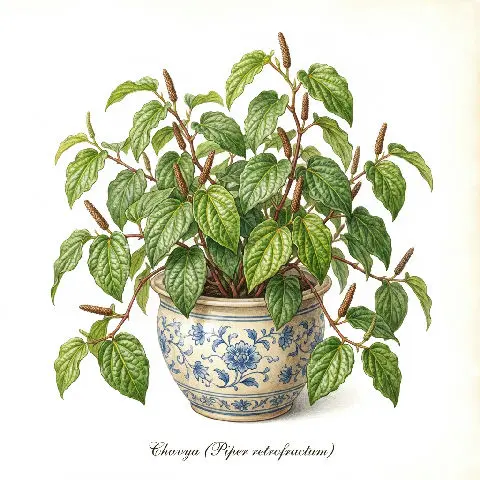
Piper retrofractum, globally recognized as Chavya or Java Long Pepper, is a distinguished perennial climbing vine within the botanical family Piperaceae. This robust plant demonstrates significant vertical growth, often ascending to heights of 2 to 4 meters by utilizing its flexible stems to grip supporting structures. Initially, the stems exhibit a vibrant green hue and a supple texture, gradually maturing into a slightly woody consistency while maintaining a notably smooth surface throughout their development.
The foliage is characterized by its glossy, cordate, or heart-shaped leaves, which taper to a distinct pointed tip. These leaves typically measure between 10 to 15 centimeters in length and 5 to 7 centimeters in width, arranged alternately along the stem, displaying prominent venation.
Chavya produces striking, small, cylindrical spikes of densely packed greenish-white flowers, which can reach lengths of up to 5 centimeters. These inflorescences are the precursors to the plant's most identifying feature: its dark, elongated fruits. Resembling diminutive peppers, these fruits grow to approximately 3 to 4 centimeters long and are crucial for species identification.
Indigenous to the luxuriant, humid tropical forests of Southeast Asia, Piper retrofractum is predominantly distributed across regions such as Indonesia and Malaysia. It flourishes in environments that provide consistent warmth and high humidity, frequently thriving beneath the dappled sunlight of the forest canopy.
Taxonomically, Piper retrofractum is a prominent member of the expansive Piper genus, a group celebrated for yielding numerous economically and medicinally significant spices, including the universally recognized black pepper (Piper nigrum). While its common name, Java Long Pepper, often leads to confusion with Piper longum (Indian Long Pepper), precise morphological differences in their fruit and flower structures reliably distinguish the two species.
Chavya's preference for well-drained, fertile soil and partial shade conditions accurately reflects its natural ecological niche, underscoring its adaptability to specific microclimates.
Trusted Scientific References
1. Authoritative external sources for Piper retrofractum
1.1 Wikipedia — Piper retrofractum
1.2 Kew POWO (Plants of the World Online)
1.3 PubMed — peer-reviewed research
1.4 NCBI Taxonomy Browser
1.5 GBIF — Global Biodiversity
1.1.Chavya (Java Long Pepper) — Defining Traits
- ✓Botanical Identity — Perennial climbing vine of the Piperaceae family, native to Southeast Asia.
- ✓Distinct Morphology — Characterized by glossy, heart-shaped leaves and elongated, dark, cylindrical fruit spikes.
- ✓Ayurvedic Significance — Esteemed in Ayurveda as part of the 'Panchakola' group, known for its deepana (appetizer) and pachana (digestive) qualities.
- ✓Pungent Taste (Katu Rasa) — A defining characteristic contributing to its therapeutic effects.
- ✓Hot Potency (Ushna Veerya) — Balances Vata and Kapha Doshas while potentially aggravating Pitta.
- ✓Rich in Alkaloids — Contains piperine, a well-researched compound known for various pharmacological activities.
- ✓Unique Amides — Contains novel retractamidde compounds with emerging research on metabolic benefits.
- ✓Digestive Aid — Highly effective in treating indigestion, bloating, and abdominal pain.
- ✓Respiratory Support — Traditional use in managing coughs, asthma, and other Kapha-related respiratory conditions.
- ✓Differentiator from P. longum — Morphologically distinct from Indian Long Pepper, despite similar common names.
1.2.Chavya (Java Long Pepper) — Concise Overview
- ✓Piper retrofractum is a climbing vine from Southeast Asia, known as Chavya or Java Long Pepper.
- ✓It is highly valued in Ayurveda for its pungent taste and hot potency, primarily benefiting digestion and respiration.
- ✓Key active compounds include piperine and unique amides (retractamidde A-D).
- ✓Traditionally used for indigestion, coughs, worm infestations, and Vata-Kapha imbalances.
- ✓Care must be taken due to its heating nature, especially for individuals with Pitta imbalances or during pregnancy.
- ✓Found in various traditional formulations, highlighting its significant medicinal role.
2.Chavya (Java Long Pepper) — Systematic Position
3.Chavya (Java Long Pepper) — Quick Facts
4.Chavya (Java Long Pepper) — Plant Morphology
5.Chavya (Java Long Pepper) — Where It Grows
6.Chavya (Java Long Pepper) — Ethnobotanical Uses
7.Chavya (Java Long Pepper) — Secondary Metabolites
- ✓Alkaloids — Piperine is the primary alkaloid, abundant in both the fruit and stem, responsible for much of Chavya's pungent taste and pharmacological activities, including digestive stimulation and anti-inflammatory effects.
- ✓Amides — A unique group of new amides, notably retractamidde A, B, C, and D, have been isolated from the aerial parts, demonstrating potential in regulating lipid metabolism and anti-obesity effects.
- ✓Phytosterols — Sitosterol is present in the stem, contributing to anti-inflammatory and cholesterol-lowering properties.
- ✓Essential Oils — Volatile compounds, including various terpenes, contribute to the characteristic aroma and carminative actions of the plant, aiding in digestion and reducing flatulence.
- ✓Lignans — Compounds with antioxidant and phytoestrogenic activities may be present, contributing to the overall therapeutic profile.
- ✓Flavonoids — These polyphenolic compounds provide antioxidant and anti-inflammatory benefits, supporting cellular health.
- ✓Fatty Acids — Various fatty acids are found, contributing to the plant's nutritional and pharmacological aspects.
- ✓Glycosides — These compounds may contribute to diverse biological activities, including cardiotonic or anti-diabetic effects, though specific roles in Chavya are less defined.
- ✓Phenolic Compounds — General phenolic acids and derivatives contribute to antioxidant capacity and potentially antimicrobial effects.
8.Chavya (Java Long Pepper) — What Research Suggests
- ✓Digestive Health Support — Chavya is a potent carminative and digestive stimulant, traditionally used to alleviate indigestion, bloating (anaha), and abdominal colic (shoola) by enhancing digestive fire (Agni) and promoting proper nutrient assimilation.
- ✓Appetite Stimulation — Its pungent taste and hot potency make it effective in treating anorexia (aruchi) and improving overall appetite, preparing the digestive system for food intake.
- ✓Respiratory System Relief — Historically employed to manage Kapha-related respiratory conditions, it is beneficial in productive coughs (kaphahara), asthma (shwasa), and other chronic breathing disorders by acting as an expectorant.
- ✓Anti-inflammatory Action — The presence of alkaloids like piperine contributes to its anti-inflammatory properties, offering relief in various inflammatory conditions, including abdominal pain.
- ✓Anti-parasitic Activity — Chavya is traditionally used as an anthelmintic (krumi), helping to expel intestinal worms and other parasitic infestations.
- ✓Metabolic Regulation — Constituents like piperine and specific amides have shown potential in regulating lipid metabolism, which could be beneficial in addressing metabolic imbalances.
- ✓Diarrhea and Dysentery Management — The fruit of Piper retrofractum possesses absorbent (grahi) qualities, making it useful in controlling diarrhea (atisarahara) and symptoms of Irritable Bowel Syndrome (IBS).
- ✓Oral Health — Traditional remedies include using ripe fruit powder for toothaches and leaf decoctions as a gargle for stomatitis and other throat disorders (kanthamaya).
- ✓Vata Dosha Balancing — Its hot potency (ushna veerya) and pungent taste (katu rasa) effectively balance Vata Dosha, providing relief from Vata-related disorders like neuralgia, paralysis, and constipation.
- ✓Detoxification Support — The flower is specifically mentioned in traditional texts for its utility in managing chronic poisoning (Gara Visha), suggesting detoxifying properties.
- ✓Hemorrhoid Management — As part of the Arshoghna group in Ayurveda, Chavya is traditionally used to support relief from hemorrhoids by improving digestion and reducing congestion.
8.1.Chavya (Java Long Pepper) — Conditions Traditionally Used For
9.Chavya (Java Long Pepper) — Precautions & Warnings
9.1.Chavya (Java Long Pepper) — Reported Side Effects
- ✓Gastric Irritation — Due to its hot potency (Ushna Veerya) and pungent taste, excessive or prolonged use can cause or worsen gastritis, heartburn, and burning sensations in the stomach.
- ✓Pitta Aggravation — Individuals with a Pitta constitution or existing Pitta imbalances may experience increased body heat, acid reflux, or skin rashes.
- ✓Oral and Throat Irritation — Direct application or strong preparations may cause irritation or burning sensations in the mouth and throat.
- ✓Pregnancy Contraindication — It is generally advised to avoid Chavya during pregnancy due to its stimulating and heating nature, which could potentially induce uterine contractions.
- ✓Not for Long-term Use — Extended, continuous consumption is not recommended; it is best used for specific periods under professional guidance.
- ✓Skin Sensitivity — In some sensitive individuals, topical application of concentrated forms might cause localized skin irritation or redness.
- ✓Drug Interactions — Potential interactions with blood-thinning medications or drugs affecting gastric acid secretion should be considered.
9.2.Chavya (Java Long Pepper) — Clinical Safety Notes
- ✓Professional Consultation — Always consult a qualified healthcare practitioner or Ayurvedic doctor before using Chavya, especially for therapeutic purposes or if you have pre-existing health conditions.
- ✓Dosage Adherence — Strictly follow recommended dosages; exceeding them can lead to adverse effects, particularly gastric irritation and Pitta aggravation.
- ✓Pregnancy and Lactation — Generally contraindicated during pregnancy and lactation due to its hot potency and stimulating effects; professional advice is crucial if considering use.
- ✓Pitta Imbalance — Individuals with conditions characterized by excess heat, such as gastritis, peptic ulcers, or inflammatory skin conditions, should use it with extreme caution or avoid it.
- ✓Short-term Use — It is typically recommended for short-term use to address specific ailments rather than prolonged, continuous consumption.
- ✓Children — Exercise caution when considering use in children; pediatric dosages and safety should be determined by a qualified practitioner.
- ✓Allergic Reactions — Discontinue use if any signs of allergic reaction, such as skin rash, itching, or difficulty breathing, occur.
10.Chavya (Java Long Pepper) — Application Forms
- ✓Powdered Root — The dried root is commonly ground into a fine powder, with a typical dosage of 1-2 grams taken with warm water or honey to aid digestion and reduce Kapha.
- ✓Fruit Decoction — Dried fruits can be boiled to prepare a decoction, traditionally used for managing diarrhea, improving respiratory function, and as a general tonic.
- ✓Leaf Infusion/Decoction — A decoction made from the leaves can be used as a gargle for oral health issues like stomatitis or as a topical wash for minor skin irritations.
- ✓Topical Application (Powder) — Ripe fruit powder can be directly applied into tooth cavities to alleviate toothache, demonstrating its localized analgesic and antiseptic properties.
- ✓Culinary Spice — Both the fruits and roots can be incorporated as a pungent spice in traditional cuisines, particularly in Southeast Asian dishes, to enhance flavor and aid digestion.
- ✓Herbal Formulations — Chavya is a key ingredient in several Ayurvedic formulations, such as Chavikasavam and Saptavinshati Guggulu, used for a range of conditions from UTIs to wound healing.
- ✓Tincture — A concentrated alcoholic extract of the root or fruit can be prepared, offering a convenient and potent form for therapeutic use, administered in drops.
- ✓Essential Oil Extraction — While less common for home use, the essential oil can be extracted from the fruits for aromatic and therapeutic applications, primarily for external use.
11.Chavya (Java Long Pepper) — Growing Guide
- ✓Site Selection — Choose a location with partial shade to mimic its natural forest canopy habitat, protecting it from intense direct sunlight.
- ✓Soil Requirements — Opt for well-drained, fertile, humus-rich soil with a slightly acidic to neutral pH (6.0-7.0) to ensure optimal growth.
- ✓Propagation — Primarily propagated through stem cuttings, which root readily in humid conditions, or from seeds, though seed germination can be slower and less predictable.
- ✓Support Structures — As a climbing vine, Chavya requires robust support structures such as trellises, poles, or adjacent trees to facilitate its vertical growth.
- ✓Watering — Maintain consistent soil moisture, especially during dry periods, as it thrives in high humidity; however, avoid waterlogging to prevent root rot.
- ✓Fertilization — Apply organic compost or balanced slow-release fertilizer periodically to enrich soil fertility and support vigorous growth.
- ✓Pest and Disease Management — Monitor for common tropical pests and fungal issues, addressing them promptly with organic or appropriate treatments.
- ✓Climate Control — Ideal growth requires consistent warmth and high humidity, making it suitable for tropical and subtropical climates or controlled greenhouse environments.
Reviewed by the Flora Medical Global Botanical Review Panel
Multi-disciplinary editorial group · Botany · Ethnobotany · Herbal-medicine literature
Who reviewed this: This page was checked by the Flora Medical Global Botanical Review Panel — an in-house editorial group of botany graduates, ethnobotany researchers, and horticulture practitioners who collectively maintain our 7,000+ plant encyclopedia. Meet the team.
Our 4-step verification process
1. Taxonomic verification
Scientific names and synonyms cross-checked against Kew POWO, World Flora Online, and The Plant List.
2. Phytochemical & medicinal cross-reference
Active compounds, traditional uses, and reported activities are cross-referenced with PubMed, USDA Dr. Duke's database, and peer-reviewed ethnobotanical literature.
3. Conservation & distribution check
Distribution, ecology, and conservation status confirmed against GBIF occurrence records and the IUCN Red List.
4. Editorial & safety review
Every entry passes an editorial pass for clarity, originality, and safety notices (toxicity, contraindications, dosage caveats) before publication.
Last reviewed:
Important medical disclaimer: This content is for educational and research purposes only. It is not medical advice and is not a substitute for consultation with a licensed healthcare provider. Do not use any herb to self-treat a medical condition without professional guidance.
Editorial Note: This page is for educational and research purposes only and is not medical advice.
Written by: Flora Medical Global Editorial Team
Reviewed by: Flora Medical Global Botanical Review Panel
Last Updated: June 15, 2026





Chavya (Java Long Pepper) — Comments & Community Reviews
Rate this plant