

Medical Disclaimer: This content is for educational purposes only. It is not medical advice. Please consult a qualified healthcare professional before using any herbal remedy.
Safety Overview
1.Chimonanthus Praecox — Plant Snapshot
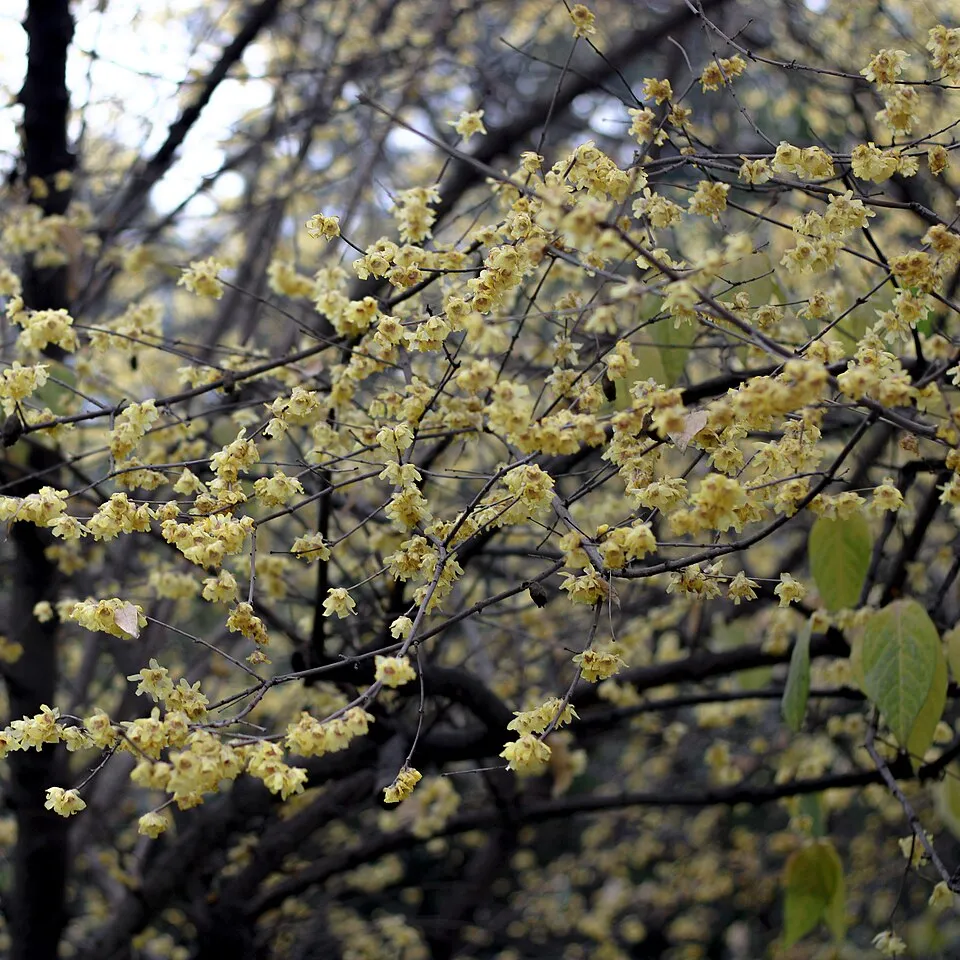
Chimonanthus praecox, commonly known as wintersweet or fragrant wintersweet, is a captivating deciduous shrub belonging to the Calycanthaceae family, a small and ancient lineage of flowering plants. This exquisite species is indigenous to the mountainous and wooded terrains of central and eastern China, flourishing in provinces such as Anhui, Fujian, Hubei, Hunan, Jiangsu, Jiangxi, Shaanxi, Sichuan, and Zhejiang.
It typically inhabits well-drained, humus-rich soils found on forest margins, slopes, and along streams, at elevations ranging from 200 to 1800 meters. Wintersweet is highly esteemed for its extraordinary ability to produce intensely fragrant blossoms in late winter to early spring, often bravely blooming amidst snow-covered landscapes, which gives rise to its evocative common name.
Morphologically, Chimonanthus praecox typically presents as a multi-stemmed shrub, achieving a height of 3 to 5 meters with a similar spread, developing a graceful, rounded, and somewhat fountain-like silhouette. Its bark is generally smooth and grayish-brown, gradually acquiring slight fissures with increasing age. The leaves are simple, arranged oppositely on the stems, ovate to elliptic or lanceolate in shape, measuring approximately 7-15 cm in length and 3-7 cm in width. They display a vibrant green hue, are typically glabrous or sparsely hairy on the underside, feature an entire margin, and terminate in a distinct acuminate apex.
These leaves emerge subsequent to the flowering period and often transition to a clear yellow in autumn before abscission. The true allure, however, lies in its waxy, cup-shaped flowers, which emerge on bare stems. Each flower, 2-4 cm in diameter, comprises numerous tepals; the outer ones are pale to bright yellow, while the inner ones are shorter and purplish-brown, creating a striking visual contrast. The plant's deep, sweet, and spicy fragrance is a hallmark, rendering it a prized ornamental and a source of valuable essential oils.
The fruit develops into an urn-shaped to ellipsoid capsule, 2-5 cm long, containing several dark brown, glossy seeds, which ripen in late summer to autumn. The root system is fibrous and spreading, providing robust anchorage.
Trusted Scientific References
1. Authoritative external sources for Chimonanthus praecox
1.1 Wikipedia — Chimonanthus praecox
1.2 Kew POWO (Plants of the World Online)
1.3 PubMed — peer-reviewed research
1.4 NCBI Taxonomy Browser
1.5 GBIF — Global Biodiversity
1.1.Chimonanthus Praecox — Defining Traits
- ✓Deciduous Shrub — Loses its leaves in autumn, allowing its winter flowers to stand out.
- ✓Winter Blooming — Produces highly fragrant flowers on bare stems from late winter to early spring.
- ✓Intense Fragrance — Possesses a strong, sweet, and spicy aroma, a key characteristic.
- ✓Yellow Flowers with Purple Centers — Outer tepals are pale to bright yellow, inner ones purplish-brown.
- ✓Native to China — Indigenous to mountainous and wooded regions of central and eastern China.
- ✓Ornamental Value — Highly prized in gardens for its unique winter appeal and scent.
- ✓Essential Oil Source — Valued for its essential oil used in perfumery and aromatherapy.
- ✓Cold Hardy — Tolerates cold temperatures, making it suitable for winter interest in many climates.
- ✓Multi — stemmed Growth — Develops a graceful, rounded, and fountain-like silhouette.
- ✓Low Maintenance — Generally free from serious pests and diseases.
1.2.Chimonanthus Praecox — At-a-Glance Summary
- ✓Chimonanthus praecox, or Wintersweet, is a deciduous shrub native to China.
- ✓Celebrated for its intensely fragrant, waxy yellow flowers blooming in late winter.
- ✓Primarily valued as an ornamental plant and source of essential oils for perfumery.
- ✓Traditional uses include aromatherapy for mood upliftment and respiratory comfort.
- ✓Contains volatile essential oils, flavonoids, and phenolic acids.
- ✓Requires well-drained soil, full sun to partial shade, and post-flowering pruning.
2.Chimonanthus Praecox — Scientific Profile
3.Chimonanthus Praecox — Reference Facts
4.Chimonanthus Praecox — Morphological Account
5.Chimonanthus Praecox — Geographic Distribution
6.Chimonanthus Praecox — Cultural & Traditional Roles
7.Chimonanthus Praecox — Bioactive Constituents
- ✓Volatile Essential Oils — Predominantly found in the flowers, these oils are rich in monoterpenes and sesquiterpenes, including compounds like linalool, α-pinene, β-pinene, limonene, and various esters, responsible for the plant's distinctive sweet and spicy fragrance and its aromatherapeutic effects.
- ✓Flavonoids — Present in various plant parts, these polyphenolic compounds exhibit antioxidant, anti-inflammatory, and potentially antiviral activities, contributing to overall plant defense and human health benefits.
- ✓Phenolic Acids — Such as caffeic acid and ferulic acid derivatives, these compounds are known for their strong antioxidant properties, protecting cells from oxidative damage.
- ✓Alkaloids — While not extensively studied for Chimonanthus praecox, some species in the Calycanthaceae family contain quinolizidine and other types of alkaloids, which can have diverse pharmacological effects.
- ✓Coumarins — These secondary metabolites are often found in plants and can possess anticoagulant, anti-inflammatory, and antimicrobial properties.
- ✓Glycosides — Various glycosides, including phenolic and triterpenoid types, may be present, influencing the plant's biological activities and stability.
- ✓Saponins — These soap-like compounds can have expectorant properties and may contribute to the plant's defense mechanisms, though their presence in wintersweet is less prominent.
- ✓Tannins — Found in bark and leaves, tannins are astringent compounds known for their antioxidant and antimicrobial properties, often used in traditional medicine for their healing effects.
- ✓Fatty Acids — Present in the seeds, these provide nutritional value and can be a source of various lipids.
8.Chimonanthus Praecox — Research Insights
- ✓Aromatherapeutic Properties — The highly fragrant flowers of Chimonanthus praecox are traditionally utilized in aromatherapy for their calming and uplifting effects, attributed to their rich essential oil content.
- ✓Mood Enhancement — In traditional practices, the sweet and spicy aroma is believed to alleviate mild stress, reduce anxiety, and promote a sense of well-being, particularly during the often somber winter months.
- ✓Respiratory Comfort — The volatile compounds released by the flowers may offer mild expectorant or decongestant support for minor respiratory discomforts, such as those associated with common colds.
- ✓Anti-inflammatory Potential — Preliminary research on essential oils from similar fragrant plants suggests potential anti-inflammatory activities, which might extend to Chimonanthus praecox extracts.
- ✓Antioxidant Activity — Phytochemicals like flavonoids and phenolic acids present in the plant may contribute to antioxidant defense, helping to neutralize free radicals and protect cellular health.
- ✓Traditional Chinese Medicine (TCM) Use — While not a primary herb, its flowers are sometimes incorporated in TCM for their aromatic properties, believed to move Qi and clear heat, particularly for emotional balance.
- ✓Topical Application for Skin — Diluted essential oil or floral water might be traditionally applied topically for soothing minor skin irritations or as a fragrant addition to cosmetic preparations.
- ✓Antiseptic Qualities — Some constituents in the essential oil may possess mild antiseptic properties, traditionally making it useful for minor cuts or abrasions when properly diluted.
- ✓Sleep Aid — The calming aroma is sometimes employed to gently encourage relaxation and support a more restful sleep, making it a natural choice for evening rituals.
- ✓Culinary Fragrance — The flowers are occasionally used in traditional cuisine or teas for their unique aromatic profile, adding a subtle, sweet, and spicy note.
8.1.Chimonanthus Praecox — Indications & Uses
9.Chimonanthus Praecox — Adverse Effects
9.1.Chimonanthus Praecox — Warnings
- ✓Allergic Reactions — Individuals sensitive to floral fragrances or specific plant compounds may experience skin irritation, respiratory discomfort, or allergic reactions upon contact or inhalation.
- ✓Skin Sensitivity — Undiluted essential oil can cause skin irritation, redness, or sensitization, particularly in individuals with sensitive skin.
- ✓Ingestion Risks — Large quantities of any plant part, especially seeds, should not be ingested, as potential toxicity has not been fully established and some Calycanthaceae species contain alkaloids.
- ✓Photosensitivity — While rare, some plant compounds can increase skin sensitivity to sunlight, though this is not commonly reported for Chimonanthus praecox.
- ✓Nausea or Headache — Excessive inhalation of the strong floral fragrance might lead to mild headaches or nausea in some sensitive individuals.
- ✓Gastrointestinal Upset — Ingesting plant material without proper preparation or in large amounts could potentially cause mild digestive upset.
- ✓Interactions with Medications — Theoretical possibility of interactions with sedatives or other medications if internal use were to be considered, due to potential calming effects of essential oils.
9.2.Chimonanthus Praecox — Safety Profile
- ✓Pregnancy and Lactation — Avoid use during pregnancy and lactation due to insufficient safety data regarding internal consumption or concentrated essential oil use.
- ✓Children — Not recommended for internal use in young children; topical use should be highly diluted and patch-tested due to skin sensitivity.
- ✓Allergic History — Individuals with known allergies to plants or strong fragrances should exercise caution and perform a patch test before topical application.
- ✓Internal Use Caution — Internal use of any part of Chimonanthus praecox is generally not recommended due to unestablished safety profiles and potential presence of alkaloids.
- ✓Essential Oil Dilution — Always dilute essential oils significantly in a carrier oil (e.g., jojoba, almond oil) before topical application to prevent skin irritation.
- ✓Consultation — Consult with a qualified healthcare professional or medical herbalist before using Chimonanthus praecox for medicinal purposes, especially if on medication or with pre-existing health conditions.
- ✓External Use Only — Primarily recommended for external, aromatic, or ornamental use.
10.Chimonanthus Praecox — Preparation & Dosage
- ✓Essential Oil Distillation — The highly fragrant flowers of Chimonanthus praecox can be processed via steam distillation to extract their precious essential oil for perfumery and aromatherapy.
- ✓Aromatic Infusion — Fresh or dried flowers can be steeped in hot water to create a fragrant herbal tea or infusion, traditionally used for its calming properties.
- ✓Floral Water/Hydrosol — During essential oil distillation, the aromatic water by-product (hydrosol) can be collected and used as a gentle facial toner or body mist.
- ✓Potpourri and Sachets — Dried flowers retain their fragrance well and are excellent for creating natural potpourri, aromatic sachets, or infusing linen.
- ✓Topical Application (Diluted) — The essential oil, always properly diluted in a carrier oil, can be massaged onto pulse points or added to bathwater for relaxation.
- ✓Culinary Garnish — Fresh flowers can be sparingly used as an edible garnish to add a unique sweet and spicy aroma to desserts, salads, or beverages.
- ✓Medicinal Tincture — Though less common, a tincture of the flowers or bark might be prepared using alcohol, for concentrated traditional herbal applications.
- ✓Incense Component — Dried and powdered flowers can be incorporated into natural incense blends for their uplifting and purifying scent in traditional rituals.
11.Chimonanthus Praecox — Propagation & Care
- ✓Site Selection — Plant Chimonanthus praecox in a location receiving full sun to partial shade, ideally sheltered from harsh winds to protect delicate winter blooms.
- ✓Soil Requirements — Thrives in moist, well-drained, humus-rich soils with a slightly acidic to neutral pH (6.0-7.0).
- ✓Watering — Requires consistent moisture, especially during dry periods, but avoid waterlogging to prevent root rot.
- ✓Fertilization — Apply a balanced, slow-release granular fertilizer in early spring, or compost around the base, to support vigorous growth and flowering.
- ✓Pruning — Prune immediately after flowering to shape the shrub, remove old or leggy stems, and encourage new growth for future blooms; severe pruning can rejuvenate older plants.
- ✓Propagation — Can be propagated by semi-hardwood cuttings taken in summer, or by layering. Seeds require stratification for germination.
- ✓Pest and Disease Management — Generally a robust plant with no serious pest or disease problems; monitor for common garden pests like aphids and treat as necessary.
- ✓Winter Protection — While cold-hardy, young plants in colder zones may benefit from a layer of mulch around the base for root protection during severe winters.
Reviewed by the Flora Medical Global Botanical Review Panel
Multi-disciplinary editorial group · Botany · Ethnobotany · Herbal-medicine literature
Who reviewed this: This page was checked by the Flora Medical Global Botanical Review Panel — an in-house editorial group of botany graduates, ethnobotany researchers, and horticulture practitioners who collectively maintain our 7,000+ plant encyclopedia. Meet the team.
Our 4-step verification process
1. Taxonomic verification
Scientific names and synonyms cross-checked against Kew POWO, World Flora Online, and The Plant List.
2. Phytochemical & medicinal cross-reference
Active compounds, traditional uses, and reported activities are cross-referenced with PubMed, USDA Dr. Duke's database, and peer-reviewed ethnobotanical literature.
3. Conservation & distribution check
Distribution, ecology, and conservation status confirmed against GBIF occurrence records and the IUCN Red List.
4. Editorial & safety review
Every entry passes an editorial pass for clarity, originality, and safety notices (toxicity, contraindications, dosage caveats) before publication.
Last reviewed:
Important medical disclaimer: This content is for educational and research purposes only. It is not medical advice and is not a substitute for consultation with a licensed healthcare provider. Do not use any herb to self-treat a medical condition without professional guidance.
Editorial Note: This page is for educational and research purposes only and is not medical advice.
Written by: Flora Medical Global Editorial Team
Reviewed by: Flora Medical Global Botanical Review Panel
Last Updated: June 15, 2026





Chimonanthus Praecox — Comments & Community Reviews
Rate this plant