


Medical Disclaimer: This content is for educational purposes only. It is not medical advice. Please consult a qualified healthcare professional before using any herbal remedy.
Safety Overview
1.Chinese Elm Bonsai — Essential Profile
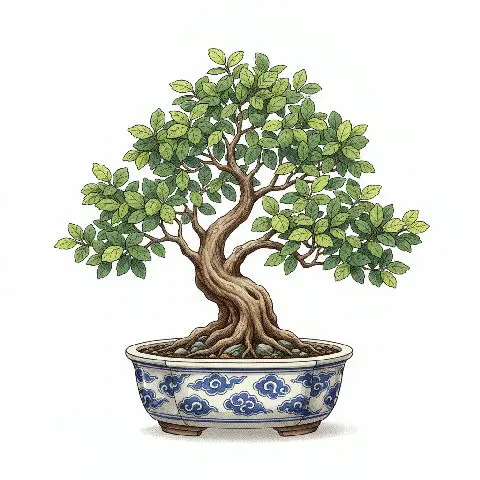
The Chinese Elm, scientifically designated as Ulmus parvifolia, stands as a distinguished member of the Ulmaceae family, widely celebrated for its aesthetic appeal, particularly in bonsai cultivation. Native to Eastern Asia, encompassing regions such as China, Korea, Japan, and Vietnam, this remarkable tree can exhibit characteristics ranging from semi-deciduous to fully evergreen, depending on the climate and specific cultivar. Its botanical charm is attributed to its small, finely serrated leaves, which create a dense canopy ideal for intricate shaping.
The tree's most captivating feature is arguably its bark, which matures to a mottled, exfoliating texture, revealing an attractive mosaic of greens, browns, and oranges, adding significant visual interest. Ulmus parvifolia thrives in a diverse array of natural habitats, from lush lowland forests to more arid mountainous terrains, showcasing its exceptional hardiness and adaptability. In its indigenous environment, the Chinese Elm can achieve impressive heights, often reaching up to 20 to 25 meters, forming a substantial presence in the landscape.
Its robust nature allows it to tolerate a wide spectrum of environmental conditions, including both full sun exposure and partial shade, and once established, it demonstrates notable drought resistance. For centuries, Ulmus parvifolia has been valued not only for its ornamental qualities but also for its versatile applications in traditional medicine, where various parts of the tree have been utilized. Its widespread introduction to global horticulture has cemented its status as a highly cherished species for both landscape design and the intricate art of bonsai, where its natural grandeur is meticulously miniaturized and shaped.
Trusted Scientific References
1. Authoritative external sources for Ulmus parvifolia
1.1 Wikipedia — Ulmus parvifolia
1.2 Kew POWO (Plants of the World Online)
1.3 PubMed — peer-reviewed research
1.4 NCBI Taxonomy Browser
1.5 GBIF — Global Biodiversity
1.6Chinese Elm Bonsai should be interpreted through verified botanical identity, practical care, and responsible safety language. This recovery note adds the missing context needed for a complete profile: match light to the plant's habit, use well-drained soil, water according to season, and avoid unsupported medicinal or edible claims. For publishing, the plant can be presented as a source-backed indoor plant with clear care guidance, common problem diagnosis, and conservative safety wording.
1.1.Chinese Elm Bonsai — Notable Characteristics
- ✓Aesthetic Bonsai Specimen — Highly valued for its small leaves, fine branching, and attractive exfoliating bark.
- ✓Adaptable and Hardy — Thrives in various conditions from full sun to partial shade, and is relatively drought-tolerant once established.
- ✓Traditional Chinese Medicine (TCM) Uses — Bark and leaves historically used for medicinal purposes.
- ✓Bioactive Compound Rich — Contains beneficial flavonoids, triterpenes, and phenolic acids.
- ✓Anti — inflammatory Potential — Compounds contribute to reducing inflammation in the body.
- ✓Diuretic and Astringent Actions — Supports fluid balance and tissue toning.
- ✓Mottled Exfoliating Bark — A distinctive ornamental feature revealing patches of various colors.
- ✓Semi — deciduous to Evergreen — Foliage retention varies based on climate and specific variety.
- ✓Easy Propagation by Cuttings — Facilitates its widespread cultivation and availability.
- ✓Responds Well to Pruning — Ideal for shaping and ramification in bonsai art.
1.2.Chinese Elm Bonsai — Snapshot Summary
- ✓Ulmus parvifolia is a prized Chinese Elm Bonsai, known for its beauty and resilience.
- ✓Traditionally used in TCM for anti-inflammatory, diuretic, and astringent properties.
- ✓Rich in bioactive compounds like flavonoids (quercetin, kaempferol) and triterpenes.
- ✓Requires specific care for bonsai cultivation, including regular pruning and proper watering.
- ✓Potential benefits for skin health, inflammation, and gastrointestinal support.
- ✓Always consult a healthcare professional due to potential side effects and drug interactions.
2.Chinese Elm Bonsai — Nomenclature & Classification
3.Chinese Elm Bonsai — Vital Statistics
4.Chinese Elm Bonsai — Botanical Features
5.Chinese Elm Bonsai — Origin & Spread
6.Chinese Elm Bonsai — Folk Medicine Applications
7.Chinese Elm Bonsai — Key Phytochemicals
- ✓Flavonoids — Key compounds include quercetin and kaempferol, known for potent antioxidant, anti-inflammatory, and antiallergic activities, contributing significantly to the plant's therapeutic potential.
- ✓Triterpenes — A diverse group of compounds, often associated with anti-inflammatory, hepatoprotective, and adaptogenic effects, found in the bark and leaves of Ulmus parvifolia.
- ✓Phenolic Acids — Such as caffeic acid and chlorogenic acid, which are recognized for their antioxidant properties and their role in protecting against oxidative stress.
- ✓Tannins — Responsible for the plant's astringent properties, tannins help in tissue constriction and can contribute to antimicrobial and wound-healing effects.
- ✓Polysaccharides — Complex carbohydrates that may possess immunomodulatory effects, supporting the body's natural defense mechanisms.
- ✓Saponins — These compounds can have expectorant and anti-inflammatory actions, though their specific role in Ulmus parvifolia's medicinal profile is still under investigation.
- ✓Steroids — Plant sterols, which can have anti-inflammatory and cholesterol-lowering properties, are present in trace amounts.
- ✓Lignans — A group of phytoestrogens with potential antioxidant and anticancer activities, contributing to the overall health benefits.
- ✓Alkaloids — While generally present in lower concentrations, some alkaloids may contribute to the plant's various biological activities, requiring further specific identification.
- ✓Glycosides — Various types of glycosides, including phenolic glycosides, contribute to the plant's complex phytochemistry and potential pharmacological actions.
8.Chinese Elm Bonsai — Pharmacological Findings
- ✓Anti-inflammatory Properties — Ulmus parvifolia contains compounds like flavonoids and triterpenes that may help reduce inflammation, potentially offering relief for various inflammatory conditions.
- ✓Diuretic Action — Traditionally used to promote urine production, assisting the body in expelling excess fluids and supporting kidney function.
- ✓Astringent Effects — The bark and leaves possess astringent qualities, which can help tighten tissues, reduce secretions, and may be beneficial for conditions like diarrhea or minor bleeding.
- ✓Skin Health Support — Applied topically, its astringent and anti-inflammatory properties may aid in soothing skin irritations, minor wounds, and promoting skin regeneration.
- ✓Antimicrobial Potential — Research suggests the presence of bioactive compounds that exhibit antimicrobial activity, potentially helping to combat certain bacterial and fungal infections.
- ✓Gastrointestinal Relief — Traditional uses include addressing digestive discomfort, such as mild stomach upset or intestinal inflammation, due to its soothing and astringent effects.
- ✓Wound Healing — Its ability to reduce inflammation and act as an astringent may support the natural wound healing process, particularly for superficial cuts and abrasions.
- ✓Antioxidant Activity — Flavonoids like quercetin and kaempferol contribute to its antioxidant capacity, helping to neutralize free radicals and protect cells from oxidative damage.
- ✓Oral Health — Historically, preparations might have been used to alleviate mouth sores or sore throats due to its soothing and astringent properties.
- ✓Respiratory Support — While less documented, some traditional systems might have utilized it for mild respiratory complaints, possibly due to its anti-inflammatory effects.
8.1.Chinese Elm Bonsai — Indications & Uses
9.Chinese Elm Bonsai — Safety Considerations
9.1.Chinese Elm Bonsai — Side Effects & Warnings
- ✓Allergic Reactions — Individuals sensitive to plants in the Ulmaceae family may experience skin rashes, itching, or respiratory symptoms upon exposure or ingestion.
- ✓Gastrointestinal Upset — High doses or prolonged internal use of Ulmus parvifolia preparations might lead to mild stomach discomfort, nausea, or diarrhea.
- ✓Skin Irritation — Topical application of fresh plant material or highly concentrated extracts could cause localized skin irritation in sensitive individuals.
- ✓Drug Interactions — Potential interactions with certain medications, especially diuretics or anti-inflammatory drugs, are possible, though not extensively studied.
- ✓Contamination Risk — As with any wild-harvested plant, there's a risk of contamination from pesticides or environmental pollutants if not sourced responsibly.
- ✓Incorrect Identification — Misidentification of Ulmus parvifolia with other elm species or look-alikes could lead to unintended effects or lack of efficacy.
9.2.Chinese Elm Bonsai — Risk Assessment
- ✓Pregnancy and Lactation — Due to insufficient safety data, pregnant and breastfeeding individuals should avoid using Ulmus parvifolia preparations.
- ✓Children — Use in children is not recommended without professional medical guidance, as dosage and safety profiles are not well established.
- ✓Pre-existing Conditions — Individuals with chronic health conditions, especially kidney or liver disease, should consult a healthcare professional before use.
- ✓Allergic History — Those with known allergies to elm trees or other plants in the Ulmaceae family should exercise caution or avoid use.
- ✓Professional Consultation — Always consult a qualified medical herbalist or healthcare provider before incorporating Ulmus parvifolia into any therapeutic regimen.
- ✓Dosage Adherence — Adhere strictly to recommended dosages; excessive consumption may increase the risk of adverse effects.
- ✓Quality Sourcing — Ensure that any Ulmus parvifolia products are sourced from reputable suppliers to minimize risks of adulteration or contamination.
10.Chinese Elm Bonsai — Preparation Methods
- ✓Decoction of Bark — Prepare by simmering dried inner bark in water for an extended period to extract its therapeutic compounds, commonly used for internal ailments.
- ✓Leaf Infusion — Steep fresh or dried leaves in hot water to create a tea, often consumed for its diuretic and anti-inflammatory benefits.
- ✓Topical Poultice — Crush fresh leaves or powdered bark with a small amount of water to form a paste, applied directly to skin irritations, wounds, or inflammation.
- ✓Tincture Preparation — Macerate bark or leaves in alcohol to create a concentrated liquid extract, allowing for precise dosing and extended shelf life.
- ✓Powdered Bark — Dry and grind the inner bark into a fine powder, which can be mixed with water for internal consumption or incorporated into topical formulations.
- ✓Herbal Compress — Soak a cloth in a strong decoction of the bark or leaves and apply warm to affected areas for localized anti-inflammatory and astringent effects.
- ✓Glycerite Extract — For those avoiding alcohol, a glycerin-based extract can be prepared from the leaves or bark, suitable for internal use.
- ✓Mouthwash/Gargle — A diluted decoction or infusion can be used as a gargle for sore throats or a mouthwash for oral irritations due to its astringent properties.
11.Chinese Elm Bonsai — Cultivation & Care
- ✓Placement — Thrives in full sun to partial shade; can be kept outdoors in temperate climates, or indoors in a cool, frost-free room during winter for non-hardy varieties.
- ✓Watering — Water generously when the topsoil is dry, ensuring the entire root mass is saturated, but avoid prolonged drought or constant moisture.
- ✓Fertilizing — Provide ample fertilizer during the growing season using a combination of solid organic and well-balanced liquid chemical fertilizers; cease during winter dormancy.
- ✓Pruning — Requires frequent trimming to achieve dense ramification; prune shoots back to 1-2 leaves after they extend 3-4 nodes; larger branches are best pruned in late autumn.
- ✓Wiring — Ideal for shaping using standard wiring and guy wire techniques to develop desired branch structure and trunk shape.
- ✓Repotting — Young trees should be repotted every two years, older trees at longer intervals, preferably in spring; perform careful root pruning and use a well-draining soil mix.
- ✓Propagation — Easily propagated from cuttings, which is the recommended method for cultivating new Chinese Elm Bonsai specimens.
- ✓Pest and Disease Management — Monitor for spider mites and scale, especially in low humidity; frequent water spraying helps deter pests; avoid lime-sulfur or systemic pesticides as they can cause defoliation.
Reviewed by the Flora Medical Global Botanical Review Panel
Multi-disciplinary editorial group · Botany · Ethnobotany · Herbal-medicine literature
Who reviewed this: This page was checked by the Flora Medical Global Botanical Review Panel — an in-house editorial group of botany graduates, ethnobotany researchers, and horticulture practitioners who collectively maintain our 7,000+ plant encyclopedia. Meet the team.
Our 4-step verification process
1. Taxonomic verification
Scientific names and synonyms cross-checked against Kew POWO, World Flora Online, and The Plant List.
2. Phytochemical & medicinal cross-reference
Active compounds, traditional uses, and reported activities are cross-referenced with PubMed, USDA Dr. Duke's database, and peer-reviewed ethnobotanical literature.
3. Conservation & distribution check
Distribution, ecology, and conservation status confirmed against GBIF occurrence records and the IUCN Red List.
4. Editorial & safety review
Every entry passes an editorial pass for clarity, originality, and safety notices (toxicity, contraindications, dosage caveats) before publication.
Last reviewed:
Important medical disclaimer: This content is for educational and research purposes only. It is not medical advice and is not a substitute for consultation with a licensed healthcare provider. Do not use any herb to self-treat a medical condition without professional guidance.
Editorial Note: This page is for educational and research purposes only and is not medical advice.
Written by: Flora Medical Global Editorial Team
Reviewed by: Flora Medical Global Botanical Review Panel
Last Updated: June 15, 2026





Chinese Elm Bonsai — Comments & Community Reviews
Rate this plant