


Medical Disclaimer: This content is for educational purposes only. It is not medical advice. Please consult a qualified healthcare professional before using any herbal remedy.
Safety Overview
1.Chitrak (Leadwort) — Overview
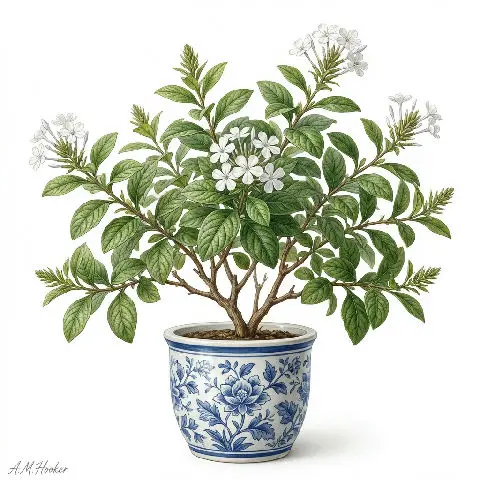
Plumbago zeylanica, universally recognized as Chitrak or Leadwort, is a resilient perennial shrub thriving in tropical and subtropical climates, belonging to the Plumbaginaceae family. This robust plant typically grows to a height of 1 to 2 meters, though it can also adopt a sprawling habit, forming dense groundcover. Its stems are distinctly woody, often exhibiting a rough or subtly furrowed texture, indicative of its hardiness across diverse environments.
The leaves are characteristically narrow, lanceolate to ovate, generally measuring between 5 to 10 centimeters in length. They present a glossy, dark green upper surface that contrasts with a paler underside, where prominent venation facilitates efficient photosynthetic processes. The root system of Chitrak is typically a robust taproot, which is the primary part valued in traditional medicine.
This taproot penetrates deeply into the soil, enabling the plant to access essential moisture and nutrients, thereby contributing significantly to its notable drought tolerance.
The inflorescence of Plumbago zeylanica is particularly captivating, featuring tubular, pristine white flowers arranged in elongated racemes. Each individual flower measures approximately 2 to 3 centimeters and displays a five-petaled corolla that, as it matures, often develops a delicate blush of blue or purplish hue, enhancing its aesthetic appeal. A distinguishing botanical feature is its calyx, which is densely covered with glandular hairs.
Following the flowering period, the plant produces small, capsule-like fruits, each containing a single seed. These fruits are often covered with sticky glandular hairs, a clever evolutionary adaptation that aids in seed dispersal by adhering to passing animals or clothing.
Chitrak exhibits a strong preference for sandy, well-drained soils and requires ample sunlight to flourish, making it a common sight in open grasslands, scrublands, forest edges, and disturbed areas. Its natural geographic distribution is extensive, predominantly spanning the Indian subcontinent, various regions of Southeast Asia, and parts of Africa.
In these regions, Plumbago zeylanica holds significant cultural and medicinal importance beyond its role as a wild flora.
Trusted Scientific References
1. Authoritative external sources for Plumbago zeylanica
1.1 Wikipedia — Plumbago zeylanica
1.2 Kew POWO (Plants of the World Online)
1.3 PubMed — peer-reviewed research
1.4 NCBI Taxonomy Browser
1.5 GBIF — Global Biodiversity
1.1.Chitrak (Leadwort) — Standout Qualities
- ✓Potent Digestive Aid — Historically revered as a top digestive stimulant in Ayurveda.
- ✓Anti — inflammatory Power — Contains plumbagin, a strong anti-inflammatory compound.
- ✓Vata and Kapha Balancer — Balances these two doshas due to its hot potency and pungent taste.
- ✓Robust Taproot — The primary medicinal part, known for deep soil penetration.
- ✓White Flowers — Distinctive tubular white flowers often with a purplish blush.
- ✓Tropical & Subtropical Native — Thrives in warm climates across Asia and Africa.
- ✓Ayurvedic Significance — One of the 'Chitraka Kula' herbs, highly valued.
- ✓External & Internal Uses — Applied topically for skin issues and consumed for digestive health.
- ✓Caustic Nature — Requires careful purification and precise dosing due to its irritant properties.
- ✓Drought Tolerant — Exhibits resilience in dry conditions due to its root system.
1.2.Chitrak (Leadwort) — Quick Summary
- ✓Chitrak (Plumbago zeylanica) is a potent Ayurvedic herb known for its 'fire-like' properties.
- ✓Primarily used to enhance digestion, metabolism, and alleviate various inflammatory conditions.
- ✓Contains plumbagin, a powerful naphthoquinone responsible for many of its therapeutic and caustic effects.
- ✓The root bark is the medicinally active part, requiring careful purification before use.
- ✓Strictly contraindicated in pregnancy, lactation, and conditions of hyperacidity or bleeding.
- ✓Always consult an expert for proper dosage and application to avoid severe side effects.
2.Chitrak (Leadwort) — Taxonomic Classification
3.Chitrak (Leadwort) — Reference Facts
4.Chitrak (Leadwort) — Morphological Account
5.Chitrak (Leadwort) — Where It Grows
6.Chitrak (Leadwort) — Cultural & Traditional Roles
7.Chitrak (Leadwort) — Bioactive Constituents
- ✓Naphthoquinones — Plumbagin is the primary active compound, responsible for the plant's pungent taste, hot potency, and significant pharmacological activities, including anti-inflammatory, antimicrobial, and cytotoxic effects. Other related naphthoquinones include 3-Chloroplumbagin, Chitranone, Elliptinone, Zeylanone, and Zeylinone, which contribute to its diverse bioactivity.
- ✓Phenolic Acids — Plumbagic acid and other phenolic compounds are present, contributing to the plant's antioxidant capacity and protective effects against oxidative stress.
- ✓Triterpenoids — Compounds like lupeol and its derivatives have been identified, which are often associated with anti-inflammatory and hepatoprotective properties.
- ✓Flavonoids — Various flavonoid glycosides may be present, known for their antioxidant, anti-inflammatory, and immunomodulatory activities.
- ✓Steroids — Beta-Sitosterol is a prominent phytosterol found in Chitrak, recognized for its anti-inflammatory and cholesterol-lowering effects.
- ✓Alkaloids — While not dominant, minor alkaloidal compounds may contribute to the plant's overall therapeutic profile.
- ✓Lignans — These compounds can exhibit antioxidant and estrogenic activities, though they are usually present in smaller quantities.
8.Chitrak (Leadwort) — Modern Studies
- ✓Digestive Stimulant — Chitrak is renowned in Ayurveda for its 'agni' or fire-like properties, significantly enhancing digestive strength (Deepana) and promoting healthy metabolism.
- ✓Carminative Action — It effectively alleviates flatulence and bloating by stimulating digestive enzymes and facilitating the expulsion of gas from the gastrointestinal tract.
- ✓Anti-inflammatory Support — The active compounds, particularly plumbagin, contribute to its potent anti-inflammatory effects, beneficial in various inflammatory conditions.
- ✓Piles Management — Traditionally used to manage non-bleeding hemorrhoids (Arshoghna), helping to shrink pile masses and reduce associated pain and discomfort.
- ✓Skin Health — It is utilized in various skin ailments (Kushtahara) like vitiligo and warts, promoting healthy skin tissue and aiding in lesion reduction.
- ✓Antimicrobial Properties — Plumbagin exhibits broad-spectrum antimicrobial activity, making Chitrak useful against certain bacterial and parasitic infections, including intestinal worms (Kruminut).
- ✓Liver and Spleen Support — Traditionally indicated for conditions like hepatomegaly and splenomegaly, it helps in regulating the size and function of these vital organs.
- ✓Menstrual Regulation — In certain traditional practices, Chitrak is used to induce menstruation (amenorrhea), though this requires extreme caution and expert guidance.
- ✓Respiratory Relief — Its pungent and hot potency aids in alleviating coughs and colds (Kasanut) by clearing respiratory passages and reducing congestion.
- ✓Malabsorption Syndrome — Chitrak is beneficial in conditions of malabsorption (Grahanihara) by improving intestinal absorption and overall gut function.
- ✓Anti-colic Properties — It acts as an antispasmodic, helping to relieve abdominal colic pain (Shoola prashamana) and cramps.
8.1.Chitrak (Leadwort) — Indications & Uses
9.Chitrak (Leadwort) — Precautions & Warnings
9.1.Chitrak (Leadwort) — Possible Adverse Reactions
- ✓Irritant & Caustic — Direct skin contact with fresh Chitrak root can cause severe burning, blistering, and ulceration due to plumbagin.
- ✓Gastric Irritation — Internal use, especially in high doses or without proper purification, can lead to gastric irritation, hyperacidity, and burning sensations.
- ✓Uterine Stimulant — It possesses strong abortifacient properties and can induce uterine contractions, making it extremely dangerous during pregnancy.
- ✓Bleeding Risk — May exacerbate bleeding disorders or interact with anticoagulant medications due to its pungent and hot nature.
- ✓Allergic Reactions — Some individuals may experience allergic reactions, including skin rashes or respiratory distress.
- ✓Systemic Toxicity — Overdose can lead to systemic toxicity affecting various organ systems, necessitating strict dosage adherence.
9.2.Chitrak (Leadwort) — Safety Overview
- ✓Pregnancy & Lactation — Absolutely contraindicated during pregnancy due to abortifacient effects; also avoided during breastfeeding.
- ✓Children — Not recommended for infants and young children due to its potent and caustic nature.
- ✓Gastrointestinal Conditions — Contraindicated in individuals with hyperacidity, peptic ulcers, inflammatory bowel disease, or any gastric bleeding.
- ✓Bleeding Disorders — Individuals with bleeding disorders or those on anticoagulant therapy should avoid Chitrak due to potential increased bleeding risk.
- ✓Purification (Shodhana) — Ayurvedic tradition mandates specific purification (Shodhana) processes for Chitrak root to mitigate its inherent toxicity before internal use.
- ✓Expert Supervision — Internal administration must always be under the strict guidance of a qualified Ayurvedic practitioner or medical herbalist.
- ✓External Use Caution — Exercise extreme caution with external application; always perform a patch test and avoid prolonged contact with skin to prevent blistering.
10.Chitrak (Leadwort) — How to Use
- ✓Root Bark Powder — The dried and purified root bark is ground into a fine powder, typically consumed in small doses (1-2 grams per day) with warm water, honey, or ghee.
- ✓Decoction Preparation — A decoction can be made by boiling root pieces in water, then reducing and straining the liquid for internal use, especially for digestive issues.
- ✓External Paste for Piles — A paste made from purified Chitrak root and ghee is traditionally applied topically to external hemorrhoids to reduce inflammation and size.
- ✓Buttermilk Infusion — For internal management of piles, small amounts of purified root powder can be mixed with buttermilk and consumed, as mentioned in Ayurvedic texts.
- ✓Vitiligo Treatment — A specialized ghee prepared by cooking Chitrak root skin with milk, curdling, and then extracting ghee, is applied externally for vitiligo.
- ✓Wart Application — A fine paste of purified Chitrak roots is applied directly to warts, often in conjunction with internal blood purifiers.
- ✓Wound Washing Solution — Chitrak powder can be added to neem decoction to create an antiseptic wash for cleansing necrosing wounds, promoting purification and healing.
- ✓Ayurvedic Formulations — Chitrak is a key ingredient in many complex Ayurvedic formulations, such as Chitrakadi Vati, for digestive and metabolic support.
11.Chitrak (Leadwort) — Growth Requirements
- ✓Site Selection — Prefers full sun to partial shade in tropical or subtropical climates with ample light exposure.
- ✓Soil Requirements — Thrives in sandy, well-drained loamy soils with a pH range of 6.0 to 7.5; avoid waterlogged conditions.
- ✓Propagation — Can be propagated effectively through seeds, stem cuttings, or root suckers; seeds require pretreatment for better germination.
- ✓Watering — Requires moderate watering, allowing the soil to dry slightly between waterings; it is relatively drought-tolerant once established.
- ✓Fertilization — Benefits from organic matter or balanced slow-release fertilizer during the growing season to support robust growth.
- ✓Pest and Disease Control — Generally resistant to major pests and diseases, but occasional monitoring for common garden pests is advisable.
- ✓Harvesting — The root bark, which is the medicinally significant part, is typically harvested after 1-2 years of growth, usually during the dry season for maximum potency.
- ✓Pruning — Light pruning helps maintain shape and encourages bushier growth, though not strictly necessary for root production.
Reviewed by the Flora Medical Global Botanical Review Panel
Multi-disciplinary editorial group · Botany · Ethnobotany · Herbal-medicine literature
Who reviewed this: This page was checked by the Flora Medical Global Botanical Review Panel — an in-house editorial group of botany graduates, ethnobotany researchers, and horticulture practitioners who collectively maintain our 7,000+ plant encyclopedia. Meet the team.
Our 4-step verification process
1. Taxonomic verification
Scientific names and synonyms cross-checked against Kew POWO, World Flora Online, and The Plant List.
2. Phytochemical & medicinal cross-reference
Active compounds, traditional uses, and reported activities are cross-referenced with PubMed, USDA Dr. Duke's database, and peer-reviewed ethnobotanical literature.
3. Conservation & distribution check
Distribution, ecology, and conservation status confirmed against GBIF occurrence records and the IUCN Red List.
4. Editorial & safety review
Every entry passes an editorial pass for clarity, originality, and safety notices (toxicity, contraindications, dosage caveats) before publication.
Last reviewed:
Important medical disclaimer: This content is for educational and research purposes only. It is not medical advice and is not a substitute for consultation with a licensed healthcare provider. Do not use any herb to self-treat a medical condition without professional guidance.
Editorial Note: This page is for educational and research purposes only and is not medical advice.
Written by: Flora Medical Global Editorial Team
Reviewed by: Flora Medical Global Botanical Review Panel
Last Updated: June 15, 2026





Chitrak (Leadwort) — Comments & Community Reviews
Rate this plant