


Medical Disclaimer: This content is for educational purposes only. It is not medical advice. Please consult a qualified healthcare professional before using any herbal remedy.
Safety Overview
1.Chitrak Red — Overview
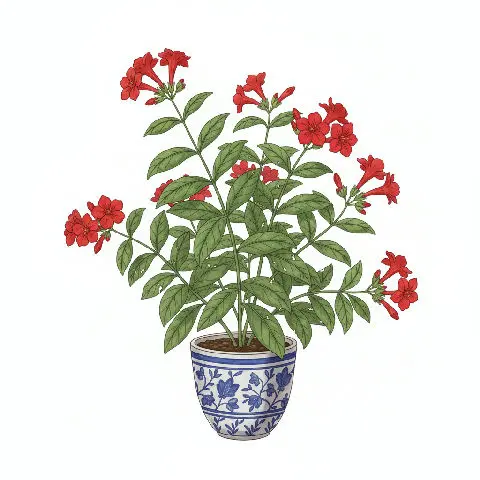
Plumbago rosea, widely recognized as Chitrak Red or Red Leadwort, is a striking perennial shrub that typically reaches a height of 0.5 to 1 meter, occasionally exceeding this under optimal growing conditions. It belongs to the Plumbaginaceae family, a group renowned for both its ornamental appeal and medicinal properties. The foliage of Chitrak Red is composed of oblong to lanceolate leaves, generally measuring between 5 and 12 cm in length.
These leaves feature a distinctly glossy, dark green upper surface, often accentuated by a prominent midrib that enhances their visual appeal. The plant's stems are somewhat woody, developing a light brown to gray bark that exhibits subtle ridging, indicative of its robust perennial growth habit.
The most captivating characteristic of Plumbago rosea is its vibrant inflorescence. It produces spectacular clusters of funnel-shaped flowers, which display an unmistakable, brilliant red hue. Each individual flower typically measures 3–4 cm in diameter, creating a stunning visual spectacle highly attractive to various pollinators such as butterflies and bees.
In its native tropical and subtropical habitats, particularly across the Indian subcontinent, Chitrak Red maintains a year-round blooming cycle. When naturalized in more temperate zones, including parts of Africa and South America, flowering generally occurs from late spring through early fall.
Chitrak Red is indigenous to regions characterized by warm, humid climates, where it flourishes in well-drained sandy or loamy soils. It demonstrates significant adaptability regarding light exposure, thriving equally well in full sun and tolerating partial shade, which contributes to its successful establishment in diverse environments.
Taxonomically, while closely related to Plumbago zeylanica (White Chitrak), Plumbago rosea is unequivocally distinguished by its signature reddish floral characteristic, a crucial identifier in botanical classification and traditional medicinal contexts.
Trusted Scientific References
1. Authoritative external sources for Plumbago rosea
1.1 Wikipedia — Plumbago rosea
1.2 Kew POWO (Plants of the World Online)
1.3 PubMed — peer-reviewed research
1.4 NCBI Taxonomy Browser
1.5 GBIF — Global Biodiversity
1.1.Chitrak Red — Defining Traits
- ✓Botanical Name — Plumbago rosea, commonly Chitrak Red or Red Leadwort.
- ✓Distinctive Red Flowers — Produces vibrant, funnel-shaped red flowers that bloom year-round in native habitats.
- ✓Potent Digestive Aid — Highly valued in Ayurveda for stimulating 'agni' and improving digestion.
- ✓Active Compound Plumbagin — Contains the irritant naphthoquinone plumbagin, responsible for many therapeutic effects.
- ✓Vata and Kapha Balancer — Its hot potency and pungent taste help to pacify Vata and Kapha doshas.
- ✓Traditional Ayurvedic Significance — Used across various Ayurvedic formulations for a wide range of ailments.
- ✓Anti — inflammatory Action — Exhibits significant properties in reducing inflammation.
- ✓External Application Versatility — Traditionally applied topically for conditions like vitiligo, warts, and hemorrhoids.
- ✓Requires Careful Handling — Known for its strong, irritant nature, necessitating purification and precise dosing.
- ✓Perennial Shrub — A robust, woody perennial growing 0.5-1 meter tall in tropical and subtropical regions.
1.2.Chitrak Red — In Brief
- ✓Potent Ayurvedic herb known as Chitrak Red (Plumbago rosea).
- ✓Renowned for its 'agni' or fire-like digestive and metabolic properties.
- ✓Contains plumbagin, a powerful naphthoquinone with diverse actions.
- ✓Traditionally used for digestion, hemorrhoids, skin conditions, and inflammation.
- ✓Requires careful processing and strict dosage due to its irritant nature.
- ✓Contraindicated in pregnancy and conditions of high Pitta.
2.Chitrak Red — Taxonomic Classification
3.Chitrak Red — Quick Facts
4.Chitrak Red — Morphological Account
5.Chitrak Red — Habitat & Distribution
6.Chitrak Red — Ethnobotanical Uses
7.Chitrak Red — Active Compounds
- ✓Naphthoquinones — Plumbagin is the primary active compound, responsible for its pungent taste, hot potency, and various pharmacological actions including anti-inflammatory, antimicrobial, and cytotoxic effects. Other related naphthoquinones include Chitranone, 3-Chloroplumbagin, Droserone, Elliptinone, Zeylanone, and Zeylinone.
- ✓Phytosterols — Compounds like Beta-Sitosterol are present, contributing to general plant health and potentially offering additional anti-inflammatory and cholesterol-lowering properties.
- ✓Flavonoids — While not explicitly listed in the provided reference, flavonoids are common in medicinal plants and often contribute to antioxidant and anti-inflammatory activities.
- ✓Triterpenoids — These compounds are known for diverse biological activities, including anti-inflammatory and hepatoprotective effects, and are typically found in many plant species.
- ✓Alkaloids — Although specific alkaloids are not detailed, their presence is often associated with potent pharmacological actions in medicinal plants.
- ✓Phenolic Compounds — General phenolic acids and compounds contribute to the plant's antioxidant capacity and protective effects against oxidative stress.
- ✓Glycosides — Various glycosides may be present, influencing different physiological pathways and contributing to the overall therapeutic profile.
- ✓Resins — Resinous components can contribute to the plant's traditional use as a stimulant and aid in digestive processes.
8.Chitrak Red — Research Insights
- ✓Potent Digestive Stimulant — Chitrak Red is highly regarded in Ayurveda for its 'agni' or fire-like properties, significantly enhancing digestive strength and metabolism.
- ✓Carminative Action — It effectively alleviates flatulence, bloating, and abdominal discomfort by promoting the expulsion of gas from the gastrointestinal tract.
- ✓Anti-inflammatory Properties — The plant's active compounds, particularly plumbagin, contribute to reducing systemic and localized inflammation, beneficial in various conditions.
- ✓Management of Hemorrhoids — Traditionally used to treat non-bleeding hemorrhoids, it helps to shrink pile masses and reduce associated pain and discomfort.
- ✓Relief from Abdominal Colic — Its antispasmodic and warming qualities help to soothe abdominal pain and cramps, providing relief from colic.
- ✓Supports Skin Health — Applied externally or used internally (with caution), it is traditionally utilized for managing skin conditions like vitiligo, warts, and other dermatological issues.
- ✓Anti-parasitic Activity — Chitrak Red exhibits anthelmintic properties, making it useful in expelling intestinal worms and parasites.
- ✓Respiratory Support — It is traditionally employed to alleviate symptoms of cough and cold by balancing Kapha dosha and reducing congestion.
- ✓Treats Malabsorption Syndrome — By improving digestion and assimilation, it helps to address conditions characterized by poor nutrient absorption.
- ✓Promotes Healthy Weight Gain — Due to its ability to significantly boost appetite and digestion, the red variety is specifically noted for supporting healthy weight gain in appropriate individuals.
- ✓Menstrual Cycle Regulation — In traditional medicine, it is used to induce menstruation and manage amenorrhea, acting as an emmenagogue.
- ✓Hepato-Splenomegaly Management — Traditionally, it has been used to address enlargement of the liver and spleen due to its detoxifying and anti-inflammatory effects.
8.1.Chitrak Red — Therapeutic Indications
9.Chitrak Red — Risk Profile
9.1.Chitrak Red — Side Effects & Warnings
- ✓Severe Gastrointestinal Irritation — Can cause burning sensation, abdominal pain, and ulceration if consumed in excessive or unprocessed doses.
- ✓Skin Blistering and Burns — Direct external application of unprocessed root can cause severe skin irritation, blistering, and chemical burns due to plumbagin.
- ✓Uterine Contractions — Its emmenagogue properties mean it can stimulate uterine contractions, making it highly contraindicated in pregnancy.
- ✓Increased Pitta Dosha — Due to its hot potency, it can exacerbate conditions associated with high Pitta, such as acidity, heartburn, and inflammatory disorders.
- ✓Hemorrhage Risk — May increase the risk of bleeding due to its potent, irritant nature, especially in individuals with bleeding disorders or on anticoagulant medication.
- ✓Nausea and Vomiting — High doses or sensitive individuals may experience nausea and vomiting.
- ✓Kidney and Liver Stress — Prolonged or improper use could potentially strain kidney and liver function.
9.2.Chitrak Red — Safety Profile
- ✓Expert Supervision Required — Always use under the strict guidance of a qualified Ayurvedic practitioner or medical herbalist due to its potent nature.
- ✓Precise Dosage Critical — Adhere strictly to prescribed dosages; even small excesses can lead to significant adverse effects.
- ✓Mandatory Purification — The roots often require specific purification (shodhana) processes in Ayurveda to reduce toxicity and enhance safety.
- ✓Avoid During Pregnancy and Lactation — Absolutely contraindicated in pregnant and breastfeeding women due to its abortifacient and emmenagogue properties.
- ✓Contraindicated in High Pitta Conditions — Individuals with hyperacidity, gastric ulcers, inflammatory bowel conditions, or other Pitta aggravations should avoid its use.
- ✓External Use Caution — Exercise extreme caution with external applications; always test a small area first and dilute appropriately if recommended.
- ✓Not for Children — Generally not recommended for use in children due to its strong potency and potential for irritation.
10.Chitrak Red — How to Use
- ✓Root Bark Powder — The dried root bark is traditionally powdered and consumed in small, precise doses, typically 1-2 grams per day, under expert guidance.
- ✓External Paste for Piles — A paste made from purified Chitrak roots and cow's ghee is applied topically to external hemorrhoids to soothe and reduce their size.
- ✓Buttermilk Infusion — Purified root paste or powder is mixed with buttermilk and consumed, particularly for digestive issues and hemorrhoids, often after an overnight soak in a mud pot.
- ✓Vitiligo Treatment — Root skin processed with milk to obtain an infused ghee is applied to vitiligo lesions, aiming to restore skin pigmentation.
- ✓Wart Application — A fine paste of purified Chitrak roots is applied directly onto warts to facilitate their removal, often alongside internal blood purifiers.
- ✓Decoction for Wounds — Chitrak powder combined with neem decoction is used as a wash for necrosing wounds, aiding in purification and healing.
- ✓Ghee or Honey Adjuvant — For anti-aging or specific Vata-balancing purposes, the herb may be administered with ghee, honey, or sesame oil.
- ✓Medicated Oils — The plant's extract is often incorporated into medicated oils for external application in various pain and inflammatory conditions.
11.Chitrak Red — Growth Requirements
- ✓Climate Preference — Thrives in warm, humid tropical and subtropical climates, requiring consistent warmth and moisture.
- ✓Soil Requirements — Prefers well-drained, fertile soil types, particularly sandy or loamy compositions; intolerant of waterlogging.
- ✓Light Exposure — Flourishes in full sun, receiving at least 6-8 hours of direct sunlight daily, but can also tolerate partial shade.
- ✓Watering Regimen — Requires regular watering to keep the soil consistently moist, especially during dry periods, but avoid overwatering.
- ✓Propagation Methods — Commonly propagated via seeds or stem cuttings, with cuttings rooting well in warm, humid conditions.
- ✓Pruning Practices — Benefits from regular pruning to maintain desired shape, promote bushier growth, and encourage prolific flowering.
- ✓Pest and Disease Management — Generally robust, but monitor for common garden pests like aphids or mealybugs; ensure good air circulation to prevent fungal issues.
- ✓Fertilization — Benefits from a balanced, slow-release fertilizer during the growing season to support vigorous growth and flowering.
Reviewed by the Flora Medical Global Botanical Review Panel
Multi-disciplinary editorial group · Botany · Ethnobotany · Herbal-medicine literature
Who reviewed this: This page was checked by the Flora Medical Global Botanical Review Panel — an in-house editorial group of botany graduates, ethnobotany researchers, and horticulture practitioners who collectively maintain our 7,000+ plant encyclopedia. Meet the team.
Our 4-step verification process
1. Taxonomic verification
Scientific names and synonyms cross-checked against Kew POWO, World Flora Online, and The Plant List.
2. Phytochemical & medicinal cross-reference
Active compounds, traditional uses, and reported activities are cross-referenced with PubMed, USDA Dr. Duke's database, and peer-reviewed ethnobotanical literature.
3. Conservation & distribution check
Distribution, ecology, and conservation status confirmed against GBIF occurrence records and the IUCN Red List.
4. Editorial & safety review
Every entry passes an editorial pass for clarity, originality, and safety notices (toxicity, contraindications, dosage caveats) before publication.
Last reviewed:
Important medical disclaimer: This content is for educational and research purposes only. It is not medical advice and is not a substitute for consultation with a licensed healthcare provider. Do not use any herb to self-treat a medical condition without professional guidance.
Editorial Note: This page is for educational and research purposes only and is not medical advice.
Written by: Flora Medical Global Editorial Team
Reviewed by: Flora Medical Global Botanical Review Panel
Last Updated: June 15, 2026





Chitrak Red — Comments & Community Reviews
Rate this plant