
Medical Disclaimer: This content is for educational purposes only. It is not medical advice. Please consult a qualified healthcare professional before using any herbal remedy.
Safety Overview
1.Chlorophytum Green — At a Glance
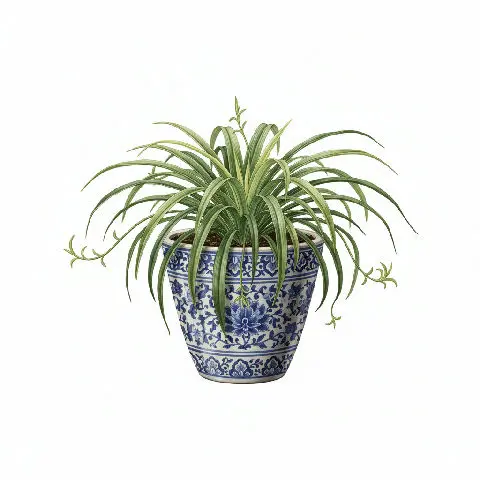
Chlorophytum comosum, widely known as the Spider Plant, Green Spider Plant, or Ribbon Plant, is a classic and exceptionally resilient herbaceous perennial belonging to the Asparagaceae family. Native to the tropical and subtropical regions of Southern Africa, particularly South Africa, this plant showcases remarkable adaptability, thriving in diverse natural habitats ranging from forest understories to rocky outcrops. Its botanical characteristics include a clump-forming growth habit with linear, arching, strap-shaped leaves that typically measure between 20-45 cm in length and 0.5-2.5 cm in width.
The 'Green' variant, which can encompass solid green cultivars or forms where green is the dominant foliage color (like 'Vittatum' with its prominent green margins), features a uniform emerald green or a deep green hue, sometimes with lighter green central bands. The leaves are characteristically channeled or folded down the middle.
From a reproductive standpoint, Chlorophytum comosum produces small, inconspicuous white, star-shaped flowers borne on long, slender stalks known as scapes. Following flowering, these scapes develop into distinctive plantlets, often referred to as 'spiderettes,' which dangle from the mother plant, giving rise to its common name. The plant's robust nature is further supported by thick, fleshy roots and rhizomes that serve as efficient water storage organs, enabling it to withstand periods of inconsistent watering.
Its history as a cultivated ornamental dates back to the 19th century, gaining immense popularity as a houseplant due to its ease of care and prolific propagation. While not a primary herb in traditional medical systems such as Ayurveda or TCM, its modern significance is largely anchored in its scientifically recognized air-purifying capabilities, famously highlighted by NASA's Clean Air Study.
Trusted Scientific References
1. Authoritative external sources for Chlorophytum comosum green
1.1 Wikipedia — Chlorophytum comosum green
1.2 Kew POWO (Plants of the World Online)
1.3 PubMed — peer-reviewed research
1.4 NCBI Taxonomy Browser
1.5 GBIF — Global Biodiversity
1.1.Chlorophytum Green — Highlights
- ✓Outstanding indoor air — Outstanding indoor air purification (NASA certified).
- ✓Remarkable ease of — Remarkable ease of care and low maintenance.
- ✓Completely non — toxic to humans and household pets.
- ✓Prolific producer of — Prolific producer of charming 'spiderettes' (plantlets).
- ✓Attractive, arching, strap — shaped green foliage.
- ✓Highly adaptable to — Highly adaptable to a range of light conditions.
- ✓Efficient water storage — Efficient water storage in thick, fleshy roots.
- ✓Contributes positively to psychological well — being.
- ✓Naturally enhances indoor — Naturally enhances indoor humidity slightly.
- ✓Excellent choice for — Excellent choice for beginner plant enthusiasts.
1.2.Chlorophytum Green — Quick Summary
- ✓Easy-to-grow, popular houseplant.
- ✓Exceptional indoor air purification capabilities.
- ✓Non-toxic and safe for pets and children.
- ✓Propagates effortlessly from 'spiderettes'.
- ✓Enhances indoor aesthetics and well-being.
- ✓Highly adaptable to various indoor conditions.
2.Chlorophytum Green — Scientific Identity
3.Chlorophytum Green — Vital Statistics
4.Chlorophytum Green — Botanical Features
5.Chlorophytum Green — Native Range & Habitat
6.Chlorophytum Green — Folk Medicine Applications
7.Chlorophytum Green — Key Phytochemicals
- ✓Phytoremediation Enzymes — Contains various enzymes, such as formaldehyde dehydrogenase and cytochrome P450, which are crucial in breaking down and metabolizing absorbed airborne toxins like formaldehyde, benzene, and xylene within the plant tissues.
- ✓Chlorophyll — The primary green pigment responsible for photosynthesis, enabling the plant to convert light energy into chemical energy and facilitating oxygen production, indirectly supporting air quality.
- ✓Carbohydrates — Including starches and sugars, these provide energy for the plant's metabolic processes and structural integrity, essential for sustaining its growth and pollutant uptake mechanisms.
- ✓Proteins and Amino Acids — Fundamental building blocks for plant growth and the synthesis of enzymes that drive biochemical reactions, including detoxification pathways.
- ✓Volatile Organic Compounds (VOCs) — While absorbing external VOCs, the plant also naturally emits a range of its own VOCs, which can interact with the indoor environment, sometimes contributing to a fresh scent.
- ✓Flavonoids — A class of secondary metabolites with antioxidant properties, potentially offering protective mechanisms for the plant against environmental stressors, though not directly linked to air purification.
- ✓Saponins — Glycosides found in various plant species, which can have diverse biological activities, though their specific role in Chlorophytum comosum's recognized benefits is less defined.
- ✓Water — Comprises the vast majority of the plant's mass, acting as the solvent for nutrient transport and participating in transpiration, which contributes to indoor humidity and pollutant uptake.
8.Chlorophytum Green — Evidence-Based Benefits
- ✓Indoor Air Purification — Chlorophytum comosum is highly effective at absorbing common indoor air pollutants such as formaldehyde, xylene, benzene, and carbon monoxide, contributing to a healthier breathing environment through phytoremediation.
- ✓Reduction of Volatile Organic Compounds (VOCs) — The plant actively metabolizes and filters out harmful VOCs released from furniture, carpets, and cleaning products, improving overall indoor air quality.
- ✓Enhanced Psychological Well-being — The presence of green plants like the Spider Plant can reduce stress, improve mood, and foster a sense of calm and connection to nature (biophilia effect) in living and working spaces.
- ✓Non-toxic to Pets — Unlike many houseplants, Chlorophytum comosum is widely considered safe for cats and dogs, making it an excellent choice for pet-friendly homes seeking air-purifying benefits without toxicity concerns.
- ✓Natural Humidity Regulation — Through the process of transpiration, Spider Plants release water vapor into the air, potentially contributing to a slight increase in ambient humidity, which can be beneficial in dry indoor environments.
- ✓Improved Focus and Productivity — Studies suggest that incorporating plants into workspaces can lead to enhanced concentration, reduced fatigue, and increased productivity among individuals.
- ✓Aesthetic and Environmental Enrichment — Its attractive foliage and cascading plantlets add visual appeal to any indoor setting, transforming sterile environments into more vibrant and inviting spaces.
- ✓Support for Respiratory Health — By reducing airborne irritants and improving air quality, the Spider Plant indirectly supports respiratory health, particularly for individuals sensitive to indoor pollutants.
- ✓Easy Care for Mental Health — The low-maintenance nature and resilience of the Spider Plant can provide a sense of accomplishment and reduce anxiety for plant owners, making plant care a stress-reducing hobby.
8.1.Chlorophytum Green — Health Applications
9.Chlorophytum Green — Safety Considerations
9.1.Chlorophytum Green — Reported Side Effects
- ✓Leaf Tip Burn — A common aesthetic issue, often caused by low humidity, inconsistent watering, or chemicals (fluoride/chlorine) and salt buildup in tap water, not a health risk.
- ✓Root Rot — Occurs due to overwatering or poorly draining soil, leading to a decline in plant health and potentially plant death if not addressed.
- ✓Pest Infestations — Susceptible to common houseplant pests like spider mites, mealybugs, and scale, which can weaken the plant and spread to other indoor plants.
- ✓Allergic Reactions (Rare) — While generally non-allergenic, some individuals with extreme sensitivities may experience mild contact dermatitis upon handling, though this is exceedingly uncommon.
- ✓No Internal Toxicity — Chlorophytum comosum is non-toxic to humans and pets, therefore, no adverse internal side effects are associated with accidental ingestion of plant material.
9.2.Chlorophytum Green — Safety Profile
- ✓Generally Regarded As Safe (GRAS) — Chlorophytum comosum is widely recognized as a safe houseplant for general cultivation and indoor environments.
- ✓Non-Toxic to Humans — There are no known toxic properties or adverse health effects associated with human contact or accidental ingestion of any part of the Spider Plant.
- ✓Pet-Friendly — It is confirmed to be non-toxic to common household pets, including cats and dogs, making it a safe choice for homes with animals.
- ✓External Use Only — Primarily an ornamental and air-purifying plant; it is not intended for internal medicinal consumption or topical application.
- ✓Proper Cultivation Practices — Ensure adequate drainage and avoid overwatering to prevent root rot, which can compromise plant health.
- ✓Water Quality Considerations — Using filtered, distilled, or rainwater can prevent leaf tip burn caused by high mineral content or chemicals in tap water, maintaining the plant's aesthetic appeal.
- ✓Hygiene After Handling — As with all plants and soil, wash hands thoroughly after handling to prevent any potential skin irritation or transfer of microbes.
10.Chlorophytum Green — Preparation Methods
- ✓Indoor Air Purification — Strategically place Chlorophytum comosum plants in living rooms, bedrooms, and offices to actively remove airborne toxins like formaldehyde, xylene, benzene, and carbon monoxide.
- ✓Aesthetic Enhancement — Utilize its arching, variegated foliage and cascading plantlets in hanging baskets, on shelves, or as desk plants to add natural beauty and a touch of greenery to any indoor space.
- ✓Psychological Well-being — Incorporate Spider Plants into areas where relaxation or concentration is desired to leverage their biophilic benefits, helping to reduce stress and improve mood.
- ✓Natural Humidifier — Group several plants together to subtly increase ambient humidity, which can be beneficial in dry climates or during winter months when indoor air is often dry.
- ✓Pet-Safe Greenery — Provide a safe and natural element for homes with pets, as it is non-toxic and allows pet owners to enjoy indoor plants without worry.
- ✓Educational Tool — Use the easily propagated 'spiderettes' as a hands-on method to teach children or beginners about plant propagation and growth cycles.
- ✓Groundcover in Warm Climates — In USDA Zones 9-11, Chlorophytum comosum can be grown outdoors as an attractive, low-maintenance groundcover in shaded or partly shaded garden areas.
- ✓Gift Giving — Propagate new plants from the prolific plantlets to create thoughtful, eco-friendly gifts for friends and family, sharing the benefits of this easy-care houseplant.
11.Chlorophytum Green — Cultivation & Care
- ✓Light Requirements — Thrives in medium to bright, indirect light; direct sunlight can scorch leaves. It tolerates lower light conditions but growth and plantlet production may be diminished.
- ✓Watering Schedule — Allow the top inch or two of soil to dry out between thorough waterings. Its fleshy roots allow it to tolerate some inconsistency, but avoid prolonged dryness or waterlogging.
- ✓Soil and Potting — Use a well-draining, general-purpose potting mix. Repot annually or bi-annually as the plant grows quickly and becomes pot-bound, which can inhibit optimal growth.
- ✓Temperature and Humidity — Prefers average room temperatures (65-75°F / 18-24°C) and average humidity. It can tolerate warmer conditions but may benefit from occasional misting in very dry environments.
- ✓Fertilization — Feed every 3-4 months during the growing season (spring and summer) with a balanced liquid fertilizer diluted to half strength. Over-fertilizing can lead to leaf tip burn and reduced plantlet production.
- ✓Propagation — Extremely easy to propagate from the 'spiderettes' or plantlets. Simply place a plantlet, still attached to the mother, onto moist soil until it roots, or detach rooted plantlets and pot them directly.
- ✓Pest Management — Generally pest-resistant, but occasionally susceptible to common houseplant pests like spider mites, mealybugs, and scale insects. Inspect regularly and treat with insecticidal soap if necessary.
- ✓Preventing Tip Burn — Brown leaf tips are often caused by low humidity, dry soil, or excessive fluoride or chlorine in tap water. Using distilled or rainwater can help alleviate this issue.
Reviewed by the Flora Medical Global Botanical Review Panel
Multi-disciplinary editorial group · Botany · Ethnobotany · Herbal-medicine literature
Who reviewed this: This page was checked by the Flora Medical Global Botanical Review Panel — an in-house editorial group of botany graduates, ethnobotany researchers, and horticulture practitioners who collectively maintain our 7,000+ plant encyclopedia. Meet the team.
Our 4-step verification process
1. Taxonomic verification
Scientific names and synonyms cross-checked against Kew POWO, World Flora Online, and The Plant List.
2. Phytochemical & medicinal cross-reference
Active compounds, traditional uses, and reported activities are cross-referenced with PubMed, USDA Dr. Duke's database, and peer-reviewed ethnobotanical literature.
3. Conservation & distribution check
Distribution, ecology, and conservation status confirmed against GBIF occurrence records and the IUCN Red List.
4. Editorial & safety review
Every entry passes an editorial pass for clarity, originality, and safety notices (toxicity, contraindications, dosage caveats) before publication.
Last reviewed:
Important medical disclaimer: This content is for educational and research purposes only. It is not medical advice and is not a substitute for consultation with a licensed healthcare provider. Do not use any herb to self-treat a medical condition without professional guidance.
Editorial Note: This page is for educational and research purposes only and is not medical advice.
Written by: Flora Medical Global Editorial Team
Reviewed by: Flora Medical Global Botanical Review Panel
Last Updated: June 15, 2026





Chlorophytum Green — Comments & Community Reviews
Rate this plant