


Medical Disclaimer: This content is for educational purposes only. It is not medical advice. Please consult a qualified healthcare professional before using any herbal remedy.
Safety Overview
1.Choisya Ternata — Plant Snapshot
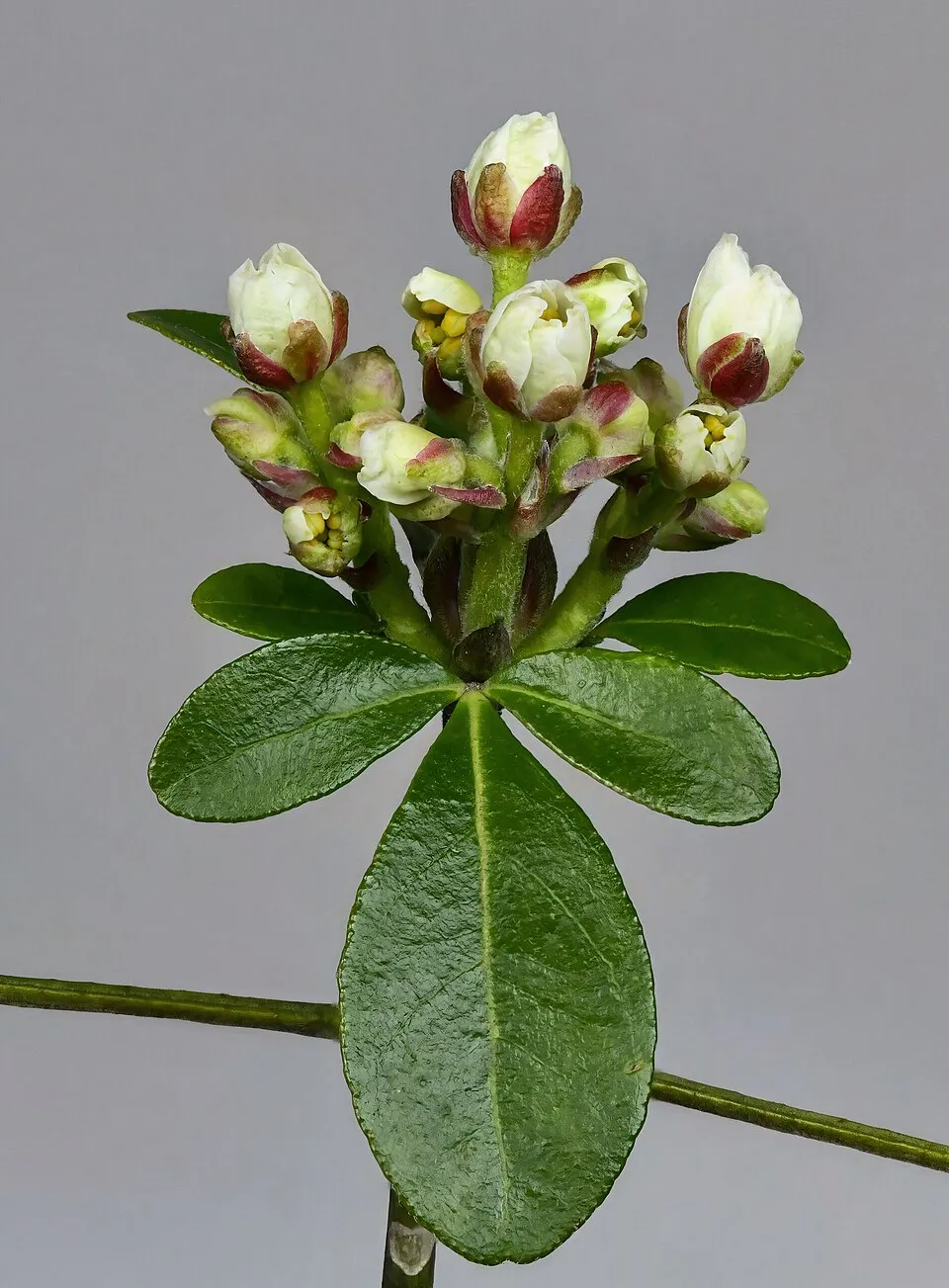
Choisya ternata, commonly known as Mexican orange blossom or Mexican mock orange, is a distinguished evergreen shrub belonging to the Rutaceae family, a lineage renowned for its aromatic members including citrus species. This resilient plant typically forms a rounded, dense bush, reaching a height of 1 to 3 meters (3 to 9 feet) and spreading similarly, making it an ideal candidate for medium-sized garden spaces, hedges, or foundation plantings. Its most striking feature is its foliage: glossy, dark green leaves arranged in a palmate fashion, typically composed of three to five obovate to oblanceolate leaflets. Each leaflet measures approximately 4 to 8 cm (1.5 to 3 inches) in length, featuring a pointed apex and entire margins.
When bruised or crushed, the leaves emit a distinct, pleasant citrusy aroma, a characteristic attributed to the rich essential oil content within specialized oil glands, which are a hallmark of the Rutaceae family. The bark of Choisya ternata is generally smooth, exhibiting a subtle gray-green hue that contributes to its year-round aesthetic appeal. The root system is fibrous and relatively shallow, enabling the plant to establish well in various soil types, provided they are well-drained. In spring, and often recurring sporadically in late summer or autumn, Choisya ternata produces an abundance of star-shaped, pure white flowers.
These blossoms, each about 2 to 3 cm (1 inch) in diameter, are borne in small, terminal or axillary cymes, creating a spectacular display against the dark foliage. The flowers are intensely fragrant, exuding a sweet, citrus-like perfume that is highly attractive to a diverse range of pollinators, including bees, butterflies, and other beneficial insects, enhancing biodiversity in the garden. While native to the mountainous regions of Mexico, particularly thriving in rocky, well-drained soils and often found in pine-oak forests, Choisya ternata has adapted remarkably to various temperate climates.
Trusted Scientific References
1. Authoritative external sources for Choisya ternata
1.1 Wikipedia — Choisya ternata
1.2 Kew POWO (Plants of the World Online)
1.3 PubMed — peer-reviewed research
1.4 NCBI Taxonomy Browser
1.5 GBIF — Global Biodiversity
1.1.Choisya Ternata — Standout Qualities
- ✓Botanical Name — Choisya ternata, commonly Mexican orange blossom.
- ✓Family — Rutaceae, known for aromatic citrus species.
- ✓Foliage — Glossy, dark green, palmate leaves with a distinct citrus scent when crushed.
- ✓Flowers — Abundant, star-shaped, pure white, intensely fragrant blossoms, primarily in spring.
- ✓Aroma — Sweet, citrus-like perfume from flowers and foliage.
- ✓Growth Habit — Dense, rounded evergreen shrub, typically 1-3 meters tall and wide.
- ✓Pollinator Attractor — Highly attractive to bees, butterflies, and other beneficial insects.
- ✓Hardiness — Hardy in USDA zones 6-9, tolerates various conditions.
- ✓Low Maintenance — Requires minimal pruning and is drought-tolerant once established.
- ✓Native Range — Indigenous to mountainous regions of Mexico.
1.2.Choisya Ternata — Quick Summary
- ✓Mexican orange blossom, Choisya ternata, is an aromatic evergreen shrub.
- ✓Renowned for its glossy foliage and intensely fragrant white flowers.
- ✓Primarily an ornamental plant, prized for its citrusy scent in gardens.
- ✓Not documented for internal medicinal use; focus on aromatic and aesthetic benefits.
- ✓Hardy, low-maintenance, and attracts pollinators.
- ✓Contains essential oils, flavonoids, and coumarins typical of the Rutaceae family.
2.Choisya Ternata — Scientific Profile
3.Choisya Ternata — Botanical Stats
4.Choisya Ternata — Plant Morphology
5.Choisya Ternata — Where It Grows
6.Choisya Ternata — Ethnobotanical Uses
7.Choisya Ternata — Bioactive Constituents
- ✓Essential Oils — Rich in monoterpenes and sesquiterpenes, responsible for the characteristic citrusy aroma. Key components likely include limonene, pinene, sabinene, and myrcene, which contribute to its fragrant and potentially antimicrobial properties.
- ✓Coumarins — Compounds like bergapten and psoralen, common in the Rutaceae family, may be present, known for their photosensitizing and various biological activities.
- ✓Flavonoids — A diverse group of polyphenolic compounds, such as rutin and quercetin derivatives, which possess antioxidant and anti-inflammatory potential.
- ✓Alkaloids — While less prominent than in some other plant families, certain quinoline alkaloids might be found, typical of some Rutaceae species, with various pharmacological actions.
- ✓Limonoids — Bitter triterpenoid compounds characteristic of the Rutaceae family, often found in citrus, which can exhibit insecticidal and antifeedant properties.
- ✓Phenolic Acids — Compounds like caffeic acid and ferulic acid, contributing to the plant's antioxidant capacity.
- ✓Terpenoids (General) — Beyond specific essential oil components, a broader range of terpenoids may be present, influencing the plant's defense mechanisms and aromatic profile.
- ✓Glycosides — Various compounds linked to sugar molecules, which can affect solubility and bioavailability of active constituents.
8.Choisya Ternata — Research Insights
- ✓IMPORTANT NOTE — Choisya ternata is primarily valued for its ornamental and aromatic qualities. Direct internal medicinal uses are not traditionally or scientifically established, and it is not recommended for consumption.
- ✓Aromatic Stress Reduction — The plant's distinctive citrus-like aroma, derived from its essential oils, is often associated with uplifting and calming effects, potentially aiding in stress reduction when experienced in an aromatic garden setting or through external aromatherapy applications.
- ✓Mood Enhancement (Olfactory) — The sweet, fresh scent of Mexican orange blossom flowers and foliage is widely appreciated for its pleasantness, which can contribute to an improved mood and a sense of well-being through olfactory stimulation.
- ✓Air Quality Improvement (Horticultural) — As an evergreen shrub, Choisya ternata contributes to local air purification by performing photosynthesis, absorbing carbon dioxide, and releasing oxygen, thereby enhancing the immediate atmospheric environment.
- ✓Pollinator Support — The highly fragrant white flowers are a significant attractant for bees, butterflies, and other beneficial insects, playing a crucial role in supporting local biodiversity and ecosystem health.
- ✓Sensory Garden Enrichment — Its year-round evergreen foliage, fragrant flowers, and aromatic leaves make it an excellent choice for sensory gardens, offering visual and olfactory stimulation that can be therapeutic.
- ✓Landscape Therapy — Gardening with aromatic plants like Choisya ternata can be a form of horticultural therapy, promoting physical activity, mental engagement, and a connection with nature, indirectly supporting overall health.
- ✓Natural Insect Repellence (Anecdotal) — The strong aromatic compounds in the leaves, characteristic of the Rutaceae family, are anecdotally thought to deter certain garden pests, though not a direct human medicinal benefit.
- ✓Skin Soothing (External, Theoretical) — While not clinically proven for Choisya ternata, some Rutaceae essential oils possess properties that can be soothing to the skin; however, direct application of Choisya ternata extracts for this purpose is not established and requires caution due to potential irritation.
- ✓Anti-inflammatory Potential (Research Interest) — Given its rich essential oil content, similar to other Rutaceae members, there is theoretical interest in exploring its anti-inflammatory properties, but no specific studies or traditional uses for Choisya ternata exist to support this claim yet.
- ✓Antimicrobial Properties (Research Interest) — The presence of various terpenes and other aromatic compounds suggests a potential for antimicrobial activity, a common trait in essential oil-rich plants, which warrants further scientific investigation for Choisya ternata.
8.1.Choisya Ternata — Indications & Uses
9.Choisya Ternata — Precautions & Warnings
9.1.Choisya Ternata — Possible Adverse Reactions
- ✓Skin Irritation — Direct contact with the crushed leaves or concentrated essential oil may cause mild skin irritation or allergic reactions in sensitive individuals.
- ✓Photosensitivity — As a member of the Rutaceae family, there is a theoretical, albeit low, risk of photosensitivity if certain coumarins are present and concentrated, though not commonly reported for Choisya ternata.
- ✓Internal Use Contraindicated — The plant is not intended for internal consumption; ingesting any part of Choisya ternata could lead to gastrointestinal upset or unknown toxic reactions.
- ✓Allergic Reactions — Individuals with sensitivities to citrus or other Rutaceae plants may experience allergic reactions to the pollen or aromatic compounds of Choisya ternata.
- ✓Toxicity Concerns — While generally considered non-toxic to humans in ornamental settings, ingestion of large quantities by pets or children should be avoided due to potential unknown compounds.
- ✓Eye Irritation — Contact with plant sap or essential oil near the eyes can cause irritation.
9.2.Choisya Ternata — Safety Profile
- ✓Non-Toxic (Ornamental Use) — Choisya ternata is generally considered safe for ornamental use in gardens and landscapes; no known hazards are associated with external contact in typical garden settings.
- ✓Avoid Ingestion — It is crucial to emphasize that this plant is not for internal consumption; its safety profile for ingestion has not been established, and it could cause adverse effects.
- ✓Skin Sensitivity — Individuals with sensitive skin should exercise caution when handling crushed leaves or plant sap, as mild irritation may occur.
- ✓Children and Pets — Keep away from young children and pets to prevent accidental ingestion, despite low reported toxicity, as symptoms are unknown.
- ✓Essential Oil Caution — If essential oils were to be extracted, they should be handled with extreme care, properly diluted, and only used externally, avoiding contact with mucous membranes.
- ✓Pollen Allergies — Individuals prone to pollen allergies may experience symptoms during the flowering season, although its pollen is not typically a major allergen.
- ✓Consult Experts — Always consult a healthcare professional or medical herbalist before considering any use beyond ornamental purposes, especially for medicinal applications.
10.Choisya Ternata — Preparation & Dosage
- ✓Ornamental Landscaping — Primarily used as an attractive evergreen shrub in gardens, providing year-round foliage, fragrant flowers, and a dense, rounded form for borders, hedges, or specimen planting.
- ✓Aromatic Garden Feature — Planted near patios or walkways to fully appreciate its intense citrus-like fragrance from both its flowers and crushed foliage.
- ✓Pollinator Garden Inclusion — Essential for attracting bees, butterflies, and other beneficial insects, thus supporting local biodiversity and garden ecosystem health.
- ✓Hedge or Screen Plant — Can be grown as an informal or formal hedge due to its dense growth habit and tolerance for clipping, providing privacy or defining garden spaces.
- ✓Container Plant — Suitable for growing in large containers, especially in colder climates where it might need winter protection, allowing its aromatic qualities to be enjoyed on patios.
- ✓Potpourri Ingredient (Theoretical) — The aromatic leaves and dried flowers could theoretically be used in potpourri for their pleasant scent, though not a traditional widespread use.
- ✓Essential Oil Extraction (Experimental) — While not commercially common, its rich essential oil content suggests potential for experimental extraction for use in aromatherapy, strictly for external application and after proper dilution and safety testing.
11.Choisya Ternata — Growth Requirements
- ✓Soil Preference — Thrives in light (sandy) to medium (loamy) soils, preferring well-drained conditions to prevent root rot, and tolerates mildly acidic, neutral, or mildly alkaline pH levels.
- ✓Light Requirements — Adaptable to full sun, semi-shade (light woodland), or even full shade, though flowering is most prolific in sunnier, sheltered locations.
- ✓Water Needs — Prefers moist soil but is notably drought-tolerant once established, making it suitable for various climates, including those with drier periods.
- ✓Hardiness — Generally hardy to USDA zones 6-9 and UK zone 7, tolerating temperatures down to approximately -10°C (14°F), though can be damaged by severe cold spells or harsh winds.
- ✓Pruning — Very tolerant of pruning, which is generally unnecessary except for removing frost-damaged wood or shaping the plant. Can be cut back hard if required to rejuvenate.
- ✓Propagation (Seed) — Seeds can be sown in spring in a greenhouse; seedlings should be pricked out into individual pots and grown on before planting out after the last frosts.
- ✓Propagation (Cuttings) — Easily propagated from half-ripe wood cuttings (6-8 cm long) in early July with gentle heat, or from almost ripe wood cuttings (10-15 cm with a heel) in August in a frame for good success rates.
Reviewed by the Flora Medical Global Botanical Review Panel
Multi-disciplinary editorial group · Botany · Ethnobotany · Herbal-medicine literature
Who reviewed this: This page was checked by the Flora Medical Global Botanical Review Panel — an in-house editorial group of botany graduates, ethnobotany researchers, and horticulture practitioners who collectively maintain our 7,000+ plant encyclopedia. Meet the team.
Our 4-step verification process
1. Taxonomic verification
Scientific names and synonyms cross-checked against Kew POWO, World Flora Online, and The Plant List.
2. Phytochemical & medicinal cross-reference
Active compounds, traditional uses, and reported activities are cross-referenced with PubMed, USDA Dr. Duke's database, and peer-reviewed ethnobotanical literature.
3. Conservation & distribution check
Distribution, ecology, and conservation status confirmed against GBIF occurrence records and the IUCN Red List.
4. Editorial & safety review
Every entry passes an editorial pass for clarity, originality, and safety notices (toxicity, contraindications, dosage caveats) before publication.
Last reviewed:
Important medical disclaimer: This content is for educational and research purposes only. It is not medical advice and is not a substitute for consultation with a licensed healthcare provider. Do not use any herb to self-treat a medical condition without professional guidance.
Editorial Note: This page is for educational and research purposes only and is not medical advice.
Written by: Flora Medical Global Editorial Team
Reviewed by: Flora Medical Global Botanical Review Panel
Last Updated: June 15, 2026





Choisya Ternata — Comments & Community Reviews
Rate this plant