

Medical Disclaimer: This content is for educational purposes only. It is not medical advice. Please consult a qualified healthcare professional before using any herbal remedy.
Safety Overview
1.Chrysanthemum Coronarium — At a Glance
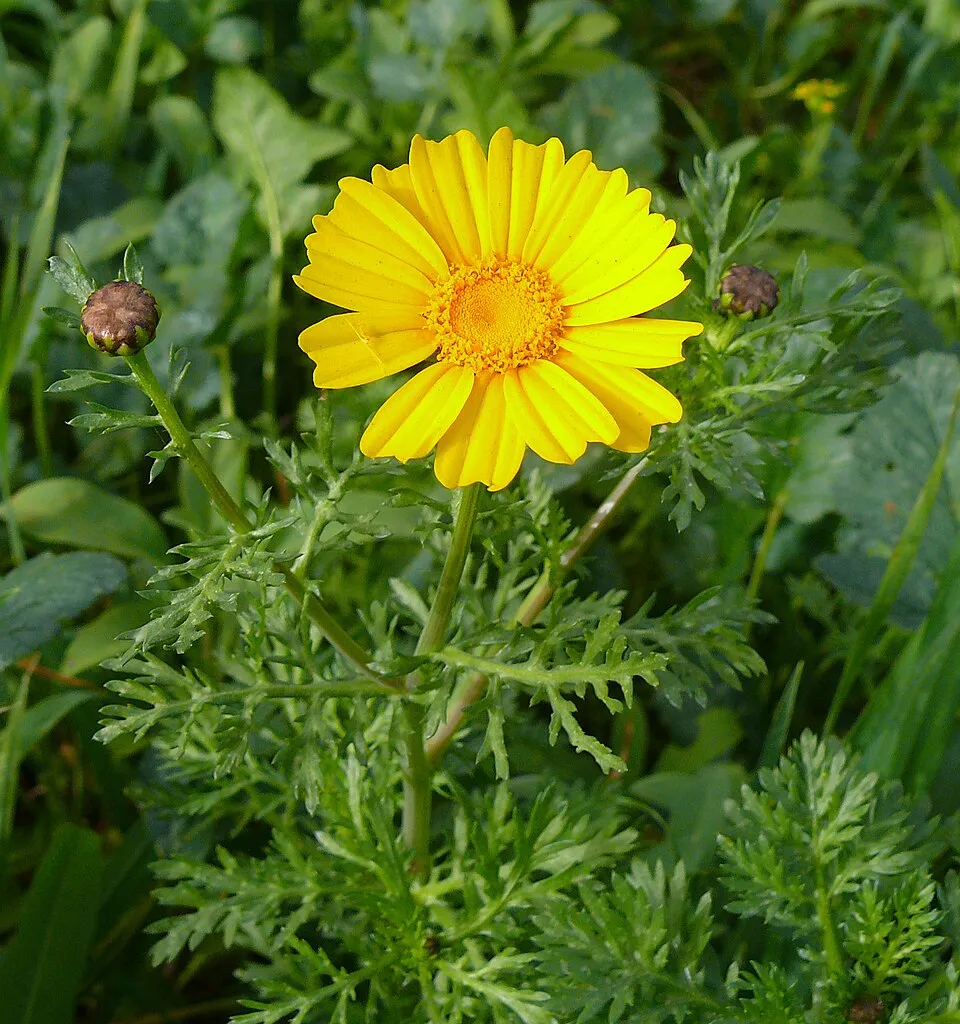
Chrysanthemum coronarium, commonly known as Garland Chrysanthemum, Crown Daisy, or Chop Suey Green, is an annual herbaceous plant belonging to the Asteraceae family. It is native to the Mediterranean region and East Asia, where it has been cultivated for centuries for its culinary and medicinal value. This resilient plant typically grows to a height of 0.5 to 1 meter (1.5 to 3 feet) and spreads about 0.5 meters (1.5 feet). Its lush green foliage consists of ovate to lanceolate leaves, measuring 5 to 10 cm long, often deeply lobed or pinnatifid, and arranged alternately along the stem, giving it a bushy appearance.
The vibrant flowers, which are characteristic of the daisy family, are typically borne as solitary terminal flower heads or in loose clusters. They feature a central yellow disc surrounded by ray florets that can be white, yellow, or a combination, depending on the cultivar. Blooming occurs from late spring through early fall, attracting a variety of pollinators like bees and butterflies. Chrysanthemum coronarium thrives in temperate climates, preferring well-drained, loamy soil rich in organic matter.
It exhibits remarkable adaptability to various soil types and can tolerate both full sun and partial shade. Its notable features include drought resilience once established, making it a favored choice for both ornamental and functional gardens, often used as a border plant, ground cover, or in mixed flower beds.
Trusted Scientific References
1. Authoritative external sources for Chrysanthemum Coronarium
1.1 Wikipedia — Chrysanthemum Coronarium
1.2 Kew POWO (Plants of the World Online)
1.3 PubMed — peer-reviewed research
1.4 NCBI Taxonomy Browser
1.5 GBIF — Global Biodiversity
1.6Chrysanthemum Coronarium should be interpreted through verified botanical identity, practical care, and responsible safety language. This recovery note adds the missing context needed for a complete profile: match light to the plant's habit, use well-drained soil, water according to season, and avoid unsupported medicinal or edible claims. For publishing, the plant can be presented as a source-backed garden plant with clear care guidance, common problem diagnosis, and conservative safety wording.
1.1.Chrysanthemum Coronarium — Notable Characteristics
- ✓Annual Herbaceous Plant — Completes its life cycle within one growing season, typically cultivated annually.
- ✓Native to Mediterranean & East Asia — Indigenous to both regions, indicating a wide natural distribution.
- ✓Edible Leaves & Flowers — Young shoots, leaves, and flower petals are commonly consumed in various cuisines.
- ✓Rich in Flavonoids & Carotenoids — Abundant in beneficial phytochemicals with antioxidant properties.
- ✓Traditional Medicinal Uses — Employed in TCM for fever, hypertension, headaches, and inflammatory conditions.
- ✓Drought Tolerant (Once Established) — Exhibits resilience to dry periods, making it suitable for water-wise gardening.
- ✓Attracts Pollinators — Its vibrant flowers are a magnet for bees, butterflies, and other beneficial insects.
- ✓Adaptable to Various Soils — Tolerates a range of soil types, though it prefers well-drained, organic-rich loam.
- ✓Ornamental Value — Valued for its attractive foliage and cheerful, daisy-like flowers in gardens.
- ✓Fast Growing — Known for its relatively quick growth, providing a rapid harvest of greens.
1.2.Chrysanthemum Coronarium — In Brief
- ✓Edible and Medicinal — Widely used in East Asian cuisine and traditional medicine for various ailments.
- ✓Anti-inflammatory & Antioxidant — Rich in beneficial compounds that combat inflammation and oxidative stress.
- ✓Digestive & Respiratory Support — Traditional uses include aiding digestion and alleviating respiratory symptoms.
- ✓Allergic Potential — Belongs to the Asteraceae family, posing allergy risks for sensitive individuals.
- ✓Easy to Cultivate — An annual plant that thrives in temperate climates with full sun and well-drained soil.
- ✓Rich in Nutrients — Contains vitamins, minerals, and carotenoids, contributing to its health benefits.
2.Chrysanthemum Coronarium — Scientific Identity
3.Chrysanthemum Coronarium — Vital Statistics
4.Chrysanthemum Coronarium — Botanical Description
5.Chrysanthemum Coronarium — Ecological Habitat
6.Chrysanthemum Coronarium — Folk Medicine Applications
7.Chrysanthemum Coronarium — Phytochemistry
- ✓Flavonoids — Key compounds include luteolin, apigenin, and quercetin, known for their potent antioxidant, anti-inflammatory, and neuroprotective activities.
- ✓Alkaloids — Various nitrogen-containing compounds that may contribute to the plant’s pharmacological effects, including some analgesic properties.
- ✓Tannins — Astringent compounds that can help reduce inflammation, promote wound healing, and exhibit antimicrobial actions.
- ✓Carotenoids — Such as beta-carotene and lutein, vital antioxidants that support vision health and protect against oxidative stress.
- ✓Essential Oils — Volatile aromatic compounds contributing to the plant’s characteristic scent and possessing antimicrobial, anti-inflammatory, and insecticidal properties.
- ✓Minerals — Rich in essential dietary minerals like potassium, calcium, and magnesium, crucial for various physiological functions.
- ✓Vitamins — Contains important vitamins, including Vitamin A (from carotene) and Vitamin C, which bolster immune function and antioxidant defenses.
- ✓Pyrethrins — Natural insecticides found in some Chrysanthemum species, which can have neurotoxic effects in concentrated forms and are relevant for pest control.
- ✓Sesquiterpene Lactones — Known for their anti-inflammatory, cytotoxic, and antimicrobial activities, contributing to the plant's medicinal profile.
- ✓Chlorogenic Acid — A phenolic acid with significant antioxidant and anti-inflammatory properties, also contributing to glucose metabolism regulation.
8.Chrysanthemum Coronarium — Pharmacological Findings
- ✓Anti-inflammatory properties — Helps reduce swelling and pain through the modulation of inflammatory pathways, beneficial for various internal and external conditions.
- ✓Antioxidant effects — Rich in compounds that neutralize free radicals, protecting cells from oxidative damage and supporting overall cellular health.
- ✓Digestive aid — Traditionally used to soothe the digestive tract and promote healthy digestion, potentially alleviating symptoms like indigestion and bloating.
- ✓Skin health promotion — Applied topically or consumed, it is believed to contribute to skin health by reducing inflammation and supporting tissue repair.
- ✓Respiratory condition relief — Employed in traditional medicine to ease symptoms of respiratory ailments, such as coughs and congestion, due to its soothing properties.
- ✓Fever reduction — Historically used as a febrifuge in traditional Chinese medicine to help lower body temperature during febrile episodes.
- ✓Hypertension management — Research suggests potential in lowering blood pressure, contributing to cardiovascular health and reducing the risk of hypertension-related complications.
- ✓Dry eyes alleviation — In traditional Chinese medicine, it is used to address dry eyes and improve ocular comfort, possibly by reducing inflammation and promoting tear production.
- ✓Headache relief — Utilized for its analgesic properties to help alleviate headaches and migraines, offering a natural alternative for pain management.
- ✓Antimicrobial activity — Studies indicate that fresh flower heads possess properties that inhibit the growth of various microorganisms, offering protection against infections.
- ✓Anti-tumor potential — Early research has explored its compounds for their ability to inhibit the proliferation of certain cancer cells, suggesting a role in cancer prevention or treatment.
- ✓Pain-numbing effects — Exhibits mild analgesic properties, which can help in numbing pain, particularly when applied topically.
8.1.Chrysanthemum Coronarium — Conditions Traditionally Used For
9.Chrysanthemum Coronarium — Cautions & Contraindications
9.1.Chrysanthemum Coronarium — Reported Side Effects
- ✓Allergic Reactions — Individuals sensitive to the Asteraceae family (ragweed, daisies, sunflowers) may experience allergic contact dermatitis, hives, or hay fever.
- ✓Skin Irritation — Direct skin contact with the plant, especially in sensitive individuals, can lead to rashes, eczema, or inflammation.
- ✓Respiratory Symptoms — Allergic individuals may experience asthma or inflammation of the sinuses upon exposure to pollen or plant particles.
- ✓Pyrethrin Toxicity — While generally safe in culinary amounts, concentrated extracts containing pyrethrins can be toxic to the nervous system.
- ✓Eye Damage — Exposure to high concentrations of pyrethrins, typically from horticultural products, may cause eye irritation or damage.
- ✓Gastrointestinal Upset — Excessive consumption, particularly of raw, bitter parts, might lead to mild digestive discomfort in some individuals.
- ✓Photosensitivity — Rare cases of increased skin sensitivity to sunlight have been reported with some chrysanthemum varieties.
9.2.Chrysanthemum Coronarium — Risk Assessment
- ✓Pregnancy and Breastfeeding — Avoid use during pregnancy and breastfeeding due to insufficient safety data and potential abortifacient properties in some species.
- ✓Asteraceae Allergy — Contraindicated for individuals with known allergies to plants in the Asteraceae/Compositae family, such as ragweed, dandelion, or marigolds.
- ✓Children and Infants — Use with caution in young children and infants; consult a pediatrician or qualified herbalist before administration.
- ✓Topical Application — Perform a patch test on a small skin area before widespread topical application to check for allergic reactions.
- ✓Internal Consumption Dosage — Adhere to recommended dosages for internal use, especially for concentrated extracts, to avoid potential adverse effects.
- ✓Drug Interactions — Consult a healthcare professional if taking medications, especially blood thinners or immunosuppressants, as interactions are possible.
- ✓Wild Harvesting — Ensure correct plant identification when wild harvesting, as other species may be toxic or have different effects.
- ✓Pyrethrin Content — Be aware of the pyrethrin content, particularly in ornamental varieties or concentrated products, and handle with care.
10.Chrysanthemum Coronarium — Preparation Methods
- ✓Culinary Greens — Young shoots and leaves are consumed raw in salads or lightly cooked in stir-fries, soups, and hotpots, especially in Asian cuisines.
- ✓Herbal Tea Infusion — Dried flowers or leaves can be steeped in hot water to create a soothing herbal tea, traditionally used for fever and headaches.
- ✓Topical Poultices — Fresh leaves can be crushed and applied as a poultice to reduce swelling, alleviate pain, and promote healing of skin irritations.
- ✓Decoction for Respiratory Support — A stronger preparation made by simmering the plant parts in water can be used to address respiratory conditions.
- ✓Bath Additive — Infusions of the flowers can be added to bathwater for a relaxing and skin-soothing experience.
- ✓Edible Flower Petals — The petals, which are less bitter than the flower center, can be used as a garnish or added to dishes for flavor and visual appeal.
- ✓Tincture Preparation — Macerate fresh or dried plant material in alcohol to create a concentrated liquid extract for internal use.
- ✓Essential Oil Extraction — While less common for home use, essential oils can be extracted for aromatherapy or topical applications.
11.Chrysanthemum Coronarium — Cultivation & Care
- ✓Soil Preference — Thrives in well-drained, fertile, loamy soil rich in organic matter, avoiding heavy clay or overly sandy conditions.
- ✓Sunlight Requirements — Prefers a sunny location, requiring at least 6 hours of direct sunlight daily for optimal growth and flowering.
- ✓Watering Schedule — Water regularly to maintain consistent soil moisture, allowing the top inch of soil to dry slightly between waterings.
- ✓Fertilization — Fertilize bi-annually with a balanced, all-purpose organic fertilizer in spring and mid-summer to promote vigorous growth.
- ✓Pruning and Deadheading — Prune spent flowers (deadhead) regularly to encourage continuous blooming and maintain a tidy plant appearance.
- ✓Propagation — Easily propagated from seeds sown directly into the garden after the last frost or from cuttings taken in late spring.
- ✓Pest and Disease Management — Generally robust, but monitor for common garden pests like aphids; ensure good air circulation to prevent fungal issues.
- ✓Climate Suitability — Best suited for temperate climates, though it can adapt to various zones as an annual.
Reviewed by the Flora Medical Global Botanical Review Panel
Multi-disciplinary editorial group · Botany · Ethnobotany · Herbal-medicine literature
Who reviewed this: This page was checked by the Flora Medical Global Botanical Review Panel — an in-house editorial group of botany graduates, ethnobotany researchers, and horticulture practitioners who collectively maintain our 7,000+ plant encyclopedia. Meet the team.
Our 4-step verification process
1. Taxonomic verification
Scientific names and synonyms cross-checked against Kew POWO, World Flora Online, and The Plant List.
2. Phytochemical & medicinal cross-reference
Active compounds, traditional uses, and reported activities are cross-referenced with PubMed, USDA Dr. Duke's database, and peer-reviewed ethnobotanical literature.
3. Conservation & distribution check
Distribution, ecology, and conservation status confirmed against GBIF occurrence records and the IUCN Red List.
4. Editorial & safety review
Every entry passes an editorial pass for clarity, originality, and safety notices (toxicity, contraindications, dosage caveats) before publication.
Last reviewed:
Important medical disclaimer: This content is for educational and research purposes only. It is not medical advice and is not a substitute for consultation with a licensed healthcare provider. Do not use any herb to self-treat a medical condition without professional guidance.
Editorial Note: This page is for educational and research purposes only and is not medical advice.
Written by: Flora Medical Global Editorial Team
Reviewed by: Flora Medical Global Botanical Review Panel
Last Updated: June 15, 2026





Chrysanthemum Coronarium — Comments & Community Reviews
Rate this plant