


Medical Disclaimer: This content is for educational purposes only. It is not medical advice. Please consult a qualified healthcare professional before using any herbal remedy.
Safety Overview
1.Chuchuhuasi — Overview
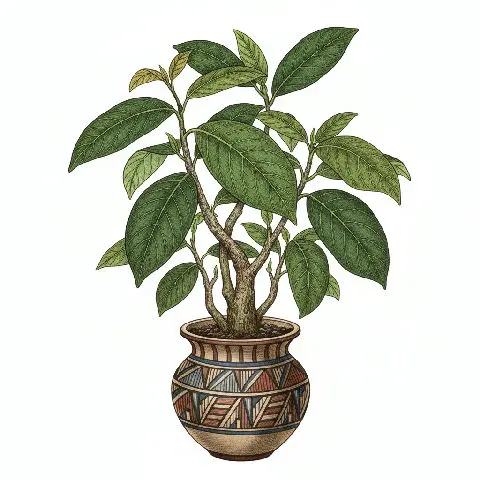
Chuchuhuasi, formally known as Maytenus macrocarpa, is a distinguished perennial tree indigenous to the Amazon rainforest, thriving predominantly across Peru, Colombia, and Brazil. This arboreal giant often reaches impressive heights of 10 to 25 meters, creating a prominent presence within the forest canopy. It develops a dense, rounded crown, contributing to its robust silhouette.
The foliage consists of alternate, lanceolate leaves, typically 10 to 20 cm long. The upper surface of these leaves exhibits a glossy, dark green hue, while the underside is a lighter tone, frequently covered with fine, delicate hairs, imparting a velvety texture.
During the spring, Maytenus macrocarpa produces small, subtle greenish-white flowers, often arranged in cymes. These blossoms add a quiet beauty to the tree's appearance. Following the flowering phase, the tree yields small, spherical fruits, each approximately 2 cm in diameter, containing a single seed enveloped by a fleshy pericarp.
The bark of Chuchuhuasi is its most distinctive feature, characterized by a rough, deeply fissured, reddish-brown surface, often used as a key identifier in its native habitat. Ecologically, this species thrives in lowland tropical forests, preferring moist, well-drained soils rich in organic matter, reflecting its adaptation to the Amazon basin's humid and fertile conditions. As a member of the Celastraceae family, Chuchuhuasi is taxonomically grouped among a diverse array of flowering plants, many of which are globally recognized for their significant medicinal qualities, particularly in traditional Amazonian medicine.
Trusted Scientific References
1. Authoritative external sources for Maytenus macrocarpa
1.1 Wikipedia — Maytenus macrocarpa
1.2 Kew POWO (Plants of the World Online)
1.3 PubMed — peer-reviewed research
1.4 NCBI Taxonomy Browser
1.5 GBIF — Global Biodiversity
1.6Chuchuhuasi should be interpreted through verified botanical identity, practical care, and responsible safety language. This recovery note adds the missing context needed for a complete profile: match light to the plant's habit, use well-drained soil, water according to season, and avoid unsupported medicinal or edible claims. For publishing, the plant can be presented as a source-backed medicinal plant with clear care guidance, common problem diagnosis, and conservative safety wording.
1.1.Chuchuhuasi — Defining Traits
- ✓Native Amazonian Tree — Indigenous to the rainforests of Peru, Colombia, and Brazil.
- ✓Distinctive Bark — Characterized by its rough, deeply fissured, reddish-brown bark.
- ✓Traditional Analgesic — Widely used in folk medicine for pain relief, especially joint and back pain.
- ✓Anti — inflammatory Potential — Valued for its traditional use in reducing inflammation, particularly in arthritis.
- ✓Phytochemically Rich — Contains a diverse array of triterpenes, including unique nor-triterpenes and dimers.
- ✓Ethnobotanical Significance — Deeply embedded in Amazonian traditional healing practices.
- ✓Post — Partum Support — Traditionally administered to women for recovery after childbirth.
- ✓Limited Clinical Research — Despite traditional uses, robust scientific studies in humans are scarce.
- ✓Herbal Supplement Ingredient — Available in various forms like tinctures, powders, and capsules.
- ✓Conservation Concern — Sustainable harvesting practices are crucial due to high demand for its bark.
1.2.Chuchuhuasi — Concise Overview
- ✓Amazonian medicinal tree (Maytenus macrocarpa) known as Chuchuhuasi.
- ✓Bark traditionally used for joint pain, inflammation, and post-childbirth recovery.
- ✓Rich in triterpene compounds like macrocarpins and isoxuxuarines.
- ✓Scientific evidence for efficacy in humans is currently insufficient.
- ✓Safety in pregnancy, breastfeeding, and for long-term use is not established.
- ✓Always consult a healthcare professional before use due to limited research.
2.Chuchuhuasi — Taxonomic Classification
3.Chuchuhuasi — Reference Facts
4.Chuchuhuasi — Plant Morphology
5.Chuchuhuasi — Habitat & Distribution
6.Chuchuhuasi — Cultural & Traditional Roles
7.Chuchuhuasi — Secondary Metabolites
- ✓Triterpene Dimers — Includes cangorosin A and various isoxuxuarine-type triterpene dimers, known for their complex structures and potential cytotoxic activities.
- ✓Nor-triterpenes — Compounds like macrocarpins A-D are unique nor-triterpenes isolated from the bark, showing cytotoxic effects in laboratory settings.
- ✓Friedelane Triterpenoids — These pentacyclic triterpenes contribute to the plant's overall phytochemical profile, often associated with anti-inflammatory properties.
- ✓Dammarane Triterpenes — Identified from Maytenus macrocarpa, these compounds are a class of tetracyclic triterpenes, which may have diverse biological activities.
- ✓Quinoid Triterpenes — Such as those found in related Maytenus species, these compounds can exhibit antimitotic and potential anticancer activities.
- ✓Sesquiterpene Polyol Esters — Found in the leaves, these compounds are known for their insecticidal properties and contribute to the plant's defense mechanisms.
- ✓Sesquiterpene-Pyridine Alkaloids — Laevisines A and B, found in some Maytenus species, are complex nitrogen-containing compounds with potential pharmacological interest.
- ✓Flavonoids — General class of polyphenolic compounds present, contributing to antioxidant and anti-inflammatory benefits.
- ✓Tannins — Astringent compounds found in the bark, responsible for some traditional uses in digestive health and wound healing.
- ✓Saponins — Glycosidic compounds that can have foaming properties and contribute to various pharmacological effects, including immune modulation.
8.Chuchuhuasi — Modern Studies
- ✓Analgesic Properties — Traditionally used to alleviate joint and muscle pain, Chuchuhuasi bark is believed to offer natural pain relief, often prepared as a decoction.
- ✓Anti-inflammatory Effects — Its compounds are thought to reduce inflammation, making it a staple in traditional remedies for arthritis and other inflammatory conditions.
- ✓Rheumatism and Arthritis Support — Indigenous communities have long utilized Chuchuhuasi for symptoms associated with rheumatism and various forms of arthritis, aiming to ease discomfort and improve mobility.
- ✓Post-Childbirth Recovery — In Amazonian traditions, it is consumed by women to aid in recovery after childbirth, believed to strengthen the body and reduce pain.
- ✓Digestive Aid — Historically, Chuchuhuasi has been used to address gastrointestinal issues such as diarrhea, potentially due to its astringent properties.
- ✓Bone Healing Support — Traditional healers apply or administer Chuchuhuasi to support the healing process of broken bones and fractures, though scientific evidence is limited.
- ✓Immune System Modulation — Some traditional uses suggest immune-supportive qualities, helping the body to resist various ailments and maintain overall wellness.
- ✓Sexual Arousal Enhancement — Anecdotal accounts and traditional beliefs link Chuchuhuasi with properties that may enhance sexual arousal and vitality.
- ✓Antioxidant Activity — Phytochemical analysis indicates the presence of compounds with antioxidant potential, which can help combat oxidative stress in the body.
- ✓Anti-cancer Research Interest — Preliminary in vitro studies suggest certain chemicals in Chuchuhuasi might possess properties that slow cancer cell growth, warranting further scientific investigation.
8.1.Chuchuhuasi — Therapeutic Indications
9.Chuchuhuasi — Adverse Effects
9.1.Chuchuhuasi — Warnings
- ✓Insufficient Data — There is limited reliable scientific information regarding the safety and potential side effects of Chuchuhuasi in humans.
- ✓Gastrointestinal Upset — As with many potent herbal remedies, some individuals may experience mild stomach discomfort, nausea, or changes in bowel habits.
- ✓Allergic Reactions — Sensitive individuals could potentially develop allergic responses, such as skin rashes or itching.
- ✓Drug Interactions — Due to its active compounds, Chuchuhuasi may theoretically interact with certain medications, particularly blood thinners or immunosuppressants.
- ✓Liver or Kidney Strain — High doses or prolonged use of any concentrated herbal extract could potentially impact liver or kidney function, though not specifically documented for Chuchuhuasi.
- ✓Hypotension Risk — Compounds with vasodilatory effects could potentially lower blood pressure in susceptible individuals.
- ✓Central Nervous System Effects — While not well-studied, some potent plant compounds can have effects on the CNS, warranting caution.
9.2.Chuchuhuasi — Risk Assessment
- ✓Lack of Research — Comprehensive safety studies on Chuchuhuasi in human populations are largely absent, necessitating a cautious approach to its use.
- ✓Pregnancy and Breastfeeding — Avoid use during pregnancy and breastfeeding due to insufficient safety data and potential effects on uterine contractions or infant health.
- ✓Medical Consultation — Always consult a qualified healthcare professional before using Chuchuhuasi, especially if you have pre-existing medical conditions or are on medication.
- ✓Dosage Importance — Adhere strictly to recommended dosages from reputable sources or practitioners; natural products are not inherently safe at any dose.
- ✓Children and Elderly — Use with extreme caution in children and the elderly, as their physiological responses to herbal remedies can differ significantly.
- ✓Autoreactivity Concerns — Some traditional uses suggest immune modulating effects, which could be a concern for individuals with autoimmune diseases.
- ✓Quality and Purity — Ensure any Chuchuhuasi product is sourced from reputable suppliers to guarantee authenticity and freedom from contaminants.
10.Chuchuhuasi — Application Forms
- ✓Traditional Decoction — The most common method involves boiling bark pieces in water for an extended period to extract active compounds, consumed as a tea.
- ✓Tincture Preparation — Bark can be macerated in alcohol (ethanol) to create a concentrated liquid extract, used in smaller, measured doses.
- ✓Topical Poultice — Crushed or powdered bark mixed with water or oil can be applied directly to the skin for localized pain or inflammation.
- ✓Infused Oil — Bark can be steeped in a carrier oil (e.g., olive oil) over time to create an analgesic massage oil for joint and muscle discomfort.
- ✓Powdered Bark — Dried bark can be ground into a fine powder and encapsulated or mixed into beverages for internal consumption.
- ✓Herbal Baths — Decoctions of Chuchuhuasi bark can be added to bathwater for a full-body soothing experience, particularly for generalized aches.
- ✓Flavoring Agent — In some regions, the bark is used to flavor traditional alcoholic beverages, imparting a distinctive taste and perceived health benefits.
- ✓Combination Formulas — Often combined with other Amazonian herbs to enhance synergistic effects for specific health concerns.
11.Chuchuhuasi — Growth Requirements
- ✓Climate Preference — Thrives in humid, tropical lowland climates with consistent warmth and high rainfall, mimicking its native Amazonian environment.
- ✓Soil Requirements — Prefers deep, fertile, well-drained soils rich in organic matter, with a slightly acidic to neutral pH (5.5-7.0).
- ✓Light Exposure — Young plants benefit from partial shade, while mature trees can tolerate full sun, though they often establish better in forest understories.
- ✓Propagation — Primarily propagated by seeds, which require specific conditions for germination, or vegetatively through stem cuttings for faster establishment.
- ✓Watering — Requires consistent moisture, especially during dry periods, but avoids waterlogging; irrigation may be necessary outside its natural habitat.
- ✓Pest and Disease Management — Generally robust, but young plants can be susceptible to common tropical pests; integrated pest management is recommended.
- ✓Harvesting — Bark, the primary medicinal part, is harvested sustainably, often by strip-barking or coppicing to allow regeneration, typically from mature trees.
- ✓Growth Rate — Exhibits a moderate to slow growth rate, requiring patience for significant bark production.
Reviewed by the Flora Medical Global Botanical Review Panel
Multi-disciplinary editorial group · Botany · Ethnobotany · Herbal-medicine literature
Who reviewed this: This page was checked by the Flora Medical Global Botanical Review Panel — an in-house editorial group of botany graduates, ethnobotany researchers, and horticulture practitioners who collectively maintain our 7,000+ plant encyclopedia. Meet the team.
Our 4-step verification process
1. Taxonomic verification
Scientific names and synonyms cross-checked against Kew POWO, World Flora Online, and The Plant List.
2. Phytochemical & medicinal cross-reference
Active compounds, traditional uses, and reported activities are cross-referenced with PubMed, USDA Dr. Duke's database, and peer-reviewed ethnobotanical literature.
3. Conservation & distribution check
Distribution, ecology, and conservation status confirmed against GBIF occurrence records and the IUCN Red List.
4. Editorial & safety review
Every entry passes an editorial pass for clarity, originality, and safety notices (toxicity, contraindications, dosage caveats) before publication.
Last reviewed:
Important medical disclaimer: This content is for educational and research purposes only. It is not medical advice and is not a substitute for consultation with a licensed healthcare provider. Do not use any herb to self-treat a medical condition without professional guidance.
Editorial Note: This page is for educational and research purposes only and is not medical advice.
Written by: Flora Medical Global Editorial Team
Reviewed by: Flora Medical Global Botanical Review Panel
Last Updated: June 15, 2026





Chuchuhuasi — Comments & Community Reviews
Rate this plant