


Medical Disclaimer: This content is for educational purposes only. It is not medical advice. Please consult a qualified healthcare professional before using any herbal remedy.
Safety Overview
1.Clary Sage — Botanical Snapshot
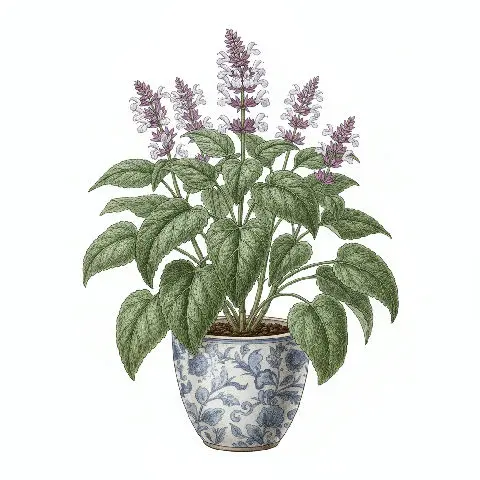
Clary Sage, botanically known as Salvia sclarea, is a robust herbaceous biennial or short-lived perennial belonging to the extensive Lamiaceae family, commonly referred to as the mint family. Native to the Mediterranean Basin, North Africa, and Central Asia, this remarkable plant has naturalized across various temperate regions globally, thriving in well-drained soils and full sun. It typically grows to a height of 0.5 to 1.5 meters (1.5 to 5 feet), characterized by its distinctive square stems, a hallmark of the Lamiaceae family, which are often covered in fine, glandular hairs. The leaves are large, broadly ovate to cordate, rugose (wrinkled), and covered in soft, downy hairs, especially on the underside, giving them a grayish-green appearance. They are arranged oppositely along the stem and possess a strongly aromatic, somewhat musky yet sweet fragrance when crushed, often described as a complex blend of earthy, floral, and slightly animalic notes.
The inflorescence of Clary Sage is a striking feature, consisting of tall, erect spikes of whorled flowers (verticillasters) that emerge from the upper leaf axils. These flowers are typically pale blue, lilac, or sometimes white, encased by large, showy, often pinkish-purple or white bracts that are more prominent than the actual flowers, contributing significantly to the plant's ornamental appeal. The blooming period usually occurs in early to mid-summer, attracting a variety of pollinators, particularly bees, which are essential for its reproduction. The root system is fibrous and moderately deep, anchoring the plant firmly in its preferred well-drained soil, making it relatively drought-tolerant once established. Taxonomically, Salvia sclarea is part of the Salvia genus, one of the largest genera in the Lamiaceae family, comprising nearly 1000 species.
Its specific epithet 'sclarea' is derived from the Latin 'clarus', meaning 'clear', referencing its historical use as an eye cleanser. Historically, Clary Sage has been revered since ancient Roman times, not only for its medicinal properties but also for its culinary and aromatic applications. It was a popular flavoring agent for wine and beer before the widespread use of hops, contributing a unique muscatel flavor, hence one of its common names, Muscatel Sage. Trusted Scientific References Authoritative external sources for Salvia sclarea : Wikipedia — Salvia sclarea Kew POWO (Plants of the World Online) PubMed — peer-reviewed research NCBI Taxonomy Browser ...[CURRENT TEXT EXISTS: 2527 chars]
1.1.Clary Sage — Notable Characteristics
- ✓Distinctive Aroma — Musky, sweet, earthy, and herbaceous fragrance.
- ✓Showy Bracts — Large, colorful bracts that are more prominent than the flowers.
- ✓Hormonal Support — Well-regarded for its benefits related to female reproductive health.
- ✓Mood Enhancer — Known for its calming, uplifting, and anxiolytic effects.
- ✓Antispasmodic Properties — Effective for relieving cramps and muscle tension.
- ✓Culinary History — Used as a traditional flavoring for wines and beers.
- ✓Adaptable Growth — Thrives in Mediterranean climates with well-drained soil and sun.
- ✓Bee Attractor — Highly attractive to pollinators, supporting biodiversity.
- ✓Biennial/Perennial — Typically lives for two years, flowering in the second, but can be short-lived perennial.
- ✓Lamiaceae Family Traits — Square stems and opposite leaves are characteristic.
1.2.Clary Sage — In Brief
- ✓Botanical Name — Salvia sclarea, a member of the Lamiaceae (mint) family.
- ✓Key Benefits — Hormone balancing, mood enhancing, antispasmodic, digestive aid.
- ✓Primary Constituents — Linalyl acetate, linalool, and sclareol, responsible for its therapeutic effects.
- ✓Traditional Uses — Eye cleanser, flavoring agent for wine/beer, menstrual support, nervous system tonic.
- ✓Safety Concerns — Contraindicated in early pregnancy, avoid with alcohol, may cause drowsiness.
- ✓Usage Forms — Primarily essential oil (inhalation, topical) and herbal tea.
2.Clary Sage — Nomenclature & Classification
3.Clary Sage — Key Data
4.Clary Sage — Botanical Features
5.Clary Sage — Ecological Habitat
6.Clary Sage — Folk Medicine Applications
7.Clary Sage — Phytochemistry
- ✓Terpenoids — Linalyl acetate (up to 75%) and linalool (up to 20%) are primary components, responsible for the characteristic aroma and significant anxiolytic, sedative, and antispasmodic actions. Germacrene D and β-caryophyllene contribute to its anti-inflammatory properties.
- ✓Diterpenes — Sclareol is a key diterpene, known for its sclareolide precursor, which has estrogen-like activity and is a valuable fixative in perfumery, contributing to hormonal balancing effects.
- ✓Flavonoids — Compounds like apigenin and luteolin glycosides possess antioxidant and anti-inflammatory activities, supporting overall cellular health and reducing oxidative stress.
- ✓Phenolic Acids — Rosmarinic acid and caffeic acid derivatives are present, acting as potent antioxidants and contributing to the plant's anti-inflammatory and antimicrobial profile.
- ✓Coumarins — Trace amounts of coumarins may be present, potentially contributing to mild anticoagulant or anti-inflammatory effects.
- ✓Esters — Predominantly linalyl acetate, which is crucial for the oil's calming, sedative, and antispasmodic actions.
- ✓Monoterpenes — Pinene and limonene are minor components, contributing to the fresh, uplifting notes of the aroma and possessing some antimicrobial properties.
- ✓Sesquiterpenes — Germacrene D and caryophyllene provide deeper, earthy notes and contribute to the anti-inflammatory and analgesic effects.
8.Clary Sage — Pharmacological Findings
- ✓Hormone Regulation — Clary Sage is believed to support the endocrine system, particularly in balancing female hormones, which can alleviate symptoms associated with PMS, menstrual irregularities, and menopause by influencing estrogen levels.
- ✓Mood Enhancement — The essential oil is widely recognized for its anxiolytic and antidepressant properties, helping to reduce stress, anxiety, and mild depression by promoting feelings of relaxation and well-being.
- ✓Antispasmodic Action — Its compounds, especially linalyl acetate, contribute to its ability to relax smooth muscles, making it effective in relieving menstrual cramps, muscle spasms, and gastrointestinal discomfort like bloating and flatulence.
- ✓Digestive Aid — Traditionally, infusions of Clary Sage leaves have been used to stimulate digestion, reduce gas, and alleviate symptoms of indigestion and irritable bowel syndrome (IBS) due to its bitter and carminative properties.
- ✓Respiratory Support — As an expectorant and antimicrobial, Clary Sage can help clear respiratory congestion, support lung function, and aid in recovery from mild respiratory infections or coughs.
- ✓Eye Health — Historically, the seeds were used to 'clear' the eyes, forming a mucilaginous substance to remove irritants, lending to its Latin name 'sclarea' (clarus = clear).
- ✓Skin Health — Applied topically (diluted), its anti-inflammatory and antiseptic properties can help soothe skin irritations, reduce inflammation, and promote healing of minor wounds or blemishes.
- ✓Sedative Properties — The calming effect of Clary Sage makes it beneficial for promoting restful sleep and easing nervous tension, often used in aromatherapy for insomnia.
- ✓Uterine Tonic — It is considered a uterine tonic, useful during childbirth to strengthen contractions and post-partum to aid recovery, though professional guidance is crucial.
- ✓Antioxidant Activity — Certain constituents exhibit antioxidant effects, helping to protect cells from oxidative stress and free radical damage.
8.1.Clary Sage — Indications & Uses
9.Clary Sage — Safety & Side Effects
9.1.Clary Sage — Warnings
- ✓Drowsiness — Clary Sage essential oil can induce significant drowsiness, especially when used in large amounts, making it unsafe before driving or operating machinery.
- ✓Interaction with Alcohol — May intensify the effects of alcohol, leading to increased intoxication and impaired judgment.
- ✓Uterine Contractions — Due to its emmenagogue properties, it can stimulate uterine contractions, making it contraindicated during early pregnancy.
- ✓Skin Irritation — Undiluted essential oil can cause skin irritation or allergic reactions in sensitive individuals. Always perform a patch test.
- ✓Hypotension — In some individuals, it may cause a drop in blood pressure, especially if already prone to low blood pressure.
- ✓Nausea/Headache — Excessive use or sensitivity can lead to mild side effects like nausea or headaches.
9.2.Clary Sage — Clinical Safety Notes
- ✓Pregnancy — Absolutely contraindicated during early pregnancy due to its emmenagogue and uterine stimulant properties. May be used with professional guidance during labor.
- ✓Breastfeeding — Avoid use during breastfeeding as its effects on infants are not well-studied.
- ✓Children — Not recommended for use in young children due to lack of safety data and potential for strong effects.
- ✓Alcohol Consumption — Avoid using Clary Sage essential oil simultaneously with alcohol, as it can heighten intoxicating effects and impair judgment.
- ✓Driving/Operating Machinery — Due to its sedative effects, avoid using Clary Sage before driving or engaging in activities requiring alertness.
- ✓Medical Conditions — Individuals with hormone-sensitive conditions (e.g., endometriosis, breast cancer) should consult a healthcare professional before use due to sclareol's estrogen-like activity.
- ✓Dilution — Always dilute Clary Sage essential oil in a carrier oil before topical application to prevent skin irritation.
10.Clary Sage — Preparation Methods
- ✓Aromatherapy Inhalation — Diffuse Clary Sage essential oil (3-5 drops) to promote relaxation, reduce stress, and improve mood. Inhale directly from the bottle or a tissue for quick relief.
- ✓Topical Application — Dilute 2-3 drops of essential oil per teaspoon of carrier oil (e.g., jojoba, almond) and massage onto the abdomen for menstrual cramps, onto pulse points for stress relief, or sore muscles.
- ✓Herbal Infusion (Tea) — Steep 1-2 teaspoons of dried Clary Sage leaves and flowers in hot water for 5-10 minutes. Strain and drink for digestive support or to promote relaxation. Not for essential oil.
- ✓Bath Soak — Add 5-10 drops of essential oil, diluted in a dispersant like Epsom salts or a carrier oil, to bathwater for a relaxing and muscle-soothing experience.
- ✓Poultice — Historically, fresh crushed leaves were applied as a poultice to soothe skin irritations or swellings. Ensure skin sensitivity is tested first.
- ✓Culinary Use — Young fresh leaves can be finely chopped and added sparingly to salads, soups, or stews for a unique, muscatel-like flavor. Used as a hop substitute in traditional brewing.
- ✓Compresses — Soak a cloth in a diluted essential oil mixture or a strong herbal infusion and apply to affected areas for pain relief or inflammation.
11.Clary Sage — Cultivation & Care
- ✓Soil Preparation — Prefers well-drained, moderately fertile soil with a pH of 6.0-7.5. Improve heavy clay soils with organic matter and sand.
- ✓Sun Exposure — Requires full sun for at least 6 hours daily to thrive and produce abundant flowers and essential oils.
- ✓Sowing Seeds — Sow seeds directly outdoors in late spring or early summer after the last frost, or start indoors 6-8 weeks prior. Lightly cover seeds as they need light to germinate.
- ✓Watering — Water regularly until established, then Clary Sage is relatively drought-tolerant. Avoid overwatering, which can lead to root rot.
- ✓Spacing — Space plants 60-90 cm (2-3 feet) apart to allow for mature size and good air circulation.
- ✓Fertilization — Generally not a heavy feeder; a light application of compost or balanced organic fertilizer in spring is sufficient.
- ✓Pest and Disease Management — Relatively pest-free, but watch for aphids. Good air circulation helps prevent fungal issues like powdery mildew.
- ✓Harvesting — Harvest leaves and flowering tops for distillation or drying when the plant is in full bloom, typically in mid-summer of its second year.
Reviewed by the Flora Medical Global Botanical Review Panel
Multi-disciplinary editorial group · Botany · Ethnobotany · Herbal-medicine literature
Who reviewed this: This page was checked by the Flora Medical Global Botanical Review Panel — an in-house editorial group of botany graduates, ethnobotany researchers, and horticulture practitioners who collectively maintain our 7,000+ plant encyclopedia. Meet the team.
Our 4-step verification process
1. Taxonomic verification
Scientific names and synonyms cross-checked against Kew POWO, World Flora Online, and The Plant List.
2. Phytochemical & medicinal cross-reference
Active compounds, traditional uses, and reported activities are cross-referenced with PubMed, USDA Dr. Duke's database, and peer-reviewed ethnobotanical literature.
3. Conservation & distribution check
Distribution, ecology, and conservation status confirmed against GBIF occurrence records and the IUCN Red List.
4. Editorial & safety review
Every entry passes an editorial pass for clarity, originality, and safety notices (toxicity, contraindications, dosage caveats) before publication.
Last reviewed:
Important medical disclaimer: This content is for educational and research purposes only. It is not medical advice and is not a substitute for consultation with a licensed healthcare provider. Do not use any herb to self-treat a medical condition without professional guidance.
Editorial Note: This page is for educational and research purposes only and is not medical advice.
Written by: Flora Medical Global Editorial Team
Reviewed by: Flora Medical Global Botanical Review Panel
Last Updated: June 15, 2026





Clary Sage — Comments & Community Reviews
Rate this plant