

Medical Disclaimer: This content is for educational purposes only. It is not medical advice. Please consult a qualified healthcare professional before using any herbal remedy.
Safety Overview
1.Clausena — Essential Profile
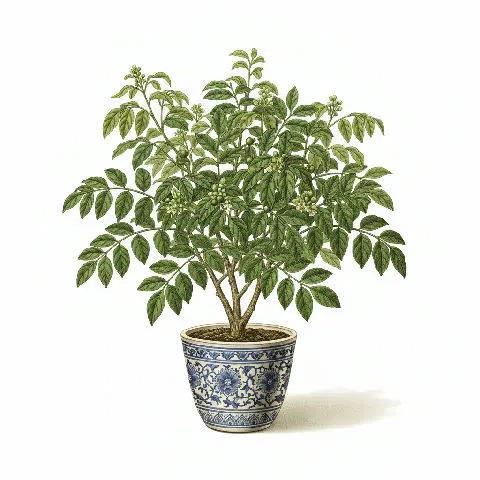
Clausena excavata, commonly known as the Chinese orange, is an esteemed member of the Rutaceae family, sharing kinship with the widely recognized citrus genus. This species manifests as a robust shrub or a small, elegant tree, typically reaching heights of up to 5 meters, though sometimes exceeding this in optimal conditions. Its botanical structure is characterized by alternate, imparipinnate leaves, which are a defining feature, measuring between 8 to 15 cm in length. Each leaf is composed of 3 to 7 distinct leaflets that exhibit a lanceolate to ovate shape, ranging from 2 to 7 cm long and 1.5 to 3 cm wide. A distinctive characteristic of the foliage is its wavy, undulate margins, which impart a unique texture and contribute to the plant's aesthetic appeal.
When crushed, the leaves release a pungent, aromatic fragrance, indicative of the essential oils contained within, a common trait among Rutaceae members. The inflorescence of Clausena excavata consists of small clusters of fragrant, hermaphroditic flowers, typically white to pale yellow in coloration, which emerge from the leaf axils. Each flower measures approximately 1 to 2 cm in diameter and is structurally composed of five delicate petals and a prominent arrangement of numerous yellow stamens, contributing to the plant's overall aromatic profile. Following successful pollination, these blossoms give way to the development of fleshy, globose berries, each approximately 1 cm in diameter. These fruits undergo a striking transformation during ripening, transitioning from an initial green hue to a vibrant, bright orange, enclosing several small, ovoid seeds.
The bark of Clausena excavata is generally smooth and grayish, often displaying a tendency to exfoliate or peel in strips, presenting a distinct and recognizable appearance. The root system is typically a taproot with lateral fibrous roots, anchoring the plant firmly and efficiently absorbing nutrients from the soil. Ecologically, Clausena excavata thrives in tropical and subtropical regions of Asia, including Southeast Asia and South Asia, often found in forests, thickets, and along forest margins. Its natural distribution spans from India and Sri Lanka across to Southern China and through to the Malay Peninsula, where it adapts to various soil types, preferring well-drained, fertile loams. Trusted Scientific References Authoritative external sources for Clausena excavata : Wikipedia — Clausena excavata Kew POWO (Plants of the World Online) PubMed ...[CURRENT TEXT EXISTS: 2574 chars]
1.1.Clausena — Distinguishing Points
- ✓Botanical Identity — A robust shrub or small tree, reaching up to 5 meters, belonging to the Rutaceae family.
- ✓Leaf Morphology — Characterized by alternate, imparipinnate leaves with wavy, undulate margins and a pungent aroma when crushed.
- ✓Floral Characteristics — Small, fragrant white to pale yellow hermaphroditic flowers arranged in axillary clusters.
- ✓Fruit Description — Develops into fleshy, globose berries that ripen from green to vibrant orange, containing ovoid seeds.
- ✓Aromatic Profile — Rich in essential oils, particularly anethole, giving it a distinctive, strong scent.
- ✓Traditional Medicinal Use — Widely employed in traditional Asian medicine for various ailments, including digestive and inflammatory conditions.
- ✓Phytochemical Richness — A source of diverse bioactive compounds such as coumarins, flavonoids, alkaloids, and phenolics.
- ✓Research Interest — Subject to ongoing scientific studies for its antioxidant, antihypertensive, antidiabetic, and anticancer potentials.
- ✓Ecological Niche — Thrives in tropical and subtropical forests and thickets across Southeast and South Asia.
- ✓Common Names — Known as Chinese orange, 'Kam-lang-chang' in Thai, or 'Amorphus' in some regions.
1.2.Clausena — Quick Summary
- ✓Clausena excavata is a tropical shrub in the Rutaceae family, known for its aromatic leaves and orange berries.
- ✓Traditionally used for its medicinal properties, including antioxidant, anti-inflammatory, and antimicrobial effects.
- ✓Modern research highlights its potential in managing hypertension, diabetes, and exhibiting anticancer activity.
- ✓Key chemical constituents include anethole, coumarins, flavonoids, and carbazole alkaloids.
- ✓Exercise caution with use, especially during pregnancy, lactation, and for those with photosensitivity.
- ✓Cultivated in warm climates, preferring well-drained soil and consistent moisture.
2.Clausena — Botanical Identity
3.Clausena — Vital Statistics
4.Clausena — Physical Description
5.Clausena — Native Range & Habitat
6.Clausena — Folk Medicine Applications
7.Clausena — Chemical Profile
- ✓Essential Oils — Dominantly features anethole (up to 86.72% in C. excavata), which is responsible for its characteristic aroma and contributes to antimicrobial and anti-inflammatory actions.
- ✓Coumarins — Includes compounds like auraptene, clausenin, and related furanocoumarins, often associated with anti-inflammatory, antimicrobial, and insecticidal activities.
- ✓Flavonoids — Contains a range of flavonoid glycosides and aglycones, such as quercetin and kaempferol derivatives, known for their potent antioxidant and anti-inflammatory properties.
- ✓Phenolic Acids — Various phenolic acids, including gallic acid and caffeic acid, contribute significantly to the plant's overall antioxidant capacity and protective cellular effects.
- ✓Carbazole Alkaloids — Specific to the Rutaceae family, these nitrogen-containing compounds like clausenine and girinimbine are often linked to diverse biological activities, including anticancer and antimicrobial effects.
- ✓Terpenoids — Beyond essential oil components, other terpenoids like limonene and caryophyllene are present, contributing to the plant's aroma and displaying various pharmacological actions.
- ✓Lignans — These plant compounds are known for their antioxidant and potential estrogenic activities, though their specific roles in Clausena excavata are still under investigation.
- ✓Steroids — Plant steroids (phytosterols) are present, which can influence cell membrane integrity and may have hormone-modulating effects.
8.Clausena — Evidence-Based Benefits
- ✓Antioxidant Support — Clausena excavata extracts demonstrate significant antioxidant activity, neutralizing harmful free radicals and protecting cells from oxidative damage, as evidenced by DPPH, ABTS, and FRAP assays.
- ✓Antihypertensive Potential — Studies indicate that compounds within Clausena excavata may inhibit ACE (angiotensin-converting enzyme) activity, contributing to blood pressure regulation and supporting cardiovascular health.
- ✓Alpha-Glucosidase Inhibition — The plant exhibits an ability to inhibit alpha-glucosidase, an enzyme involved in carbohydrate digestion, which can help manage post-prandial blood glucose levels, suggesting its potential in diabetes management.
- ✓Anticancer Properties — Preliminary research suggests Clausena excavata may possess cytotoxic effects against certain human lung cancer cells in vitro, indicating a potential role in cancer research and treatment development.
- ✓Anti-inflammatory Effects — Traditional uses and phytochemical profiles suggest anti-inflammatory properties, potentially due to the presence of flavonoids and coumarins that modulate inflammatory pathways.
- ✓Antimicrobial Activity — Various extracts of Chinese orange have shown inhibitory effects against certain bacteria and fungi, supporting its traditional use in managing infections.
- ✓Analgesic Relief — In folk medicine, Clausena excavata has been employed for its pain-relieving qualities, likely attributed to compounds that interact with pain perception pathways.
- ✓Antimalarial Potential — Some species within the Clausena genus have been investigated for antimalarial activity, pointing to a potential for similar effects in Clausena excavata.
- ✓Digestive Aid — Traditionally, parts of the plant are used to stimulate digestion and alleviate gastrointestinal discomfort, possibly due to its aromatic essential oils.
- ✓Insecticidal Properties — The pungent essential oils, particularly rich in anethole, contribute to the plant's natural defense mechanisms and have been explored for their insecticidal and repellent qualities.
8.1.Clausena — Reported Uses
9.Clausena — Safety Considerations
9.1.Clausena — Caution Notes
- ✓Skin Irritation — Direct contact with fresh sap or essential oil may cause dermatitis or photosensitivity in sensitive individuals.
- ✓Gastrointestinal Upset — High doses of internal preparations may lead to nausea, vomiting, or stomach discomfort.
- ✓Photosensitivity — Coumarins present in the plant can increase sensitivity to sunlight, potentially causing sunburn or skin reactions.
- ✓Allergic Reactions — Individuals with sensitivities to Rutaceae family plants may experience allergic responses.
- ✓Drug Interactions — Potential for interaction with medications, especially blood thinners or drugs metabolized by the liver, due to active compounds.
- ✓Hypotension — Due to its potential antihypertensive effects, excessive use might lead to a significant drop in blood pressure.
9.2.Clausena — Toxicity Assessment
- ✓Pregnancy and Lactation — Avoid use during pregnancy and lactation due to insufficient safety data and potential abortifacient properties.
- ✓Children — Not recommended for use in infants and young children without expert medical advice.
- ✓Photosensitivity Risk — Advise caution with sun exposure after topical or internal use, especially for individuals sensitive to furanocoumarins.
- ✓Pre-existing Conditions — Individuals with bleeding disorders, hypotension, or liver/kidney conditions should consult a healthcare professional before use.
- ✓Allergic History — Contraindicated in individuals with known allergies to plants in the Rutaceae family.
- ✓Dosage Adherence — Adhere strictly to recommended dosages; high concentrations of essential oils can be toxic.
- ✓Patch Test — Perform a patch test before extensive topical application to check for skin sensitivity.
10.Clausena — Usage Guide
- ✓Herbal Tea Infusion — Dried leaves or bark can be steeped in hot water to create a medicinal tea, traditionally used for digestive issues or as a general tonic.
- ✓Topical Poultice — Crushed fresh leaves or a paste made from the bark can be applied externally as a poultice for skin ailments, inflammation, or minor wounds.
- ✓Decoction — Boil bark or roots in water for a longer period to extract more potent compounds, often used for more chronic conditions or internal remedies.
- ✓Essential Oil Extraction — Leaves and other aerial parts are steam-distilled to obtain essential oil, which is then used in aromatherapy or diluted for topical application.
- ✓Tincture Preparation — Macerate plant parts (leaves, bark) in alcohol to create a concentrated liquid extract, allowing for precise dosing.
- ✓Culinary Use — In some regions, the leaves are used as a flavoring agent in traditional dishes, similar to curry leaves, adding a pungent, aromatic note.
- ✓Incense or Fumigation — Dried plant material may be burned to release aromatic smoke, traditionally used for insect repellent or purification purposes.
11.Clausena — Cultivation & Care
- ✓Climate Preference — Thrives in tropical and subtropical climates, requiring warm temperatures and high humidity for optimal growth.
- ✓Soil Requirements — Prefers well-drained, fertile loam soils with a slightly acidic to neutral pH (6.0-7.0).
- ✓Sun Exposure — Requires full sun to partial shade; young plants may benefit from some afternoon shade in very hot climates.
- ✓Watering — Needs consistent moisture, especially during dry periods, but avoid waterlogging to prevent root rot.
- ✓Propagation — Commonly propagated by seeds, which should be fresh, or by semi-hardwood cuttings for genetic consistency.
- ✓Fertilization — Benefits from regular feeding with a balanced organic fertilizer, particularly during its active growing season.
- ✓Pruning — Prune to maintain desired shape, remove dead or diseased branches, and encourage bushier growth, typically after flowering or fruiting.
- ✓Pests and Diseases — Generally robust, but monitor for common citrus pests like scale insects or aphids, and fungal diseases in overly wet conditions.
Reviewed by the Flora Medical Global Botanical Review Panel
Multi-disciplinary editorial group · Botany · Ethnobotany · Herbal-medicine literature
Who reviewed this: This page was checked by the Flora Medical Global Botanical Review Panel — an in-house editorial group of botany graduates, ethnobotany researchers, and horticulture practitioners who collectively maintain our 7,000+ plant encyclopedia. Meet the team.
Our 4-step verification process
1. Taxonomic verification
Scientific names and synonyms cross-checked against Kew POWO, World Flora Online, and The Plant List.
2. Phytochemical & medicinal cross-reference
Active compounds, traditional uses, and reported activities are cross-referenced with PubMed, USDA Dr. Duke's database, and peer-reviewed ethnobotanical literature.
3. Conservation & distribution check
Distribution, ecology, and conservation status confirmed against GBIF occurrence records and the IUCN Red List.
4. Editorial & safety review
Every entry passes an editorial pass for clarity, originality, and safety notices (toxicity, contraindications, dosage caveats) before publication.
Last reviewed:
Important medical disclaimer: This content is for educational and research purposes only. It is not medical advice and is not a substitute for consultation with a licensed healthcare provider. Do not use any herb to self-treat a medical condition without professional guidance.
Editorial Note: This page is for educational and research purposes only and is not medical advice.
Written by: Flora Medical Global Editorial Team
Reviewed by: Flora Medical Global Botanical Review Panel
Last Updated: June 15, 2026





Clausena — Comments & Community Reviews
Rate this plant