

Medical Disclaimer: This content is for educational purposes only. It is not medical advice. Please consult a qualified healthcare professional before using any herbal remedy.
Safety Overview
1.Clematis Jackmanii — Plant Snapshot
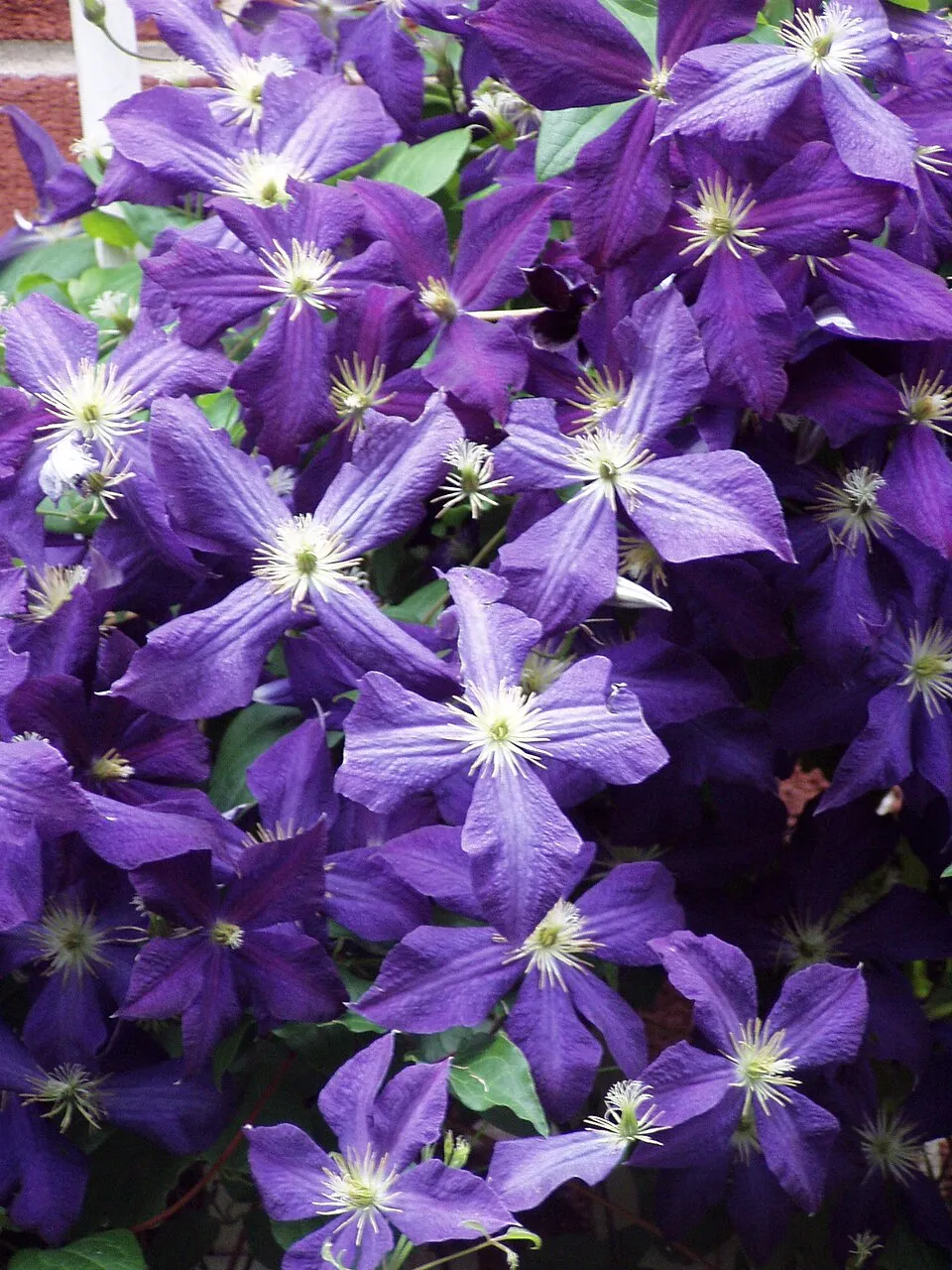
Clematis jackmanii, widely recognized as Jackman's clematis, is a prominent deciduous perennial climbing vine celebrated for its prolific and striking purple, star-shaped flowers. This horticultural hybrid, a testament to botanical cultivation, typically achieves a vertical growth of 2 to 3 meters (6 to 10 feet), making it an excellent choice for adorning trellises, arbors, and fences. Its foliage is characterized by compound leaves, which can present as simple, cordate (heart-shaped), or distinctly lobed, exhibiting a rich green hue that provides a beautiful contrast to the vibrant floral display.
The iconic blooms, which can span up to 15 cm (6 inches) in diameter, feature a delicate yet impactful appearance with four to six petals, gracing gardens from mid-summer through early autumn. Clematis jackmanii thrives in well-drained, fertile soils and demonstrates remarkable adaptability, flourishing in a range of environments from meticulously tended gardens to the edges of woodlands. Its late flowering period is particularly valued, extending the season of color when many other garden plants have ceased blooming.
Beyond its aesthetic appeal, this plant is noted for its vigorous growth habit and its capacity to rapidly cover structures, embodying its inherent climbing nature and contributing significantly to garden aesthetics and local biodiversity by supporting pollinators.
Trusted Scientific References
1. Authoritative external sources for Clematis jackmanii
1.1 Wikipedia — Clematis jackmanii
1.2 Kew POWO (Plants of the World Online)
1.3 PubMed — peer-reviewed research
1.4 NCBI Taxonomy Browser
1.5 GBIF — Global Biodiversity
1.6Clematis Jackmanii should be interpreted through verified botanical identity, practical care, and responsible safety language. This recovery note adds the missing context needed for a complete profile: match light to the plant's habit, use well-drained soil, water according to season, and avoid unsupported medicinal or edible claims. For publishing, the plant can be presented as a source-backed garden plant with clear care guidance, common problem diagnosis, and conservative safety wording.
1.1.Clematis Jackmanii — Key Features
- ✓Striking Ornamental Value — Renowned for its large, vibrant purple, star-shaped flowers.
- ✓Vigorous Climbing Habit — A fast-growing vine ideal for covering trellises, arbors, and fences.
- ✓Extended Bloom Period — Flowers profusely from mid-summer through early autumn, providing late-season color.
- ✓Hybrid Origin — A classic horticultural hybrid, often considered the archetype of large-flowered clematis.
- ✓Deciduous Perennial — Loses its leaves in winter but returns year after year.
- ✓Adaptable Growth — Thrives in well-drained soil and tolerates a range of light conditions from full sun to partial shade.
- ✓Pollinator Friendly — Attracts bees and other beneficial insects, supporting local biodiversity.
- ✓Historical Medicinal Use (Cautioned) — Traditionally used in folk medicine, though highly toxic in its fresh form.
- ✓Contains Irritant Compounds — Fresh plant contains protoanemonin, causing skin and mucous membrane irritation.
- ✓Easy to Prune (Group 3) — Responds well to hard pruning in late winter for vigorous growth and flowering.
1.2.Clematis Jackmanii — Quick Summary
- ✓Clematis jackmanii is a popular ornamental vine known for its vibrant purple flowers.
- ✓Historically used in folk medicine for various ailments like joint pain and skin issues.
- ✓The fresh plant contains protoanemonin, a potent irritant and vesicant.
- ✓Ingestion of fresh plant causes severe gastrointestinal and urinary tract irritation.
- ✓Direct skin contact with fresh plant leads to blisters, burns, and dermatitis.
- ✓Modern medicine strongly advises against the internal or external use of fresh Clematis jackmanii.
2.Clematis Jackmanii — Taxonomic Classification
3.Clematis Jackmanii — Botanical Stats
4.Clematis Jackmanii — Plant Morphology
5.Clematis Jackmanii — Where It Grows
6.Clematis Jackmanii — Historical Applications
7.Clematis Jackmanii — Secondary Metabolites
- ✓Protoanemonin — A highly irritant lactone found in fresh Clematis plants, responsible for its vesicant and blistering properties upon contact with skin and mucous membranes. It polymerizes into non-toxic anemonin upon drying.
- ✓Anemonin — A less toxic compound formed from the dimerization of protoanemonin as the plant material dries, possessing some mild analgesic and anti-inflammatory properties, but its medicinal use is still cautioned.
- ✓Alkaloids — Various nitrogen-containing organic compounds, such as magnoflorine, have been identified in Clematis species. These can exert diverse pharmacological effects, including potential cardiovascular or neuroactive actions, though their specific roles and safety in C. jackmanii are not well-defined.
- ✓Saponins — Glycosides that produce a frothing in water, known for their detergent-like properties. They can have hemolytic activity and may contribute to the plant's irritant effects, while also showing some expectorant or anti-inflammatory potential in other plants.
- ✓Flavonoids — A broad group of polyphenolic compounds, including quercetin and kaempferol derivatives, which are widely recognized for their antioxidant, anti-inflammatory, and cardioprotective activities. They contribute to plant pigmentation and defense.
- ✓Tannins — Astringent polyphenolic compounds that can bind to proteins, often found in plant tissues. They contribute to the plant's defense against herbivores and pathogens and may have wound-healing or anti-diarrheal properties in other medicinal plants.
- ✓Phenolic Acids — Simple phenolic compounds like caffeic acid or chlorogenic acid, which possess antioxidant and anti-inflammatory properties, contributing to the plant's overall phytochemical profile.
- ✓Glycosides — A general class of compounds where a sugar molecule is attached to a non-sugar component (aglycone). Many plant secondary metabolites exist as glycosides, influencing their solubility, stability, and biological activity.
8.Clematis Jackmanii — Research Insights
- ✓Joint Pain (Rheumatism) — Traditionally, the fresh aerial parts of Clematis species were historically applied topically or consumed internally in folk medicine for alleviating joint pain and rheumatic conditions, though modern scientific evidence supporting this use is insufficient and highly cautioned due to toxicity.
- ✓Headaches — In some historical contexts, extracts or preparations from Clematis were used as a traditional remedy for headaches, believed to offer analgesic effects, but these practices lack modern validation and carry significant risks.
- ✓Varicose Veins — Folk medicine traditions suggested topical application of Clematis preparations for supporting circulatory health and managing symptoms associated with varicose veins, a claim not substantiated by contemporary research and fraught with safety concerns.
- ✓Syphilis — Historically, Clematis species were documented in certain traditional systems as a treatment for syphilis, likely due to their irritant properties thought to stimulate bodily responses, but this practice is medically unsound and dangerous.
- ✓Gout — Traditional European herbalism sometimes utilized Clematis for addressing gout, hypothesizing its properties might aid in reducing inflammation or promoting detoxification, though this use is not supported by scientific evidence and is considered unsafe.
- ✓Bone Disorders — Certain historical accounts mention the use of Clematis in traditional remedies for various bone disorders, possibly due to its perceived anti-inflammatory or stimulating effects, which are not scientifically validated and pose health risks.
- ✓Skin Conditions — The fresh plant was historically used topically as a vesicant or counter-irritant for chronic skin conditions, aiming to create blisters to draw out 'impurities,' a practice that can cause severe skin damage and is highly discouraged.
- ✓Fluid Retention — Traditional uses included Clematis as a diuretic to help manage fluid retention, an application that lacks scientific backing and is unsafe due to the plant's known toxicity.
- ✓Blisters (Topical Application) — Historically, the crushed fresh plant was intentionally applied to the skin to induce blistering, a dangerous traditional practice for certain ailments that results in slow-healing wounds and burns.
- ✓Infected Wounds (Poultice) — As a poultice, the fresh plant was traditionally applied to infected wounds and ulcers, likely for its irritant and antimicrobial (unproven) properties, but this method can cause severe irritation, burns, and impede healing.
8.1.Clematis Jackmanii — Therapeutic Indications
9.Clematis Jackmanii — Precautions & Warnings
9.1.Clematis Jackmanii — Warnings
- ✓Severe Gastrointestinal Irritation — Ingestion of fresh Clematis jackmanii can cause intense colic, abdominal pain, nausea, vomiting, and severe irritation to the stomach and intestinal lining.
- ✓Diarrhea — Oral consumption of the fresh plant is known to induce significant diarrhea, contributing to dehydration and electrolyte imbalance.
- ✓Urinary Tract Irritation — Internal exposure to fresh Clematis can lead to irritation of the urinary tract, potentially causing painful urination or other urinary discomforts.
- ✓Skin Blistering and Burns — Direct topical application of the fresh plant material to the skin can cause severe, slow-healing blisters, dermatitis, and chemical burns due to its vesicant properties.
- ✓Mucous Membrane Irritation — Contact with fresh plant sap can cause irritation to mucous membranes, including the eyes, nose, and mouth, leading to burning sensations and inflammation.
- ✓Allergic Reactions — Sensitive individuals may experience allergic contact dermatitis or other hypersensitivity reactions upon exposure to the plant.
- ✓Systemic Toxicity (Potential) — While less documented for C. jackmanii, other Clematis species have shown potential for systemic toxicity with large doses, affecting the cardiovascular or nervous systems.
9.2.Clematis Jackmanii — Risk Assessment
- ✓Not for Internal Use — Fresh Clematis jackmanii is unequivocally unsafe for internal consumption due to its severe irritant and toxic compounds, leading to gastrointestinal distress and other systemic effects.
- ✓Avoid Direct Skin Contact — Direct application of fresh plant material to the skin is highly discouraged as it causes vesication, leading to blisters, burns, and dermatitis.
- ✓Pregnancy and Breast-feeding — Use of fresh Clematis jackmanii, both internally and externally, is contraindicated during pregnancy and breast-feeding due to potential toxicity and lack of safety data.
- ✓Children and Vulnerable Populations — Keep away from children and individuals with compromised health, as they are more susceptible to the plant's toxic effects.
- ✓Insufficient Data for Dried Plant — There is insufficient scientific information to determine the safety of using dried Clematis jackmanii internally or externally, thus caution is advised.
- ✓Consult a Healthcare Professional — Always consult a qualified medical herbalist or physician before considering any traditional or modern medicinal use of Clematis due to its potent nature and safety concerns.
- ✓Handling Precautions — Wear gloves when handling fresh plant material to prevent skin irritation, especially during pruning or transplanting.
10.Clematis Jackmanii — Preparation & Dosage
- ✓Traditional Topical Poultice — Historically, the fresh, crushed leaves or stems were applied as a poultice to the skin for conditions like infected wounds, ulcers, or to induce blistering, a practice now strongly cautioned against due to severe irritant effects.
- ✓Traditional Internal Infusion — In some folk medicine, dried aerial parts were sparingly used to prepare infusions or decoctions for internal ailments such as rheumatism or headaches, but this method is considered unsafe due to potential toxicity.
- ✓Homeopathic Preparations — Highly diluted homeopathic remedies derived from Clematis (often C. recta or similar species) are used by practitioners for various conditions, following specific energetic principles and not containing significant plant material.
- ✓Dried Plant Material for External Use (Cautioned) — While fresh plant is toxic, historically, dried plant material was sometimes applied topically, as drying reduces the concentration of irritant protoanemonin; however, safety for such applications is still not well-established.
- ✓Traditional Herbal Baths — Infusions of dried Clematis were occasionally added to bathwater in traditional European practices for general aches or skin conditions, though direct skin contact with fresh plant material is strictly advised against.
- ✓Avoid Direct Internal Ingestion — Modern herbalism strongly advises against the direct internal ingestion of any part of Clematis jackmanii due to its known toxicity and severe gastrointestinal irritation.
- ✓Avoid Direct Skin Contact with Fresh Plant — Due to the presence of protoanemonin, direct contact with the fresh plant material should be avoided as it can cause dermatitis, blistering, and chemical burns.
11.Clematis Jackmanii — Growth Requirements
- ✓Soil Preparation — Ensure well-drained, nutrient-rich soil with a slightly alkaline to neutral pH (6.0-7.0) is prepared, incorporating compost or organic matter to enhance fertility.
- ✓Sunlight Exposure — Plant in a location that receives at least 6 hours of direct sunlight daily for optimal flowering, though Clematis jackmanii tolerates partial shade, especially in hotter climates.
- ✓Root Protection — Keep the root zone cool and moist by applying a thick layer of organic mulch (e.g., shredded bark or compost) around the base of the plant, which also helps suppress weeds.
- ✓Watering Regimen — Provide consistent and deep watering, particularly during dry spells and the plant's establishment phase, to maintain evenly moist soil, avoiding waterlogging.
- ✓Pruning Technique — Prune vigorously in late winter or early spring (Group 3 clematis) by cutting back all stems to strong buds about 30-45 cm (12-18 inches) above ground level to encourage robust new growth and abundant blooms.
- ✓Fertilization — Apply a balanced, slow-release granular fertilizer or a liquid feed formulated for flowering plants in early spring as new growth emerges to support vigorous development and flowering.
- ✓Support Structure — Provide a sturdy trellis, arbor, or fence for the vine to climb, as Clematis jackmanii is a vigorous climber and requires adequate support.
- ✓Pest and Disease Monitoring — Regularly inspect foliage for common pests like aphids or spider mites and signs of fungal diseases such as clematis wilt, addressing issues promptly with appropriate organic or chemical treatments.
Reviewed by the Flora Medical Global Botanical Review Panel
Multi-disciplinary editorial group · Botany · Ethnobotany · Herbal-medicine literature
Who reviewed this: This page was checked by the Flora Medical Global Botanical Review Panel — an in-house editorial group of botany graduates, ethnobotany researchers, and horticulture practitioners who collectively maintain our 7,000+ plant encyclopedia. Meet the team.
Our 4-step verification process
1. Taxonomic verification
Scientific names and synonyms cross-checked against Kew POWO, World Flora Online, and The Plant List.
2. Phytochemical & medicinal cross-reference
Active compounds, traditional uses, and reported activities are cross-referenced with PubMed, USDA Dr. Duke's database, and peer-reviewed ethnobotanical literature.
3. Conservation & distribution check
Distribution, ecology, and conservation status confirmed against GBIF occurrence records and the IUCN Red List.
4. Editorial & safety review
Every entry passes an editorial pass for clarity, originality, and safety notices (toxicity, contraindications, dosage caveats) before publication.
Last reviewed:
Important medical disclaimer: This content is for educational and research purposes only. It is not medical advice and is not a substitute for consultation with a licensed healthcare provider. Do not use any herb to self-treat a medical condition without professional guidance.
Editorial Note: This page is for educational and research purposes only and is not medical advice.
Written by: Flora Medical Global Editorial Team
Reviewed by: Flora Medical Global Botanical Review Panel
Last Updated: June 15, 2026





Clematis Jackmanii — Comments & Community Reviews
Rate this plant