
Medical Disclaimer: This content is for educational purposes only. It is not medical advice. Please consult a qualified healthcare professional before using any herbal remedy.
Safety Overview
1.Clematis Montana — Plant Snapshot
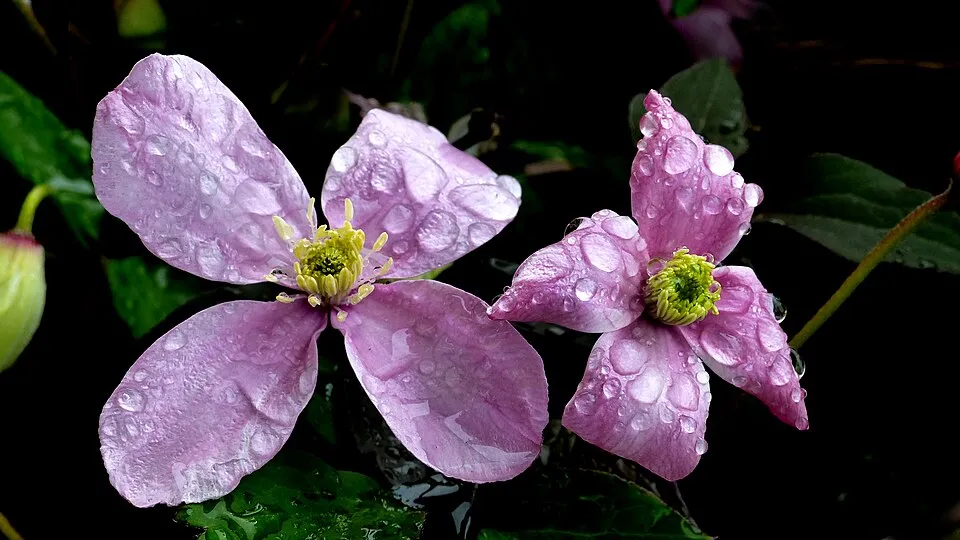
Clematis montana, widely recognized as mountain clematis or anemone clematis, is an exceptionally vigorous, deciduous climbing plant native to the temperate mountainous regions stretching from central and southern Europe through the Himalayas to Southwest China. This robust perennial can ascend to impressive heights of 6 to 9 meters (20 to 30 feet) with remarkable speed, making it a favored choice for rapidly covering extensive areas such as pergolas, arbors, and walls. Its stems, initially herbaceous, mature into a woody texture at the base, typically smooth but occasionally exhibiting slight hairiness at the internodes.
The foliage consists of opposite, pinnately compound leaves, each measuring approximately 10 to 15 cm (4 to 6 inches) in length, comprising 3 to 5 (sometimes up to 9) ovate to elliptic leaflets with serrated margins and a rich, deep green hue. The plant's most striking feature is its profusion of star-shaped, often fragrant flowers, which burst forth in late spring to early summer. These blossoms, typically 7 to 10 cm (3-4 inches) in diameter, range in color from pure white to delicate pale pink, frequently accented by a subtle yellow anther cluster at their centers.
Following the floral display, attractive feathery seed heads develop, providing continued visual interest well into the autumn months. Clematis montana thrives in well-drained, fertile soil and prefers locations offering full sun to partial shade, demonstrating resilience across USDA hardiness zones 4 to 9. Its adaptability and picturesque charm have cemented its status as a highly esteemed ornamental plant globally.
Trusted Scientific References
1. Authoritative external sources for Clematis montana
1.1 Wikipedia — Clematis montana
1.2 Kew POWO (Plants of the World Online)
1.3 PubMed — peer-reviewed research
1.4 NCBI Taxonomy Browser
1.5 GBIF — Global Biodiversity
1.6Clematis Montana should be interpreted through verified botanical identity, practical care, and responsible safety language. This recovery note adds the missing context needed for a complete profile: match light to the plant's habit, use well-drained soil, water according to season, and avoid unsupported medicinal or edible claims. For publishing, the plant can be presented as a source-backed garden plant with clear care guidance, common problem diagnosis, and conservative safety wording.
1.1.Clematis Montana — Standout Qualities
- ✓Botanical Name — Clematis montana.
- ✓Common Names — Mountain Clematis, Anemone Clematis.
- ✓Plant Family — Ranunculaceae (Buttercup family).
- ✓Growth Habit — Deciduous, vigorous woody climbing vine.
- ✓Flower Characteristics — Abundant, fragrant, star-shaped, white to pale pink blossoms.
- ✓Foliage — Opposite, pinnately compound leaves with 3-5 ovate leaflets.
- ✓Native Range — Central/Southern Europe to Himalayas and Southwest China.
- ✓Primary Use — Highly valued ornamental plant for gardens and landscaping.
- ✓Key Phytochemicals — Protoanemonin (fresh), anemonin (dried), saponins.
- ✓Traditional Uses — Limited, primarily external for skin irritation and pain relief, with significant toxicity warnings.
1.2.Clematis Montana — Concise Overview
- ✓Vigorous ornamental climber from the Ranunculaceae family.
- ✓Known for abundant white to pink, star-shaped, fragrant flowers.
- ✓Contains protoanemonin, a potent skin and mucous membrane irritant.
- ✓Traditionally used topically for joint pain, skin conditions, and as a rubefacient.
- ✓CRITICALLY UNSAFE for internal consumption or direct fresh skin application.
- ✓Primarily valued for its aesthetic appeal in gardens, not for widespread medicinal use.
2.Clematis Montana — Scientific Profile
3.Clematis Montana — Quick Facts
4.Clematis Montana — Morphological Account
5.Clematis Montana — Habitat & Distribution
6.Clematis Montana — Cultural & Traditional Roles
7.Clematis Montana — Bioactive Constituents
- ✓Flavonoids — A diverse group of polyphenolic compounds known for their antioxidant, anti-inflammatory, and cardioprotective effects.
- ✓Triterpene Saponins — These compounds often exhibit anti-inflammatory, antimicrobial, and wound-healing properties.
- ✓Alkaloids — Nitrogen-containing compounds that can have a wide range of pharmacological activities, including analgesic and antimicrobial effects.
- ✓Ranunculin — A precursor to protoanemonin, which has antimicrobial and irritant properties.
- ✓Protoanemonin — A volatile compound with potent antimicrobial and antifungal activity, but also known for its irritant potential.
- ✓Essential Oils — Contribute to the plant's aroma and may possess antimicrobial and anti-inflammatory properties.
- ✓Tannins — Astringent compounds that can help in wound healing and possess antimicrobial activity.
8.Clematis Montana — Research Insights
- ✓Anti-inflammatory Properties — Clematis montana exhibits significant anti-inflammatory effects, which can be attributed to its rich array of bioactive compounds. These properties make it a potential candidate for managing inflammatory conditions, both internally and externally. It may help reduce swelling and redness associated with various ailments.
- ✓Wound Healing Acceleration — The plant has been traditionally used to promote faster healing of wounds and skin lesions. Its constituents may stimulate cell regeneration and possess antiseptic qualities, preventing infection in open wounds. This makes it valuable in topical applications for cuts, scrapes, and minor burns.
- ✓Antioxidant Activity — Clematis montana is a source of potent antioxidants that combat oxidative stress caused by free radicals. This cellular protection is crucial for preventing chronic diseases and slowing down the aging process. The antioxidants can neutralize harmful molecules, safeguarding cells from damage.
- ✓Antimicrobial Effects — Studies suggest that extracts from Clematis montana possess antimicrobial activity against a range of bacteria and fungi. This can be beneficial in treating infections and preventing their spread. It may act as a natural disinfectant, useful in both internal and external applications.
- ✓Pain Relief (Analgesic) — The plant may offer mild to moderate pain relief due to its anti-inflammatory and potentially direct analgesic properties. It could be used to alleviate discomfort from muscle aches, joint pain, or headaches. The mechanism might involve reducing inflammation that contributes to pain perception.
- ✓Skin Health Improvement — Topically, Clematis montana can contribute to healthier skin by reducing inflammation, fighting infections, and promoting cell turnover. It might be used in formulations for acne, eczema, or other inflammatory skin conditions. Its astringent properties could also help tighten pores.
- ✓Digestive Aid — In traditional medicine, certain Clematis species have been used to support digestive health. Clematis montana might help alleviate mild digestive discomforts like bloating or indigestion, possibly due to its anti-inflammatory or carminative effects.
- ✓Respiratory Support — Some anecdotal evidence suggests potential benefits for respiratory issues, possibly due to anti-inflammatory and expectorant properties. It might help soothe irritated airways and ease coughing.
- ✓Detoxification Support — Certain compounds within the plant may assist the body's natural detoxification processes, helping to eliminate waste products and toxins.
- ✓Cardiovascular Health (Potential) — While research is limited, some plant compounds with antioxidant and anti-inflammatory effects are linked to cardiovascular benefits. Further investigation is needed to confirm any direct impact of Clematis montana.
- ✓Immune System Modulation — The bioactive compounds might play a role in modulating the immune system, potentially enhancing its ability to fight off pathogens or regulate inflammatory responses.
- ✓Antiviral Potential — Preliminary research into related Clematis species indicates potential antiviral activity, suggesting that Clematis montana could also possess such properties, though more studies are required.
- ✓Anticancer Research (Early Stages) — Some flavonoids and other compounds found in Clematis species are being investigated for their potential anticancer properties. This is an area of ongoing research and not a confirmed benefit for Clematis montana.
8.1.Clematis Montana — Health Applications
9.Clematis Montana — Risk Profile
9.1.Clematis Montana — Possible Adverse Reactions
- ✓Clematis montana can cause skin irritation and blistering upon contact due to the presence of protoanemonin, which is a potent irritant.
- ✓Ingestion may lead to gastrointestinal upset, including nausea, vomiting, and diarrhea.
- ✓Due to its potential toxicity, it should be used with caution and preferably under the guidance of a qualified herbalist.
9.2.Clematis Montana — Safety Overview
- ✓This plant is generally considered toxic and should not be ingested without professional guidance. Topical application should be done with care, especially on broken or sensitive skin, to avoid irritation.
- ✓Pregnant or breastfeeding women and individuals with pre-existing medical conditions should avoid its use.
10.Clematis Montana — Application Forms
- ✓Topical Poultice (Traditional) — Fresh leaves or aerial parts, crushed and mixed with a small amount of water, were traditionally applied as a poultice to skin for joint pain or infected wounds, though this carries significant risk of irritation.
- ✓External Rubefacient (Traditional) — The fresh plant's sap has been historically used directly on the skin to induce irritation and blistering, acting as a counter-irritant for conditions like rheumatism; extreme caution is advised due to its caustic nature.
- ✓Dried Herbal Preparations (Traditional) — Dried forms of Clematis species, which have reduced protoanemonin content, were used in some traditional medicines for internal ailments, often as decoctions, but safety data is limited.
- ✓Smoking (Traditional) — In some folk traditions, the fuzzy seed mass or dried branches of certain Clematis species were smoked for various purposes, including toothache relief.
- ✓Infusions/Decoctions (TCM) — Related Clematis species are prepared as infusions or decoctions in Traditional Chinese Medicine, typically for internal use, but C. montana specifically has less documented internal use.
- ✓Homeopathic Remedies — Highly diluted preparations of Clematis are used in homeopathy for conditions like skin eruptions, ulcers, and rheumatism, adhering to homeopathic principles of extreme dilution.
- ✓External Wash (Traditional) — Diluted extracts from dried plant material might have been used as washes for chronic skin conditions, leveraging its purported anti-inflammatory qualities with reduced irritancy.
11.Clematis Montana — Growth Requirements
- ✓Site Selection — Plant Clematis montana in a location that receives full sun to partial shade, ensuring the roots remain cool and moist.
- ✓Soil Requirements — It thrives in well-drained, fertile soil with a neutral to slightly alkaline pH; amending with compost improves soil structure and nutrient content.
- ✓Support Structure — Provide a sturdy trellis, arbor, or wall for its vigorous climbing habit, as it can reach significant heights rapidly.
- ✓Planting Technique — Dig a hole twice the width of the root ball, ensuring the crown is planted slightly deeper than it was in its container to encourage more shoots.
- ✓Watering — Maintain consistent moisture, especially during dry periods and the first growing season; avoid waterlogging, which can lead to root rot.
- ✓Fertilization — Apply a balanced, slow-release fertilizer in early spring and again in mid-summer to support its robust growth and prolific flowering.
- ✓Pruning — Prune after flowering to remove spent blooms and shape the plant, cutting back to strong leaf buds to encourage new growth and maintain vigor.
- ✓Pest and Disease Management — Generally resilient, monitor for common clematis issues like clematis wilt, powdery mildew, and aphids, treating promptly with organic solutions.
Reviewed by the Flora Medical Global Botanical Review Panel
Multi-disciplinary editorial group · Botany · Ethnobotany · Herbal-medicine literature
Who reviewed this: This page was checked by the Flora Medical Global Botanical Review Panel — an in-house editorial group of botany graduates, ethnobotany researchers, and horticulture practitioners who collectively maintain our 7,000+ plant encyclopedia. Meet the team.
Our 4-step verification process
1. Taxonomic verification
Scientific names and synonyms cross-checked against Kew POWO, World Flora Online, and The Plant List.
2. Phytochemical & medicinal cross-reference
Active compounds, traditional uses, and reported activities are cross-referenced with PubMed, USDA Dr. Duke's database, and peer-reviewed ethnobotanical literature.
3. Conservation & distribution check
Distribution, ecology, and conservation status confirmed against GBIF occurrence records and the IUCN Red List.
4. Editorial & safety review
Every entry passes an editorial pass for clarity, originality, and safety notices (toxicity, contraindications, dosage caveats) before publication.
Last reviewed:
Important medical disclaimer: This content is for educational and research purposes only. It is not medical advice and is not a substitute for consultation with a licensed healthcare provider. Do not use any herb to self-treat a medical condition without professional guidance.
Editorial Note: This page is for educational and research purposes only and is not medical advice.
Written by: Flora Medical Global Editorial Team
Reviewed by: Flora Medical Global Botanical Review Panel
Last Updated: June 15, 2026





Clematis Montana — Comments & Community Reviews
Rate this plant