
Medical Disclaimer: This content is for educational purposes only. It is not medical advice. Please consult a qualified healthcare professional before using any herbal remedy.
Safety Overview
1.Clematis Recta — Botanical Snapshot
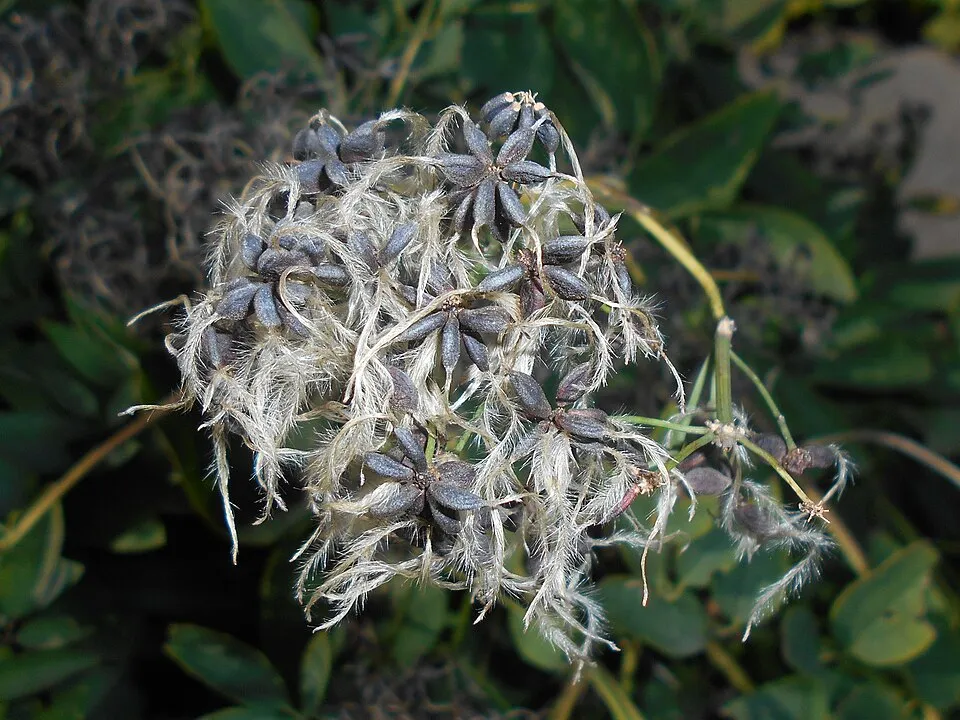
Clematis recta, commonly known as Bush Clematis or Ground Virginsbower, is a deciduous perennial herbaceous plant belonging to the Ranunculaceae family. Native to eastern, southern, and central Europe extending to the Caucasus region, its scientific epithet 'recta' is Latin for 'upright,' accurately describing its growth habit, which typically forms a bushy, non-climbing mound rather than a vining structure.
The plant typically reaches heights of 0.5 to 1.5 meters, presenting erect or slightly spreading stems that emerge from a fibrous root system.
The leaves of Clematis recta are arranged oppositely, pinnately compound, with ovate to lanceolate leaflets that often feature entire or subtly serrated margins and a lush green appearance. During the warmer months, typically from late spring to early summer, the plant produces an abundance of small, fragrant, star-shaped white flowers, often borne in dense, terminal panicles above the foliage.
These delicate blooms are highly attractive to various pollinators, including bees and butterflies, contributing significantly to garden biodiversity. Following flowering, attractive feathery seed heads develop, adding ornamental interest.
Clematis recta thrives in rich, well-drained soils and prefers full sun to partial shade. It demonstrates notable hardiness, capable of tolerating a range of environmental conditions, including short periods of drought once established, though it flourishes best with moderate moisture.
Its natural habitats include open fields, meadows, forest edges, and along roadsides, indicating its adaptability. While appreciated for its ornamental value in landscaping, providing ground cover or a bushy accent, it has also historically been recognized in traditional medicine, albeit with significant safety considerations due to its potent phytochemistry.
Trusted Scientific References
1. Authoritative external sources for Clematis Recta
1.1 Wikipedia — Clematis Recta
1.2 Kew POWO (Plants of the World Online)
1.3 PubMed — peer-reviewed research
1.4 NCBI Taxonomy Browser
1.5 GBIF — Global Biodiversity
1.1.Clematis Recta — Distinguishing Points
- ✓Botanical Identity — Deciduous perennial herbaceous plant in the Ranunculaceae family.
- ✓Growth Habit — Upright, bushy form, not a true climbing vine, typically 0.5-1.5 meters tall.
- ✓Ornamental Value — Valued for abundant, fragrant white flowers and feathery seed heads.
- ✓Native Range — Indigenous to central and southern Europe to the Caucasus.
- ✓Key Phytochemistry — Contains ranunculin, which converts to the potent irritant protoanemonin when fresh.
- ✓Traditional Uses — Historically applied topically for pain, gout, and skin issues; rarely ingested in dried forms.
- ✓High Toxicity — Fresh plant material is highly toxic and irritant, causing severe blisters and internal distress.
- ✓Safety Concerns — Considered unsafe for internal use and direct topical application, especially when fresh.
- ✓Pollinator Friendly — Flowers attract bees and butterflies, contributing to garden biodiversity.
- ✓SEO Focus — Important to highlight both traditional applications and critical safety warnings for users searching for 'Clematis recta benefits' or 'Clematis recta side effects'.
1.2.Clematis Recta — Concise Overview
- ✓Clematis recta is a European perennial known as Bush Clematis, famed for its upright habit and white flowers.
- ✓Traditionally used for joint pain, headaches, and skin conditions, but with significant safety warnings.
- ✓Contains highly irritant compounds like protoanemonin, especially when fresh.
- ✓Fresh plant is considered unsafe for internal or topical use, causing severe irritation and blistering.
- ✓Lack of scientific evidence supports its efficacy for medicinal claims.
- ✓Avoid during pregnancy, breastfeeding, and for internal use; use extreme caution with any external application.
2.Clematis Recta — Nomenclature & Classification
3.Clematis Recta — Fact Sheet
4.Clematis Recta — Botanical Features
5.Clematis Recta — Native Range & Habitat
6.Clematis Recta — Heritage Uses
7.Clematis Recta — Chemical Profile
- ✓Protoanemonin — A highly irritant lactone found in fresh Clematis recta, responsible for its blistering and burning effects on skin and mucous membranes. It is a derivative of ranunculin.
- ✓Ranunculin — A glycoside precursor to protoanemonin, released when plant cells are crushed. This compound is the primary cause of the fresh plant's toxicity and irritancy.
- ✓Flavonoids — A diverse group of polyphenolic compounds, such as quercetin and kaempferol derivatives, known for their antioxidant and potential anti-inflammatory properties, often found in various plant parts.
- ✓Saponins — Glycosides that produce a frothing in water; these compounds can have expectorant, anti-inflammatory, and immune-modulating activities, though their specific role in Clematis recta requires further study.
- ✓Triterpenoids — A class of natural products derived from a 30-carbon precursor, often contributing to the plant's defense mechanisms and sometimes exhibiting anti-inflammatory or cytotoxic effects.
- ✓Alkaloids — Nitrogen-containing organic compounds, often with significant physiological effects, though specific types and their concentrations in Clematis recta are not extensively documented.
- ✓Volatile Oils — Complex mixtures of aromatic compounds that contribute to the plant's fragrance and may possess antimicrobial or insecticidal properties.
- ✓Tannins — Astringent polyphenolic compounds that can bind to proteins, potentially contributing to wound healing or anti-inflammatory effects in traditional topical applications.
- ✓Coumarins — Aromatic lactones that can have anticoagulant, anti-inflammatory, and antimicrobial properties, though their presence and specific roles in Clematis recta are less studied.
8.Clematis Recta — Evidence-Based Benefits
- ✓Joint Pain Relief — Traditionally, Clematis recta has been applied externally as a counter-irritant to alleviate discomfort associated with joint pain, though this practice carries significant risks.
- ✓Headache Management — Historical use indicates topical application for headache relief, leveraging its irritant properties to create a diversionary sensation.
- ✓Gout Support — In traditional medicine, Clematis recta was sometimes used in poultices for the symptoms of gout, aiming to reduce localized pain and inflammation.
- ✓Skin Conditions Treatment — Historically, it was applied to the skin for various conditions, including minor irritations, with the understanding that its potent compounds could elicit a therapeutic response.
- ✓Wound Healing — Traditional applications suggest its use for promoting the healing of minor wounds, likely due to its irritant effects stimulating local blood flow.
- ✓Digestive Aid — Some historical accounts mention internal use of dried preparations for digestive issues like bloating and discomfort, though this is highly discouraged due to toxicity.
- ✓Sore Throat and Cough Relief — Infusions from dried leaves were traditionally used to soothe sore throats and alleviate coughs, acting as a demulcent or expectorant.
- ✓Localized Pain Management — As a poultice, the plant was historically applied to specific areas for localized pain relief, utilizing its rubefacient properties.
- ✓Immune Response Modulation — Traditional texts suggest compounds within Clematis recta might modulate immune responses, contributing to cold and flu relief, though scientific backing is absent.
- ✓Anti-inflammatory Properties — While fresh plant material is highly irritating, dried forms were traditionally believed to possess anti-inflammatory actions when applied topically for conditions like skin irritations.
8.1.Clematis Recta — Therapeutic Indications
9.Clematis Recta — Safety Considerations
9.1.Clematis Recta — Caution Notes
- ✓Severe Gastrointestinal Irritation — Ingestion of fresh Clematis recta can cause severe irritation to the stomach, intestines, and urinary tract, even in low doses.
- ✓Colic and Diarrhea — Internal consumption of the fresh plant is likely to induce severe colic and diarrhea.
- ✓Skin Blistering and Burns — Direct contact with fresh Clematis recta can cause slow-healing blisters, dermatitis, and chemical burns on the skin.
- ✓Mucous Membrane Irritation — The fresh plant's chemicals cause significant irritation to mucous membranes upon contact.
- ✓Allergic Reactions — Sensitive individuals may experience allergic contact dermatitis even from dried or processed plant material.
- ✓Urinary Tract Discomfort — Internal exposure may lead to irritation of the urinary tract, causing pain or discomfort.
- ✓Lack of Safety Data for Dried Forms — There is insufficient reliable information to confirm the safety of dried Clematis recta for internal or prolonged topical use.
9.2.Clematis Recta — Safety Overview
- ✓Likely Unsafe When Fresh — Fresh Clematis recta is considered likely unsafe for both internal consumption and direct skin application due to potent irritant compounds.
- ✓Pregnancy and Breast-feeding — Avoid use during pregnancy and breast-feeding, as there is insufficient safety data and potential for harm to mother and child.
- ✓Internal Use Contraindicated — Internal use, especially of fresh plant material, is strongly contraindicated due to severe gastrointestinal and urinary tract irritation.
- ✓Topical Use with Extreme Caution — Any topical application, even with dried material, should be approached with extreme caution, preferably under professional supervision, and always with prior patch testing.
- ✓Children and Vulnerable Populations — Should not be used in children, the elderly, or individuals with compromised health due to high toxicity risk.
- ✓Lack of Scientific Evidence for Efficacy — No good scientific evidence supports the efficacy of Clematis recta for any health purpose, further emphasizing the risk-benefit imbalance.
- ✓Professional Guidance Essential — Due to its toxicity, any consideration of Clematis recta for medicinal purposes must involve consultation with a qualified healthcare professional or medical herbalist.
10.Clematis Recta — Usage Guide
- ✓Topical Poultice (Dried) — Traditionally, dried and powdered Clematis recta was mixed with a binder and applied externally for localized pain or skin conditions, strictly avoiding fresh plant material.
- ✓Herbal Infusion (Dried Leaves) — Dried leaves were historically steeped in hot water to create an infusion for soothing sore throats or coughs; internal use is strongly cautioned against.
- ✓Tincture (External Use Only) — A diluted tincture prepared from dried plant material might be used externally as a rubefacient, under strict professional guidance and patch testing.
- ✓Homeopathic Preparations — Clematis recta is used in highly diluted homeopathic remedies for specific symptoms, where the original material's toxicity is minimized.
- ✓Decoction (External Wash) — A decoction made from dried aerial parts could be used as an external wash for certain skin irritations, with extreme caution.
- ✓Avoid Fresh Plant Contact — Absolutely avoid direct contact with fresh Clematis recta on skin or mucous membranes due to severe irritant properties.
- ✓Professional Consultation — Any traditional use should only be considered under the guidance of a qualified medical herbalist or healthcare professional, given its toxicity.
- ✓Drying Process — If considering traditional preparations, ensure the plant material is thoroughly dried, as this process reduces the concentration of the irritant protoanemonin.
11.Clematis Recta — How to Grow
- ✓Soil Preference — Thrives in rich, well-drained soils with a neutral to slightly alkaline pH.
- ✓Light Requirements — Prefers full sun to partial shade for optimal growth and flowering.
- ✓Watering — Requires moderate moisture, especially during dry spells; tolerates short periods of drought once established.
- ✓Propagation — Can be propagated by seed, division in early spring, or stem cuttings.
- ✓Pruning — Benefits from pruning in late winter or early spring to remove dead wood and encourage bushy growth.
- ✓Hardiness — Generally hardy in USDA zones 3-8, tolerating cold winters.
- ✓Pest and Disease Control — Relatively resistant to most pests and diseases, but good air circulation helps prevent fungal issues.
- ✓Habitat Mimicry — Mimic its natural habitat of open fields and forest edges by providing adequate space and sunlight.
Reviewed by the Flora Medical Global Botanical Review Panel
Multi-disciplinary editorial group · Botany · Ethnobotany · Herbal-medicine literature
Who reviewed this: This page was checked by the Flora Medical Global Botanical Review Panel — an in-house editorial group of botany graduates, ethnobotany researchers, and horticulture practitioners who collectively maintain our 7,000+ plant encyclopedia. Meet the team.
Our 4-step verification process
1. Taxonomic verification
Scientific names and synonyms cross-checked against Kew POWO, World Flora Online, and The Plant List.
2. Phytochemical & medicinal cross-reference
Active compounds, traditional uses, and reported activities are cross-referenced with PubMed, USDA Dr. Duke's database, and peer-reviewed ethnobotanical literature.
3. Conservation & distribution check
Distribution, ecology, and conservation status confirmed against GBIF occurrence records and the IUCN Red List.
4. Editorial & safety review
Every entry passes an editorial pass for clarity, originality, and safety notices (toxicity, contraindications, dosage caveats) before publication.
Last reviewed:
Important medical disclaimer: This content is for educational and research purposes only. It is not medical advice and is not a substitute for consultation with a licensed healthcare provider. Do not use any herb to self-treat a medical condition without professional guidance.
Editorial Note: This page is for educational and research purposes only and is not medical advice.
Written by: Flora Medical Global Editorial Team
Reviewed by: Flora Medical Global Botanical Review Panel
Last Updated: June 15, 2026





Clematis Recta — Comments & Community Reviews
Rate this plant