
Medical Disclaimer: This content is for educational purposes only. It is not medical advice. Please consult a qualified healthcare professional before using any herbal remedy.
Safety Overview
1.Clerodendrum Thomsoniae — Botanical Snapshot
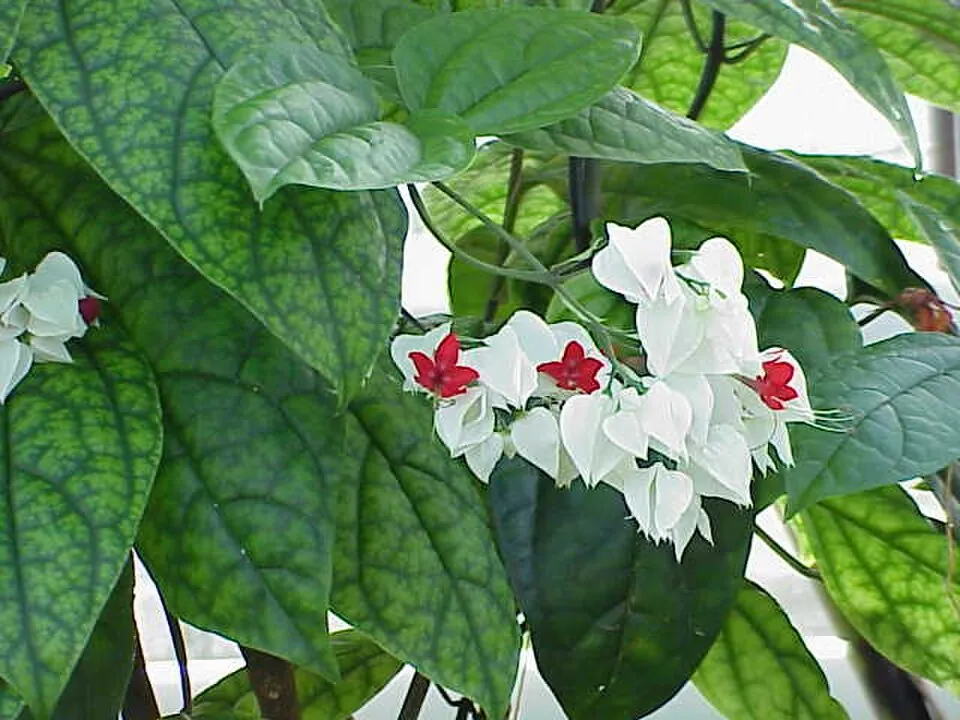
Clerodendrum thomsoniae, widely recognized as the Bleeding Heart Vine or Bagflower, is a captivating ornamental vining plant primarily native to the tropical rainforests of West Africa, spanning regions from Cameroon to Senegal. This striking species, first botanically described in 1861 by George Thomson, belongs to the Lamiaceae family, though it was historically classified under Verbenaceae. It is a vigorous, twining climber, capable of reaching lengths of up to 4 meters (approximately 13 feet) in its natural habitat or under optimal cultivation conditions. Its most distinctive feature is its profusion of unique, bicolored flowers, which emerge in cymes.
Each bloom consists of a pristine, balloon-like white calyx that dramatically encases and then reveals a vibrant, five-lobed crimson corolla, creating a stark and beautiful contrast. This dramatic appearance has earned it evocative common names such as 'Glory Bower' and 'Lady's Eardrops.' While primarily celebrated for its aesthetic appeal in conservatories, hanging baskets, and trellises across tropical and subtropical zones globally, its genus, Clerodendrum, has a long history in various traditional medicine systems. Although C. thomsoniae itself has less documented specific use in formal Ayurvedic, Traditional Chinese Medicine (TCM), or Unani texts compared to some of its congeners, modern scientific inquiry is beginning to unravel its phytochemical richness.
Initial studies have identified significant concentrations of flavonoids, triterpenoids, and phenolic acids, which are known for their diverse biological activities. These compounds suggest a potential for medicinal applications, aligning with the broader therapeutic recognition of the Clerodendrum genus. The plant thrives in warm, humid environments, requiring specific care when cultivated indoors in cooler climates, yet its robust growth habit generally makes it a relatively low-maintenance option for exotic flowering plant enthusiasts.
Trusted Scientific References
1. Authoritative external sources for Clerodendrum thomsoniae
1.1 Wikipedia — Clerodendrum thomsoniae
1.2 Kew POWO (Plants of the World Online)
1.3 PubMed — peer-reviewed research
1.4 NCBI Taxonomy Browser
1.5 GBIF — Global Biodiversity
1.1.Clerodendrum Thomsoniae — Highlights
- ✓Botanical Name — Clerodendrum thomsoniae.
- ✓Common Names — Bleeding Heart Vine, Bagflower, Glory Bower, Lady's Eardrops.
- ✓Plant Family — Lamiaceae (formerly Verbenaceae).
- ✓Native Region — Tropical West Africa (Cameroon to Senegal).
- ✓Distinctive Flowers — Features a prominent white calyx surrounding a vibrant crimson corolla.
- ✓Growth Habit — A vigorous, twining woody climber, capable of reaching significant lengths.
- ✓Key Phytochemicals — Rich in flavonoids, triterpenoids, and phenolic acids.
- ✓Preliminary Medicinal Potential — Explored for antioxidant, anti-inflammatory, and antimicrobial activities.
- ✓Primary Use — Highly valued globally as an ornamental plant for its exquisite blooms.
- ✓Cultivation Requirements — Thrives in warm, humid environments with bright, indirect light.
1.2.Clerodendrum Thomsoniae — Concise Overview
- ✓Striking ornamental vine, Clerodendrum thomsoniae, known as Bleeding Heart Vine.
- ✓Native to tropical West Africa, cultivated worldwide for its unique white and crimson flowers.
- ✓Contains significant levels of flavonoids, triterpenoids, and phenolic acids.
- ✓Emerging scientific research suggests potential antioxidant, anti-inflammatory, and antimicrobial properties.
- ✓Limited documented traditional medicinal use for this specific species compared to congeners.
- ✓Safety for internal human consumption is not established; primarily an ornamental plant.
2.Clerodendrum Thomsoniae — Scientific Identity
3.Clerodendrum Thomsoniae — Key Data
4.Clerodendrum Thomsoniae — Physical Description
5.Clerodendrum Thomsoniae — Native Range & Habitat
6.Clerodendrum Thomsoniae — Traditional Uses
7.Clerodendrum Thomsoniae — Key Phytochemicals
- ✓Flavonoids — Compounds like quercetin, luteolin, and their glycosides are prominent, contributing to the plant's significant antioxidant capacity and anti-inflammatory effects by scavenging free radicals.
- ✓Triterpenoids — Includes oleanolic acid and ursolic acid derivatives, which are often studied for their anti-inflammatory, hepatoprotective, and potential anti-tumor activities.
- ✓Phenolic Acids — Such as caffeic acid, ferulic acid, and gallic acid, these compounds are potent antioxidants and contribute to the plant's observed antimicrobial properties.
- ✓Saponins — Glycosidic compounds that can exhibit hemolytic, anti-inflammatory, and cholesterol-lowering properties, though their specific roles in C. thomsoniae are still under investigation.
- ✓Alkaloids — Nitrogen-containing compounds that can exert diverse pharmacological effects, often acting as antimicrobials or influencing physiological processes.
- ✓Glycosides — Various sugar-bound molecules where the attached sugar moiety can influence solubility and bioavailability, potentially impacting cardiac function or purgative effects.
- ✓Phytosterols — Including beta-sitosterol, known for its anti-inflammatory effects and ability to help lower cholesterol levels.
- ✓Volatile Oils — While not extensively characterized for Clerodendrum thomsoniae, these essential oils typically provide aromatic properties and can possess antimicrobial or insecticidal activities.
- ✓Iridoid Glycosides — A class of monoterpenoids that often exhibit anti-inflammatory, antispasmodic, and hepatoprotective actions, found in various Lamiaceae species.
- ✓Tannins — Astringent polyphenolic compounds that can contribute to antioxidant, anti-inflammatory, and antimicrobial effects by binding to proteins.
8.Clerodendrum Thomsoniae — Evidence-Based Benefits
- ✓Antioxidant Support — Flavonoids and phenolic acids within Clerodendrum thomsoniae may help neutralize harmful free radicals, protecting cellular structures from oxidative damage and supporting overall cellular vitality.
- ✓Anti-inflammatory Action — Research suggests that triterpenoids and other compounds present in the plant could modulate inflammatory pathways, potentially offering relief from various inflammatory conditions.
- ✓Antimicrobial Properties — Extracts have demonstrated inhibitory activity against certain bacterial and fungal strains, indicating a potential role in managing superficial microbial infections.
- ✓Hepatoprotective Potential — Certain phytochemicals found in the Clerodendrum genus, and potentially in C. thomsoniae, may offer protective benefits to liver cells against toxin-induced damage.
- ✓Cardioprotective Research — Exploratory studies on related Clerodendrum species suggest a potential for supporting cardiovascular health, a pathway warranting investigation for Bleeding Heart Vine.
- ✓Analgesic Activity — Preliminary findings might indicate pain-relieving effects, which could be attributed to its anti-inflammatory constituents and broader phytochemical profile.
- ✓Immunomodulatory Support — Compounds within the plant may interact with immune system components, potentially helping to balance or enhance the body's natural defense mechanisms.
- ✓Antidiabetic Exploration — Some members of the Clerodendrum genus are being investigated for their ability to help regulate blood sugar levels, presenting an area for future research for C. thomsoniae.
- ✓Wound Healing — Traditional applications of some Clerodendrum species for skin ailments suggest a potential for C. thomsoniae extracts to support minor wound healing through its antimicrobial and anti-inflammatory effects.
- ✓Anti-cancer Research — While highly preliminary, the presence of various bioactive compounds may lend itself to future studies exploring anti-proliferative activities against certain cancer cell lines.
8.1.Clerodendrum Thomsoniae — Health Applications
9.Clerodendrum Thomsoniae — Safety Considerations
9.1.Clerodendrum Thomsoniae — Reported Side Effects
- ✓Skin Irritation — Direct contact with the sap or leaves of Clerodendrum thomsoniae may cause mild dermal irritation or allergic contact dermatitis in sensitive individuals.
- ✓Gastrointestinal Upset — Ingestion of plant material, especially in larger quantities, might lead to symptoms such as nausea, vomiting, stomach cramps, or diarrhea.
- ✓Allergic Reactions — Individuals with known allergies to plants within the Lamiaceae family may experience allergic responses, including skin rashes, itching, or respiratory symptoms.
- ✓Unknown Systemic Toxicity — Due to the very limited human clinical data, the long-term systemic effects and potential organ toxicity from internal consumption are not yet established.
- ✓Drug Interactions — There is a theoretical potential for interaction with prescription medications, particularly those metabolized by the liver or affecting blood coagulation, though specific interactions are unstudied.
- ✓Pregnancy and Lactation Risks — The safety of internal use during pregnancy and breastfeeding is unknown, and thus, it should be strictly avoided.
9.2.Clerodendrum Thomsoniae — Risk Assessment
- ✓Limited Human Studies — Comprehensive safety data for the internal human consumption of Clerodendrum thomsoniae is currently insufficient, necessitating extreme caution and avoidance of internal use.
- ✓Pregnancy and Breastfeeding — Use is contraindicated during pregnancy and lactation due to the complete lack of safety studies and potential unknown effects on fetal development or infant health.
- ✓Pediatric Use — Not recommended for use in children, as specific dosage guidelines and safety information for this demographic are entirely absent.
- ✓Allergic Sensitivities — Individuals with known allergies to plants in the Lamiaceae family should exercise caution or avoid direct contact with Clerodendrum thomsoniae.
- ✓Medical Consultation — Any consideration for medicinal application, especially internal, must be undertaken solely under the direct supervision and guidance of a qualified healthcare professional.
- ✓Topical Patch Test — Before extensive topical application, a small patch test on the skin is advised to check for any localized irritation or allergic reactions.
- ✓Ornamental Use Only — Given the current state of research, Clerodendrum thomsoniae should be considered primarily an ornamental plant, with medicinal uses remaining strictly exploratory and unproven for human therapy.
10.Clerodendrum Thomsoniae — Preparations & Uses
- ✓Decoction — For traditional or exploratory research, roots or tougher stems could be slowly boiled in water to extract water-soluble compounds, typically used for internal applications in traditional systems.
- ✓Infusion — Dried leaves or flowers might be steeped in hot water to create a mild herbal tea, primarily for aromatic purposes or very gentle effects, once safety is confirmed.
- ✓Tincture — Plant material can be steeped in a high-proof alcohol solution to create a concentrated liquid extract, used in small, measured doses for research into its active constituents.
- ✓Poultice — Crushed fresh leaves or flowers could potentially be applied topically as a poultice to skin, exploring localized anti-inflammatory or antimicrobial benefits, if any traditional uses emerge.
- ✓Standardized Extracts — Prepared using various solvents (e.g., ethanol, methanol) to isolate and concentrate specific phytochemicals, primarily for scientific study and product development.
- ✓Topical Applications — Infused oils, creams, or gels containing C. thomsoniae extracts could be developed for dermatological uses, such as soothing minor skin irritations or promoting skin health.
- ✓Research Formulations — Various laboratory formulations are used to study the plant's efficacy, including cell culture mediums or animal models, to understand its biological activities.
- ✓Aromatic Use — While not a primary medicinal use, the plant's aesthetic appeal and pleasant scent in cultivation can contribute to a calming environment.
11.Clerodendrum Thomsoniae — Cultivation & Care
- ✓Light — Clerodendrum thomsoniae thrives in bright, indirect light; direct afternoon sun can scorch its leaves, while insufficient light significantly reduces flowering.
- ✓Soil — Prefers a rich, well-draining potting mix that retains some moisture, ideally with a slightly acidic to neutral pH, enriched with organic compost.
- ✓Watering — Requires consistent moisture during its active growing season; water thoroughly when the top inch of soil feels dry, reducing frequency in cooler months.
- ✓Humidity — High humidity is critical for optimal growth and abundant flowering, especially when grown indoors; regular misting or placement on a pebble tray is beneficial.
- ✓Temperature — Ideal temperatures range between 18-29°C (65-85°F); it is sensitive to cold temperatures and will suffer damage or die if exposed to frost.
- ✓Fertilization — Feed regularly every 2-4 weeks during the spring and summer growing period with a balanced liquid fertilizer diluted to half strength.
- ✓Pruning — Prune after the main flush of blooms to maintain a manageable shape, encourage bushier growth, and stimulate the production of more flowers.
- ✓Propagation — Easily propagated from semi-hardwood stem cuttings taken in spring or early summer, which can root readily in water or a moist, sterile potting medium.
Reviewed by the Flora Medical Global Botanical Review Panel
Multi-disciplinary editorial group · Botany · Ethnobotany · Herbal-medicine literature
Who reviewed this: This page was checked by the Flora Medical Global Botanical Review Panel — an in-house editorial group of botany graduates, ethnobotany researchers, and horticulture practitioners who collectively maintain our 7,000+ plant encyclopedia. Meet the team.
Our 4-step verification process
1. Taxonomic verification
Scientific names and synonyms cross-checked against Kew POWO, World Flora Online, and The Plant List.
2. Phytochemical & medicinal cross-reference
Active compounds, traditional uses, and reported activities are cross-referenced with PubMed, USDA Dr. Duke's database, and peer-reviewed ethnobotanical literature.
3. Conservation & distribution check
Distribution, ecology, and conservation status confirmed against GBIF occurrence records and the IUCN Red List.
4. Editorial & safety review
Every entry passes an editorial pass for clarity, originality, and safety notices (toxicity, contraindications, dosage caveats) before publication.
Last reviewed:
Important medical disclaimer: This content is for educational and research purposes only. It is not medical advice and is not a substitute for consultation with a licensed healthcare provider. Do not use any herb to self-treat a medical condition without professional guidance.
Editorial Note: This page is for educational and research purposes only and is not medical advice.
Written by: Flora Medical Global Editorial Team
Reviewed by: Flora Medical Global Botanical Review Panel
Last Updated: June 15, 2026





Clerodendrum Thomsoniae — Comments & Community Reviews
Rate this plant